Interesting state trial court opinion suppressing fruits of a geofence warrant for failure to satisfy CalECPA, the California privacy law, and its statutory particularity requirements. https://t.co/GRT2So3QgJ #N
This is deeply concerning. These are the same Saudis who recruited and paid 3 Twitter employees to spy on KSA’s critics. Read the DOJ’s complaint: https://t.co/IdHavmZ3RH
@daphnehk@BerinSzoka Not sure, but bills like SC S. 1373 which outlaw internet services being used to provide information about abortion are a good example of the issue
This is exactly right. State AGs always forget that they can enforce state criminal laws that are consistent with federal law without any Section 230 problem under the existing exceptions. This a perfect example of why that should not change.
The National Association of Attorneys General has been pushing for over a decade to gut #Section230 by exempting state criminal law
This is just one example of why that's a terrible idea
@daphnehk@michaelkwun It appears the complaint has been amended and there is a pending MTD yet to be decided. It argues that websites/services are not “products” subject to product liability claims — an argument which has been successful in many video game cases. https://t.co/iGmWsbjCuI
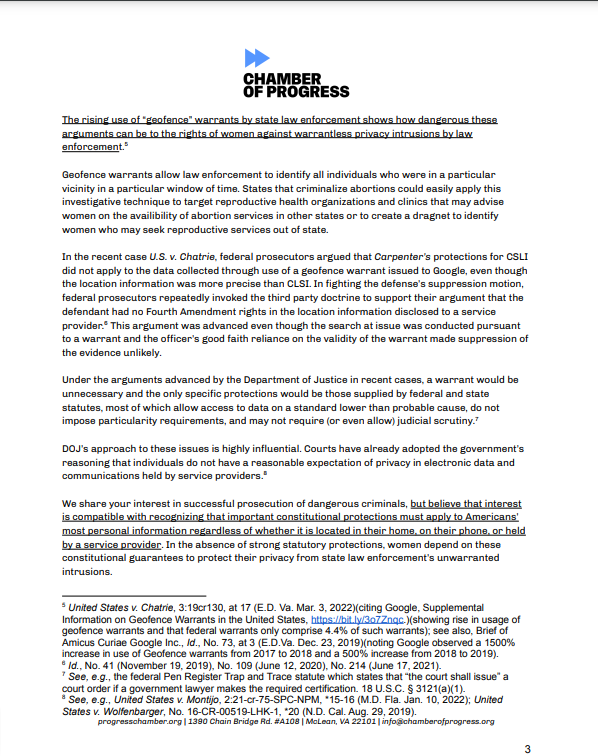
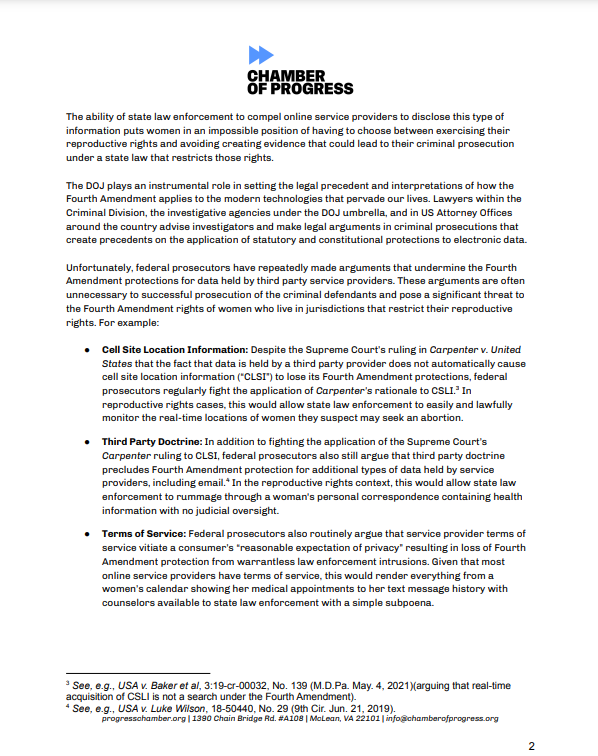
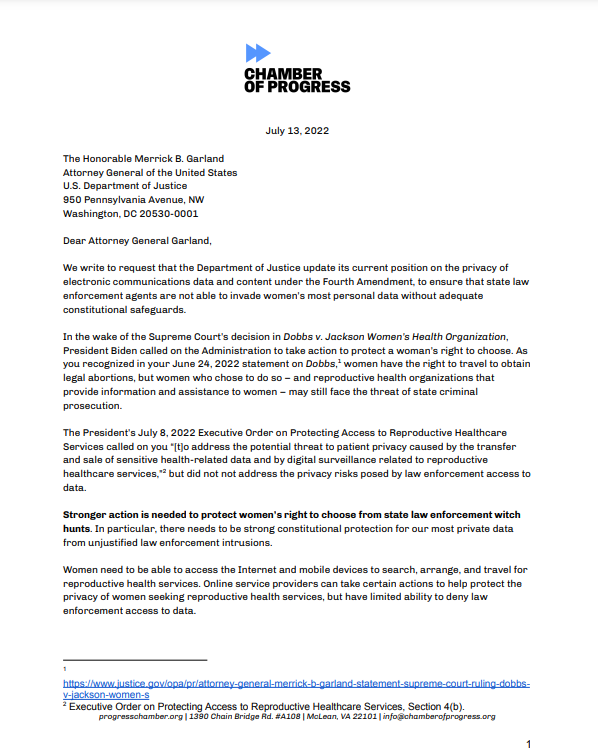
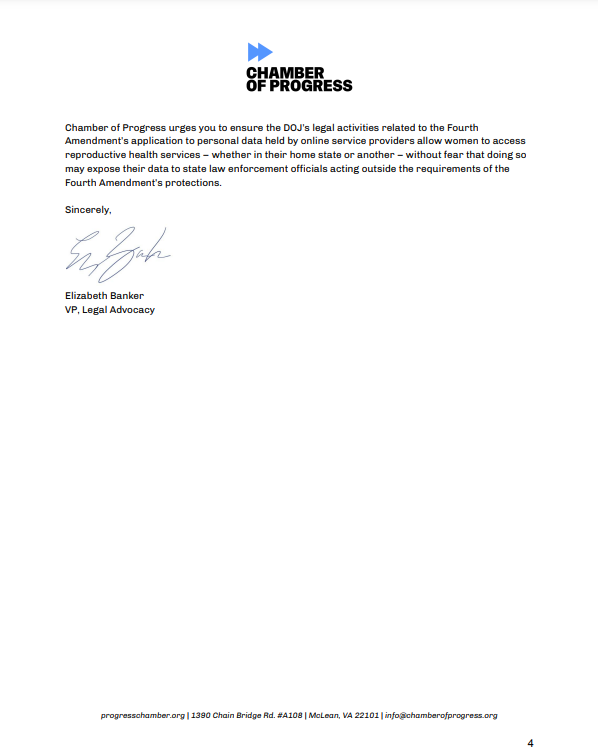
An overlooked aspect of the privacy discussion post-Dobbs is law enforcement access to online data. Provider steps to minimize or delete sensitive info won’t impact emails confirming appts, cal entries, & other content a user controls. These deserve strong 4th Amend protections.
The DOJ is arguing in court that our private data isn't so private - everything from text history to calendar appts can be accessed without a search warrant. Since Roe was overturned, that's especially dangerous. We're calling on the DOJ to reconsider the precedent it's setting.
Need to get caught up on what is going on with social media addiction cases and state bills, then check out @natrubio__ story. It includes @ericgoldman explaining why these efforts run headlong into Section 230.
Today in Source Code: an overview of @BenBrodyDC's interview with FTC Chair Lina Khan about her Year Two agenda; and my story on how eight lawsuits against Meta for its algorithms are working around Sec. 230 https://t.co/5aydA1EIyR
I think this shows the danger of elected judges that fear the wrath of their party if they follow the law. In this specific case, term up in 2024, R, 4 years as chair of Delaware County Republicans. https://t.co/NRxJrOjMxO
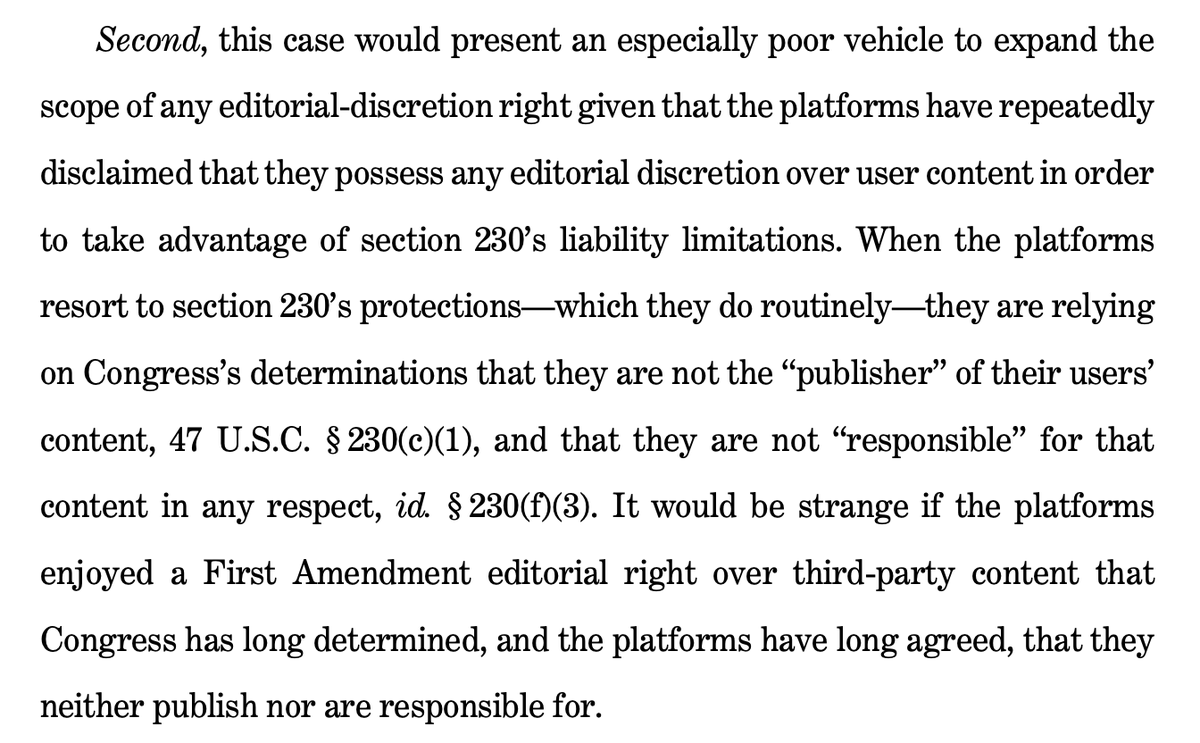
There's a bogus myth that platforms' editorial rights under 1st Am are at odds with Sec 230 protection over user content. They're not.
No surprise - AG @KenPaxtonTX repeated it ↙️
Surprised that @CommonSense just did as well, against CA's "social media addiction" bill ↘️
I also love the “this is the narrowest approach we could have taken” defense of the hosting rule. Under its laser-like precision, TX explains that providers don’t have to host Russia’s Ukraine misinformation b/c HB20 allows them to ban ALL speech by governments.
My head is spinning from the circular arguments in TX’s HB20 defense. If providers aren’t publishers & are dumb pipes, what exactly is the statutory benefit 230 conveys in exchange for waiving the 1st A rights they supposedly don’t have to start with? https://t.co/faMjwFlUlQ
We suspend over half a million spam accounts every day, usually before any of you even see them on Twitter. We also lock millions of accounts each week that we suspect may be spam – if they can’t pass human verification challenges (captchas, phone verification, etc).
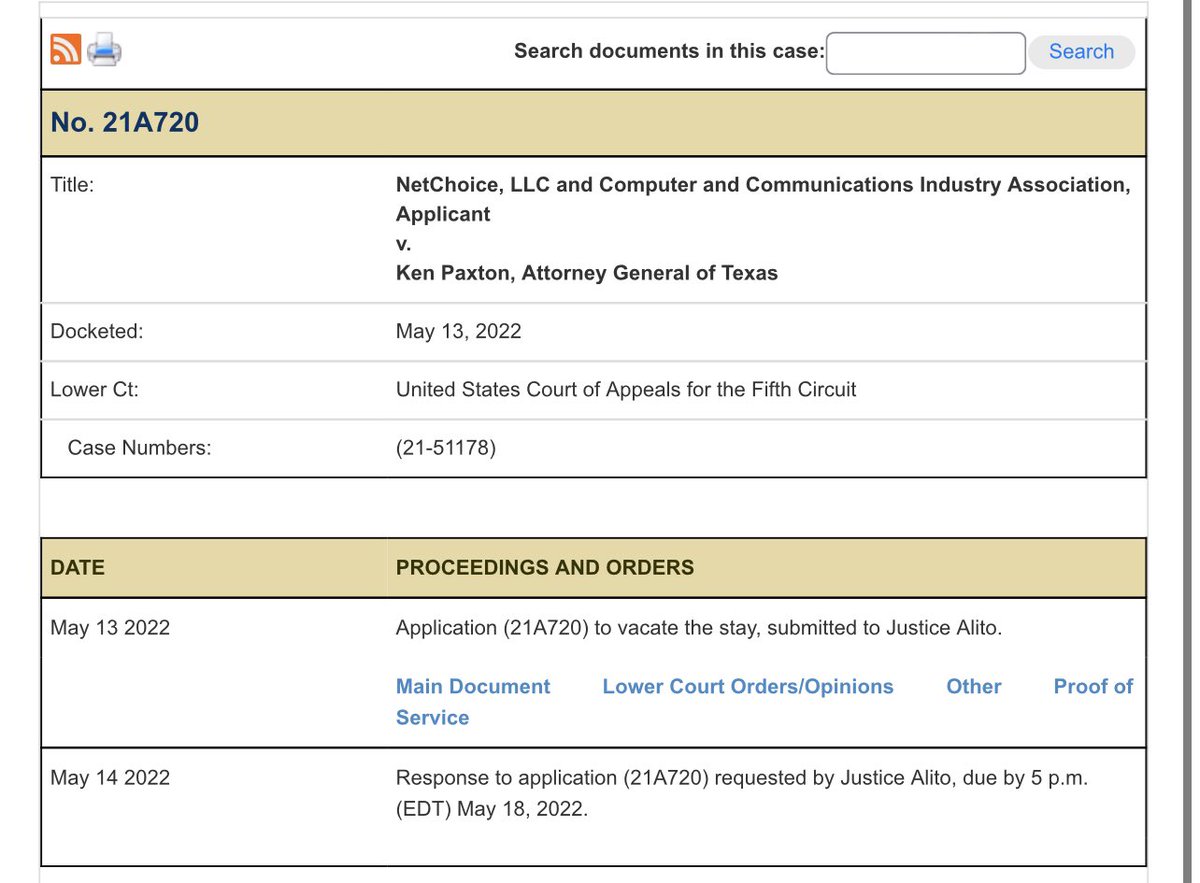
Justice Alito has ordered Texas to respond to the emergency application in the HB20 / social media platform moderation case by Wednesday at 5 p.m. EDT.
That’s not as fast as I would’ve expected, but it’s still faster than if he was signaling a lack of concern:
@daphnehk Would animal cruelty content (U.S. v. Stevens) be more what you had in mind? I’m sure it can be twisted into being controversial, because anything can these days…
@daphnehk Misinformation is a good example of a vile thing that is definitely not covered by one of the exceptions. O’Handley v. Padilla is a good example of a case where a federal judge ruled Twitter had a First Amendment right not carry it