From @thecontinent_
“ The war in Tigray ended two years ago. But the loss and suffering it brought is still plain to see in Ethiopia’s northernmost region: missing limbs, scattered families, and damage to buildings and infrastructure that is
thought to amount to $20-billion.”
The @StateDept in 2021 prepared a declaration that Ethiopia’s atrocities against #Tigray|ans constitute a #genocide. However, @SecBlinken chose trade over #HumanRights & refused to sign it. We urge the @realDonaldTrump admin. sign the declaration.
https://t.co/awgMTAwPVy
Dear, Tigray Leaders, Debretsion Gebremichael @reda_getachew@ProfKindeya
The people of Tigray are suffering on the streets of Addis Ababa and other places, but you are fighting about power. This is very shameful. You used to lead Ethiopia. What happened now that you only have this small region of Tigray to lead? I am trying to help 174 people to return home from Addis. If one person can do this, why can't you it? Why are the people of Tigray suffering so much under your rule?
@SeifGebre@Hamesa_Tsegemat @tirgume @DrTedros@PressTeddy@Nohelema@martinplaut@Romha12@Ge1Solomon@TigrayUpdate@TeklehaymanotG #DebretsionGebremichael
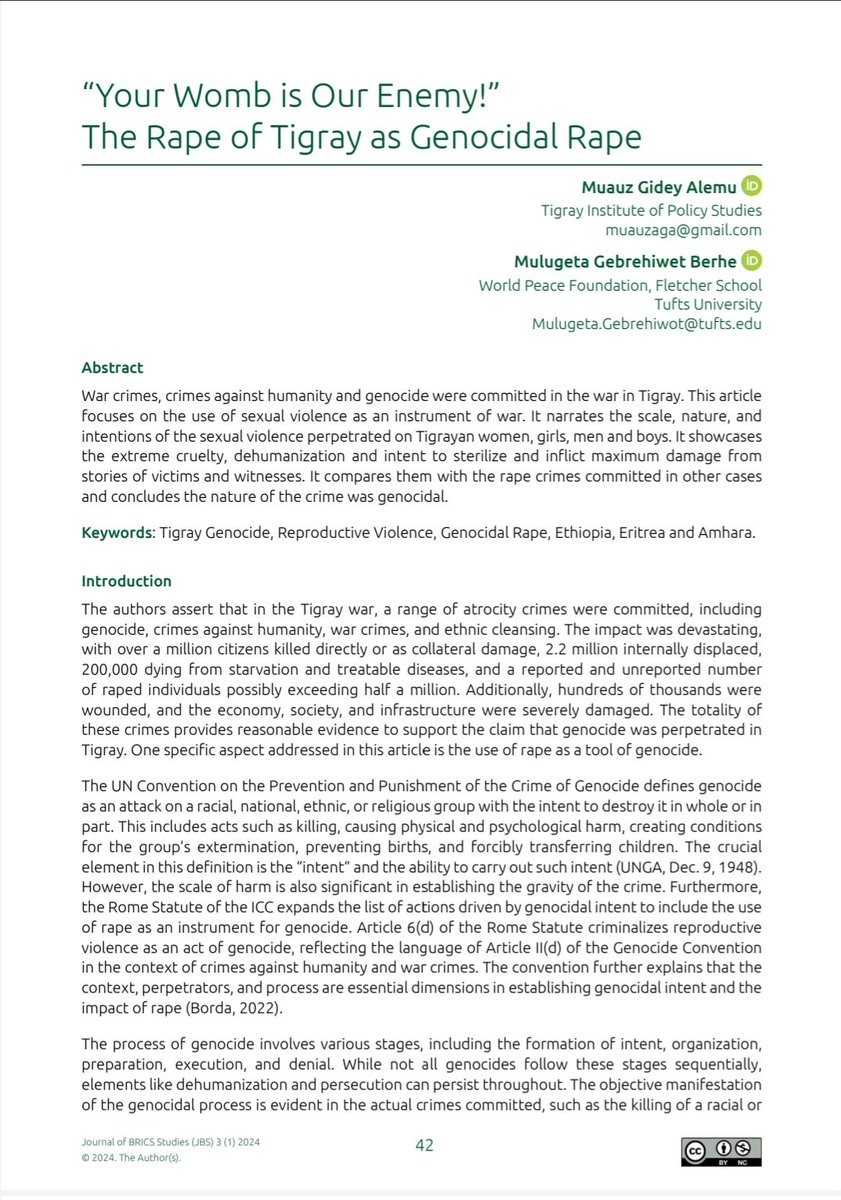
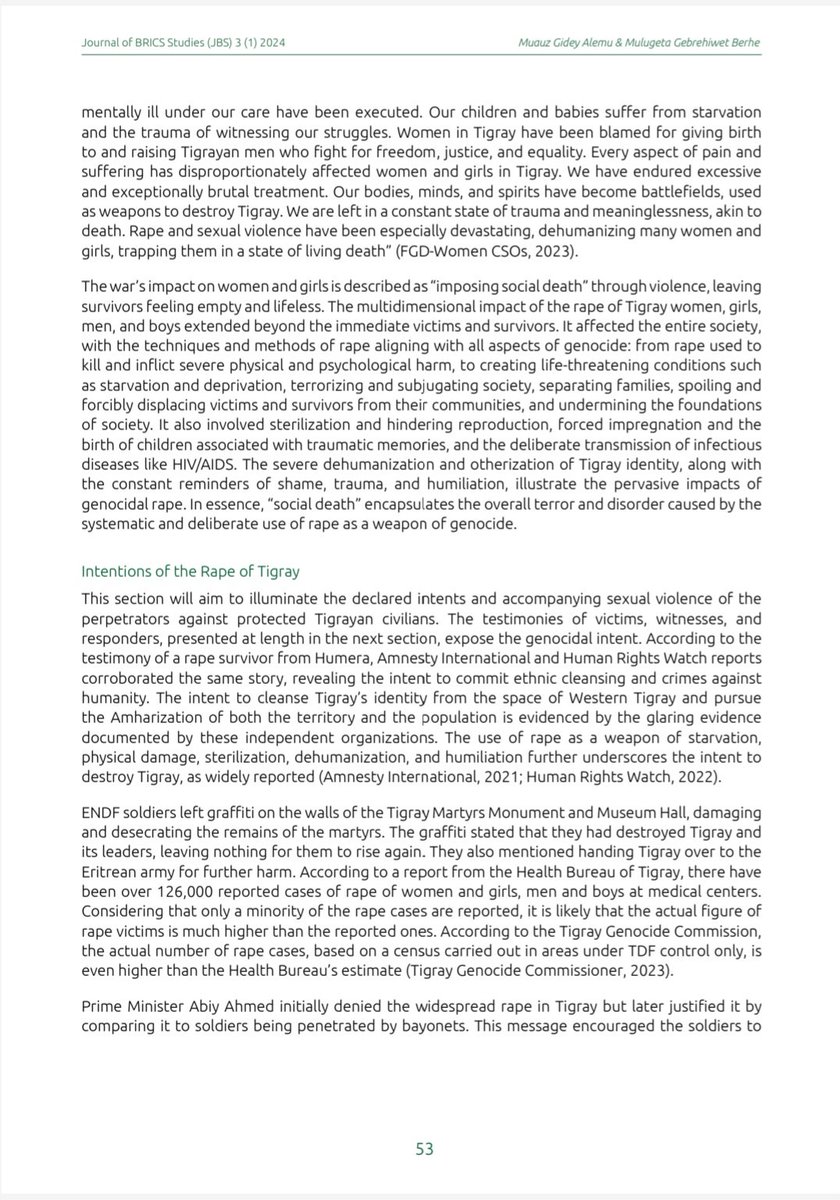
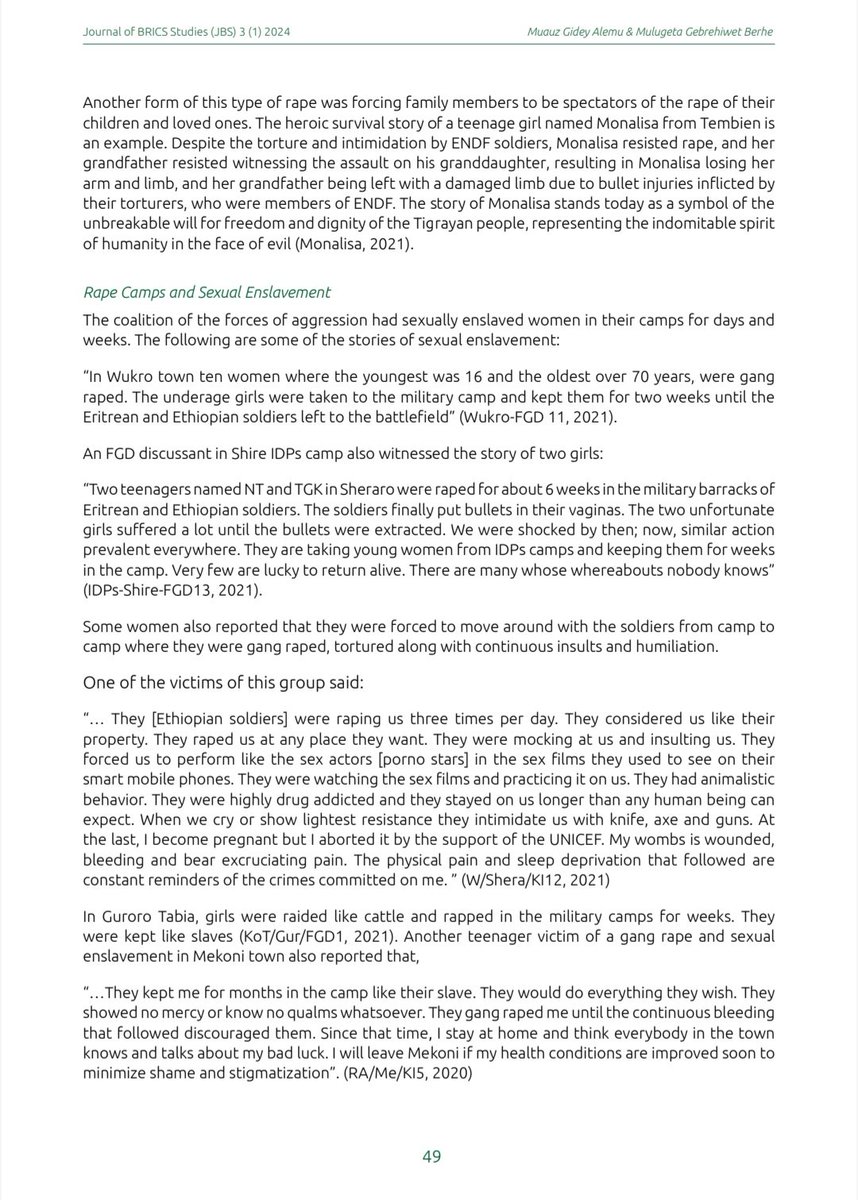
A research on weaponized rape in Tigray by Dr. Mulugeta Gebrehiwot (Chaltu) and Muez Gidey entitled “Your Womb is Our Enemy!”
The Rape of Tigray as Genocidal Rape, published in the Journal of BRICS Studies. 1
#Ethiopia: ‘Waiting for death’: desperate plight of #Tigray’s war displaced
The aftermath of the Tigray war continues to affect over a million people who remain displaced from their homes, nearly two years after a peace deal was signed. In #Mekele, the capital of Ethiopia's Tigray region, many internally displaced persons (#IDPs) are living in crowded, makeshift shelters.
Wolde Meressa, 78, resides in a school classroom with 30 others. "By staying here, we are merely waiting for death," he said, describing the cramped conditions. Wolde is one of approximately 1.1 million people unable to return home, according to the UN's humanitarian response agency, OCHA.
Aid organizations are scaling back operations, making essential supplies harder to obtain. Tibe Addise, 42, living in an IOM-run camp in #Shire, stated, "Since arriving, I have struggled to care for my children, suffering cold and hunger daily."
Many IDPs were forced from Western Tigray, an area that remains largely inaccessible to humanitarian agencies. Surafel Asmelash, coordinator at the Seba Care IDP camp in Mekele, noted, "According to the peace agreement, we were told that peace had been restored and we would be able to return to our homes. However, we have neither returned nor have the aid agencies been given the opportunity to stay. The people have been left in limbo."
https://t.co/tOzQOBi6tr