"The only kind of thinking that matters in science is structured thinking. The only way to give structure and substance to your thoughts is to write them down. Writing. Is. Thinking" (Hazelett, 2025)
https://t.co/1Xf6vEz3oz
Lifestyle is a stronger predictor of aging and mortality than genetics.
A new Nature study of ~500,000 people found:
🎯 17% of mortality variation was linked to lifestyle (exposome).
🧬 <2% of was explained by genetics.
Here’s what you need to know 👇🧵 1/10
"Incorporating low-tech AACT into regular SLT in inpatient settings can improve communication for basic needs in an in-patient setting, facilitate language recovery,... , compared to SLT alone, for people with post-stroke aphasia" https://t.co/YwL6uwfQ45
We join the world in mourning the loss of aphasia advocate and pioneer, Audrey Holland. Read NAA President Darlene Williamson's words about this amazing woman.
https://t.co/b4PdQNL3A6
This article brings me back to my days in private practice: https://t.co/RtzxEhtIed
There is definitely a huge gap in the literature on AAC for individuals with hearing impairment and additional disabilities
Person-centred #stroke rehabilitation begins with collaborative goal setting and this codesigned goal setting tool should be used by all rehabilitation professionals (Physio’s, OT’s, SLP’s nurses, dietitian’s etc) with people with aphasia #aphasia2022 . https://t.co/qoDIsyAHzt
Motivation has the potential to influence rehabilitation outcomes, and researchers and clinicians have acted to promote it. This article examines motivation in aphasia rehabilitation both in theory and practice https://t.co/R9CoGVasbz @csunorthridge@LosAngelesVA@VANorthernCA
Recently published open-access article (Edmonds & Morgan, 2022): https://t.co/Bol8HhmHXX
"Participation in aphasia centers can result in significant changes in language, functional communication, and quality of life in people with chronic aphasia."
Wearable technology for people with AAC could help preempt challenging behavior with communication opportunities and help people who use AAC signal readiness for learning and indicate feature preferences. Find out more from #JSLHR https://t.co/Cwk6HRYcYX @Uark_CDIS@PennStateCSD
Today, 1 October, is the International Day of Older Persons. It also marks the start of the Ageing Well campaign that runs throughout October. Get involved in the Ageing Well campaign by visiting our website and accessing campaign resources. #SPAageingwell https://t.co/PlWLSQ9L56
Tomorrow is the start of International AAC Awareness Month!
This year's theme is Show Your Voice! We want to hear how you plan to celebrate AAC Awareness Month, so use #AACAware22 on your posts so we can see them!
This study's objective 1: evaluate how much AAC devices allow changes to their language files (phonology, semantics, morphosyntax, pragmatics) to accommodate multicultural and multilingual clients
Results: more semantic & phonological changes possible
https://t.co/TQjn5N7Vjx
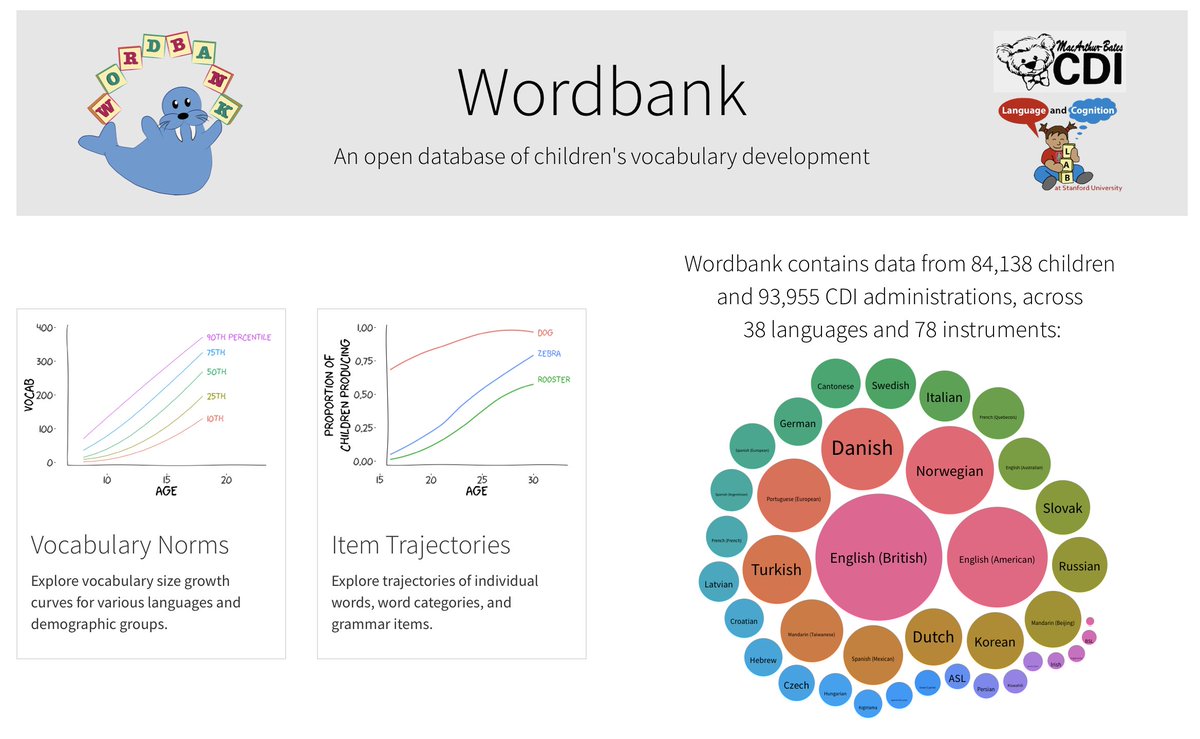
Wordbank is an open database of children's vocabulary development across languages, archiving parent reports of what their children say.
Today we are updating Wordbank, adding 10k children, 9 new languages, and data on bilinguals.
https://t.co/eZe6Ou2m9U
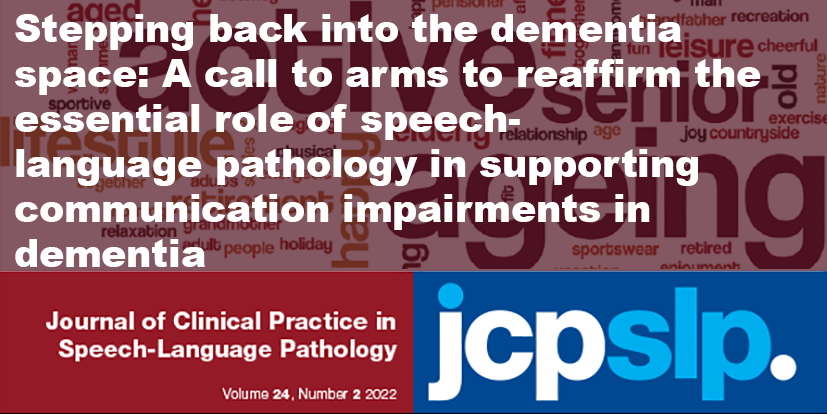
‘Stepping back into the dementia space: A call to arms to reaffirm the essential role of speech-language pathology in supporting communication impairments in dementia’ in @jcpslp Vol 24 No. 2. This edition is about ageing. #WeSpeechies#SLPeeps#slp2B
https://t.co/v7zJlD5CMv
Join us for Seminar 34 - TeleCHAT: Preliminary findings from the first ICAP to be delivered via telerehabilitation.
Presentation by: Dr Annie Hill
Wed 31st Aug 2022 - 3pm AEST
Register free via Zoom https://t.co/KU2CbDV9CR
After spending blood, sweat, tears and going through COVID infections, our systematic review in visual word N170 is finally out. So glad to spend this journey with @arianetretow and @verwimpcara. Thanks to our PIs and @neoprismc! https://t.co/CKVcygUblt