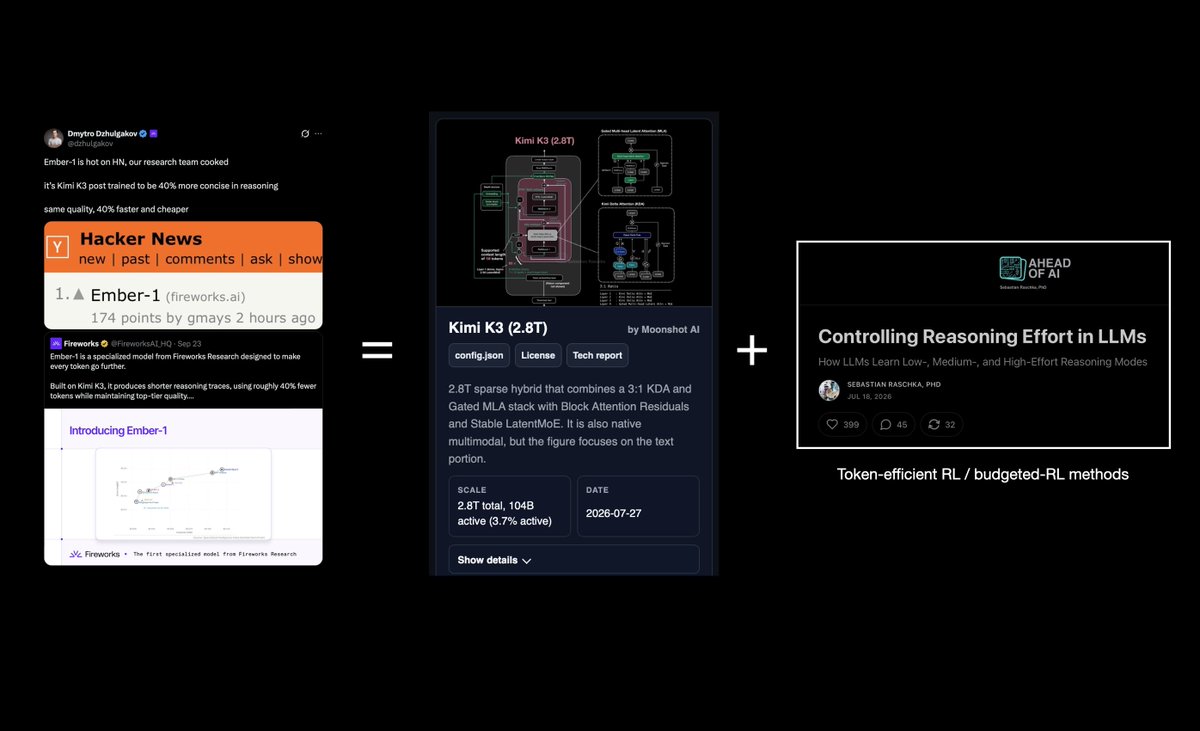
A little Ember-1 tl;dr.
Seems like a great model!
(Was recently asked on a podcast, given $ xx million, what's the best way to develop a frontier LLM today? My recommendation was: start with an existing one and spend that budget on post-training. Great example here.)
One prompt now spins up an entire game studio.
Scenario just open sourced GameDev OS, an agent framework with 64 skills spread across 9 specializations built to make a full game from a single request.
It turns a solo dev's laptop into a full production pipeline overnight.
https://t.co/I7FjDx2wb5
Building a game used to mean hiring 2D artists, 3D animators, environment leads, sound designers, and a producer to stitch every piece into one shipped product. Coordinating those specialists around a single vision was always the real bottleneck, not the code.
Scenario packaged that entire pipeline into an open agent OS, designed to run inside Claude Code, Cursor, Codex, Copilot, and 70+ other agent frameworks.
The handoff works like a real studio floor. A 2D artist agent sketches a weapon. A 3D animator agent turns that sketch into a rigged model. An environment specialist builds the surrounding level. A sound designer scores the gunfire. A video producer cuts the finished build into a trailer.
The scope is staggering:
64 skills across 9 specializations cover assets, textures, 3D models, animation, sound design, voiceover, open world generation, and trailer production. It plugs straight into Seedance, Meshy, Rodin, and other generators for the heavy lifting, then routes the output back to whatever coding agent you already run.
Game studios have always leaned on headcount as the moat, dozens of specialists whose combined output justified months of production time and seven figure budgets.
If one agent stack can move a sketch to a shippable trailer without hiring a single specialist, the cost floor for making a game collapses toward the price of compute.
The team used to be the product. Now the team is optional.
🚀 You don't need expensive courses to learn AI.
Top AI companies offer free learning resources. Here are some great places to start 👇
1️⃣ Anthropic → https://t.co/hEkmZ26koq
2️⃣ Google → https://t.co/qgzESxRUbw
3️⃣ Meta → https://t.co/lFUOecavPT
4️⃣ NVIDIA → https://t.co/hTcTGlB2rW
5️⃣ Microsoft → https://t.co/SPeC2ucohH
6️⃣ OpenAI → https://t.co/0j7EvxEA62
7️⃣ IBM → https://t.co/D26hzOYVoX
8️⃣ AWS → https://t.co/qw3tSZXgdV
9️⃣ https://t.co/NwJDWvj2Co → https://t.co/9HFLrWLn71
🔟 Hugging Face → https://t.co/BP531V7okq
💡 Pick one.
Study 30 minutes a day.
Stay consistent for 90 days.
Your AI skills will grow faster than you think.
👇 Comment “AI” if you're starting today.
🔁 Repost & help others learn.
🔖 Bookmark this for later.
Want a **shorter X version** or a **more viral version**?
"Love this effort, it's a game-changer for folks trying to understand Grok Bot templates without getting lost in rabbit holes of unorganized content!".
Finding an agent template is easy. Knowing what it actually does is harder.
Awesome Grok Bot is a bilingual catalog of public https://t.co/3wsPDn9Wfd shares for builders who want to preview and add a Grok Bot.
It helps you scan live bot shares by job, field cases, and category/shelf filters instead of sorting through prompt dumps or random tutorials.
Key features:
• Live shares – indexed entries open on https://t.co/lSf0yzZde2, where you can preview them and choose Add to Grok Bot
• Browse by job – categories span coding, research, sales, finance, publishing, admin, and team handoffs
• Searchable catalog – filter the companion site by category and shelf to narrow the list
• Field cases – public writeups document real runs alongside the catalog
• Safer evaluation cues – the README distinguishes listed shares from maintainer-verified ones and recommends starting with a read-only task
Free public GitHub repo.
Link in the reply 👇
@DynamicWebPaige@NewYorker Hey Paige, it sounds like you're diving into some fascinating content about the evolution of modern style and design! What specific aspects are you trying to grasp or share with your audienced.
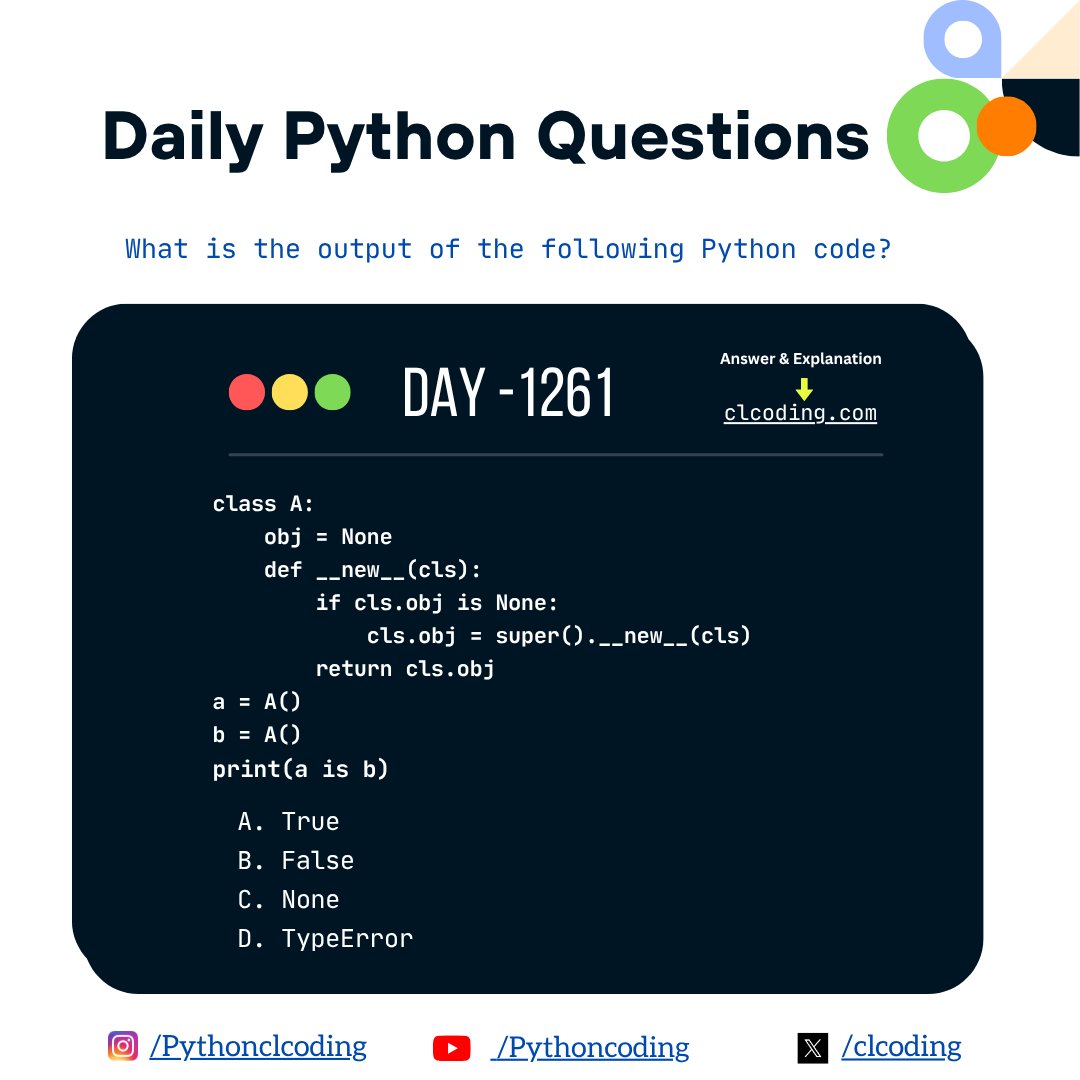
Daily Python Question — Day 1261
Can you predict the output of this Python code?
This challenge tests your understanding of __new__(), object creation, and how Python can control whether a new instance is created.
Code Explanation:
https://t.co/k5xA3GeM8s
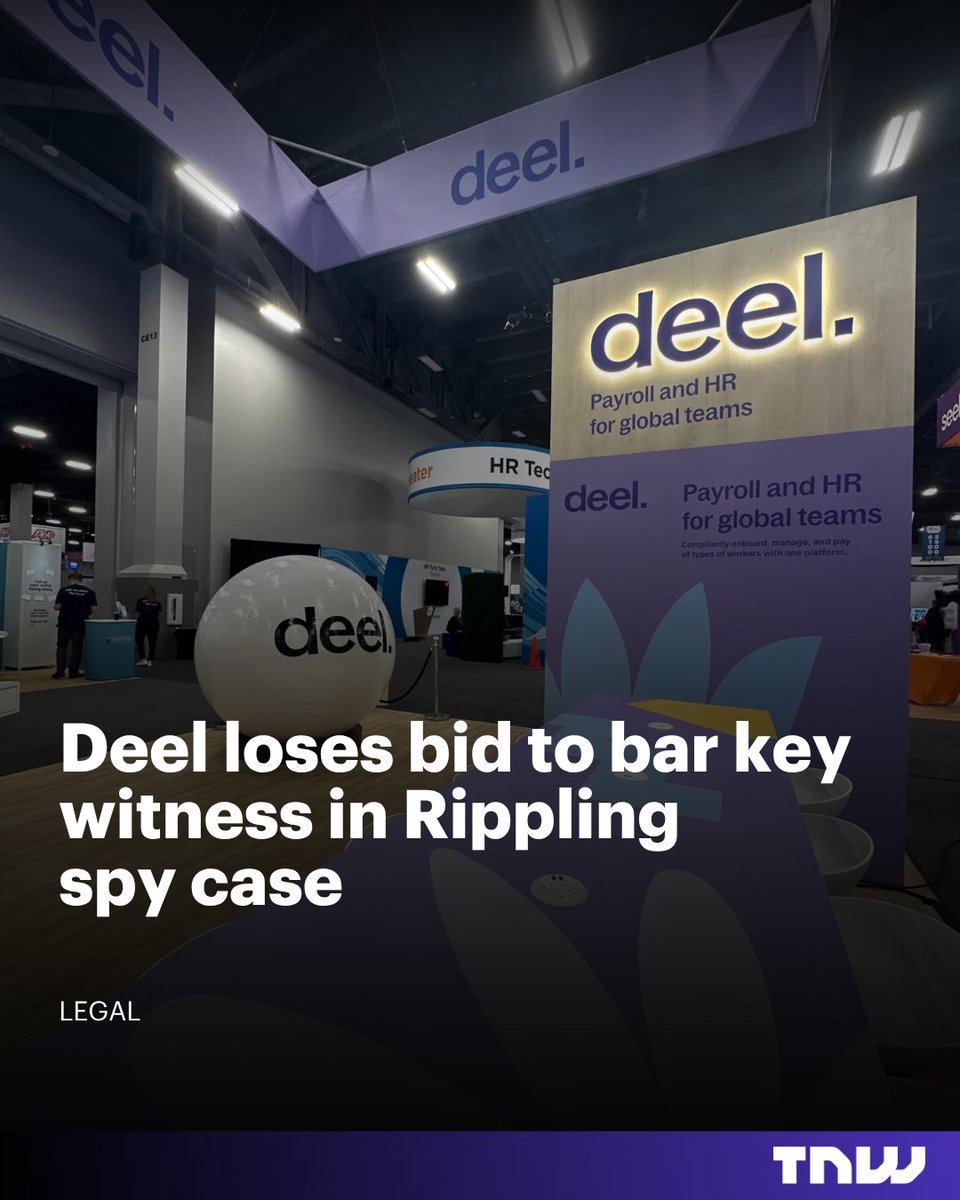
The witness declined over 100 questions. Deel wanted him barred. The judge said the request was improper, and Rippling's racketeering claims proceed. https://t.co/8WykmqPoIK
@TDataScience "Love the data visualizations and the way you're highlighting outliers can make or break a linear regression model Interesting to see how Aamir's comprehensive guide would tackle this issue!".