25 days until I submit my PhD thesis—and I truly couldn’t have made it here without the unwavering support of my incredible, kind and brilliant supervisor.
@sjblakemore
Thank you so much, Sarah, for the lovely shoutout!
Highlighting the brilliant @emilyanntowner, Cambridge Gates Scholar, finishing PhD on social isolation in adolescence. Emily creates videos about learning, social brain, mental health and more.
Emily also has a Cambridge Blue 🤩
https://t.co/IUYi5FOSbl
https://t.co/ATgCPZhaKn
Our latest paper, published today in Royal Society Open Science (@RSocPublishing), found that being alone heightens 'threat alert' in teenagers—even when they're connected on social media. 🧠📲 https://t.co/EypnTCUEUL
Our findings? Average self-reported loneliness more than doubled after isolation where participants could interact virtually and nearly tripled after complete isolation. 😟
💬💻📱 While virtual interactions made teens feel less lonely than complete isolation, their heightened threat response remained. This suggests that online socializing might not fully meet teenagers’ social needs. 👥
Importantly, both types of isolation—even when teens could interact online—led to increased threat responses ❗⚡ (heightened sensing of potential dangers—typical in anxiety disorders).
🌎 Loneliness is a global public health crisis, especially among adolescents. We conducted an experiment with 40 teens aged 16-19 to see how isolation affects them—with and without their smartphones.
🚨New preprint 🚨
**A computational model of reward learning and habits on social media**
🧵
We develop a computational reward learning model of real-world social media data, which infers the separate goal-directed and habitual cognitive processes driving posting...
🧠My first-first author paper of grad school is officially hot off the press! 🧠
We detail a novel approach for assessing the effects of caregiving-related #adversity (e.g., maltreatment) on the #brain#gut#immune axis and #internalzing symptoms in youth
https://t.co/ixOIYmEHlk
📢Delighted to launch #CamNeuro2025 CNS programme 👏👏!
🎤All new speakers to CNS covering all themes of @camneuro
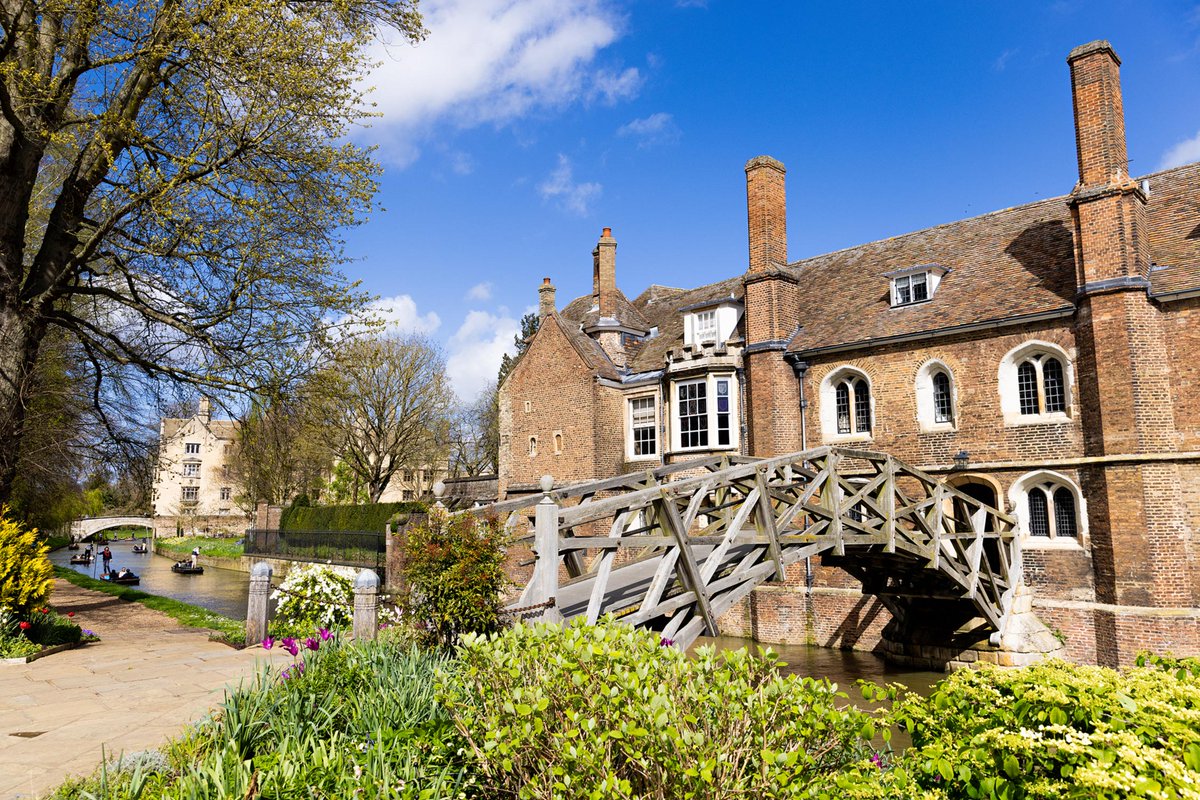
🏰Excited to be back @QueensCam on April 8th 2025
✒️Registration open in 2 weeks - watch this space!
🧪🔬Exciting sponsorship opportunities available🧠
💥New paper from the lab is out today in @NatureNeuro by phenom @laura_pritschet!! See LP's great summary below. This paper launches The Maternal Brain Project, an international effort to longitudinally map the brain & proteome across pregnancy, thanks to @bowers_wbhi@CZIscience
Excited to share new work from the @BABLab_UCLA and the Mind, Brain, Body team finding weakened links between cortisol and the oral microbiome, as well as altered bacterial abundance, in kids exposed to early caregiving-related adversity. (1/7)
https://t.co/dIa2WLlVKm
Many people DMed me this post, asking for my perspective. I disagree with the general take: mediation analyses from cross-sectional data should be blanket rejected. ALL mediation analyses require causal assumptions including experiments and longitudinal designs. So what to do?