Do not rush out of the slippery bathroom to pick your calls. Cultivate the habit of calling back when you are done instead. Airtime is far cheaper than brain surgery.
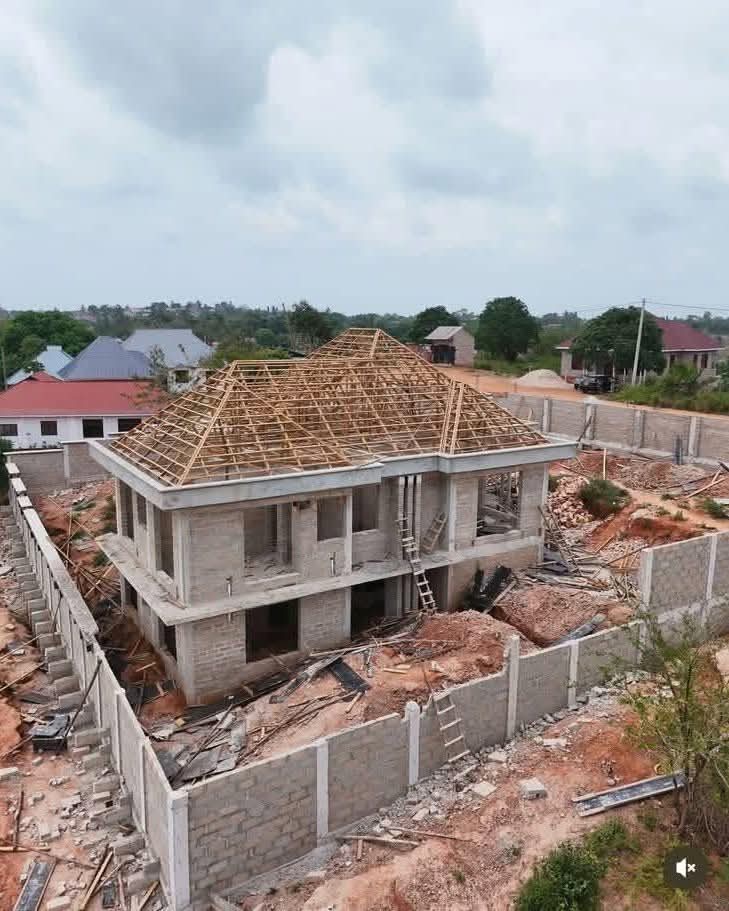
If You Don’t Have Enough Money, Don’t Rush to Build — Let Me Teach You What to Do
If you don’t have enough money to build, the worst thing you can do is to rush into construction out of pressure or comparison. Building is not a competition. It is a process, and when you understand the process, money stops controlling your decisions.
The first thing to do is to stop looking at finished buildings and start looking at stages. Every building you admire today was done step by step. Nobody woke up and completed a house overnight.
Start with land security. If you don’t yet have land, focus on buying and securing one first. Land ownership alone already puts you ahead. If you already have land, make sure the documents are safe and verified.
Next, invest in knowledge before blocks. Understanding basic building stages, costs, and common mistakes will save you more money than rushing to site. Many people lose money not because they are poor, but because they lack information.
Then plan what you can complete. If your money can only handle excavation and foundation, do only that and stop. A well-done foundation is progress, not failure. Never start what you can’t finish at that stage.
Budget in phases. Break your building into clear stages and attach realistic costs to each one. This gives you control and confidence, even with a small income.
Build with time, not pressure. As income comes in, you move to the next stage. That is how many landlords you see today started, quietly, patiently, and wisely.
Most importantly, involve the right professionals from the beginning. Proper guidance helps you avoid waste, rework, and regrets that cost more than the building itself.
If you build with sense, discipline, and knowledge, small money can still create big progress. Building is not about how fast you start, but how wisely you continue.
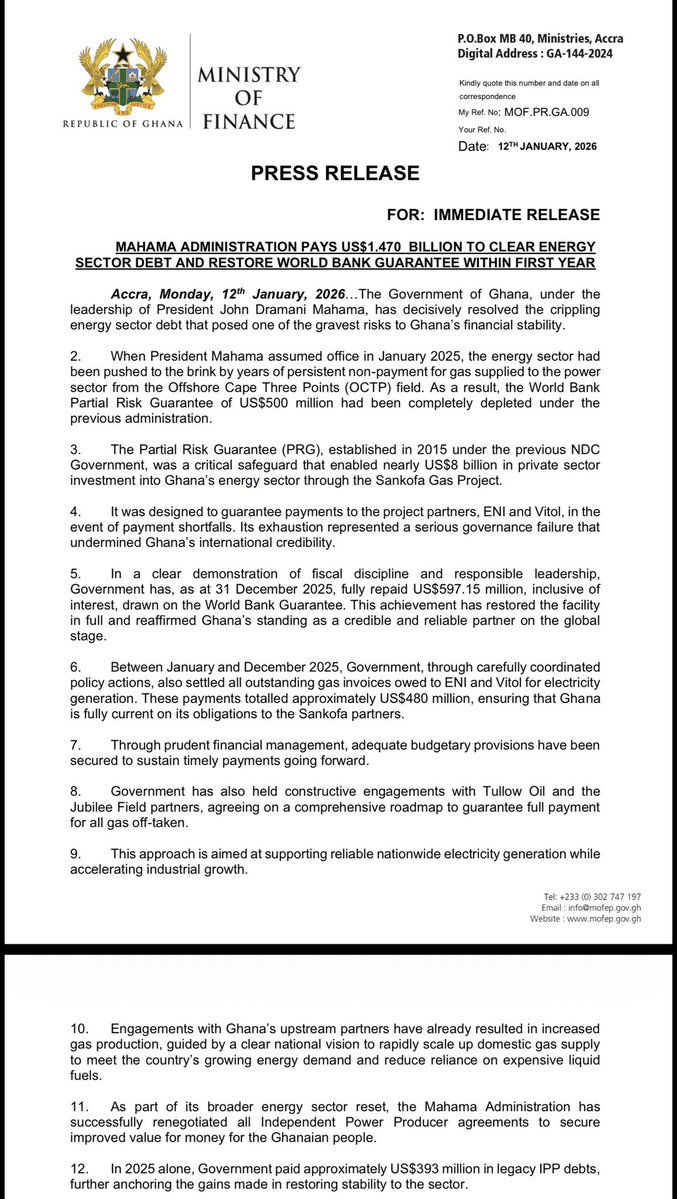
MAHAMA ADMINISTRATION PAYS US$1.470 BILLION TO CLEAR ENERGY SECTOR DEBT AND RESTORE WORLD BANK GUARANTEE WITHIN FIRST YEAR
1.The Government of Ghana, under the leadership of President John Dramani Mahama, has decisively resolved the crippling energy sector debt that posed one of the gravest risks to Ghana’s financial stability.
2.When President Mahama assumed office in January 2025, the energy sector had been pushed to the brink by years of persistent non-payment for gas supplied to the power sector from the Offshore Cape Three Points (OCTP) field. As a result, the World Bank Partial Risk Guarantee of US$500 million had been completely depleted under the previous administration.
3.The Partial Risk Guarantee (PRG), established in 2015 under the previous NDC Government, was a critical safeguard that enabled nearly US$8 billion in private sector investment into Ghana’s energy sector through the Sankofa Gas Project.
https://t.co/p6IbSCnMeY was designed to guarantee payments to the project partners, ENI and Vitol, in the event of payment shortfalls. Its exhaustion represented a serious governance failure that undermined Ghana’s international credibility.
https://t.co/ngaycdqwRo a clear demonstration of fiscal discipline and responsible leadership, Government has, as at 31 December 2025, fully repaid US$597.15 million, inclusive of interest, drawn on the World Bank Guarantee. This achievement has restored the facility in full and reaffirmed Ghana’s standing as a credible and reliable partner on the global stage.
6. Between January and December 2025, Government, through carefully coordinated policy actions, also settled all outstanding gas invoices owed to ENI and Vitol for electricity generation. These payments totalled approximately US$480 million, ensuring that Ghana is fully current on its obligations to the Sankofa partners.
7. Through prudent financial management, adequate budgetary provisions have been secured to sustain timely payments going forward.
8. Government has also held constructive engagements with Tullow Oil and the Jubilee Field partners, agreeing on a comprehensive roadmap to guarantee full payment for all gas off-taken.
9. This approach is aimed at supporting reliable nationwide electricity generation while accelerating industrial growth.
10. Engagements with Ghana’s upstream partners have already resulted in increased gas production, guided by a clear national vision to rapidly scale up domestic gas supply to meet the country’s growing energy demand and reduce reliance on expensive liquid fuels.
11. As part of its broader energy sector reset, the Mahama Administration has successfully renegotiated all Independent Power Producer agreements to secure improved value for money for the Ghanaian people.
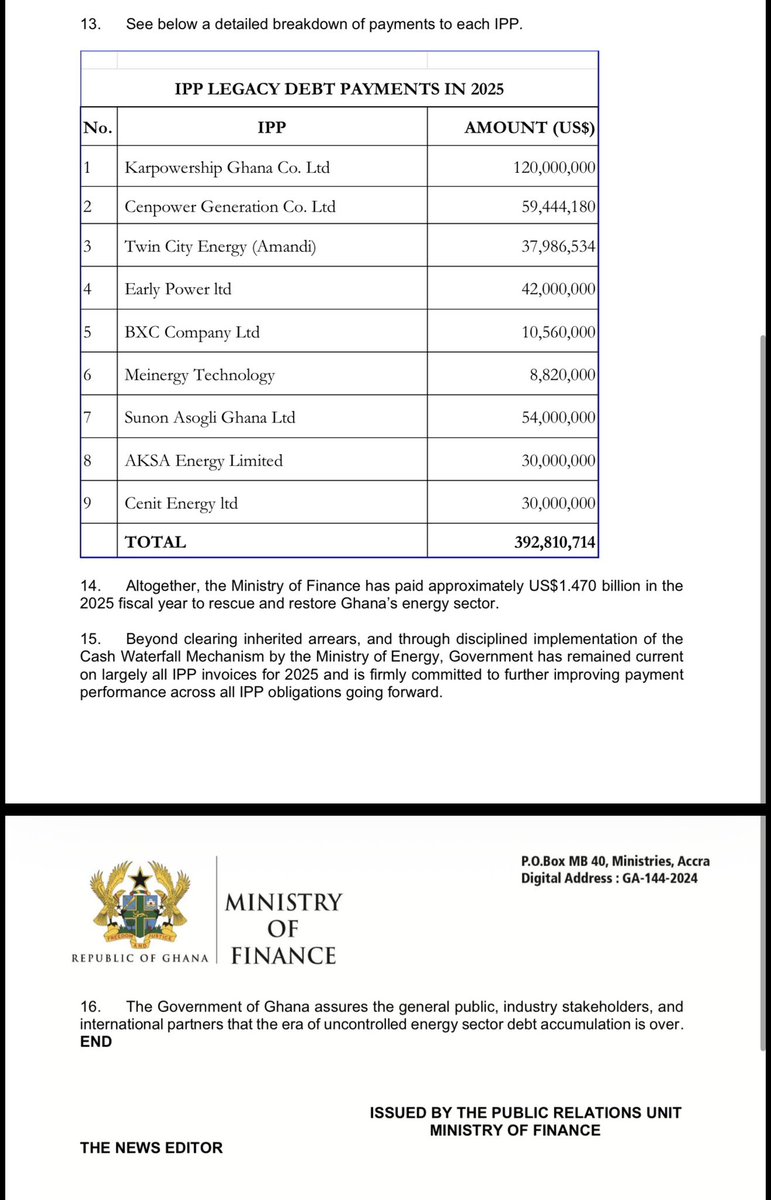
12. In 2025 alone, Government paid approximately US$393 million in legacy IPP debts, further anchoring the gains made in restoring stability to the sector.
13. See below a detailed breakdown of payments to each IPP.
• Karpowership Ghana Co. Ltd – US$120,000,000
• Cenpower Generation Co. Ltd – US$59,444,180
• Twin City Energy (Amandi) – US$37,986,534
• Early Power ltd – US$42,000,000
• BXC Company Ltd – US$10,560,000
• Meinergy Technology – US$8,820,000
• Sunon Asogli Ghana Ltd – US$54,000,000
• AKSA Energy Limited – US$30,000,000
• Cenit Energy ltd – US$30,000,000
TOTAL – US$392,810,714
14. Altogether, the Ministry of Finance has paid approximately US$1.470 billion in the 2025 fiscal year to rescue and restore Ghana’s energy sector.
@JDMahama Happy New Year fellow country men. All things shall work to your advantage this year. The pain, misery and hard times we saw last year, we shall see no more in Jesus name. This is your year of divine advantage