Listening to Gen (Rtd) Fred Ibingira recount how, during the insurgency of late 1990’s, commanders were required to sign letters accepting the ultimate consequences should they fail to stop the advance of the abacengezi, was a powerful reminder of what accountability looked like when Rwanda’s very survival was at stake.
The point is not the firing squad itself. It is that the responsibility to protect the nation was made unmistakably real.
This made me reflect on a question for all of us.
What is the equivalent, in our own fields, of that level of accountability? What consequence, standard or commitment is strong enough to keep us focused on the mission of rebuilding Rwanda and ensuring that our country never again falls into the hands of those who sought to destroy it?
Nations are not only protected by soldiers at the front. They are also protected every day by citizens, public servants, teachers, entrepreneurs, artists and leaders who refuse complacency and take their responsibilities seriously.
These were commanders who had already faced death on the battlefield. Yet what shook them was not simply the prospect of dying—it was the prospect of failing in the duty entrusted to them.
That distinction says something profound about Rwanda’s sense of leadership.
Hier à Paris, c'était l'heure de vérité dans la course pour le poste de Secrétaire général de la Francophonie. L'audition des quatre candidats, par la 47ème session extraordinaire de la Conférence ministérielle de la Francophonie (CMF), a permis à chaque postulant de présenter, pendant 20 minutes, son parcours et sa vision, et de répondre, pendant 35 minutes, aux questions des ministres. Ceci était une première dans l'histoire de la Francophonie, qui a été permise par la réforme de la gouvernance de l'OIF opérée par la Secrétaire générale actuelle, Louise Mushikiwabo.
49 États membres, dont 23 ministres, étaient représentés à la CMF, y compris les Ministres des Affaires étrangères des quatre États ayant présenté des candidats (trois - Mauritanie, Roumanie et Rwanda - en présentiel, et une - RDC- en visioconférence).
À l'issue des auditions, deux conclusions se sont immédiatement imposées:
1) Les présentations de tous les candidats ont été faites dans un esprit très constructif. En effet, les trois femmes africaines et le gentleman européen ont pu dérouler leur programme, sans confrontation aucune entre pays ou candidats. Les même personnes ont d'ailleurs pu échanger, de façon cordiale et courtoise, lors de la réception organisée par le Président cambodgien de la CMF;
2) Un contraste saisissant a quand-même sauté aux yeux de tous; entre d'une part, l'expérience, la compétence et la maîtrise des dossiers de Louise Mushikiwabo, et, d'autre part, celles de ses trois compétiteurs. Mais cela n'enlève rien à l'ambition sincère que tous les candidats ont pu exprimer pour notre organisation commune.
La prochaine étape sera le 20ème Sommet de la Francophonie, qui aura lieu à Phnom Penh au Cambodge les 15-16 Novembre 2026, au cours duquel les Chefs d'État et de Gouvernement vont, sur recommendation de leurs ministres, élire ou réélire le/la Secrétaire général(e) de la Francophonie.
We are pleased to announce that Israel’s Ministry of Health has decided to remove #Rwanda and #Kenya from the list of countries subject to temporary Ebola-related entry restrictions.
@UrugwiroVillage@RwandaHealth@Rwandamigration@RwandaGov
--------------------------------------
Twishimiye kumenyesha ko Minisiteri y’ubuzima ya Isiraheli yafashe icyemezo cyo kuvana #uRwanda na #Kenya ku rutonde rw’ibihugu bibujijwe kwinjira muri Isiraheli by’agateganyo kumpamvu za Ebola.
Exposing how the HRW report was shaped inside DRC government circles
✍🏻Long before Human Rights Watch (HRW) released its 78-page report on June 10, the narrative it advances appears to have already taken shape within Kinshasa’s political corridors.
✍🏻Concerns about the report begin with its timing and access. A month earlier, in mid-May 2026, the script was already in motion before the report’s publication. HRW’s Executive Director, Philippe Bolopion, and its senior researcher on the Great Lakes, Clémentine de Montjoye, travelled to Kinshasa to be briefed ahead of publication. Among those they met were Prime Minister Judith Suminwa and Deputy Prime Minister and Minister of Defense Guy Kabombo Muadiamvita.
Read:https://t.co/vCsnKL2tqp
The inside lies of HRW’s groundless DRC report
👉🏼The Human Rights Watch’s (HRW) June 10 report, “Death was everywhere,” deserves the scrutiny it is now receiving. The report presents itself as a major investigation into alleged abuses by AFC/M23 and the Rwanda Defence Force in eastern DRC. Yet its most explosive claims rest on a fragile foundation: HRW did not visit the alleged mass grave sites, did not inspect the alleged detention and training camps inside AFC/M23-controlled territory, and did not conduct forensic exhumations. Instead, it asks the public to accept a narrative built largely on anonymous testimony from former detainees.
👉🏼While the report has been publicly challenged by regional critics as selective, our investigation desk has identified several questionable assumptions, contradictions, and Kinshasa propaganda that raise serious questions about HRW’s findings.
👉🏼The Human Rights Watch’s “Death was everywhere” report fails the most basic tests of investigative integrity. By avoiding rebel-controlled territory, relying on unverified anonymous sources, ignoring regional linguistic and ethnic realities, and amplifying Kinshasa’s preferred narrative, HRW has produced a document that prioritizes advocacy over accuracy.
Read:https://t.co/9QBuxYhHjF
Washington’s blind spot in DRC
▶️Washington can no longer avoid a hard question: how long will the United States continue treating Congolese President Félix Tshisekedi as a fragile client to be managed, excused, and shielded from accountability while eastern DRC burns?
▶️For months, the language of American diplomacy has centered on enforcement, ceasefires, humanitarian access, and regional peace. On the ground, however, that language has too often translated into selective pressure. AFC/M23 is ordered to withdraw. Rwanda is sanctioned. But when Tshisekedi’s own armed coalition violates ceasefires, bombs populated areas, collaborates with the FDLR genocidal militia, and unleashes Wazalendo militias on civilians, Washington suddenly discovers the convenience of silence.
▶️Every broken ceasefire weakens trust in diplomacy. Every withdrawal followed by abuses discourages compromise. And, every unchecked violation entrenches impunity. If Washington continues to shield Kinshasa from accountability, eastern DRC’s crisis may not end in negotiation, but in rupture; driven by a population exhausted by war, hunger, disease, and militia rule, and increasingly turning its anger toward the center of power.
Read more: https://t.co/ScqrQntf3E
On June 2, 1994, RPA troops ended this horror by rescuing more than 10,000 Tutsi who had been stranded at Kabgayi.
During a burial ceremony for genocide victims in Ngoma, Huye District, Afande Ibingira explained that RPA forces could have reached Butare earlier. After the fall of Nyanza on May 30, 1994, their next destination was supposed to be Butare. However, they received orders from RPA Commander Maj. Gen. Paul Kagame to immediately change direction and rescue the Tutsi at Kabgayi, who were facing imminent mass extermination. After only three days of fighting, RPA troops arrived in Kabgayi.
This French television report was filmed towards the end of May 1994. It is possible that these journalists helped alert the world to the situation unfolding there.
To speak with journalists, Augustin had to remain seated while other Tutsi refugees formed a circle around him to shield him from nearby soldiers. He urged the journalists to alert the international community to their plight.
Sister Bernadette, herself a Tutsi, said that she had moved beyond fear because the refugees desperately needed assistance.
The refugees were hosted at several locations in Kabgayi, including Primary School A, Primary School B, St. Joseph Secondary School, Petit Séminaire St. Léon, and ESSI Kabgayi.
This footage was filmed inside a place known as the "CND" (Brothers' Covenant), where Tutsi men organized resistance against repeated Interahamwe assaults. The area was heavily attacked night after night.
The CND served as a refuge for men and boys, while women and children were accommodated in other shelters throughout Kabgayi.
Kabgayi served as the military hospital headquarters of the FAR, while President Habyarimana's Presidential Guard was based at Murambi.
Between April and June 2, 1994, killings were carried out selectively. Mayors regularly arrived and took Tutsi from their respective communes. Thousands were selected on a daily basis and transported from Ngororero to the Nyabarongo River in ONATRACOM buses, where they were killed.
I hope that Augustin and Sister Bernadette survived and are still alive today.
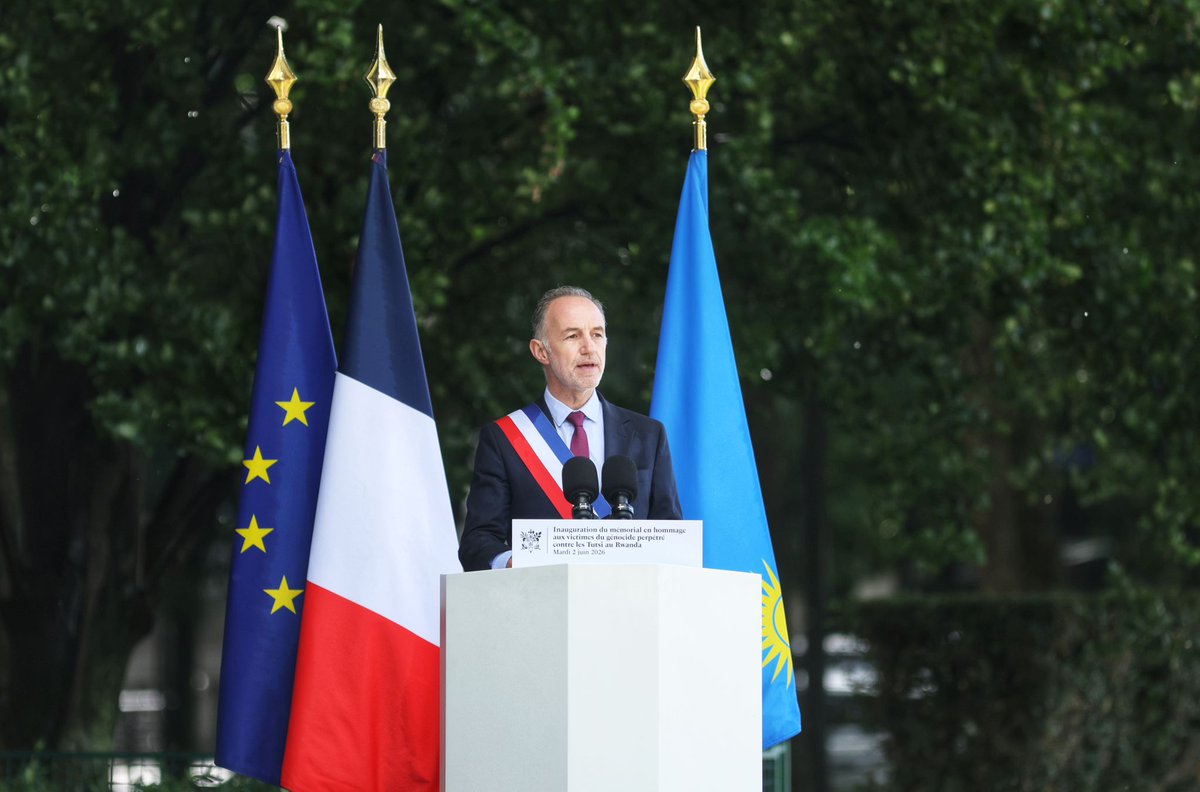
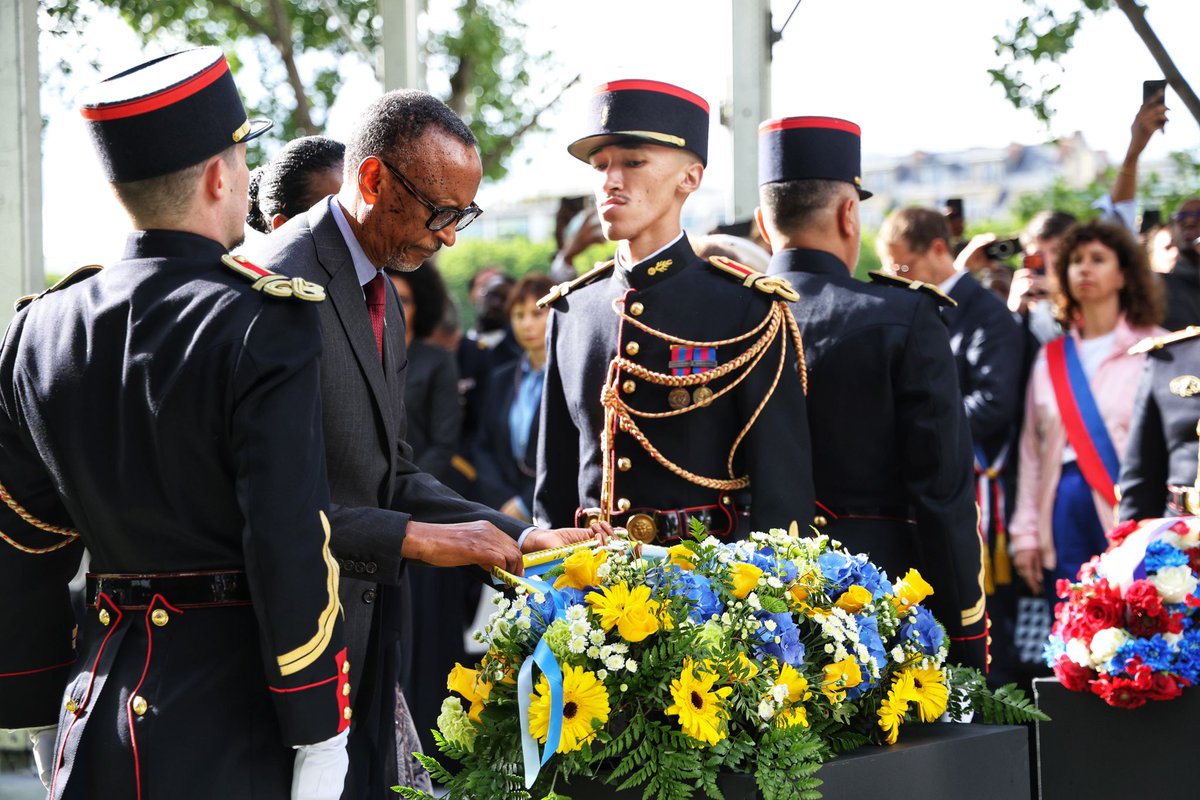
Ce mémorial en hommage aux victimes du génocide perpétré contre les Tutsi au Rwanda est un lieu vivant. Il cultive la mémoire et projette vers l'avenir la relation entre le Rwanda et la France.
À nous de transmettre avec rigueur, dignité, vérité et justice.
Twibuke Twiyubaka.
Aujourd'hui, nous inaugurons un monument national à la mémoire des victimes du Génocide perpétré contre les Tutsi au Rwanda.
« Ici, comme une archive, reposent les voix et les mots, les souvenirs et les expériences, les sentiments et les espoirs des victimes et des survivants. »
📸 Guillaume Bontemps - Ville de Paris
@dzaneza@theBAL@PaulKagame “...,” says the daughter of fugitive Marcel Sebatware, whose entire understanding of Rwanda come from watching television and YouTube yet portrays herself an expert on Rwanda without ever really knowing Rwanda
@DavidHimbara@rwanda The attempt to paint Muganga as pro-Rwanda so that Ugandans question his ability to perform in his role, while simultaneously pushing him to be anti-Rwanda to prove his loyalty to Uganda, is insane.
@DavidHimbara@rwanda The attempt to paint Muganga as pro-Rwanda so that Ugandans question his ability to perform in his role, while simultaneously pushing him to be anti-Rwanda to prove his loyalty to Uganda, is insane.
One of my greatest regrets from my time as US AsstSecState for Africa was advocating for US to support Tshisekedi as winner of Congo's 2018 election. I thought he would really be different and advance the Congolese people's interests. How wrong I was!
https://t.co/4WH0S7CwZ1
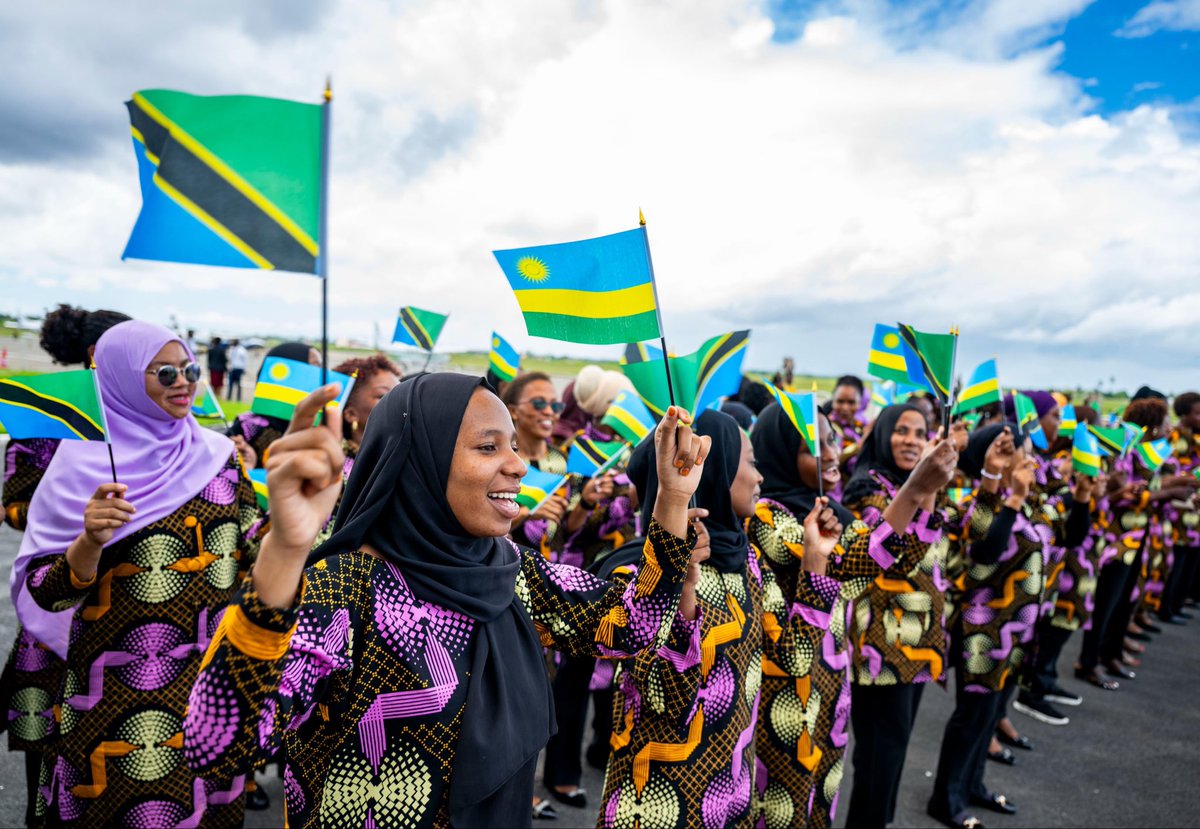
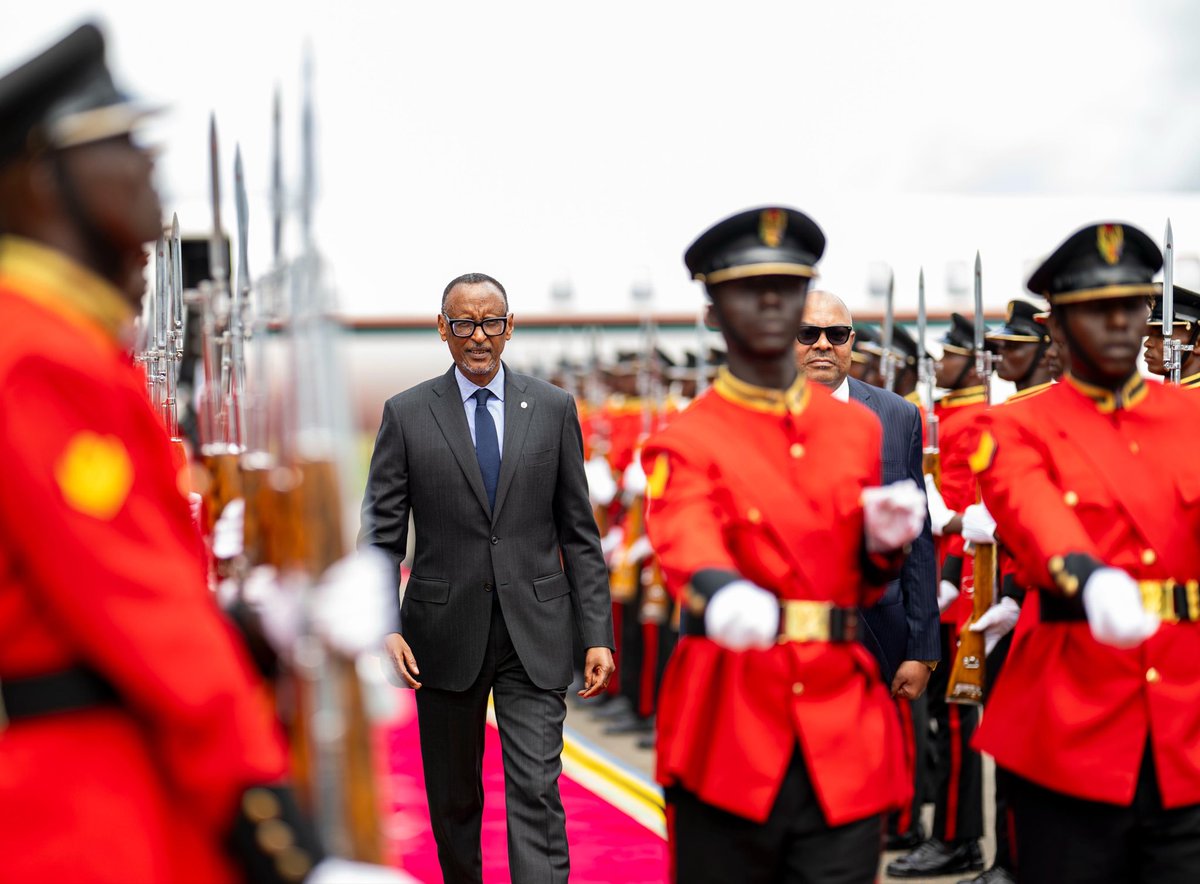
President Kagame has arrived in Dar es Salaam, Tanzania for a one-day working visit. President Kagame and his host President @SuluhuSamia of the United Republic of Tanzania are now having tête-a-tête meeting which will be followed by a joint press conference.
It's about time for some attention to the suffering of Congo's Tutsis. All focus seems to be on what Rwanda is doing wrong while the DRC's Govt gets a pass. Justice for Congo's Tutsis is a foundational problem which a long-term solution must address!
https://t.co/4h5OMOC9Tf
Prof .PLO Lumumba commends Rwanda for its remarkable recovery and progress under the leadership of Paul Kagame, highlighting Kigali as a shining example of order, modern infrastructure, and technological advancement. He concludes with a powerful message of resilience and optimism, affirming that denialism and revisionism will not prevail, and that a conscious and united African spirit will stand firm against the recurrence of such atrocities.
@RwandaInKenya
#SymposiumOnGenocideNairobi
#Kwibuka32
The Banyamulenge gather in Washington correctly calling out dictator Tshisekedi and the genocidal FDLR forces for carrying out another genocide in Africa's great lakes. I call on Presidents Tshisekedi and Ndayishimiye to immediately stop all violence and Implement the Washington Peace Accord. The problems in Congo require active enactment by the Congo- not blaming President Trump.