Read my op-ed in @thehill on why the fight to protect Medicare Negotiation isn't over & why Congress mustn't give in to Pharma @P4AD_ https://t.co/LoFZT7BhWn
.@P4AD_ CEO @MerithBasey just published in @thehill - and if you care about Medicare negotiation, read it.
After SCOTUS shut the door on pharma's legal challenge, Merith breaks down why the fight isn't over & what Congress is being asked to do next. https://t.co/AnkfCD72QS
It's time we rein in Big Pharma's abuse of the patent system.
That’s why my colleagues should join my bill with @SenAmyKlobuchar and @SenHawleyPress so we can get more affordable generics on the market and save patients money at the pharmacy counter.
Pharma patent abuse is getting the national attention it deserves. @EpochTimes just published a deep dive on how drug companies stack overlapping patents to keep prices high - featuring P4AD advocates living with the consequences every day.
Read it here: https://t.co/R3tenqdDOc
If patents always reflected "real, distinct innovation", we wouldn’t see drugs covered by dozens of overlapping patents years after launch. That delays competition and keeps prices high. Innovation matters - but so does access. ETHIC targets that abuse.
The ETHIC Act rests on a myth. Patents are granted for real, distinct innovations. Weakening them won't increase access — it will discourage the innovation that produces new drugs and future generics.
"Voters across the political spectrum overwhelmingly consider pharmaceutical industry practices to be a major factor driving the price of prescription drugs, rather than funding innovation."
You can side with Big Pharma, or you can side with patients and @SallyPipes and @pacificresearch continue to choose to support patent abuse and drug company greed over patient access. Get the facts about sham patient groups like PRI: https://t.co/sduOmEUftM
Fearmongering won't change the facts. PERA corrects years of judicial confusion by restoring clear patent eligibility rules for real inventions -- while preserving strict novelty and non-obviousness requirements.
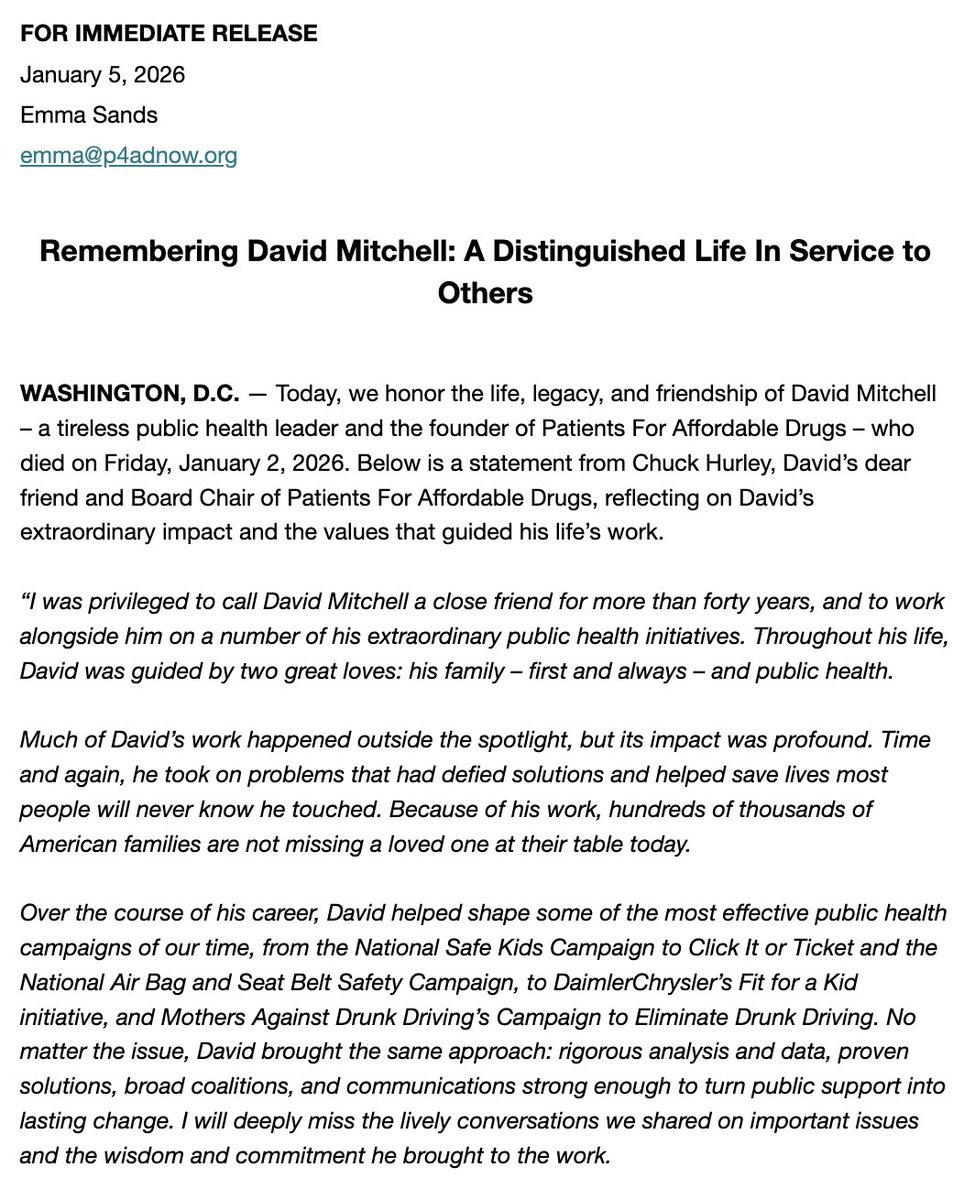
I’m deeply grateful for every minute I got to spend with David.
I learned more from him than I can put into words. He was precise and thoughtful, and a world-class storyteller who cared deeply about getting things right and taking on the hard issues. He will be missed every day.
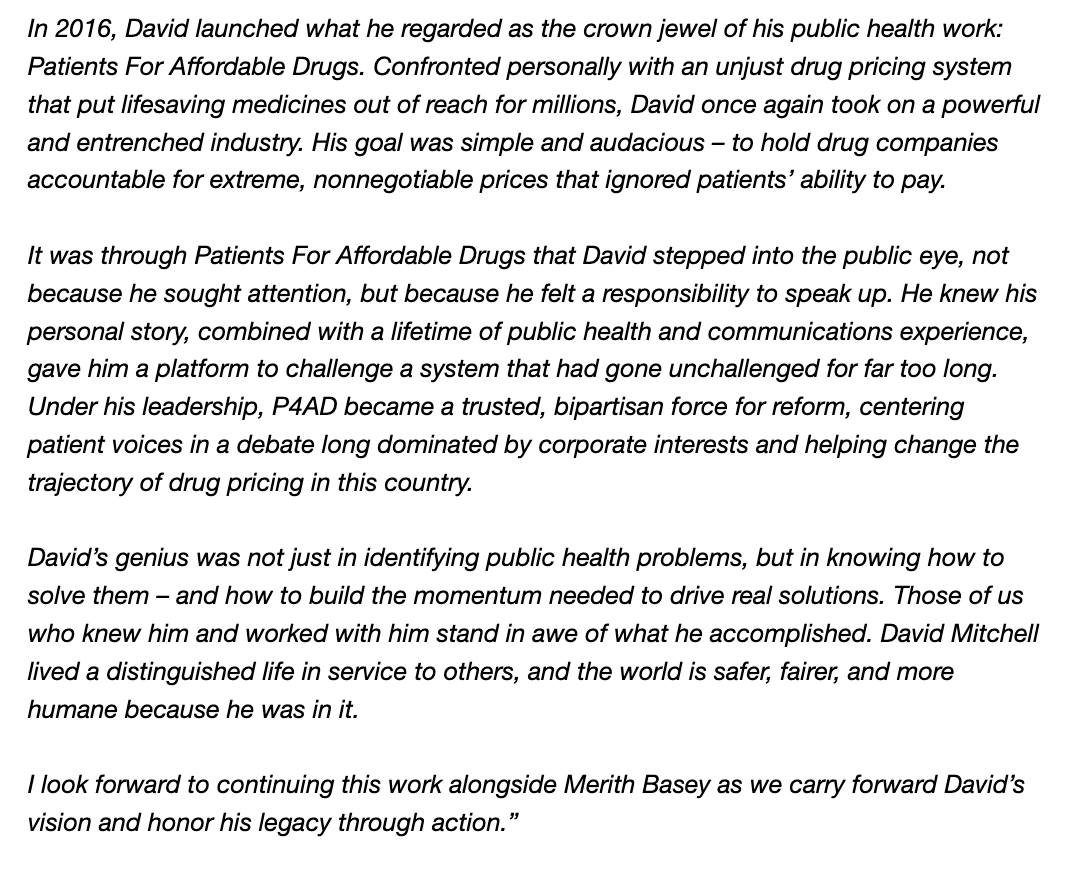
A statement from Chuck Hurley, Board Chair of Patients For Affordable Drugs and David’s close friend of more than 40 years, honoring David’s life and legacy following his passing on Friday.
https://t.co/YoCx5r6W5W
A statement from Chuck Hurley, Board Chair of Patients For Affordable Drugs and David’s close friend of more than 40 years, honoring David’s life and legacy following his passing on Friday.
https://t.co/YoCx5r6W5W
NEW: "Tariffs would disrupt international supply chains, forcing companies to decide whether to pass on increased costs to patients and exacerbate existing drug shortages"
https://t.co/yQ5MCh1Njj
We agree PBMs drive up costs. But that's not the whole story. Drug companies abuse the patent system to block generics & biosimilars- often filing 100+ patents on one drug- keeping prices high for patients. We need to fix both to truly lower drug prices. https://t.co/DwV49GQ3gu
Blaming patents for high drug prices is a convenient distraction. The real anti-competitive force? PBMs -- opaque middlemen that restrict access and distort costs. As the @FTC and @TheJusticeDept heard last week, they’re the ones distorting competition.
Don't be deceived: OPRHAN Cures is a harmful $5 billion giveaway to pharma & will increase drug prices for patients. Tell your Senator to vote against its inclusion in the reconciliation bill. https://t.co/QBG5sxSuEg