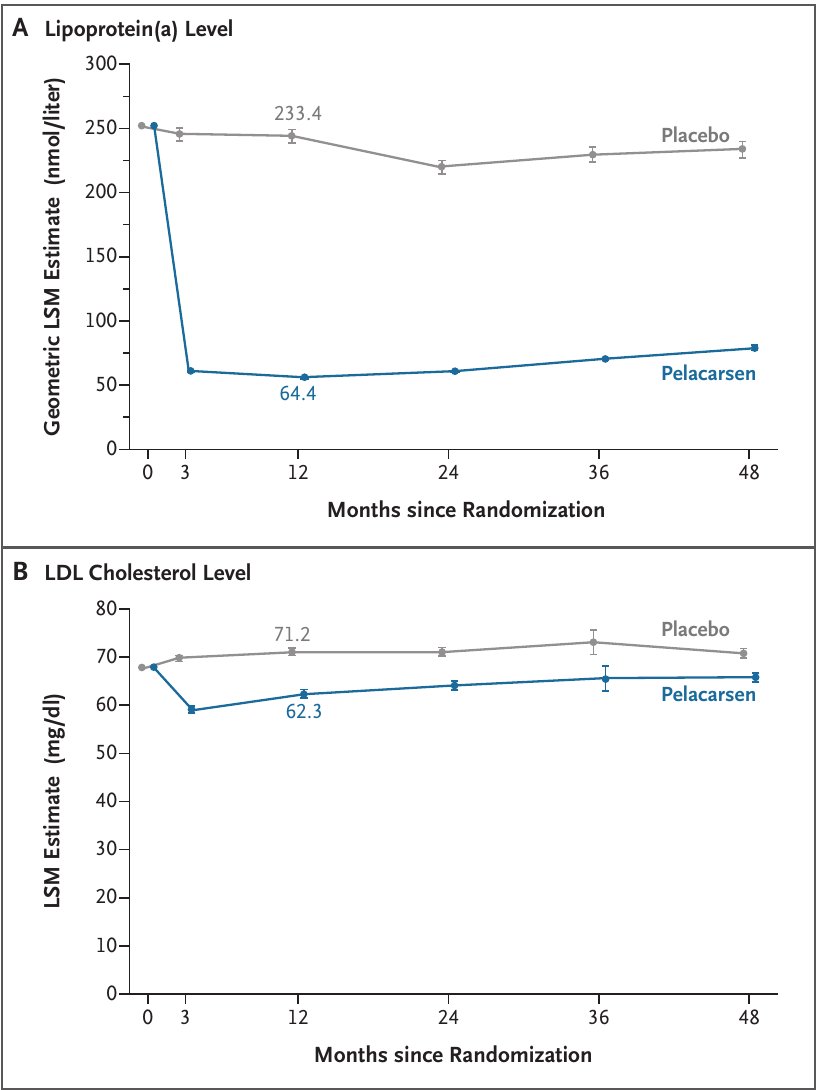
Pelacarsen cut Lp(a) by 78%, but major cardiovascular events didn't budge (HR 1.02). A dramatic biomarker change without a detectable event benefit. https://t.co/JekDkfKbtQ
34% of U.S. women below age 50 have iron deficiency under new hematology guidelines, which raise the threshold of ferritin to 30, 50, or 100 ng/mL depending on circumstances:
An LDL of 70 mg/dL would already put you around the 10th percentile.
Yet a new study shows cutting cholesterol even further, to <55 mg/dL, reduced cardiovascular events by a third.
IMO, surprising that reductions at the low end still seem to yield such large benefits. I'd expect things to saturate much earlier.
iPhone Duo launches today. To test Empirical Health without hardware, we built a full 3D simulator with inverse camera projection, frosted-glass blur, hinge-anchored layouts, and path-traced lighting.
Yes!
The earlier you start getting cholesterol down, the longer you'll live.
One way we know this is by comparing people who have low LDL for genetic reasons to people in trials: people who have low LDL for life basically have consistent treatment for longer, and live longer.
Big labs don’t have a monopoly on AI research.
More than 20 YC startups have published research recently at top conferences like NeurIPS, ICLR, and ICML.
https://t.co/Tg0L8VA0qP
Right now only 1% of eligible patients use injectable PCSK9 inhibitors, but that's going to change since the FDA just approved the first PCSK9 pill, enlicitide.
Cuts LDL cholesterol/ApoB by 50-60% AND reduces Lp(a) by 28%:
@PardonMyMess@afshineemrani@grok ApoB: more accurate cholesterol
Lp(a): strongest hereditary risk factor for heart disease
hs-CRP: inflammation, an independent risk factor for heart disease
You can get this from @EmpiricalHLTH and other providers.
This same dynamic is playing out in AI for health right now. Startups that price on outcomes (VBC, Medicare ACCESS), rather than fee for service, give themselves the incentive to invest in software that compounds.