In 1979, a young French physicist sat at an early computer and calculated what a black hole might look like. Forty years later, in 2019, humanity finally saw one for real.
Then, in 2022, we captured the first image of Sagittarius A*—the supermassive black hole at the heart of our own galaxy. In 2024, scientists went further still, revealing it in polarized light and exposing the powerful, swirling magnetic fields that wrap around its event horizon.
What was once pure mathematics is now something we can point a telescope at. And we’re only just starting to understand the universe’s most extreme objects.
NASA sometimes gets some serious flak for being an expensive organization.
However, there are major differences between NASA and for example a private firm making aerospace products.
NASA being publically funded, is obligated to make (almost) everything they research public domain available, and because everyone thinks "rockets" they dont know that NASA has been a world leading centre for both gear and rolling bearing research for over fifty years.
NASA has done cutting edge research into both these topics at NASA Lewis Research Center and the Glenn Research centre.
Why do rockets care about gears and bearings ?
Well, there are different types of rocket motors, and only solid fuel rockets are essentially devoid of moving parts, many of the rocket engines used are liquid fuel rockets, and that means ... PUMPS, which are full of gears and bearings (the Space Shuttle engines and Saturn V engines finally moved to direct drive, eliminating the gear reduction). The Saturn 1B (pictured) has a 5000 hp, 33,000rpm gearbox in its turbopump which had to be very lightweight.
A huge amount of the work done at these centres was overseen by the godfather of gears and bearings. Which is now centred things like rotorcraft applications.
Erwin Zaretsky, if you want to know how to design bearings and look at gear tribology, if you read everything Zaretsky has published on them, there is almost nothing you wont know how to do.
The bulk of this research is only freely available because NASA is publically funded.
So yes, NASA has spent a lot of money over the years, but unlike with most private firms, a large proportion of the intellectual results are fed back into the global human hive engineering mind.
Here is a link to one of my favourite reads, the classis "Liquid Rocket Engine Turbopump Gears." which is as good a place as any to start reading about gears in an exciting application.
https://t.co/q9UNvn2fZa
Erwin is not a young man anymore, but is still around and its a jolly good thing he worked for NASA because we get to read all his stuff for free !
My university theis used free NASA papers from these research centres as its primary source for data, although one had some typos in some of the equations, so I wrote to NASA, and they fixed it !
If thats not good value for humanity, what is ?
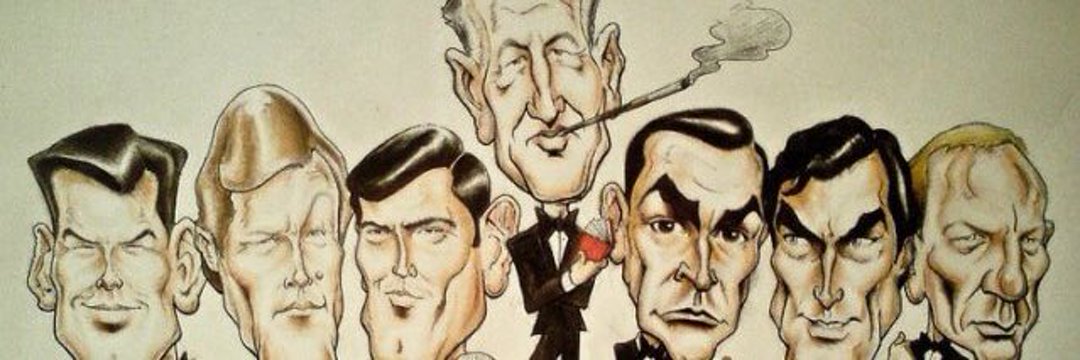
GoldenEye is not merely a masterpiece; it is a model for how future James Bond films ought to be made. It establishes its characters against a history already in place, declining to pause for elaborate origin stories or flashbacks.
The origin story, once so well told on the silver screen, has become a curse upon modern cinema, and it is one that I feel began with comic-book superhero films and their near-constant reboots.
Let us begin with the way GoldenEye perfectly introduces new faces with a sense of prior existence already intact.
Valentin Zukovsky, played by the late Robbie Coltrane, arrives with a limp, a grudge, and a precise recollection of the evening James Bond shot him. A few lines of dialogue and a gesture with a gun are all it takes; the history is simply there. We understand the nature of their relationship at once: former Cold War adversaries, mutually wary, still nursing grievances, yet grudgingly willing to do business. The audience need not be told the full story of their earlier encounter in a flashback.
Alec Trevelyan, portrayed by Sean Bean, is handled in much the same way. First introduced in the pre-title sequence as 006, he reappears as the villain in the film's plot twist. The revelation that his parents were Lienz Cossacks gives his grievance its weight, conveyed through conversation rather than exposition. Even Bond's parents are mentioned only once in dialogue that highlights the contrast between the two orphans:
"We're both orphans, James. But where your parents had the luxury of dying in a climbing accident, mine survived the British betrayal and Stalin's execution squads. My father couldn't let himself or my mother live with the shame. MI6 figured I was too young to remember. And in one of life's little ironies, the son went to work for the government whose betrayal caused the father to kill himself and his wife."
That is all. No flashback, no explanation of the Aiguilles Rouges, no flashback sequence of the formative traumas for both Bond and Trevelyan. The detail serves only to sharpen the contrast between the two men and lend weight to Trevelyan's grievance. The audience is trusted to accept that Bond has a past and that it has shaped him without having to watch it unfold in an origin story.
GoldenEye understands that a well-placed line, delivered by an actor who understands the character, can accomplish more than twenty minutes of retrospective narrative. The film simply gets on with the matter at hand; its characters arrive already formed.
That is precisely how Pierce Brosnan's Bond arrives too: fully formed as Agent 007, a licensed-to-kill spy, and Brosnan is excellent in the role, he plays it with an ease and lightness that never descends into mere pastiche. There is charm in abundance, but there is also a discernible brutal edge; one senses the cold professional beneath the smile. His exchanges with Dame Judi Dench's M are particularly well acted. The new M is introduced without ceremony: she is the new authority of the post-Cold War world, while Bond remains the same secret agent, unchanged by the times.
We do not have to be reintroduced to Bond after the six years hiatus between Licence to Kill and GoldenEye; we already know who Bond is.
Then there is Samantha Bond's portrayal of Moneypenny. Like Lois Maxwell opposite both Sean Connery and Roger Moore, she shares wonderful chemistry with Brosnan's Bond and an evident delight in their banter. She holds her own with considerable style; one never feels she is merely imitating Maxwell. She makes the role her own while remaining unmistakably Moneypenny.
The film is impeccably cast, and every actor delivers. The result is a world that feels larger than the immediate plot, populated by characters who seem to have existed long before the cameras arrived. It was a splendid start to Brosnan's tenure.
#GoldenEye #PierceBrosnan #SeanBean #JamesBond
Snímek složený z 578 jednotlivých 8sekundových expozic pořídil 📷Brendan Larsen 9. září 2026 mezi 20:18 a 22:13 místního času nedaleko novozélandské sopky Mt. Taranaki. Na snímku je 14450 stop po přibližně 1400 jednotlivých družicích.
photo that can never be taken again. The Space Shuttle riding atop NASA's modified 747 Shuttle Carrier Aircraft, while the Concorde slices across the sky in the background. (1983)
May 5, 1945. Hitler has been dead for five days. The war in Europe is almost over.
In a castle in the Austrian Alps, American soldiers, German soldiers, and a group of elderly French prisoners grab rifles and get ready to fight the SS.
Together.
The castle was called Schloss Itter. The Nazis had turned it into a prison for very important people. Not ordinary prisoners. Trophies.
Inside were two former prime ministers of France, Paul Reynaud and Édouard Daladier. Two of France's top generals, Maxime Weygand and Maurice Gamelin. A famous tennis champion, Jean Borotra. And the older sister of Charles de Gaulle.
As the Reich collapsed in early May, the SS guards panicked and ran. The prisoners suddenly found themselves in charge of a castle, with weapons left behind, and a serious problem.
Waffen-SS units were still roaming the area. Fanatics who would gladly kill them all.
They needed help. Fast.
One of the castle's prisoners, a Yugoslav handyman, slipped out on a bicycle to find the Americans. Separately, a German army officer named Major Josef Gangl also went looking for them.
Gangl was a Wehrmacht officer who had turned against the Nazis and was secretly working with the Austrian resistance. He wanted to protect the prisoners too.
He found an American tank commander named Captain Jack Lee.
Lee was 27, tough, cigar chewing, and willing to do something insane. With a single Sherman tank and a handful of American soldiers, he drove up into the mountains alongside Gangl and a few of his German troops.
They reached the castle on May 4.
The French prisoners were not exactly thrilled to see a tiny rescue force. They had expected an army. Instead they got a few Americans, a few Germans, and one tank.
The next morning, the SS attacked.
Somewhere between 100 and 150 Waffen-SS troops hit the castle with machine guns, mortars, and anti-tank weapons. The defenders fought back from the walls and windows. Americans and Germans side by side.
The French prisoners refused to hide. Some of them, including Reynaud, picked up weapons and joined in.
The Sherman tank was knocked out. The defenders were running out of ammunition. It looked like the castle would fall.
Then Jean Borotra, the tennis star, volunteered to make a run for it. He jumped the wall, slipped past the SS, and sprinted through the countryside to find American reinforcements.
He found them. And he insisted on coming back with them to finish the fight.
During the battle, Major Gangl saw Paul Reynaud exposed to gunfire and moved to pull him to safety. A sniper shot Gangl dead.
He had survived the whole war as a German soldier, only to die defending French prisoners from the SS in its final days.
That afternoon, the American relief force arrived and broke the attack. The SS were scattered and captured. The prisoners were saved.
Jack Lee received the Distinguished Service Cross. In Austria, Josef Gangl is remembered as a hero, and a street is named after him.
It is believed to be the only battle of the war where American and German soldiers fought together on the same side.
In 1986, a five-year-old boy in India fell asleep on a railway station bench while waiting for his older brother. His brother never returned.
The boy, thinking his brother might be inside, climbed into an empty train compartment to look for him. There, he fell asleep again. When he woke up, the doors were locked and the train was moving. The train didn’t stop for nearly two days. When it finally did, he had reached Kolkata — about 1,500 kilometers away from his home. He was so young that he didn’t know his full name, couldn’t read, and couldn’t even tell the name of his village.
For several weeks, he wandered alone on the streets. He slept under railway station benches and survived on whatever little food he could find. Eventually, he was taken to an orphanage and declared a “missing child.” No one could figure out where he had come from
After some time, a couple from Tasmania, Australia, adopted him. They gave him a loving home, and he began a new life. His name became Saroo Brierley, and he grew up on the other side of the world.
But he never forgot his past. He had some faint memories — a bridge near a railway station, a water tower, the layout of his neighborhood, and the faces of his family.
When he was about 25 years old, he learned about Google Earth. He estimated how far a train could have traveled and created a radius around Kolkata, then began searching towns along railway lines in that area. For weeks, he spent around 30 hours each week studying satellite images, trying to find something familiar. Even his Australian family didn’t know what he was doing — they thought he was just browsing the internet.
Finally, in 2011, after years of effort, he found the place — a water tower, a bridge, and a ditch near the station. The location was Ganesh Talai area in the city of Khandwa, Madhya Pradesh. He zoomed in and recognized the streets where he had once walked as a child.
He came to India and, wandering through the streets of that town, eventually reached his home. The door was closed, and he feared that everything might be lost. Then some people came out and took him to a woman.
She was his mother. She had never stopped searching for her son for 25 years. After all those years, they stood face to face again
He later learned that the brother he had been waiting for that night had died after being hit by a train. His mother had searched for both her sons for 25 years — she learned the truth about one, but never lost hope for the other.
His story was later written in the book A Long Way Home, and it was adapted into the film Lion, which received six Oscar nominations
Nansi Williams - the heroic dinner lady who died saving the lives of schoolchildren during the Aberfan disaster...
On October 21, 1966, a Welsh school dinner lady Nansi Williams threw herself over five children as a wall of coal waste crashed into their school. All five survived. She did not.
That morning, children at Pantglas Junior School in Aberfan, Wales, were preparing for their final day before the half-term holiday. Nansi, a local woman who worked in the school dining hall, was collecting dinner money from pupils.
Above the village stood enormous mountains of waste from the nearby coal mine. For years, residents had lived beneath them, despite concerns about their stability.
At approximately 9:15 a.m., one of those mountains collapsed.
Around 150,000 tonnes of coal waste and water surged down the hillside, smashing into houses and engulfing the school.
Inside, Nansi saw the danger approaching.
She ordered five children to get down, then threw herself over them, using her own body as a shield.
The impact killed her.
One of the children, Karen Thomas, later recalled how Nansi had jumped on top of them as glass shattered and the wall collapsed. The children initially did not understand that she was dead. They tried pulling her hair to wake her.
When rescuers recovered Nansi's body, accounts say she was still clutching a pound note collected for school dinners.
The Aberfan disaster killed 144 people, including 116 children.
An official inquiry later placed responsibility squarely on the National Coal Board. The catastrophe had been preventable.
Nansi had no children of her own. In her final moments, she saved five who belonged to other families.
For decades, her extraordinary sacrifice received little recognition beyond the community that remembered her.
Now, approaching the disaster's 60th anniversary in October 2026, a campaign to honor her has succeeded. A commemorative Purple Plaque is scheduled to be unveiled in Aberfan on October 30.
Five children went home because Nansi Williams never did.
#archaeohistories
@multiplanet1 I doubt this engineer, if he exists, ever said the following, as this is a line of text clearly written by AI and is not the way 65yr old engineers speak:
"I didn't get smarter when I went to SpaceX. I got faster. The intelligence was always there. The system was in the way."
@multiplanet1 I doubt this engineer, if he exists, ever said the following, as this is a line of text clearly written by AI and is not the way 65yr old engineers speak:
"I didn't get smarter when I went to SpaceX. I got faster. The intelligence was always there. The system was in the way."
In 1940, British fighter pilots began noticing something deeply frightening about their aircraft.
Push a Spitfire or Hurricane into a sharp dive, and the engine could suddenly splutter, lose its strength, or stop altogether.
German pilots already understood the advantage. Their fuel-injected Messerschmitt Bf 109s could dive aggressively without suffering the same problem. British Merlin engines relied on carburetors, and when the aircraft experienced negative G forces, fuel rushed through the carburetor in the wrong way, leaving the engine without the mixture it needed.
In a fight for your life, even a few seconds could mean everything.
Then Beatrice Shilling stepped in.
Shilling was an aeronautical engineer at the Royal Aircraft Establishment, but she was far from the quiet, conventional engineer people might have expected. Before the war, she raced motorcycles at Brooklands, one of Britain’s most dangerous racing circuits. She became one of the few women to earn its prestigious Gold Star after completing a lap at more than 100 mph.
She knew machines.
Rather than attempting to rebuild the entire carburetor, Shilling found a remarkably simple answer: a tiny metal restrictor placed in the fuel system to control the sudden rush of fuel during negative-G maneuvers.
From 1941 onward, Shilling and a small team traveled from RAF station to RAF station, fitting the modification directly onto fighter aircraft.
The pilots soon gave the little device a nickname that would follow it into history.
“Miss Shilling’s orifice.”
It was not a perfect solution. Later carburetor technology eventually dealt with the problem more completely.
But that little piece of metal gave RAF pilots something precious when they needed it most: an engine that was far less likely to betray them during combat, without having to wait for an entirely new engine design.
And perhaps the best part of the story is the woman behind it.
Before Beatrice Shilling helped keep British fighters alive in the sky, she had already been spending her weekends pushing motorcycle engines beyond 100 miles per hour on a dangerous racing circuit.
When war placed a dangerous engine problem in front of her, she did what she knew best.
She understood the machine.
🚀✈️ Malgré les années et un concept abandonné pour les vols habités, il reste quelque chose de fascinant et d’unique dans la navette spatiale. Une véritable icône de l’ère spatiale qui semble encore appartenir au futur. Ressentez-vous la même chose ?
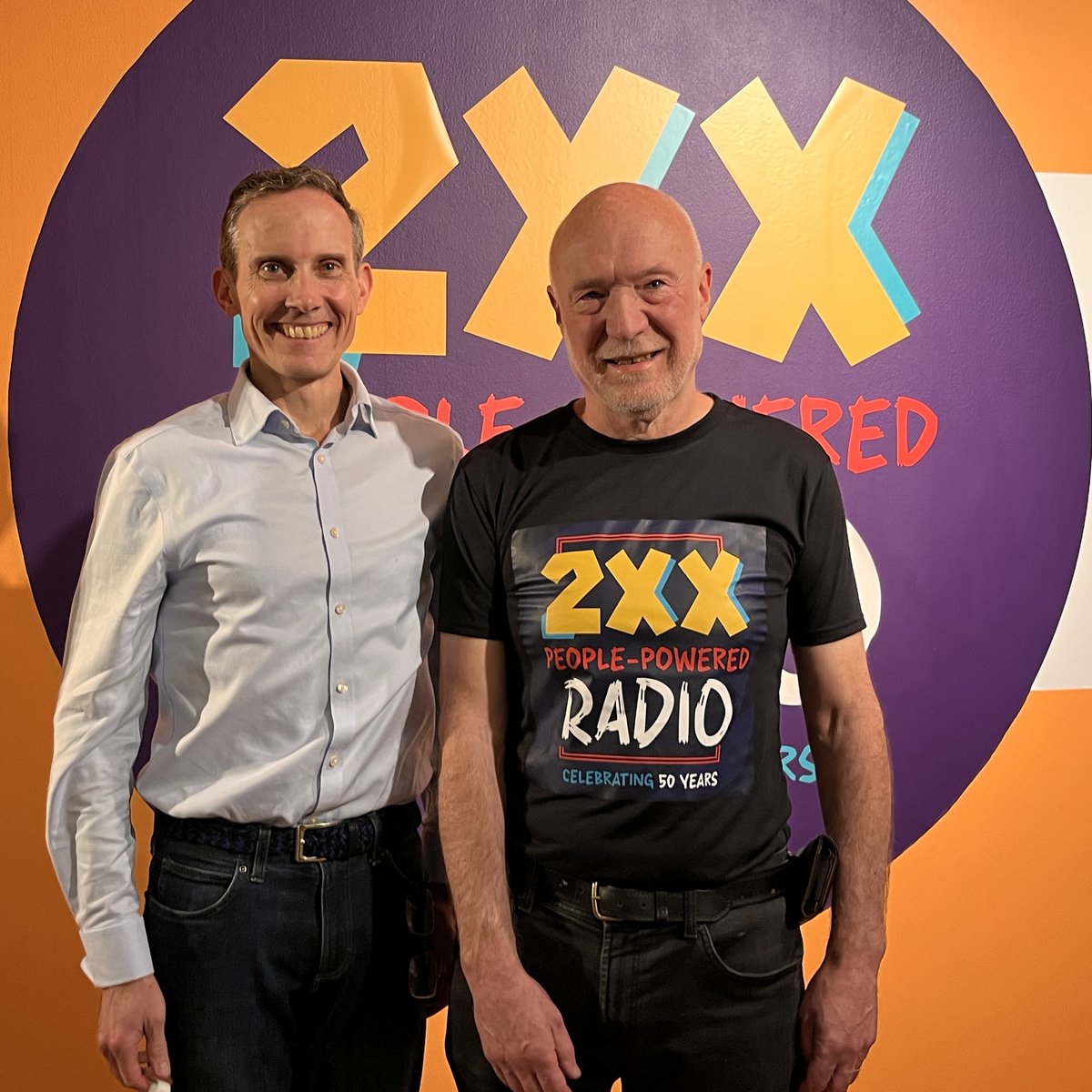
Fifty years of people-powered radio. Great to join longtime broadcaster Declan O’Connell to celebrate 2XX’s 50th birthday, from its Radio ANU roots to five decades shaping Canberra’s airwaves. The 2XX exhibition is at Canberra Museum + Gallery until 6 September. #canberra#auspol
Today is the 50th Birthday of Canberra community radio station 2XX-FM.
It started at 1010AM, before moving to 1008AM with the move to 9kHz spacing in 1978, then to its current home on the dial at 98.3FM in 1999 when the official callsign became 1XXR*.
https://t.co/GdCUeZyJhI