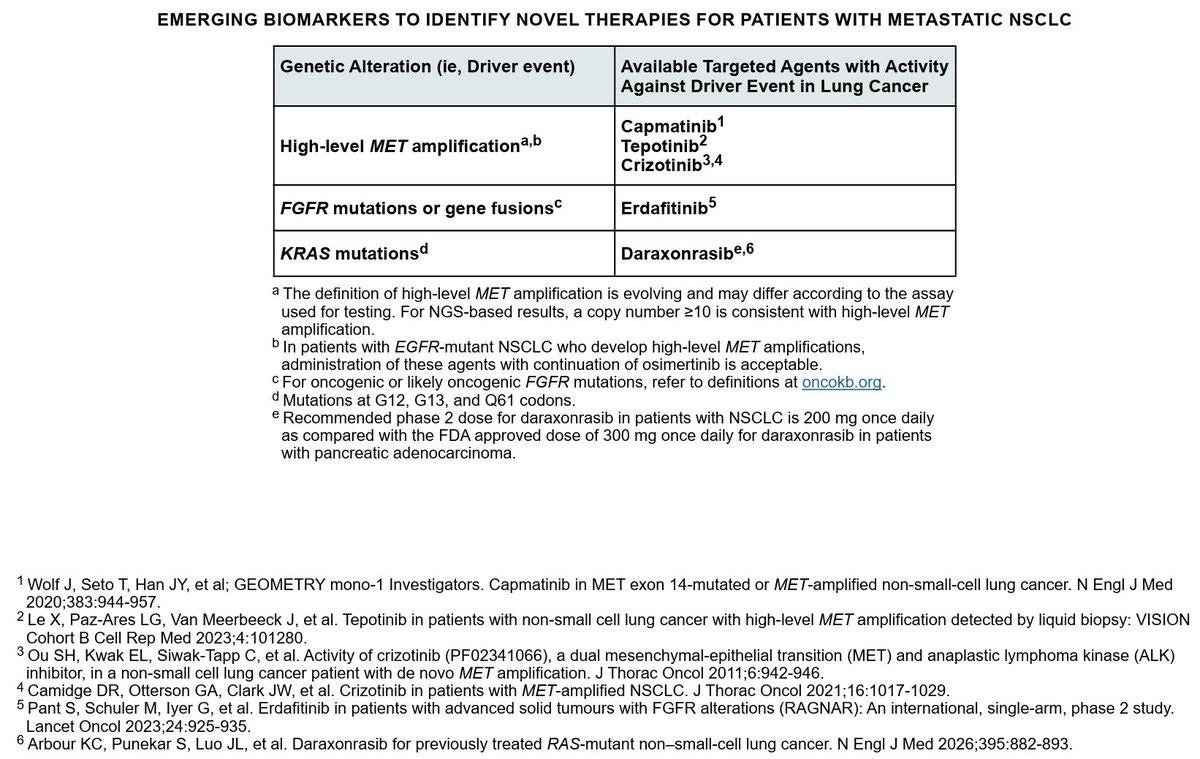
🧬 Beyond KRAS G12C!
NCCN lists daraxonrasib for KRAS G12/G13/Q61-mutant metastatic NSCLC in its emerging biomarkers table.
🎯 A step forward for broader RAS targeting.
📌 Off-label in NSCLC—not an FDA approval for lung cancer.
#NSCLC#KRAS#PrecisionOncology@OncoAlert@ONCOassist@OncBrothers
🧬 The NHS-Galleri trial is another reminder that exciting technology is not the same as proven clinical benefit.
🔬 142,250 participants
📅 Three annual screening rounds
🎯 12 prespecified cancer types
❌ The primary endpoint was not met: the multicancer early-detection test did not reduce stage III-IV diagnoses
IRR 1.03
📉 Stage IV diagnoses were numerically lower:
IRR 0.86 (95% CI 0.74-1.00)
But the question that matters most remains unanswered:
➡️ Does earlier detection reduce cancer mortality?
➡️ Does it improve overall survival?
➡️ Does the benefit outweigh false positives, overdiagnosis, and downstream procedures?
✨ Sophisticated technology is compelling, but screening tests must ultimately prove that they improve outcomes—not merely detect disease differently.
⏳ It is too early to close the book on Galleri. Longer follow-up will be decisive.
https://t.co/lvJnwt07M8
@OncoAlert@ONCOassist@IASLC
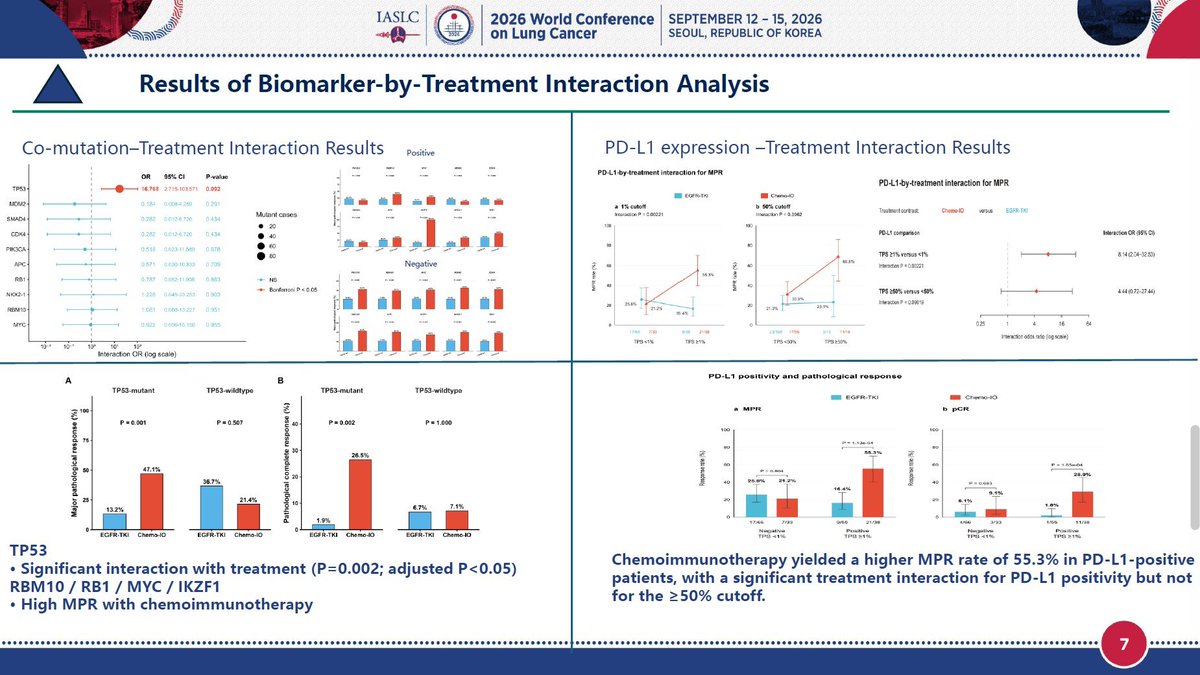
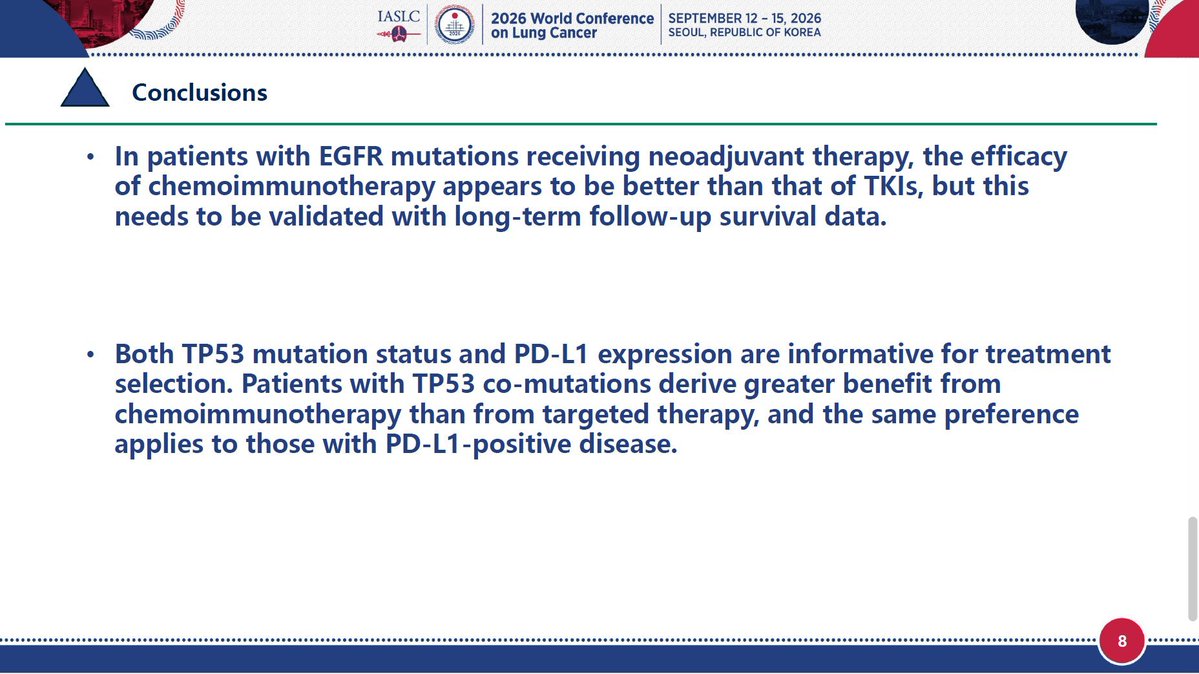
🆙 #WCLC26#LCSM | MO06.04 raises an interesting question for EGFR-mutant NSCLC:
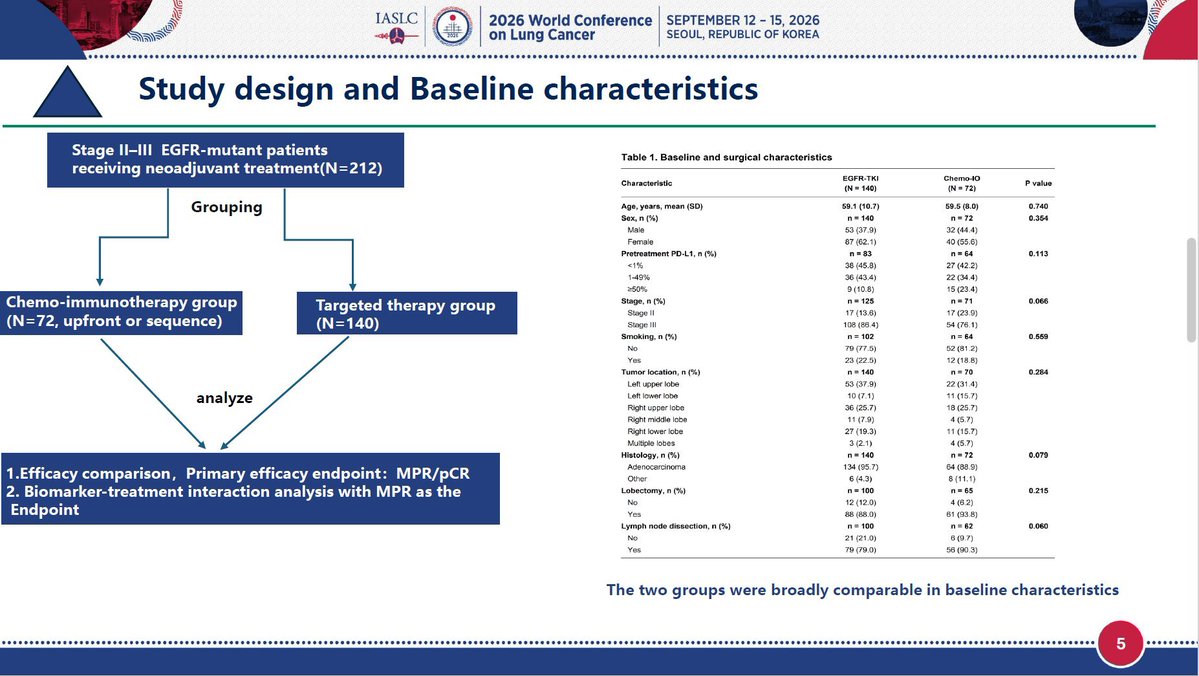
In the TP53-mutant subgroup, neoadjuvant chemo-immunotherapy achieved MPR in 48.6%, versus 9.6% with EGFR-TKI. 🎯 Could TP53 help identify patients who benefit from an immune-based combination after TKI progression?
There is a metastatic link: IMpower150 reported an exploratory signal with atezolizumab + bevacizumab + chemotherapy in EGFR-mutant disease after TKI treatment. But TP53 was not validated as a predictor for that regimen. The neoadjuvant result compares chemo-ICI with a TKI, so it cannot isolate the effect of immunotherapy—or be directly applied to metastatic disease.
🔬 A compelling hypothesis: test whether TP53 status predicts benefit from adding immunotherapy to post-TKI treatment in metastatic EGFR-mutant NSCLC.
@OncoAlert@OncoAlert@IASLC@EGFRResisters
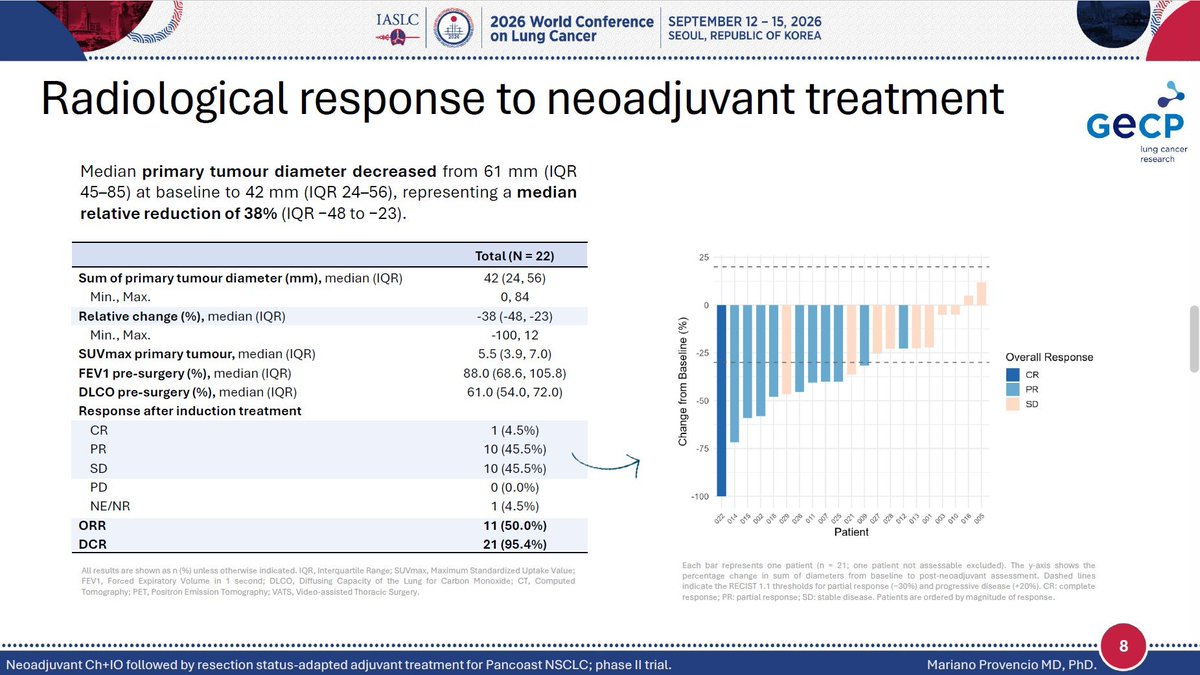
🚨 Could Pancoast tumors be a blind spot in neoadjuvant immunotherapy research?
In a small phase II study, chemo + nivolumab—without radiotherapy—achieved pathological complete response in 11/19 operated patients (58%). For context, CheckMate 816 reported 24% in a broader NSCLC population. 🔎
The signal is intriguing, but different trials cannot prove that Pancoast tumors are more immunotherapy-sensitive.
There’s another possibility worth testing: treating without RT upfront may leave radiotherapy available if disease recurs. For now, CRT → surgery remains standard. We need a direct CRT vs neoadjuvant chemoimmunotherapy trial in Pancoast NSCLC. 🧪
@ONCOassist@OncoAlert@OncBrothers
6/6TakeawaySurgery enables staging and selective escalation.
It does not close the gap in this PROTEUS-defined population.Substantial BCR and metastatic progression remain.
That is the rationale for perioperative intensification.Aydogdu et al. Eur Urol Open Sci 2026
https://t.co/dovLf2iecu #PROTEUS #Urology #GUOncology
1/6
Is surgery-first enough in high-risk prostate cancer?A contemporary PROTEUS-like cohort: 1,392 men
Radical prostatectomy without neoadjuvant ADT
Median follow-up: 60 monthsOutcomes show a clear unmet need in this narrowly defined, aggressive population.
🔬 Retzius-sparing vs. Standard RARP
💡 Both are minimally invasive, robot-assisted procedures to remove the prostate. Standard RARP approaches from the front; RS approaches from behind, preserving anterior support structures to improve early continence recovery.
👥 120 patients | Randomized trial
⏳ Median follow-up: 77 months
📊 5-year progression-free survival:
• RS: 80.2%
• Standard: 91.1%
p=0.01
⚠️ Despite an early continence advantage, RS showed less favorable oncologic control in this trial. Limited prior RS experience and the study’s original focus on early continence should be considered.
@OncoAlert@ONCOassist@OncBrothers
https://t.co/T5vRlIg3P7
The true impact of adherence in cancer screening is finally clear. Study in @JAMANetworkOpen shows that while simply receiving an invitation for colorectal cancer screening (FOBT) reduces mortality by 26%, actual PARTICIPATION & ADHERENCE by healthy volunteers drives a massive 43% reduction! 🤯 This is a game-changer for public health programs. The life-saving potential is far greater than we thought. Just inviting people isn't enough—we must ensure active participation! Read the full study here:
https://t.co/bz4ofaydcO