You can also find us elsewhere...
@WhatsApp
https://t.co/7PjRhNKa4t
@facebook
https://t.co/9GHecvA64Y
@bluesky
https://t.co/xn14xCSFhN
@LinkedInUK
https://t.co/fF8ACyx43b
@instagram
https://t.co/1F8NF2XtVG
Threads
https://t.co/FLfiNbtWD5
The @ofgem price cap is expected to rise by 26% in Jan, with record-breaking unit gas costs.
Millions are already in energy debt. Many more worry they soon will be.
Gas is causing this price shock, so it's gas the UK needs to get off urgently.
This winter, make sure your windows, doors & letterbox are draught-proofed. Otherwise, heat you've paid for escapes. It's simple, cheap & DIY.
Here's how to do it: https://t.co/EeK1XkX5S7
Oil companies already make billions in profits. Weakening the Zero Emission Vehicle mandate would keep drivers reliant on petrol and diesel for longer and help protect those profits.
New analysis finds that a typical household buying second-hand could save around £800 a year by choosing an electric car over a petrol one.
For a lower-income household driving fewer miles, the estimated saving is around £400 a year. Both figures assume drivers do most of their charging at home on a cheap overnight tariff. These savings should be within the reach of people who don’t have a driveway where they can charge overnight.
That’s why the Government should stand by the Zero Emission Vehicle mandate. The more new electric cars sold today, the more choice drivers will have when those cars reach the second-hand market.
Ministers should also act on the Electricity Bills Taskforce’s recommendations to bring down the cost of electricity.
End Fuel Poverty Coalition coordinator Simon Francis appeared on the PRAN podcast recently, discussing the reality of fuel poverty in the UK, the scale of rising energy debt, mega energy industry profits, and what the government must do to support people this winter.
🎧 Listen now: https://t.co/Yq0u8p7bGx
More than 270,000 solar installations across the UK this year, a new annual record according to MCS [Microgeneration Certification Scheme]
From homes and community halls to supermarkets and football grounds, more people are generating electricity on their own rooftops, and every unit they generate and use is one less they need to buy.
For households feeling the pain of ever rising energy bills this matters. Getting off the fossil fuel price rollercoaster means investing in renewables and making sure the savings reach the people who need them most.
Households struggling with bills should be first in line for support, including people who rent their homes or can’t afford the upfront cost of solar panels.
Five companies could soon supply electricity to more than nine in ten homes in Great Britain. If your supplier lets you down, where are you meant to go?
E.ON bought OVO last month, and now EDF has agreed to buy Utilita. If the deal goes ahead, just five groups would account for 92.7% of household electricity accounts, based on the figures today.
Competition was meant to put households in charge, but now households will have fewer independent suppliers to look at.
And when ministers and the regulator sit down with the companies that supply our electricity, whose voice will carry more weight? Households deserve a bigger say in the rules.
We’ve written again to @JohnHealey_MP@hmtreasury tonight asking for a meeting to discuss what can still be done to help households.
https://t.co/39sk1bZLiJ
Energy bills are forecast to rise by 26% to £2,166 a year for the typical household from January, according to the latest forecast from Cornwall Insight
Will the government offer more support?
The Budget included £100 in energy bill support for 20million households in council tax bands A to D. But bills are going up by more than £400
I asked John Healey, the Chancellor, last week and he suggested that there won't be another package this winter
“The support that we’re putting in place this winter was set out; I set it out at the budget."
https://t.co/JcaRS1pUtu
Everybody deserves to live in a warm and healthy home. That’s why we’re supporting @NEA_UKCharity#FuelPovertyAwarenessDay.
On #FuelPovertyAwarenessDay, households already struggling to put the heating on face the prospect of a record gas price this winter.
Independent energy analysts Cornwall Insight forecast that gas could reach 10.9p per unit in January, 37% higher than today.
The headline forecast of £2,166 a year reflects Ofgem’s lower estimate of typical energy use. Using the 2022/23 benchmark, January’s forecast rates would mean an annual bill of £2,569 before support.
In 2022/23, the bill after support was around £2,100, or £2,499 in today’s money. A household receiving no support would face an annual bill around £70 higher in real terms for the same amount of energy.
Households struggling to keep warm need urgent help before January. The Chancellor must act now with further support for energy bills.
Households can’t afford a repeat of the mistakes made during the last energy crisis.
That’s why we have written to the Chancellor requesting an urgent meeting on protecting households this winter and beyond.
Our letter raises three concerns:
➡️The £100 support payment uses council tax bands to decide who gets help, leaving some households in need without support.
➡️Cuts to investment in warmer homes will make it harder to tackle high bills.
➡️Forcing households onto prepayment meters risks leaving people without heating or power when they cannot afford to top up.
This is why we urgently need support that reaches people who are struggling to afford their bills, investment in homes that stay warm, and action to tackle energy debt without leaving people unable to keep the heating on.
Bringing down electricity costs and reducing our dependence on gas must remain priorities.
There is still time to change course and give households the protection they need.
Read more: https://t.co/bZG0FUi74N
A coalition of more than 100 anti-poverty groups has warned the government that cost-of-living support announced in the Budget won't be enough to protect people from rising bills this winter
In a letter to Chancellor John Healey, @EndFuelPoverty says the £100 payment scheme is poorly designed, with Treasury figures showing around one sixth of fuel-stressed households will miss out
It comes as Cornwall Insight this morning said that it expects the energy price cap to rise 26% in January https://t.co/V1RRAAc66H
Experts @cornwallinsight predict energy bills will rise by 26% in Jan, due to soaring gas costs.
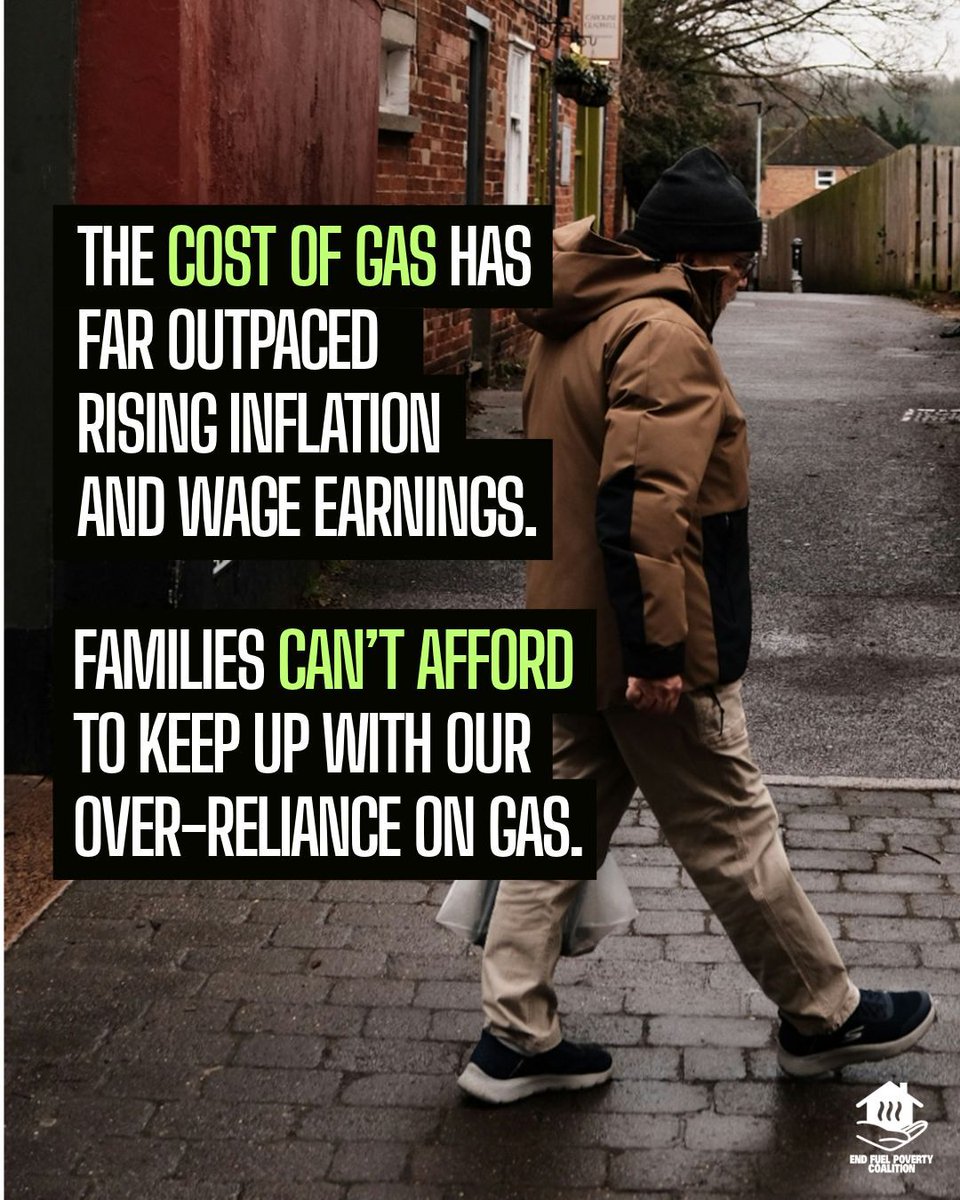
People are worried, and it's unsurprising: the cost of gas is far outpacing rising inflation + wage earnings. We must get off gas and heating oil for good.
Households are cutting back as energy firms cash in: they've made £143 billion in UK profits alone since 2020. Their CEOs are thriving too, with a huge bump in the value of their personal stakes this year.
Revealed: Energy firms have made £143 billion in UK profits alone since 2020, as households face their 6th winter of sky-high energy bills.
The majority of people think this profiteering is wrong. Here, they explain why:
Wrapping heating pipes in insulation tubes helps reduce heat loss & prevents water temperature from dropping. This conserves energy & brings down bills. Easy to install insulation tubes are available cheaply.
➡ https://t.co/2rqAPjLEuq
The Government has secretly scrapped a £25m pilot to give free plug-in solar panels to low-income households, @UtilityWeek reveals.
Panels that could save families up to £110 a year will now stay out of reach for those who need them most.
It’s the wrong decision and a false economy.
https://t.co/jFg2ZWdztb
High wholesale gas prices are keeping households under pressure, with forecasts predicting another rise in energy bills in January.
Lower price cap headline figures don’t necessarily mean lower energy costs. Ofgem now assumes a typical household uses less gas and electricity, which reduces the annual bill figure used to describe the price cap. Our comparison keeps energy use the same throughout, showing how costs have risen and what a further increase in January could mean for households.
The prospect of further rises underlines the need to protect people struggling to keep warm this winter.
Households need meaningful support with their bills now, alongside investment in warmer homes and affordable clean energy to reduce our exposure to the fossil fuel price rollercoaster.
Ithaca Energy's market value is up £1.4 billion since the start of the war in Iran.
Its CEO's shares have risen by £1.1 million.
They're celebrating while families work out what more they can cut from their already extremely tight budgets.
This week, check how your boiler, thermostat and radiator valves work.
Look up the manufacturer’s instructions and, if you have boiler central heating, set the timer around when you need your home to be warm.
Anywhere between 18°C and 21°C is a healthy temperature for your home. If a room feels too hot, adjusting the heating can help reduce energy use while keeping you comfortable.
➡ https://t.co/a6Tewgb455