We received the Schlumberger's team, led by Mr. ND Madeemezia- President, Europe and Africa and Mr. Jean Marc Kloss- Managing Director, West Africa, on a courtesy visit to our office.
Our discussion focused on the tangible impact of the ongoing oil and gas reforms, the opportunities emerging across the sector, and the growing confidence of global industry players in Nigeria’s energy landscape.
It was insightful to hear perspectives from the field on the progress being made and to exchange ideas on how we can continue to drive growth, and strengthen value of the sector’s contribution to national development.
In the oil and gas sector, the reforms we instituted have attracted billions of dollars in fresh investment from the international oil companies that had shunned our country. The $5 billion NLNG Train 7 project is nearing completion to boost LNG production capacity, exports, and dividends.
Domestic gas utilisation is expanding. Local refining capacity has improved our energy security. With large-scale domestic and modular refineries operational, Nigeria is reducing its dependence on imported petroleum products and conserving foreign exchange.
For years, the power sector suffered from debt, underinvestment, and uncertainty, which weakened generation capacity and limited growth. Today, we are confronting those challenges directly.
Our administration is clearing legacy obligations, expanding transmission infrastructure, investing in renewable energy, and strengthening the national grid because no modern economy can grow in darkness. When power improves, businesses expand, industries grow, jobs are created, and families prosper.
We are determined to power Nigeria into a new era of industrial growth and economic opportunity.
EMPOWERING NIGERIANS: AGRICULTURE, EDUCATION, AND HOUSING
Agricultural interventions have supported millions of farmers by improving seedlings, fertilisers, mechanisation, and irrigation and by expanding access to finance and markets. We are opening new agricultural corridors to create jobs, strengthen supply chains, and reduce pressure on household incomes.
The Nigerian Education Loan Fund has provided over 1.5 million students with access to higher education, disbursing more than ₦282 billion to ensure that no willing student is denied access due to financial hardship.
Our Renewed Hope Housing Programme, along with that of the Federal Housing Authority (FHA), is delivering over 10,000 housing units across 14 states and the FCT, creating over 300,000 jobs and expanding access to affordable housing. Major Renewed Hope Cities in Abuja, Lagos, and Kano are progressing steadily. Our consumer credit initiative, CREDICORP, is opening up new economic opportunities for workers and families.
In healthcare, thousands of primary healthcare centres are being revitalised, while health insurance coverage is expanding for vulnerable Nigerians.
DEEPENING TELECOMS ACCESS AND INVESTMENT
We also took decisive action to stabilise the telecommunications sector, which remains one of the most important drivers of modern economic growth.
After years of severe operational pressures and declining investment, confidence is gradually returning to the sector. Telecom operators are expanding networks, investing in infrastructure, recruiting Nigerian talent, and widening digital access across the country.
A connected Nigeria is a more competitive Nigeria. Digital infrastructure is now essential to commerce, education, innovation, and national productivity.
YOUTH, TECHNOLOGY AND DIGITAL TRANSFORMATION
To our young people, I want you to know this nation believes in you. You are not a problem to be managed. You are the engine of Nigeria’s future. Across technology, manufacturing, creative industries, agriculture, sports, and entrepreneurship, we are expanding opportunities for you to compete and succeed. We are investing in digital skills, technical education, innovation, student financing, and enterprise support because the future must be driven by Nigerian talent, creativity, and productivity.
SECURITY AND NATIONAL UNITY
Security remains central to our national mission and to the creation of a virile and prosperous society. Our Armed Forces and security agencies have intensified operations against terrorists, bandits, kidnappers, oil thieves, and criminal networks. While challenges remain, many communities and highways are becoming safer and more economically active. We continue investing in intelligence, surveillance, logistics, technology, and inter-agency coordination.
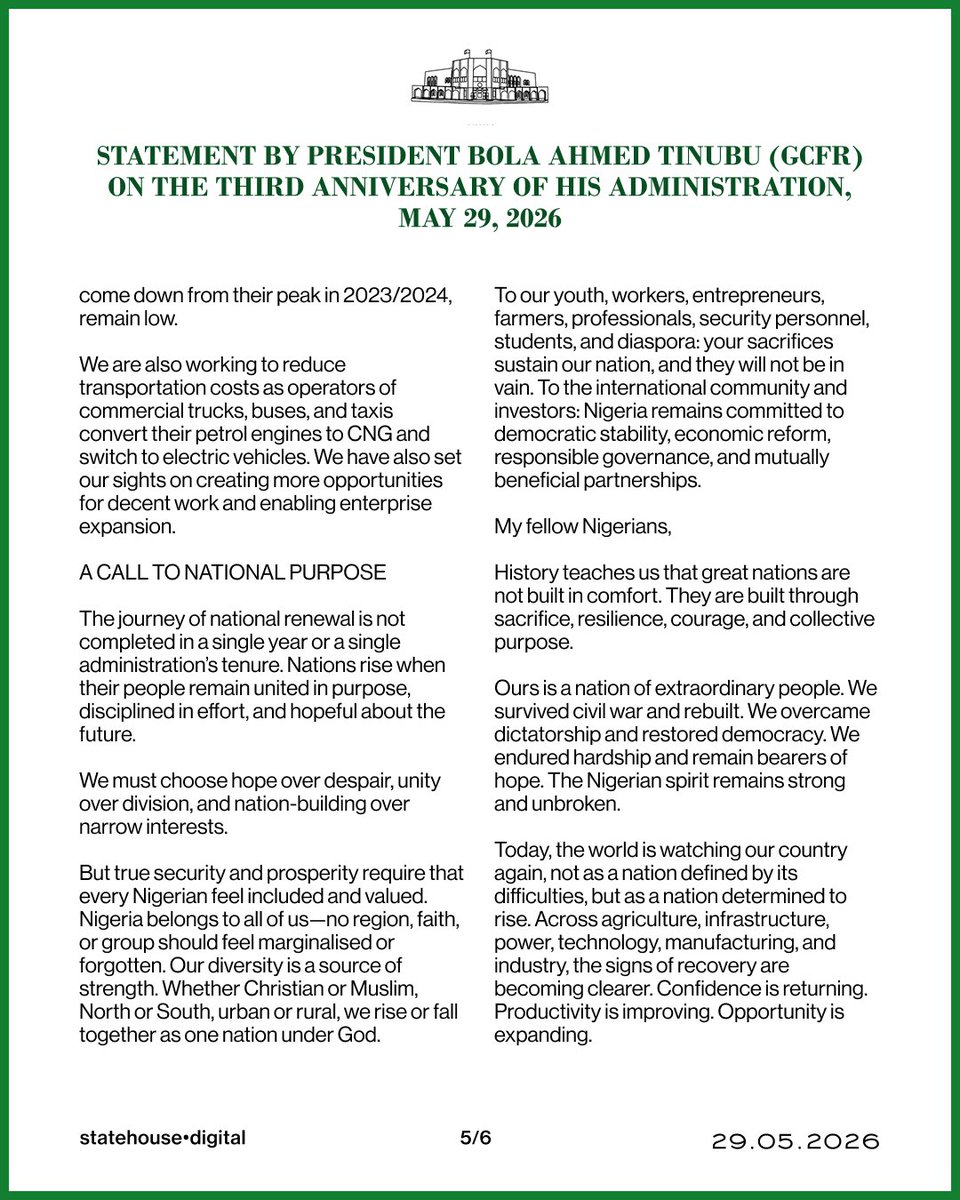
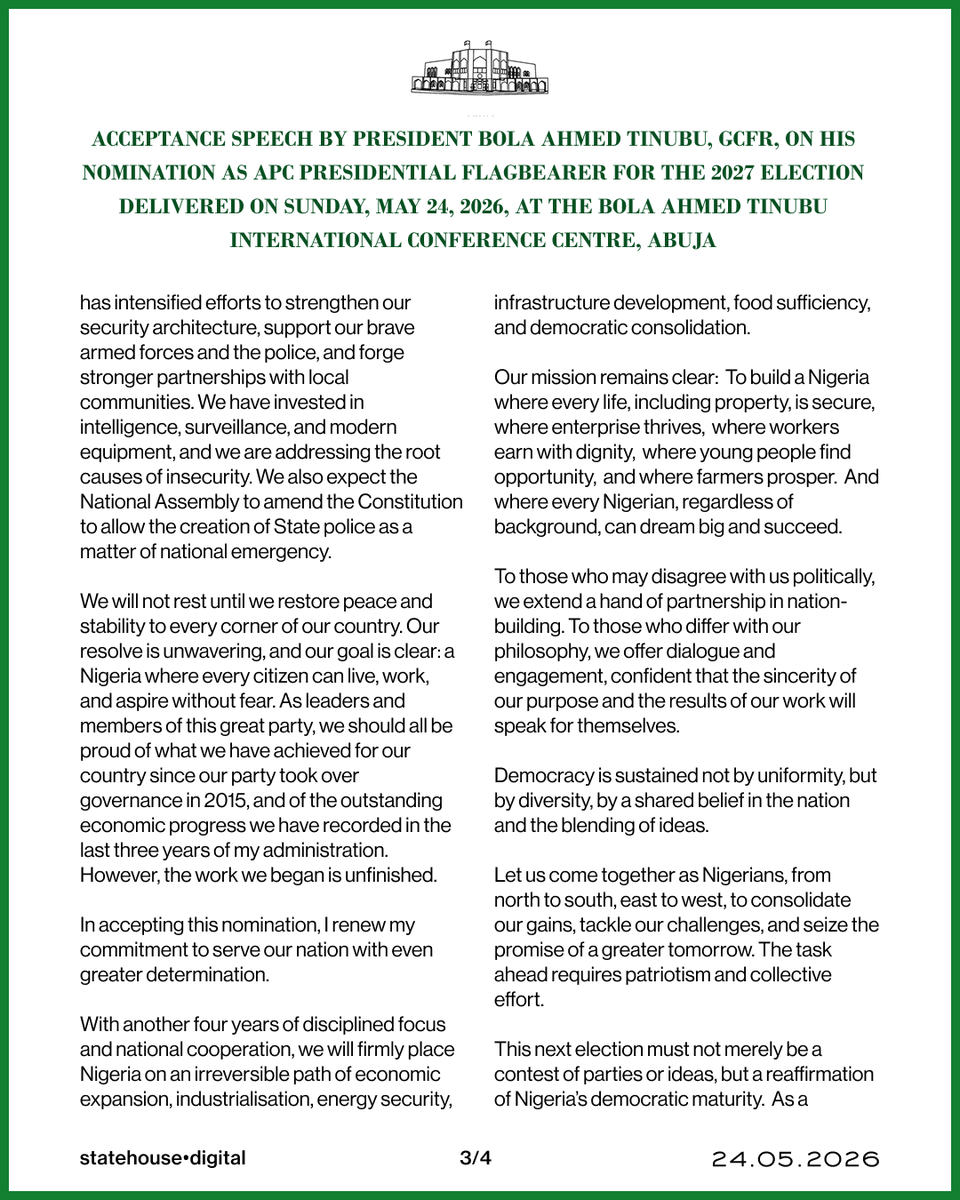
ACCEPTANCE SPEECH BY PRESIDENT BOLA AHMED TINUBU, GCFR, ON HIS NOMINATION AS APC PRESIDENTIAL FLAG BEARER FOR THE 2027 ELECTION DELIVERED ON SUNDAY, MAY 24, 2026, AT THE BOLA AHMED TINUBU INTERNATIONAL CONFERENCE CENTRE, ABUJA.
In this @BusinessDayNg interview, Jagir Baxi, Chairman and Managing Director of Esso Exploration and Production Nigeria Ltd (an @exxonmobil affiliate), said:
“The incentive structure that has been codified has made Nigeria more globally competitive as an investment destination… This administration has created genuine momentum for speed, through the presidential directives, through the visible support for specific projects, through the tenor of engagement. Our obligation is to match that momentum. Protect what we have today. Bring the new capacity with urgency.”
This is precisely the objective of the Presidential directives issued by President Bola Ahmed Tinubu, GCFR @NGRPresident@officialABAT
These sentiments reflect what we continue to hear from many IOCs and indigenous operators across the industry.
Link to interview:
https://t.co/tDntezFe6A
NOGICD Act IS TODAY 🎉🎉
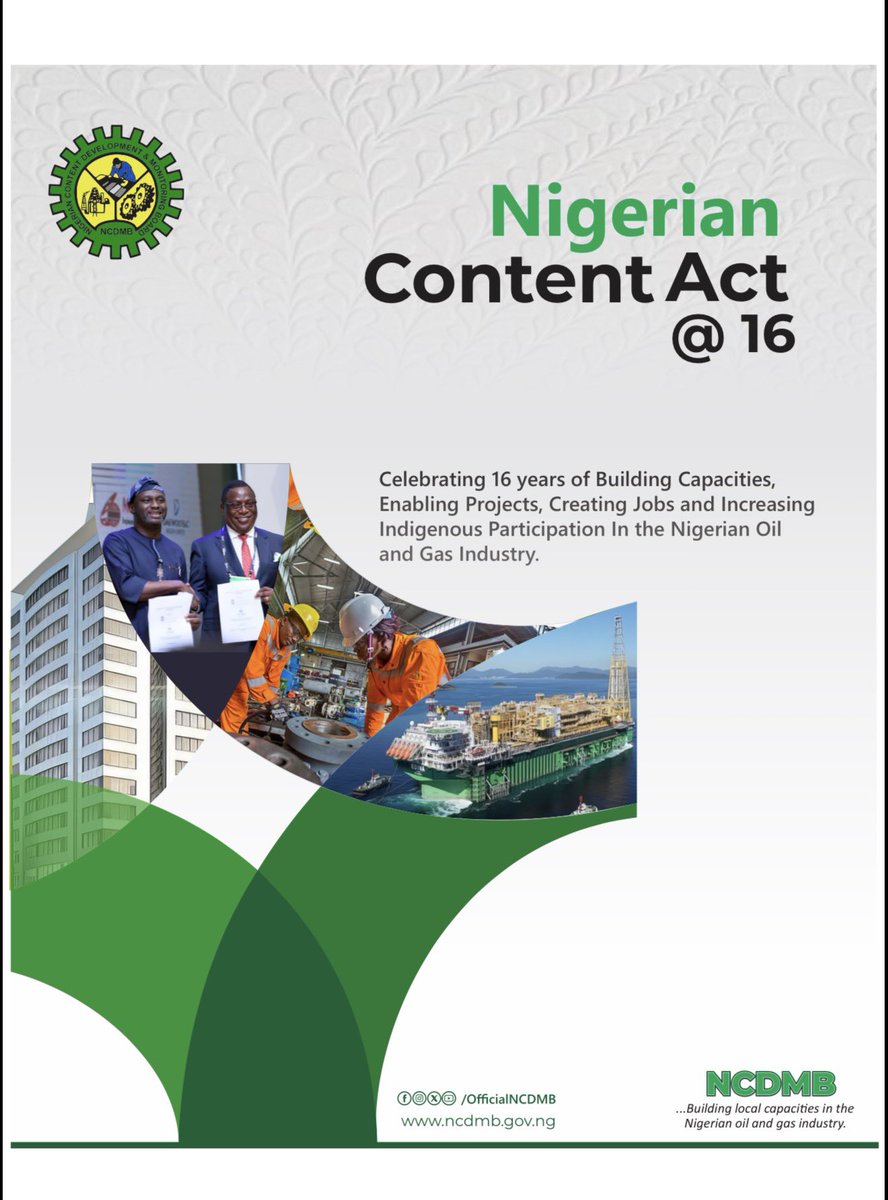
Today marks the 16th anniversary of the enactment of the Nigerian Oil and Gas Industry Content Development (NOGICD) Act.
It’s also been 16 years since the establishment of the Nigerian Content Development and Monitoring Board (NCDMB)
… years of transformative impact on the Nigerian oil and gas industry
At NCDMB we have made significant contributions to our national economy, enabling mega projects, linking and catalyzing key sectors
We have created jobs and opportunities for industry players, integrated local communities into the energy industry’s value chain
Across the African continent, we have influenced local content policies, inspired other Africans nations to play active roles in their energy sector, helped pull their people out of poverty.
Congratulations NCDMB
Congratulations Nigerian Content stakeholders
Congratulations Nigeria.
Applications are now open for the NLNG 2026 Post-Primary Scholarship Scheme, designed to support bright Basic Six pupils from NLNG host communities in Rivers State through their secondary school education.
If your child meets the requirements, we encourage you to apply and take a step towards a brighter future.
Entry closes: 11 May 2026
Apply here: https://t.co/cLVsqxaza1
Give your child the opportunity to learn, grow, and achieve more.
#NLNG #ScholarshipOpportunity #EducationMatters #Parents #FutureLeaders
NLNG’s Leadership recently held an engagement with key government stakeholders to strengthen collaboration on Nigeria’s energy future.
At the centre of the discussion was a shared objective to unlock Nigeria’s gas potential to drive economic growth, stability, and long-term national development.
With Train 7 nearing completion, NLNG remains focused on expanding production, strengthening global competitiveness, and increasing domestic gas supply in line with national priorities like the Decade of Gas.
Beyond operations, the company continues to contribute to national development through impactful projects, including infrastructure delivered via public–private partnerships.
NLNG remains committed to supporting Nigeria’s energy vision and driving sustainable national growth.
#NLNG #EnergyForGrowth #DecadeOfGas #Nigeria #EnergyTransition
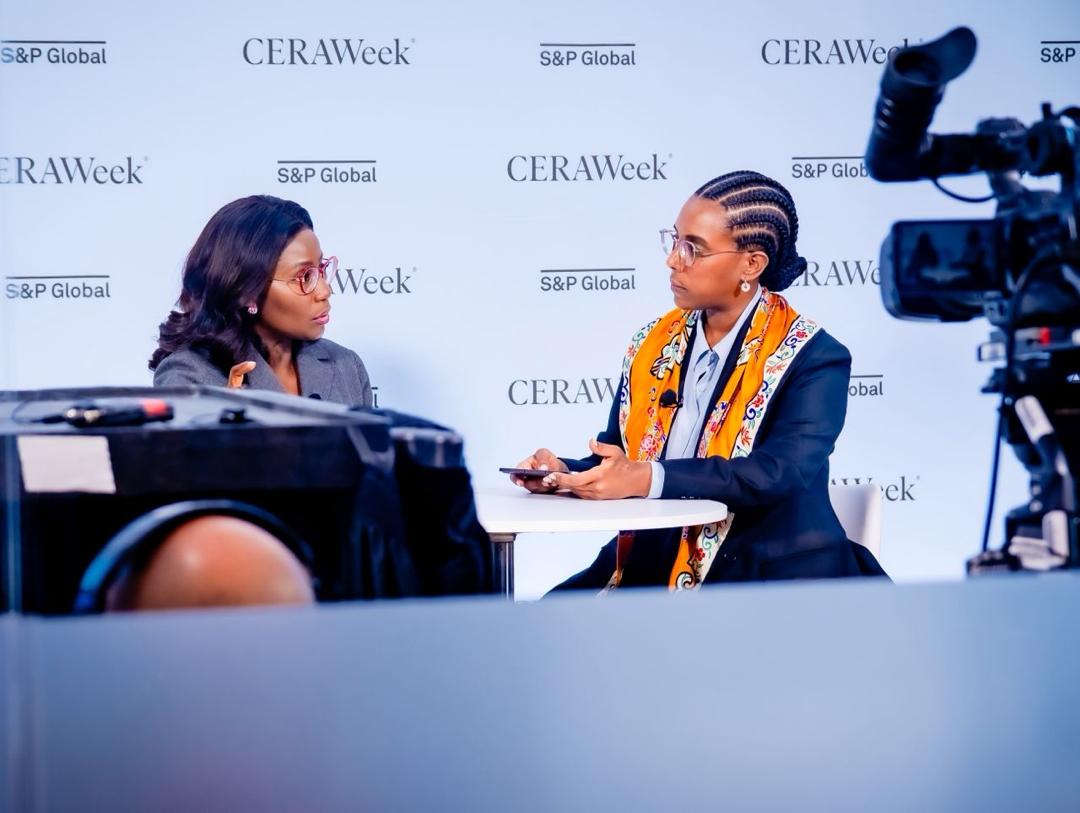
In this @SPGMarketIntel Executive Insight with @NatznetOnAfrica , Vice President and Head of Analysis, Global Insights at S & P Global Market Intelligence, @OluVerheijen discussed how Nigeria is positioning itself amid global disruptions in the energy sector.
She emphasized that Nigeria’s reform agenda is no longer focused on simply adding more oil barrels or LNG cargoes, but on building a functional, market-driven system capable of attracting private-sector capital at scale.
According to her, the goal is to deliver reliable power to the economy, support a competitive manufacturing sector, and ultimately drive productivity, job creation, and income growth across the value chain.
Watch the full interview here: https://t.co/PlIHG7MbLY
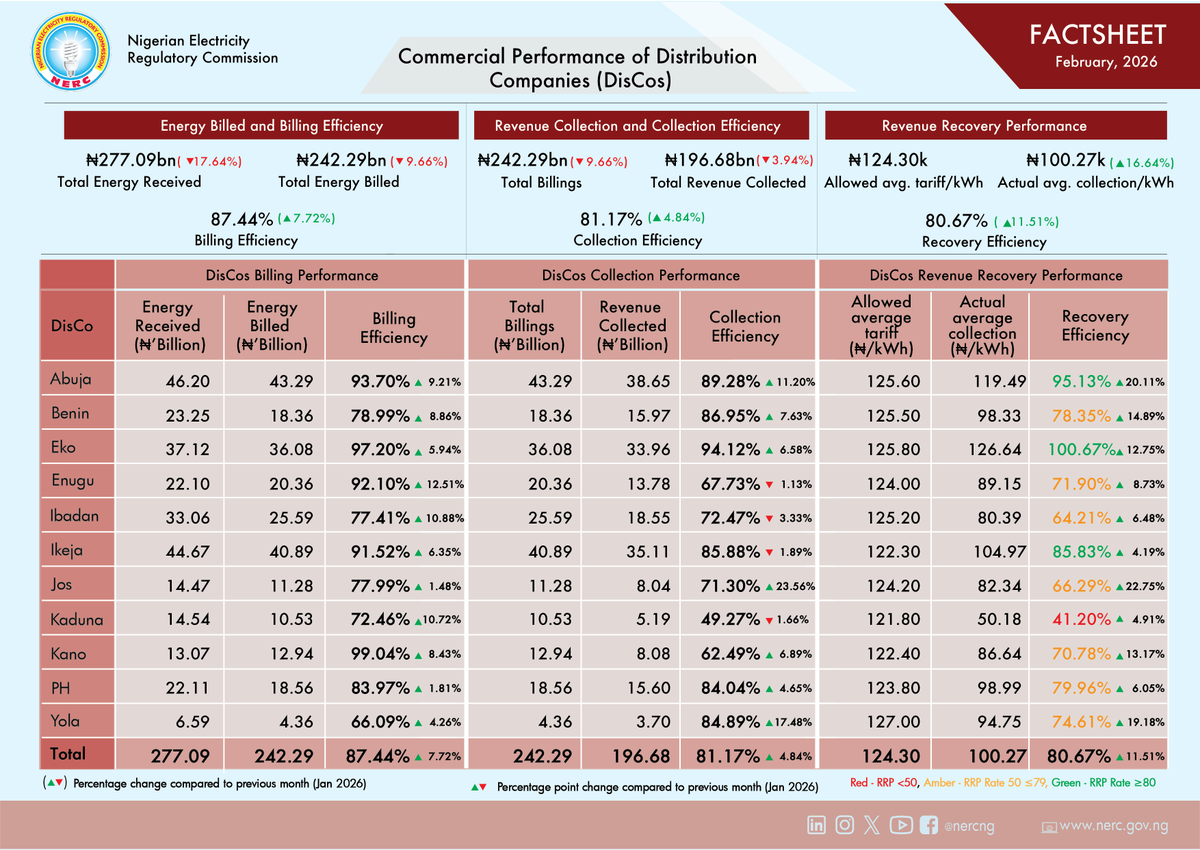
The February 2026 Commercial Performance Factsheet breaks down the financial health and efficiency of the Distribution Companies (DisCos), including the new ATC&C loss targets.
Highlights:
Billing Efficiency: Stood at 87.44%, with total energy billed reaching ₦242.29bn.
Collection Efficiency: Recorded at 81.17%, resulting in a total revenue collection of ₦196.68bn for the month.
ATC&C Loss Targets: The Commission approved reduced targets for 2026 (averaging 16.64%) to reflect the expected impact of DisCo investments made in 2025.
Revenue Recovery: The average recovery efficiency across all DisCos was 80.67%.
Visit https://t.co/xQRN6ytloB to stay informed on the numbers shaping the NESI.
#NERC #CommercialPerformance #DisCos #EnergyFinance #Nigeria #ElectricityData #Factsheet #EnergyInsights #NESI
"We will not bring back subsidy because it creates destruction for the economy, and we won't introduce price control because we believe in the market...the situation in Iran presents new opportunities for us as the world looks to diversify sources of energy and invest in new market"
- Minister of Finance and Coordinating Minister of the Economy, Taiwo Oyedele
The Nigerian Upstream Petroleum Regulatory Commission @NUPRCofficial has released Domestic Crude Supply Obligation (DCSO) in accordance with the provisions of the Petroleum Industry Act.
Read the full report here: https://t.co/B0dsCRFP7K
NUPRC releases DCSO report for Q1 2026
The Nigerian Upstream Petroleum Regulatory Commission has released the statistics on the enforcement of the Domestic Crude Supply Obligation (DCSO) in accordance with the provisions of the Petroleum Industry Act.
A summary of the monthly allocation shows that 61.9 million barrels of crude oil were allocated to domestic refineries during the quarter, while producers collectively offered a higher volume of 68.7 million barrels.
However, actual supply to local refineries was 28.5 million barrels, translating to a supply conversion rate of 36-46 per cent as of the end of the first quarter (Q1) 2026.
The shortfall between volumes offered and actual deliveries has been attributed primarily to pricing gaps between producers and domestic refiners. The Commission emphasised that the current framework operates on a “willing buyer, willing seller” basis, which continues to shape transaction outcomes.
Read more when you visit: https://t.co/1m2yp9LCfO
Yesterday’s announcement signals the next phase of Nigeria’s energy reforms.
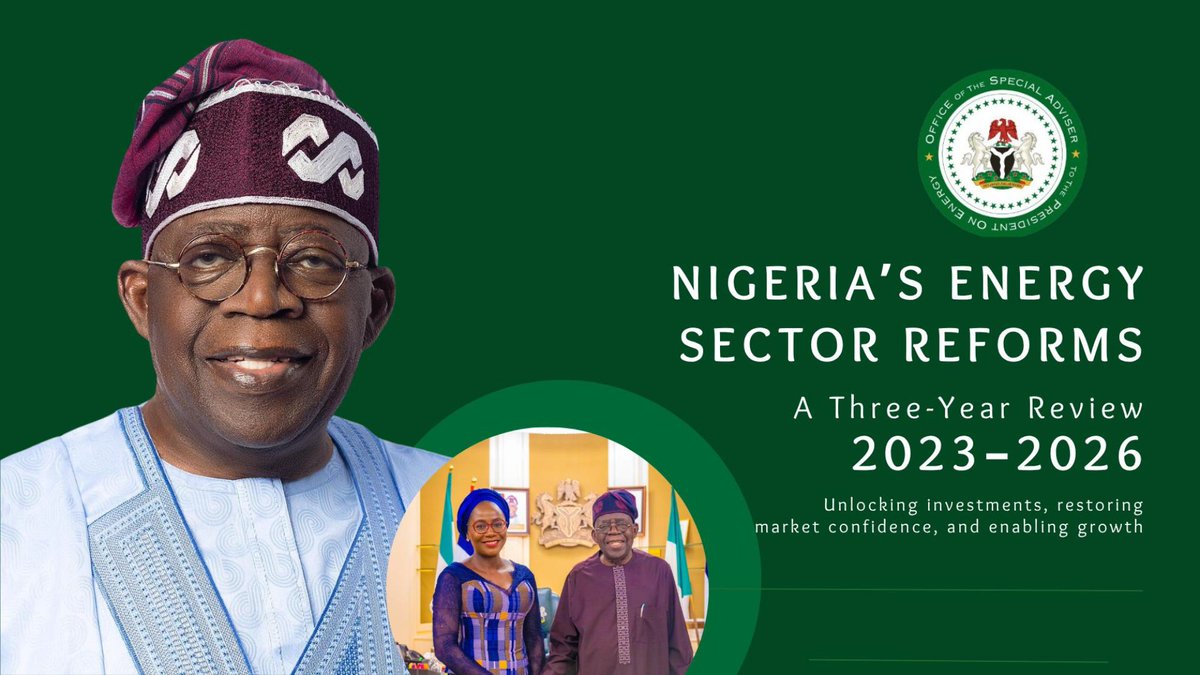
I am grateful to His Excellency, President Bola Ahmed Tinubu GCFR @NGRPresident, for the opportunity to serve and to help deliver measurable progress over the past three years — restoring credibility, unlocking investment, and repositioning the sector for growth. (See attached: 3-Year Review of Energy Sector Reforms.) I welcome Mr.@JosephOTegbe as Minister of Power, and Mr. Rilwan Lanre Babalola as Special Adviser on Power and Chairman of the Presidential Taskforce on Power Sector Reset. This is a decisive step to accelerate delivery in the electricity sector.
On this Workers’ Day, I salute my team — whose discipline, resilience, and commitment have powered these outcomes over the past three years. The work continues. #WorkersDay #EnergyReform #RenewedHope
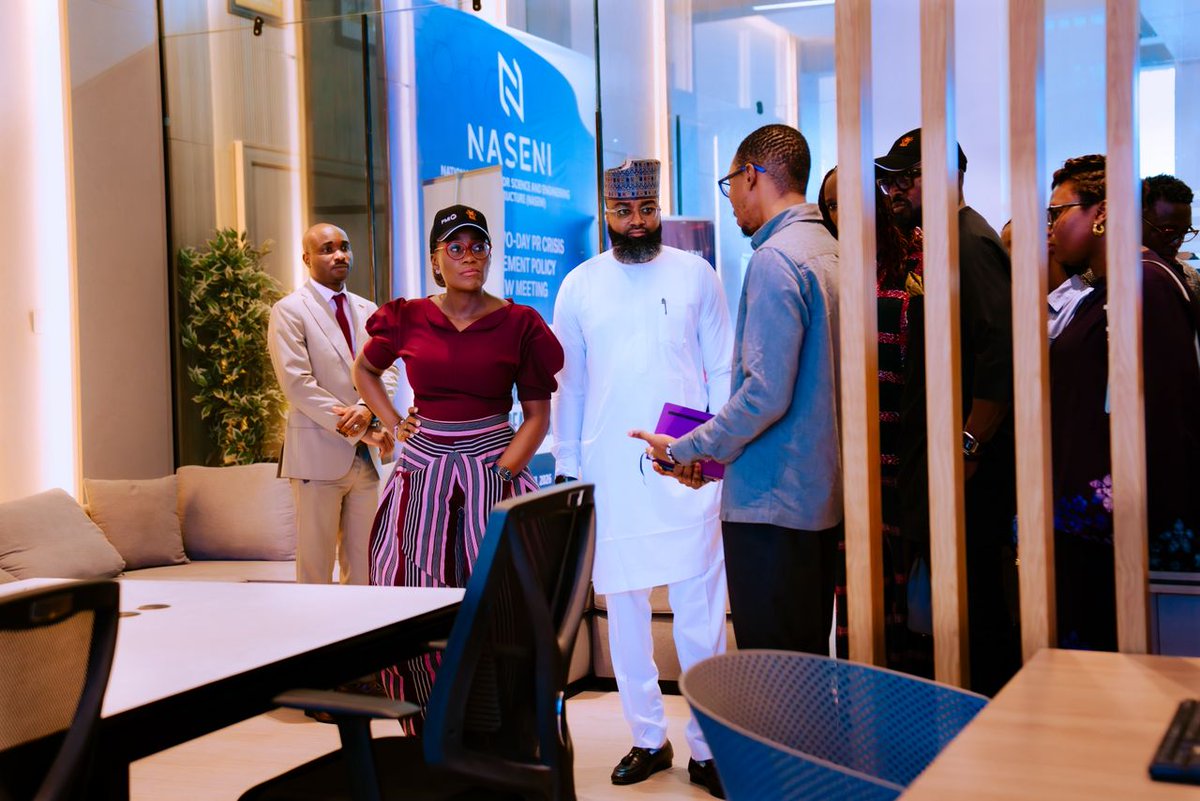
It was a pleasure visiting @NASENIHQ and its Centre of Excellence, to see firsthand the work Mr. Khalil and his team are delivering for Nigerians, particularly the remarkable contributions of the young women on the design and innovation team.
NASENI remains central to advancing our industrialisation agenda and has demonstrated clear capacity to deliver.
I am encouraged by the progress and look forward to a strong and impactful collaboration.
I visited @AmalTech_NG and had the opportunity to see their work firsthand across hardware development, semiconductor processing, and smart technology solutions.
They also shared insights into their approach to building local capacity within the technology ecosystem, and the important role indigenous technology plays in strengthening energy systems, improving infrastructure, and supporting sustainable development.
Companies like these are critical to advancing our industrialisation agenda as a country, and I am truly proud of the work the team is doing.
Global energy capital is scarce and selective. Namibia, Guyana, Mozambique and closer home, even countries like Ghana and Senegal are competing.
So what is Nigeria doing differently to stay ahead ? The Special Adviser to the President on Energy, Mrs. @OluVerheijen , answers this question in this exclusive interview with the Upstream Gaze. Read more when you visit: https://t.co/SakVNXZd18