Dorset Mum in Hants. Lover of the British countryside & our historic buildings. Tweets about gardening, food, heritage & books. On Instagram and Pinterest too.
Woman of the Day prison reformer and philanthropist Elizabeth Fry, born OTD in 1780 in Norwich, the first woman to give evidence to a Select Committee. It was instrumental in the passing of the Gaols Act 1823, which separated the sexes.
Caring responsibilities came early to her. Her mother died when she was 12 — she had twelve siblings — and as a Quaker, she took an interest in the impoverished, the sick and prisoners. A “plain Friend”, she dressed plainly, did not dance or sing, and took philanthropy very seriously.
In 1813 and at the suggestion of another Friend, Elizabeth visited Newgate Prison and found women and children in small overcrowded cells where they had to manage washing, cooking, toilet functions, and sleep on straw. Some hadn’t even been tried at court. She was horrified.
“All I tell thee is a faint picture of reality; the filth, the closeness of the rooms, the furious manner and expressions of the women towards each other, and the abandoned wickedness, which everything bespoke are really indescribable".
She returned the following day with food and clothing, but family finances prevented her from doing more until 1816. At first, she concentrated on the children by funding a school inside the prison for them, but she found it impossible to ignore the plight of the women. They were at the mercy of male inmates who raped and sexually exploited them. On release, the few occupations available to women were beyond their reach. Life was without hope.
Elizabeth founded the Association for the Reformation of the Female Prisoners in Newgate and encouraged other affluent women to set up classes for women prisoners, providing them with materials so they could learn to sew and knit. It calmed them — “Already, from being like wild beasts, they appear harmless and kind" — and meant they had employable skills on release.
When she gave evidence to a Select Committee on 27 February 1818, she pulled no punches. She told them in graphic terms of the rapes and sexual exploitation suffered by the women. Her powerful evidence helped to secure the Gaols Act 1823 which required prisons to separate the sexes.
Other provisions of the Act included paying gaolers (to combat corruption), requiring doctors and chaplains to visit prisoners (still an important statutory requirement today), and greater emphasis on reform and rehabilitation.
The Gaols Act was far-seeing and genuinely progressive, but other than separation of the sexes, toothless. Town gaols and debtors prisons were excluded and there was no means of checking that its provisions were being met.
Elizabeth returned once more to give evidence to a Select Committee of the House of Lords in 1835, pointing out that "in many instances their condition is melancholy...they may truly be called schools for crime", that some still had "no instruction, no employment, no classification [of inmates]...and they get into a most low and deplorable state of morals...I would not say that all are in that condition, but I fear many are".
In those days, many prisoners faced transportation to New South Wales even for the most minor of crimes (for more serious offences, hanging was the go-to sanction). They faced eight months in vermin-infested cramped holds, often flooded with bilge-water, and strictly rationed fresh water. The women transported by the First Fleet had only the clothing they were standing up in and when this became infected with lice and had to be burnt, they were given rice sacks to wear. Elizabeth campaigned for better care and provision for them too.
In 1825, she published "Observations of the Siting, Superintendence and Government of Female Prisoners", an influential book that laid out in clear detail how penal regimes should be run.
Somewhere along the way, Elizabeth established a "nightly shelter" for the homeless in London after seeing the body of a boy who had frozen in winter and set up a system of volunteers to visit the poor and homeless and provide help and comfort to them. She campaigned against the slave trade, and in 1840, opened a training school for nurses. Florence Nightingale took a team of Fry nurses to the Crimea.
Her abiding principles of kindness and fairness sprang from her Quaker faith and she was the first woman — other than the late Queen, of course — to be depicted on a British banknote.
Elizabeth Fry died in 1845 at the age of 65. I cannot tell you how much I admire this woman.
Less than a century later, Westminster and Holyrood subsequently ditched Elizabeth’s truly progressive approach to prison as a place for rehabilitation, not punishment, and decided that it would be even more “kind and inclusive” to hold men in women’s prisons, as long as they claimed to be women too.
In wartime and in war zones, that would be regarded as a war crime under the Geneva Convention, and those officials who allowed it would be classed as war criminals.
It’s peacetime, allegedly, but I’d still call it a human rights violation, and I have a few choice words for all of those politicians and civil servants who nodded along with it. I hope their complicity haunts them.
'In May 2026, he was removed from the House of Lords because of non-attendance in the preceding session of Parliament'
I think this is dreadfully mean. There is *no harm* in Lord Christopher remaining a peer even if he's too frail to attend. He draws no salary for non-attendance
The last remaining person in Parliament who served in the Armed Forces in the Second World War retired on Wednesday.
Labour peer Lord Christopher, aged 101, bowed out, 81 years after WWII ended.
BREAKING: We are grateful to @wesstreeting for not taking forward Law Commission proposals to liberalise surrogacy: we wish him well for the future.
We continue our fight against relaxing domestic surrogacy laws and call on all our supporters to lobby their MPs and @DHSCgovuk
A work colleague sent me this photo of sheep in a field of dandelions taken on his evening walk. I think it’s beautiful. He gave me permission to post it and reckoned it might get 100 likes. I bet him it would make at least 1000. Off you go folks - do your thing 😂
This beautiful remastered footage was captured by an off duty policeman on 8th May 1945 after Churchill officially declared Victory in Europe. Flags are strung between terraces during the street celebrations in Gateshead. 🇬🇧 #VEDay
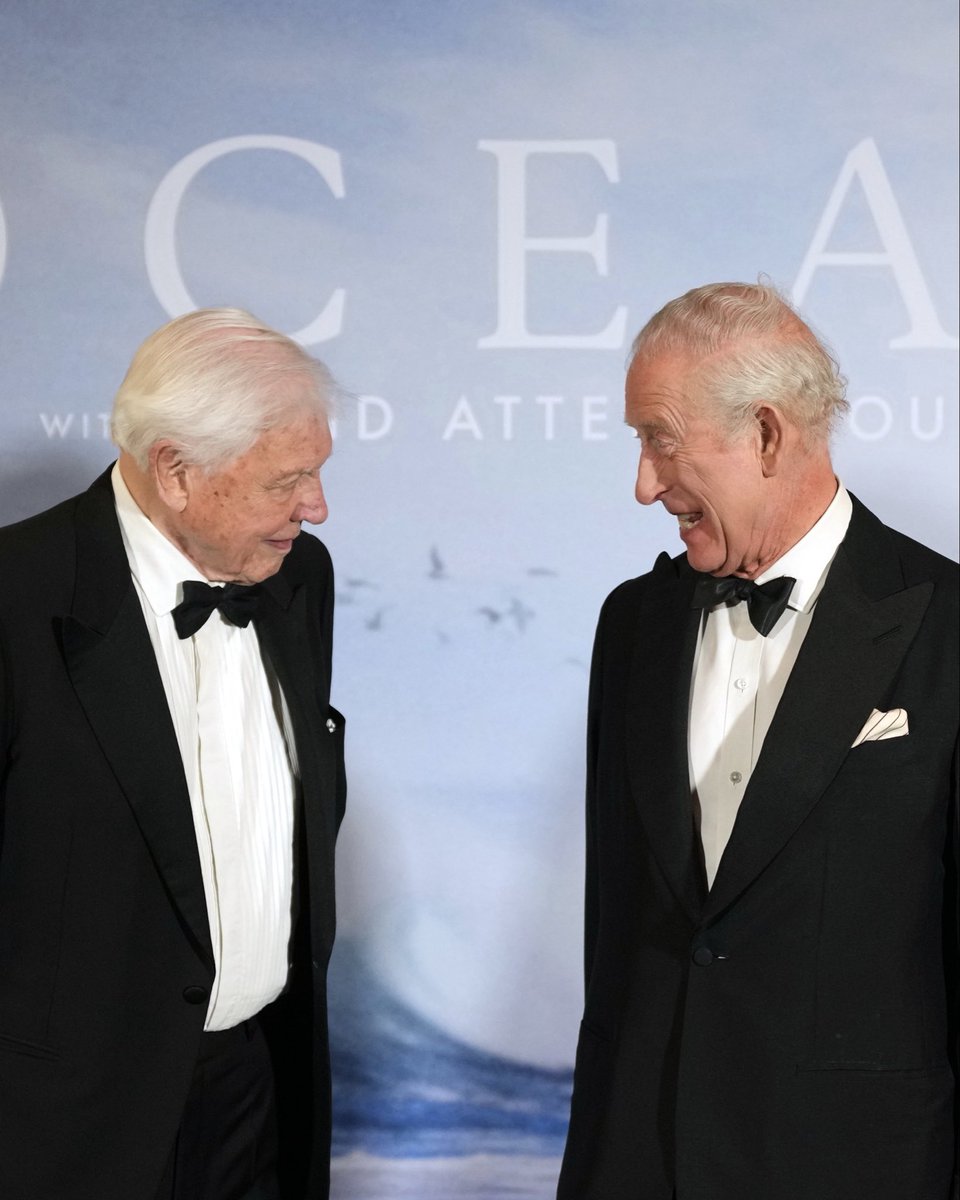
Wishing Sir David Attenborough a very happy 100th birthday. Enjoy your special celebration this evening! 🎈🦍🐆🦅🌿
Tune in to ‘David Attenborough's 100 Years on Planet Earth’ at 8.30pm on BBC One and @BBCiPlayer.
The fact that retiring MPs (some after just 1 term) are given a valedictory debate before every general election but the hereditary peers were given no time to commemorate their 50+ years of service and the nearly 1000 years of service by their ancestors is utterly shameful.
🇬🇧 How good is it to see British tradition on a May day.
Children dancing around the maypole in a country village.
This particular one in Welford-on-Avon in Warwickshire.
🇬🇧Solidarity with British Jews.
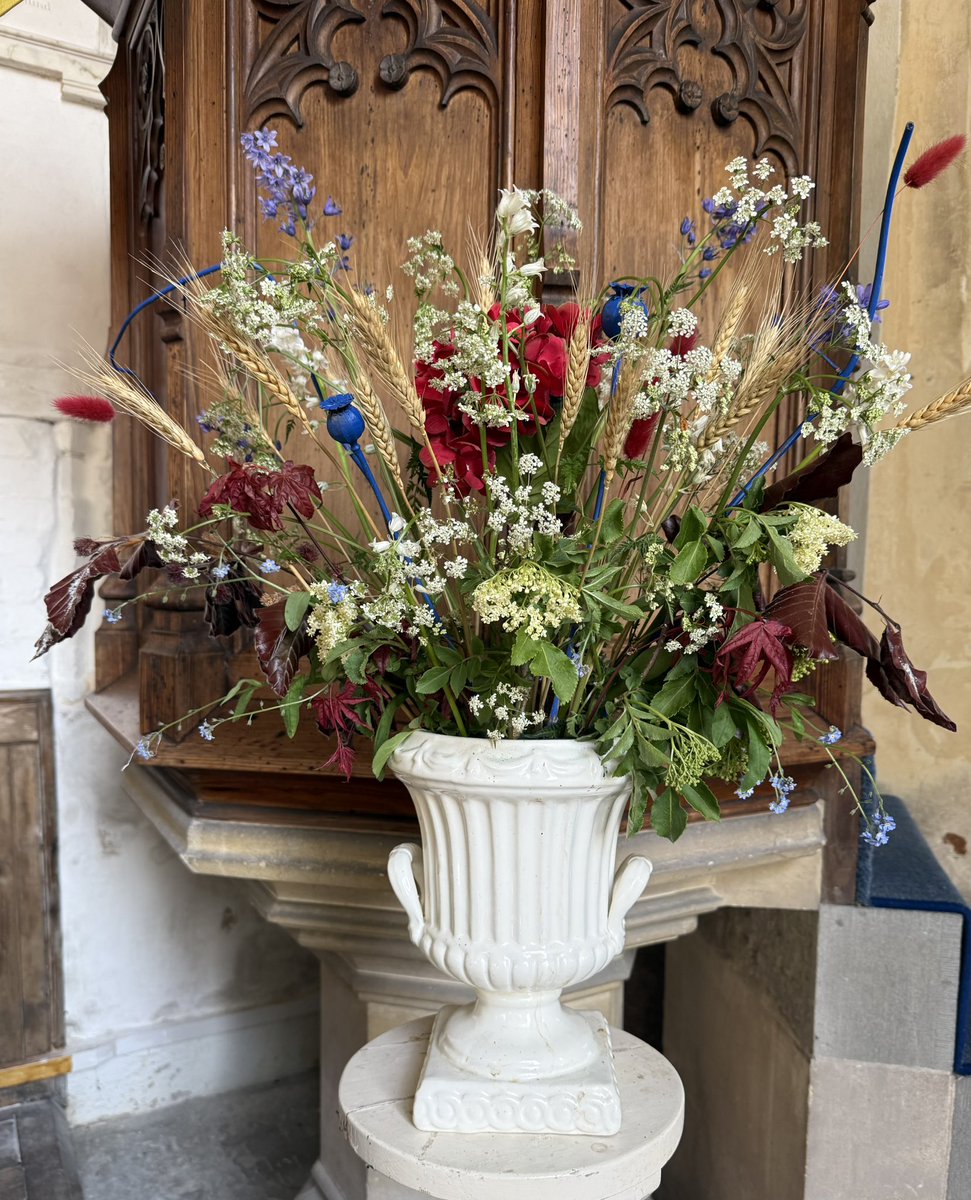
My heritage on my father’s side. They’ve contributed hugely to the British way of life; our history, prosperity and values, with achievements in all fields, and continue to do so. Red white & blue flowers. Forget-me-nots in remembrance of October 7th.
In the midst of all the news today, and with Parliament prorogued, many people may not have noticed that this was the final time the hereditary peers sat in Parliament before being forced out by Labour.
I want to pay an extra special tribute to them.
Combined they had 1784 years of parliamentary experience, wisdom and service to this country. That is not something easily replaced, and it should not be casually discarded.
Most were Conservatives. All were public servants.
They have brought to public life judgment shaped over decades, deep expertise, institutional memory, and a sense of duty that has strengthened Parliament and, very often, improved legislation in ways the public will never fully see.
Their record speaks for itself. They have served in war and peace, in government and opposition, in defence, diplomacy, farming, business, science and public service. They have not merely occupied seats in the Lords, they have contributed to the life of the nation.
That is why what has happened matters. Hereditary peers are a living part of Britain’s constitutional inheritance that Labour is casually tearing up.
Labour has rubbed away another part of our heritage, not to strengthen Parliament but to replace it with political appointees, four of whom it has already had to suspend the whip from because they were so inappropriate. That contrast says rather a lot.
At a time when public trust in politics is fragile, I think it is worth saying plainly that experience, seriousness and tradition still matter. Service still matters. Duty still matters.
So today, as an era closes, I want to put on record my profound gratitude and admiration for our hereditary peers. Britain has been better governed because of them. The Conservative Party has been stronger because of them. And Parliament will be poorer without them.
Their contribution will long outlast the petty politics that has brought this moment about.
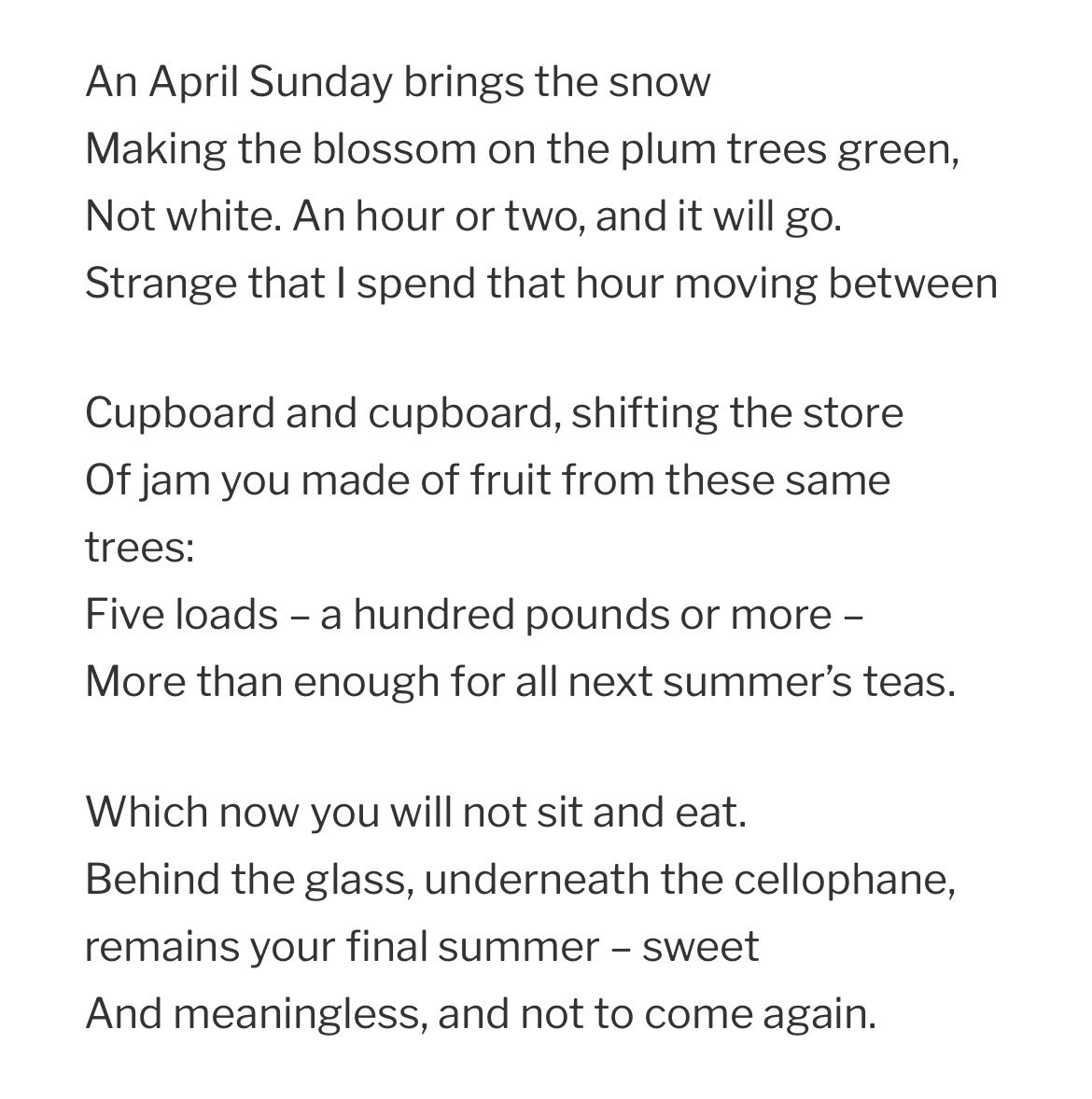
Larkin’s father died on 26 March 1948. A week the following Sunday it snowed in Warwick. This beautiful elegy was never printed in the poet’s lifetime and yet, arguably, it is his first great poem.
This door in Westminster Abbey is older than most modern nation-states. Made in the 1050s from an English oak, it's the only surviving Anglo-Saxon door in Britain.






![TheAttagirls's tweet photo. Woman of the Day prison reformer and philanthropist Elizabeth Fry, born OTD in 1780 in Norwich, the first woman to give evidence to a Select Committee. It was instrumental in the passing of the Gaols Act 1823, which separated the sexes.
Caring responsibilities came early to her. Her mother died when she was 12 — she had twelve siblings — and as a Quaker, she took an interest in the impoverished, the sick and prisoners. A “plain Friend”, she dressed plainly, did not dance or sing, and took philanthropy very seriously.
In 1813 and at the suggestion of another Friend, Elizabeth visited Newgate Prison and found women and children in small overcrowded cells where they had to manage washing, cooking, toilet functions, and sleep on straw. Some hadn’t even been tried at court. She was horrified.
“All I tell thee is a faint picture of reality; the filth, the closeness of the rooms, the furious manner and expressions of the women towards each other, and the abandoned wickedness, which everything bespoke are really indescribable".
She returned the following day with food and clothing, but family finances prevented her from doing more until 1816. At first, she concentrated on the children by funding a school inside the prison for them, but she found it impossible to ignore the plight of the women. They were at the mercy of male inmates who raped and sexually exploited them. On release, the few occupations available to women were beyond their reach. Life was without hope.
Elizabeth founded the Association for the Reformation of the Female Prisoners in Newgate and encouraged other affluent women to set up classes for women prisoners, providing them with materials so they could learn to sew and knit. It calmed them — “Already, from being like wild beasts, they appear harmless and kind" — and meant they had employable skills on release.
When she gave evidence to a Select Committee on 27 February 1818, she pulled no punches. She told them in graphic terms of the rapes and sexual exploitation suffered by the women. Her powerful evidence helped to secure the Gaols Act 1823 which required prisons to separate the sexes.
Other provisions of the Act included paying gaolers (to combat corruption), requiring doctors and chaplains to visit prisoners (still an important statutory requirement today), and greater emphasis on reform and rehabilitation.
The Gaols Act was far-seeing and genuinely progressive, but other than separation of the sexes, toothless. Town gaols and debtors prisons were excluded and there was no means of checking that its provisions were being met.
Elizabeth returned once more to give evidence to a Select Committee of the House of Lords in 1835, pointing out that "in many instances their condition is melancholy...they may truly be called schools for crime", that some still had "no instruction, no employment, no classification [of inmates]...and they get into a most low and deplorable state of morals...I would not say that all are in that condition, but I fear many are".
In those days, many prisoners faced transportation to New South Wales even for the most minor of crimes (for more serious offences, hanging was the go-to sanction). They faced eight months in vermin-infested cramped holds, often flooded with bilge-water, and strictly rationed fresh water. The women transported by the First Fleet had only the clothing they were standing up in and when this became infected with lice and had to be burnt, they were given rice sacks to wear. Elizabeth campaigned for better care and provision for them too.
In 1825, she published "Observations of the Siting, Superintendence and Government of Female Prisoners", an influential book that laid out in clear detail how penal regimes should be run.
Somewhere along the way, Elizabeth established a "nightly shelter" for the homeless in London after seeing the body of a boy who had frozen in winter and set up a system of volunteers to visit the poor and homeless and provide help and comfort to them. She campaigned against the slave trade, and in 1840, opened a training school for nurses. Florence Nightingale took a team of Fry nurses to the Crimea.
Her abiding principles of kindness and fairness sprang from her Quaker faith and she was the first woman — other than the late Queen, of course — to be depicted on a British banknote.
Elizabeth Fry died in 1845 at the age of 65. I cannot tell you how much I admire this woman.
Less than a century later, Westminster and Holyrood subsequently ditched Elizabeth’s truly progressive approach to prison as a place for rehabilitation, not punishment, and decided that it would be even more “kind and inclusive” to hold men in women’s prisons, as long as they claimed to be women too.
In wartime and in war zones, that would be regarded as a war crime under the Geneva Convention, and those officials who allowed it would be classed as war criminals.
It’s peacetime, allegedly, but I’d still call it a human rights violation, and I have a few choice words for all of those politicians and civil servants who nodded along with it. I hope their complicity haunts them.](https://pbs.twimg.com/media/HI0fqw5WYAAMbp4.jpg)