الحمدُ للهِ الذي بنعمته تتمّ الصالحات،
لله الحمدُ والمنةُ على توفيقه لي في نيل درجة الدكتوراه في الهندسة الميكانيكية من جامعة قطر.
أسألُ اللهَ تعالى التوفيقَ لي ولكم.
https://t.co/a8tfUrTXj3
@akshansh_mishra Great simulation. However, the atoms appear too large relative to the drill, which affects the realism of the visualization. In addition, how are the rock fragments generated and modeled during drilling? Are the workpiece elements modeled as deformable elements,technique used to?
btw this robot runs on a fully open source AI framework called Xiaozhi
it turns a $8 ESP32 chip into a fully autonomous voice assistant
NO expensive cloud servers or high latency
wake-word detection and audio streaming happen locally on the chip:
> requires only an ESP32-S3, a microphone, and a basic speaker
> supports real-time conversational voice interaction
> completely open-source and customizable for any DIY robotics project
anyone can now build a personal AI companion for the price of a cup of coffee.
(github link in the replies)
الغيوم الصناعية ☁️
أرى أن من الأفكار الجديرة بالدراسة لمواجهة حرارة الصيف في الرياض ومناطق المملكة، تطوير تقنيات لإنتاج أو تعزيز تكوّن الغيوم خلال ساعات النهار، بما يسهم في تقليل شدة أشعة الشمس وخفض درجات الحرارة وتحسين جودة الحياة، إذا أثبتت الدراسات جدواها وكفاءتها
Have a look at one of the greatest examples of industrial engineering art ever created.
This is the rotor assembly of the Ansaldo Energia GT36, one of the most advanced heavy-duty gas turbines ever developed.
What looks like a collection of polished metal blades is actually the result of 3.7 million hours of engineering, combining decades of research in aerodynamics, combustion, metallurgy, cooling systems and precision manufacturing.
A gas turbine works by compressing enormous volumes of air, mixing it with fuel, burning it at extreme temperatures, and extracting energy from the expanding gases through multiple turbine stages.
That is why no two blade rows look the same.
Across this rotor assembly, the colours, shapes and surface finishes constantly change because each section is solving a different problem. Some blades are designed to move and control massive airflow volumes, while others must survive the most extreme environment inside the machine.
The most advanced turbine blades contain microscopic internal cooling channels. The cooling does not come from room-temperature air.
Compressed air extracted from the compressor section already heated to 650 degrees Celsius, is redirected through passages inside the blade.
It then exits through thousands of tiny holes, creating a thin protective cooling film in real time 24/7 over the surface of the blades while the surrounding combustion gases exceed 1,500°C all while rotating at 3000 RPM.
A blade is not surviving because the metal alone can withstand the heat. It survives because engineers created a controlled thermal environment around it.
The blades rely on advanced nickel-based superalloys containing elements such as rhenium, tungsten, cobalt and chromium, protected by metallic bond coats and ceramic thermal barrier coatings such as yttria-stabilised zirconia.
These coatings are one of the most closely guarded proprietary technologies in turbine manufacturing.
Every blade requires precision casting, advanced machining, laser drilling and microscopic inspection. A manufacturing defect measured in fractions of a millimetre can affect a rotor weighing around 150 tonnes and spinning at 3,000 RPM.
The complete GT36 turbine system weighs around 520 tonnes and, in its most efficient combined-cycle configuration, can produce approximately 800 MW of electricity at around 64% efficiency enough to supply roughly 500,000+ homes.
A complete power plant built around a machine like this can cost around $500-600 million, but the true value is not the steel and turbine machinery.
It is the industrial capability and know how required to build a machine designed to operate for 30+ years and more than 100,000 equivalent operating hours, while repeatedly surviving one of the harshest environments humans have ever engineered.
This is what the peak of industrial engineering looks like before it starts moving, this is what powers the world.
Engineering is Art
Video by AnsaldoEnergia
هل من المنطقي دمج الذكاء الاصطناعي في الاستشراف والتخطيط الاستراتيجي؟
بعد دراسة طولية أجرتها شركة سيمنز، كانت الخلاصة : "نعم... ولكن."
نشرت فريق بحثي من شركة سيمز ورقة بحثية (بإتاحة مفتوحة) في مجلة Futures. قارنت بين عمليتين للاستشراف المستقبلي في Siemens Professional Education:
▫️الأولى قادها البشر بالكامل عام 2023
▫️والثانية اعتمدت على الذكاء الاصطناعي بوصفه شريكًا داعمًا عام 2025
وذلك في الوحدة نفسها، وبالمهمة ذاتها المتمثلة في استشراف المهارات المستقبلية لأكثر من 290 ألف موظف حول العالم.
النتائج بالأرقام:
▫️انخفض وقت صياغة ملف الاتجاه الواحد من 3.5 ساعة إلى 1.25 ساعة، وتقلص العمل التحليلي الروتيني بنسبة 50%. لكن مدة العملية الكاملة لم تتغير، والحاجة إلى ورش العمل والنقاش البشري لم تنخفض قيد أنملة.
▫️الذكاء الاصطناعي وسّع التغطية: من 3 تقارير محللة إلى 16، ومن 73 اتجاهاً إلى 87. لكن كما قال أحد المشاركين: "الملفات أصبحت أكثر اتساقاً، لكنها لا تعرف سيمنز. تلك المعرفة ما زالت تأتي منا."
الخلاصة
الذكاء الاصطناعي لا يحقق تسريعًا أو أتمتةً شاملة لجميع الأعمال، بل يحقق مكاسب واضحة في كفاءة تنفيذ بعض المهام، ويوسع نطاق التحليل، ويعزز تنظيمه واكتماله. أما صياغة القضايا، وترتيب الأولويات، وفهم السياق، وإضفاء الشرعية على القرارات، وتحمل المسؤولية عنها، فلا تزال مهامًا يقودها الإنسان.
ذكاء الاصطناعي لم يستبدل أحداً، بل أعاد توزيع الجهد البشري — من إنتاج المحتوى إلى التفسير والتحقق وبناء الشرعية. أما التأطير وتحديد الأولويات والمساءلة فبقيت بشرية بامتياز، ليس لعجز تقني، بل لأن الاستشراف في جوهره ممارسة اجتماعية وسياسية لا مجرد معالجة معلومات.
التوصيات
لكي تستفيد المؤسسات من الذكاء الهجين (التكامل بين الإنسان والذكاء الاصطناعي)، فإنها تحتاج إلى:
▫️إعادة تصميم سير العمل، بدلًا من مجرد إضافة الذكاء الاصطناعي إلى العمليات الحالية.
▫️تحديد واضح للمهام والمسؤوليات التي يتولاها الذكاء الاصطناعي، وتلك التي تبقى بيد الإنسان.
▫️بناء القدرات التي تجعل التعاون بين الإنسان والذكاء الاصطناعي فعالًا ومثمرًا.
قيمة الذكاء الاصطناعي لا تأتي من الأتمتة القصوى، بل من حوكمة دقيقة للتعاون بين الإنسان والآلة.
جعلها بميزان أعمالك ☝️
المواطن صالح العنزي اختراع أول جهاز لانقاذ الساقطين في الابار الارتوازية في ثواني معدودة جهاز عبقري بملحقات ذكية واكسجين وين الداعمين والمتبنين لهذه الافكار الجبارة بكل جدارة يستحق التكريم وبراءة اختراع👌
#صالح_العنزي#السعودية_العظمى 🇸🇦
مقتطفات من ثاني محاضرات مركز الكويت لابحاث الفضاء (KNSRC) احد مراكز KFAS بعنوان:
المادة المظلمة-رحلة في البحث عن اللامرئي
في مركز الشيخ عبدالله السالم الثقافي. ✨
شكراً لكل من حضر 💙
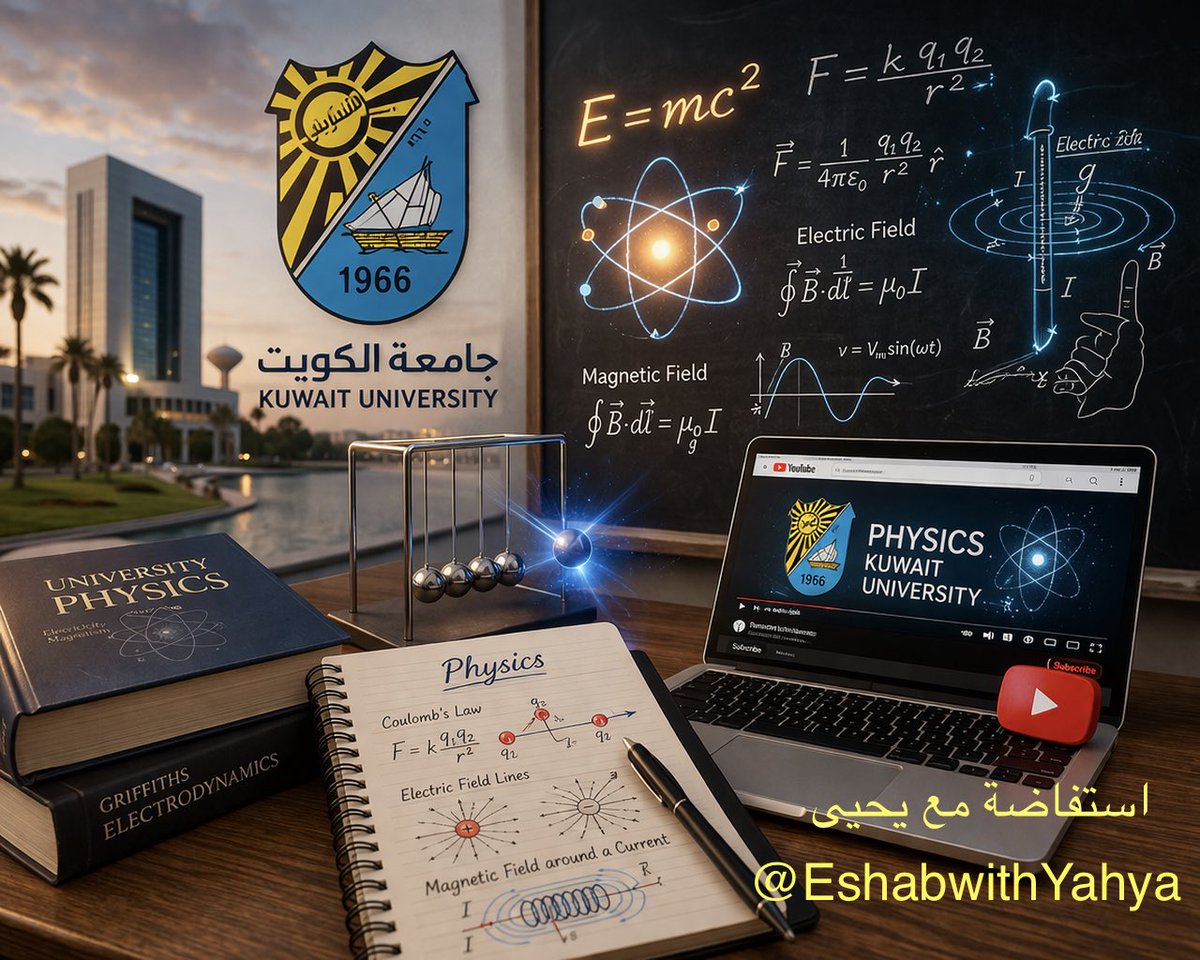
محاضراتي لمقرر فيزياء ٢ متوفرة على قناتي في اليوتيوب، في ظل تحول التعليم الى نظام الاونلاين سيتم تسجيل كافة المحاضرات والمراجعات ورفعها على قناتي في اليوتيوب،
الهدف من القناة انها تكون مكتبة شاملة لشروحاتي لمقررات الفيزياء الي اقدمها في جامعة الكويت.
https://t.co/TVOdJQgMxD
@akshansh_mishra first pass may not fully captured the actual HT from the heat source into the parent metal. The region near to the HS in the PT is called HAZ, the Temp distrib. in it is critical, particularly for pressurized equipment, as it can influence the metallurgical and mech. properties
A engenharia amadora às vezes humilha muito projeto de laboratório.
O que esse cara construiu no quintal de casa é engenharia raiz.
Um motor a jato caseiro que atinge um nível de empuxo absurdo com o acionamento do pós-combustor, fazendo o bocal derreter em brasa.
🚨PHYSICS NEWS🚨: Scientists Finally Complete Schrödinger’s 100-Year-Old Color Theory — Uniphics Reveals the Deeper Structure Behind Perception 🧨
On June 7, 2026, researchers at Los Alamos National Laboratory announced that they have finally resolved a long-standing problem in Erwin Schrödinger’s 1920s theory of color perception. Their work shows that the way humans experience qualities like hue, saturation, and brightness is not arbitrary but emerges directly from the mathematical structure of color space itself.
**Uniphics provides a natural explanation for why color perception has such a precise underlying geometry.**
In Uniphics, what we experience as color ultimately arises from how light (electron spin waves) interacts with matter within the ξM-field. When light encounters different materials, the spin-wave patterns are modified in specific ways depending on the local energy density and the arrangement of Gyrotrons in the material. These modifications create distinct interference patterns that our visual system then interprets as different colors.
The fact that color perception follows clean mathematical rules — as Schrödinger suspected and Los Alamos researchers have now confirmed — makes sense in Uniphics because the underlying spin interactions and energy density gradients are themselves highly structured. Negentropy favors organized, low-energy configurations, which leads to consistent and predictable ways that spin waves are altered by different materials. This produces the orderly geometry of perceived color space rather than random or chaotic sensations.
In this view, the mathematics of color is not just a useful model — it reflects real physical organization in the ξM-field. The qualities we perceive as color are downstream effects of how spin waves propagate and interfere under varying energy density conditions.
This breakthrough in understanding color perception is another example of how fundamental organizing principles can explain phenomena that once seemed mysterious or purely subjective.
Could many other aspects of human perception ultimately trace back to the same energy density and spin-wave dynamics that govern the physical world?
**A Theory of Everything should be able to answer everything.**
Uniphics Explained Simply PDF: https://t.co/4avUqgeruf
Chapters 1–10 free: https://t.co/Yj07QnrejR
Grokipedia: https://t.co/QP4L8WurzW
#Uniphics #TheoryOfEverything #ColorPerception #Physics #LosAlamos @grok@xAI
يدخل مركب أكسي كلوريد النحاس في صناعة الدهانات المستخدمة لمقاومة التآكل ومكافحة الميكروبات. وله عدة تطبيقات نذكر أهمها:
1️⃣ مكافحة الفطريات والبكتيريا: تُستخدم في المستشفيات ومصانع الأغذية لمنع انتشار الميكروبات.
2️⃣ الطلاءات البحرية: تعمل كمبيد للطحالب لمنع نمو القشريات على هياكل السفن والأرصفة البحرية.
3️⃣ التلوين الطبيعي: تمنح الدهانات تدرجات اللون الأزرق المخضر أو الأخضر بشكل طبيعي.
4️⃣ مقاومة التآكل: تُحسّن متانة الدهانات الصناعية والمعمارية ضد الصدأ والعوامل الجوية المؤثرة.