FORMER RFK ADVISER: MAHA HAS BEEN CAPTURED BY CORPORATE INTERESTS
Former RFK Jr. adviser Tiffany Cianci reveals corporate interests are absorbing the MAHA movement it was built to fight.
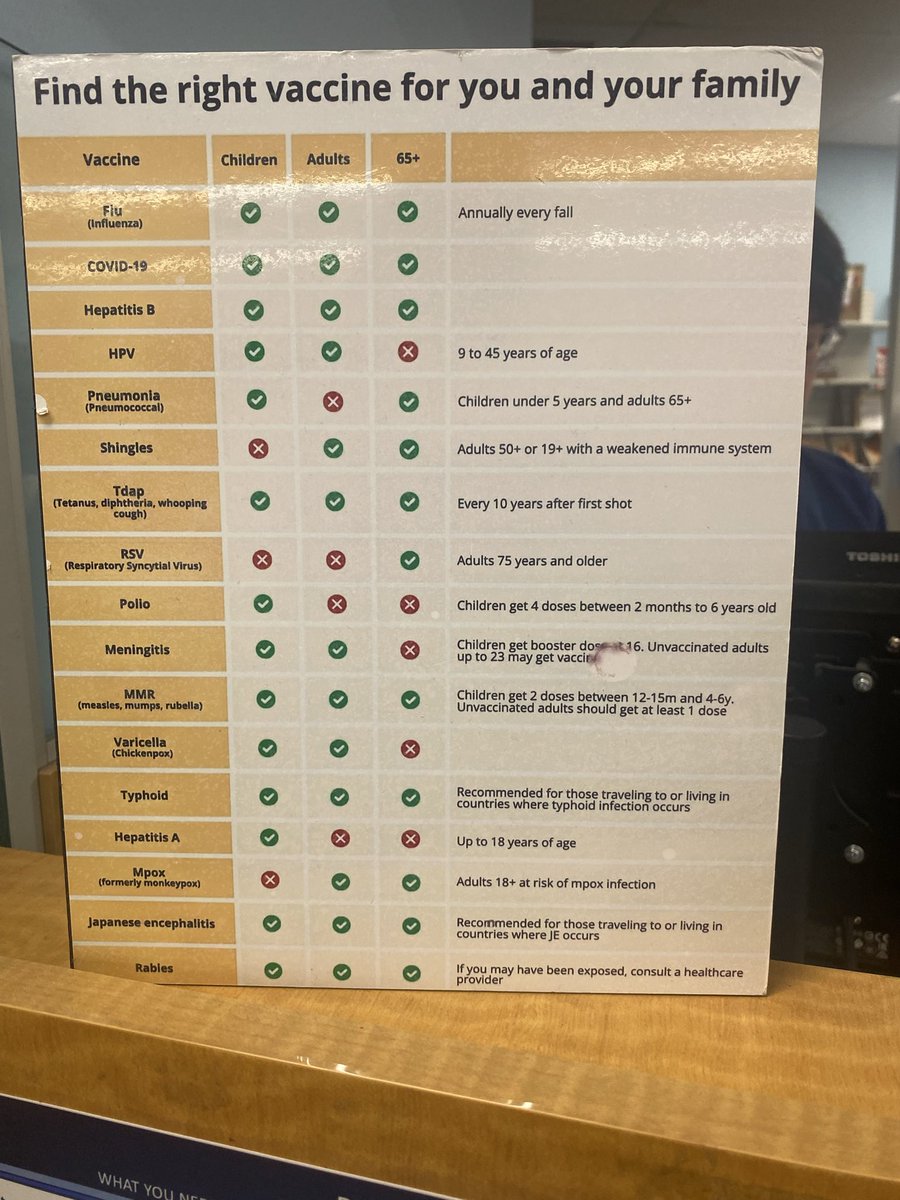
RFK Jr. now claims a measles outbreak is tied to missed COVID-era vaccinations, and points to Anthony Fauci’s past warnings. Cianci questions the shift and asks whether the Trump administration set Kennedy up to fail.
The warning signs are everywhere. OpenAI and Anthropic sponsored the MAHA Summit. Corporate interests that MAHA once challenged now have a seat at the table.
Cianci points to HHS failures and Susie Wiles, who previously lobbied for Pfizer and Bayer/Monsanto and advised Benjamin Netanyahu, as blocking meaningful change and weakening the MAHA agenda.
So where is RFK Jr.? Why is he silent as the MAHA movement is being dismantled? And what should they make of his reported $2 million book advance defending Israel? @TheVinoMom breaks it down.
"Where am I, and what is the time?" he said aloud to the ceiling.
"In the House of Elrond, and it is ten o'clock in the morning." said a voice. "It is the morning of October the twenty-fourth, if you want to know."
Image: 'Frodo Waking in Rivendell' – Carol Phenix
#TolkienSociety #Tolkien
Bill Gates financed the FIRST-EVER creation of 16 man-made viruses using AI.
The Gates-funded mad scientists used AI to design entire viral genomes and then physically manufactured them.
Now, he’s claiming the world faces imminent AI bioterror attacks—the VERY capability he helped fund into existence.
This demands an FBI investigation.
Remember that the people who created COVID were given awards.
The people that were injured by COVID were labelled terrorists.
War is peace.
Freedom is slavery.
We are past 1984.
YOUR DOG’S AND CAT’S RABIES VACCINES CAN NOW BE SELF-REPLICATING mRNA
Many vets will NOT tell you they’re injecting Merck’s experimental saRNA shots (NOBIVAC NXT) into your pet.
The self-replicating genetic material can likely shed onto human owners.
This must be STOPPED.
While I am not terribly worried about oral ingestion of the mRNA or spike, listen to the results of the mRMA injected livestock.
Think you're faring much better? You're not.
LEDs are more energy-efficient, yet they also pose a threat to human health.
For the past two decades the global shift toward energy-efficient light-emitting diodes has drastically altered how we light our homes and offices. While highly beneficial for reducing electricity bills, these lights emit a narrow spectrum dominated by short blue wavelengths and entirely lack the long-wavelength red and infrared light found in natural sunlight and older incandescent bulbs.
Emerging research led by Professor Glen Jeffery at University College London shows that our cells’ powerhouses, the mitochondria, rely on these missing red wavelengths to function. Without them, mitochondrial respiration is suppressed, leading to systemic infrared starvation that can disrupt cellular energy production, cause chronic inflammation, and accelerate aging.
This lack of natural spectrum light is more than a matter of eye strain; it has deep metabolic consequences. Studies show that exposing the body to specific red and near-infrared light stimulates mitochondria to consume more glucose and oxygen, dramatically reducing blood glucose spikes and regulating insulin levels. Conversely, prolonged indoor exposure to red-deficient, blue-heavy LEDs is linked to metabolic dysfunction and cellular degeneration, contributing directly to chronic conditions such as type 2 diabetes, cognitive decline, and vision loss.
As public health researchers warn of this modern environmental hazard, experts suggest reintroducing balanced full-spectrum lighting or simple red-light exposure to help restore our natural metabolic rhythms and protect long-term health.
[Barrett, E. M., & Jeffery, G. (2026). LED lighting (350-650nm) undermines human visual performance unless supplemented by wider spectra (400-1500nm+) like daylight. Scientific Reports, 16(1), 3061. DOI: 10.1038/s41598-026-35389-6]
Imagine following nearly 13 million real people for more than 10 years just to see what cholesterol level helps them live the longest. That is exactly what Korean scientists did in a giant 2019 study. They tracked 12.8 million adults who had check-ups between 2001 and 2004, and they kept watching until 2013. More than 694,000 people died during that long stretch.
The results were clear and surprising. Cholesterol and death formed a U-shape. Very low cholesterol was linked to higher death rates. So was very high cholesterol. The sweet spot for the longest life was 210 to 249 mg/dL for most adults. That is higher than many doctors call “ideal.” Younger people had a slightly lower best range, but still not the super-low numbers often pushed today.
Because the study lasted so many years, reverse causality is less likely to explain the low-cholesterol danger. Reverse causality means a hidden illness might lower your cholesterol right before it kills you. With more than a decade of follow-up, early sickness cannot easily account for the extra deaths seen in people who started with low cholesterol. The pattern held across ages and for both men and women.
The huge number of people—almost the entire adult population of a country—makes the findings hard to ignore. Smaller studies can be wrong by chance. This one is massive. It shows that moderately higher total cholesterol, not the lowest possible number, went with the best chance of living longer in this large group.
In short, the biggest study of its kind found that cholesterol levels in the low-to-mid 200s were tied to the longest lives, and the long tracking time makes it tougher to blame the higher death rates at low levels on reverse causality alone.
What if the doctors teaching you, the researchers testing new drugs, and the journals you trust were all being paid by the same companies that sell those drugs?
Arnold Relman, who edited the New England Journal of Medicine for 14 years, believed that is exactly what was happening. In 1980 he warned about a new “medical-industrial complex”—a growing web of for-profit hospitals, labs, and companies that treat health care like a business instead of a service for sick people. Over time he became especially worried about the pharmaceutical industry’s influence.
Relman said the drug companies were buying the medical profession. They paid for research, sponsored medical education classes, and funded the experts who wrote articles and guidelines. Academic medical centers and universities, he argued, were letting themselves become “paid agents” of the industry. In his view, this was disgraceful because doctors and scientists are supposed to put patients first, not company profits.
He saw the problem in continuing medical education, where drug companies helped pay for the courses doctors must take to keep their licenses. He argued that education should be free of marketing pressure so doctors learn what is best for patients, not what sells the most pills. As editor, he made the New England Journal one of the first to require authors to disclose any money they received from companies whose products they wrote about.
Relman thought the solution was bigger than better rules. He believed medicine should be non-profit, with doctors paid a salary instead of fees for every test or procedure, and with a simpler payment system that does not reward unnecessary care. He kept sounding the alarm for decades, saying the commercial side of medicine had grown even worse than he first predicted.
BREAKING: 3D-PRINTED FAKE MEAT and FISH have officially entered American grocery stores WITHOUT disclosing 3D-PRINTING on the packaging.
Israeli company Steakholder Foods is behind the rollout, selling the following products under the brand name PERFECTA:
“Marbled Steak”
“Filet Mignon”
“Chicken Breast”
“Salmon Patties”
“White Fish Patties”
The fake meat is printed using soy flour, rapeseed oil, modified starch, methylcellulose, gums, and artificial meat coloring.
I will NOT be eating this slop.
In one study, most chickadees without a bird feeder present didn’t make it to spring. Most with one did.
A Wisconsin study followed hundreds of marked chickadees over three winters. 69% of the birds with feeders readily available survived. Only 37% survived without.
A chickadee lives on the edge in winter. Every day, it eats about 10% of its body weight, then burns all of it shivering through the night. Every morning, it starts near empty.
About half of what it eats in winter is insects: eggs and pupae tucked into bark and twigs, waiting out the cold.
Those insects come from native trees. An oak feeds hundreds of kinds of caterpillars. A Bradford pear or a crape myrtle feeds almost none.
Now picture the average subdivision. Lawn, a Bradford pear out front, a row of boxwoods. A chickadee working that yard in January is picking through a nearly empty pantry.
Don't beat yourself up. Most of us didn’t choose those plants. The builder did. Here's what you can do:
Stock a feeder with black oil sunflower or put up a plain suet feeder.
Plant one native tree. Fall is the best time to do it. Oaks are the gold standard, with native cherries and willows close behind. The National Wildlife Federation’s Native Plant Finder shows which plants feed the most caterpillars where you live.
And leave the leaves under it. A lot of moths spend the winter as pupae in leaf litter, and those make next spring’s caterpillars.
You don’t need a perfect yard. Researchers point out that a neighborhood where lots of people plant some natives does more than one person going all-native.
Just do what you can, the chickadees will appreciate it.
Sometime over winter, this caterpillar's heart will stop beating. Then its gut freezes. Then its blood. Then the rest of it.
In spring it thaws out and crawls off like nothing happened.
Woolly bears make their own natural antifreeze and pull water out of their cells, so the ice forms around the cells instead of inside them. They can freeze and thaw more than once in a winter, though it is hard on their bodies.
The brown band doesn't predict anything about winter. It shows age, and caterpillars from the same mother come out with different bands.
They spend the winter under your dead leaves. Rake some into a bed instead of bagging and tossing them. In the spring, they'll emerge as Isabella tiger moths.
Dont forget what Yales LISTEN STUDY did to its vax injured & LC research participants
people need to know how the injured are treated, what happened to their data & access to their own medical records at all times
https://t.co/BuYJAPBbAB
I'm now four hours in reading this aloud and there are some genuinely surprising, repeated, and persistent vaccine injuries here, aside from heart and lung inflammation, Bells Palsy, and swelling in arms and legs plus nasty rashes.
The part that rattles me: Depression and suicide ideation. Massive headaches. Memory loss. A sense that a belt is being tightened around one's head. It just keep cropping up.
What does all that sound like to you? Seems like brain damage from poisoning. I don't recall that as listed among the side effects.
Also, don't take my word for it. This is what people actually reported again and again.
https://t.co/lym8ckIRd7
Vivaldi's “Winter,” visualized in a fascinating way, so that the auditory experience is even more intense; one can literally “see” the music, so to speak
In every case the company knew first. By decades. In writing.
1924: the makers of leaded petrol lose five workers to lead madness in one plant. Their own scientist calls the product a gift of God. Lead stays in the tank until 2000, and takes a measured slice of IQ off every child born in the century.
1930s: the asbestos company's own doctors find the lung disease and the company settles the lawsuits quietly, with silence clauses, for 40 years.
1953: the tobacco companies meet in New York, read their own research, and set up an institute to manufacture doubt about it. It runs for 44 years.
1961: the chemical company finds its non-stick coating in the blood of its workers and the livers of its rats. It tells no one for 40 years. It is now in the blood of every person on earth.
1965: the sugar industry pays three Harvard men to blame fat. The paper runs in the top journal. The payment is found in a box in 2016.
1966: the maker of PCBs finds dead fish downstream of its plant and writes an internal memo recommending the company say nothing. It is 1977 before they are banned.
1990s: the makers of the opioid know the addiction rate from their own files and tell doctors it is under one percent.
2000s: the makers of a diabetes drug see the heart attacks in their own data and keep selling. 2010 before it is pulled.
The pattern is not a secret conspiracy. It is a filing cabinet. The company knew, the knowledge sat in a drawer, and the consensus outside the building was built on the brochure.
So when the brochure says a seed oil is heart healthy and the trans fat is gone and the formula is complete, ask the only question the last century has ever answered the same way.
What is in the drawer.
This is how hard pharma-bought hospitals fight against an unpatented, low-cost, life-saving medicine, which has saved the lives of COVID patients and COVID vaccine victims.
I showed abundant proof in my 2021 book The Defeat of COVID that ivermectin indeed saves lives.
A trauma surgeon from the hospital that treated America’s first diagnosed COVID patient just said this to Ron Johnson. Dr. James P. Miller. Providence Everett. Washington.
He told the roundtable the head of infectious disease at his own hospital privately said he was working with the state to restrict the civil rights of the unvaccinated.
Not a comment section. A surgeon. On the record.
Miller’s fuller line: including the right to drive - and therefore work - by tying licence renewal to the shot.
He named that official in a prior sworn statement as Dr. George Diaz. He said Diaz wanted the unvaccinated kept out of ordinary life, and claimed he was talking to the governor’s office about turning it into policy.
Same hospital, Miller said, endorsed refusing care to the unvaccinated. He opened a free clinic at a church because of it.
That’s his testimony.
Monday. Capitol Hill.
They called it public health.
He called it what it sounded like in the corridor:
papers, licences, and a list of who still gets to move.