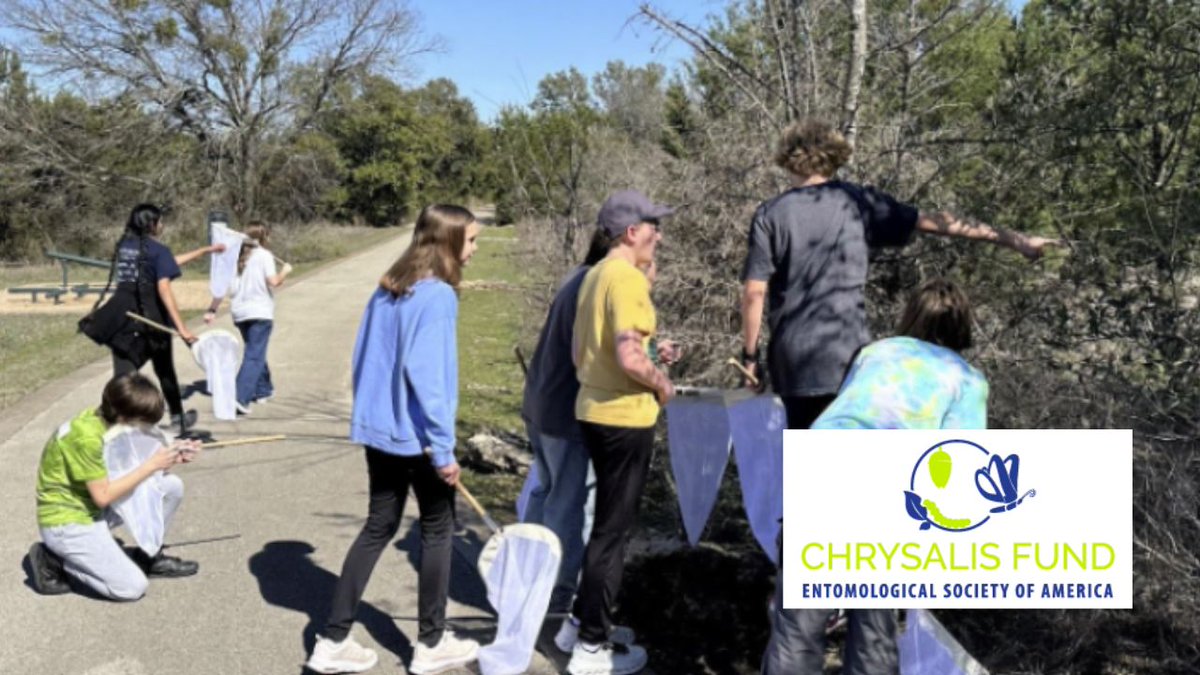
The Chrysalis Fund helps students discover science through insects, biodiversity, and real-world exploration. Read about the 6 projects selected for 2026 and see how donor support is turning creative educational ideas into meaningful learning experiences. https://t.co/ekbiZ0Dvnk
A new study explores patterns of pigmentation and wing scale structure in Delias butterflies that reflect both visible and ultraviolet light. Researchers say the classical palette of warning coloration may contain colors that humans have long overlooked. https://t.co/Akh4MfiW1u
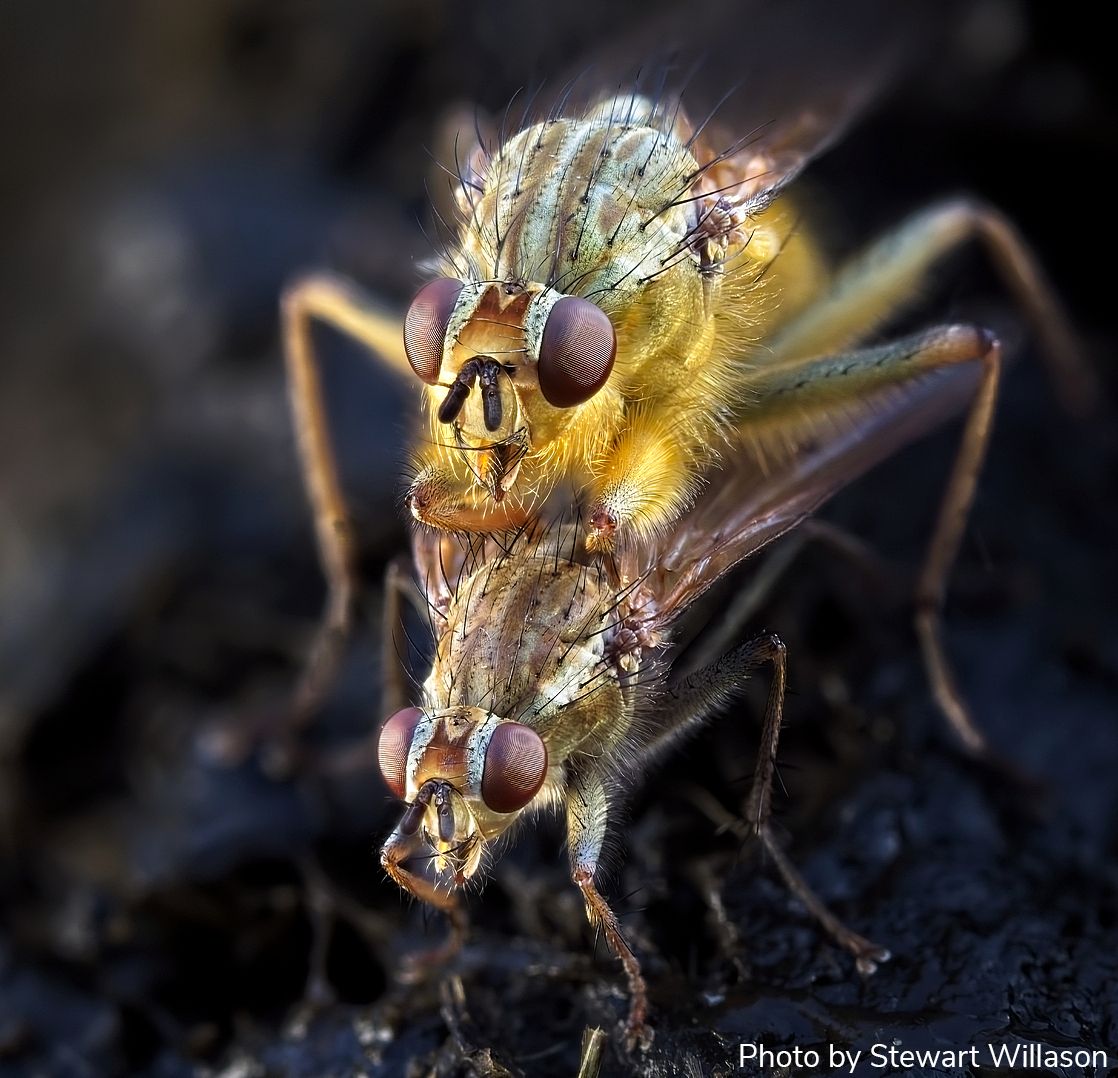
Arthropod Photo of the Week: September 30, 2026
Golden dung flies
Scathophaga sp.
Diptera: Scathophagidae
Observed in Oregon, USA
By Stewart Willason, Oregon, USA
#arthropodPOTW
For entomology students, life does not always take place amid a crowded campus and busy hallways. One entomology graduate student shares how working and living at a remote research station has shaped her academic experience and career journey. https://t.co/pUKwSFhvn5
On 28 September, a jet-powered drone slammed into the headquarters of the National Academy of Sciences of Ukraine in Kyiv, killing at least two people and destroying a section of the historic building. https://t.co/f8ZsSfjxwB
Meet Clay Morrow, Ph.D., postdoctoral researcher at Cornell, expert in plant-insect interactions and cross-disciplinary innovation, and subject of the next installment of our "Standout Early Career Professionals" series. https://t.co/3DmiGJXBav
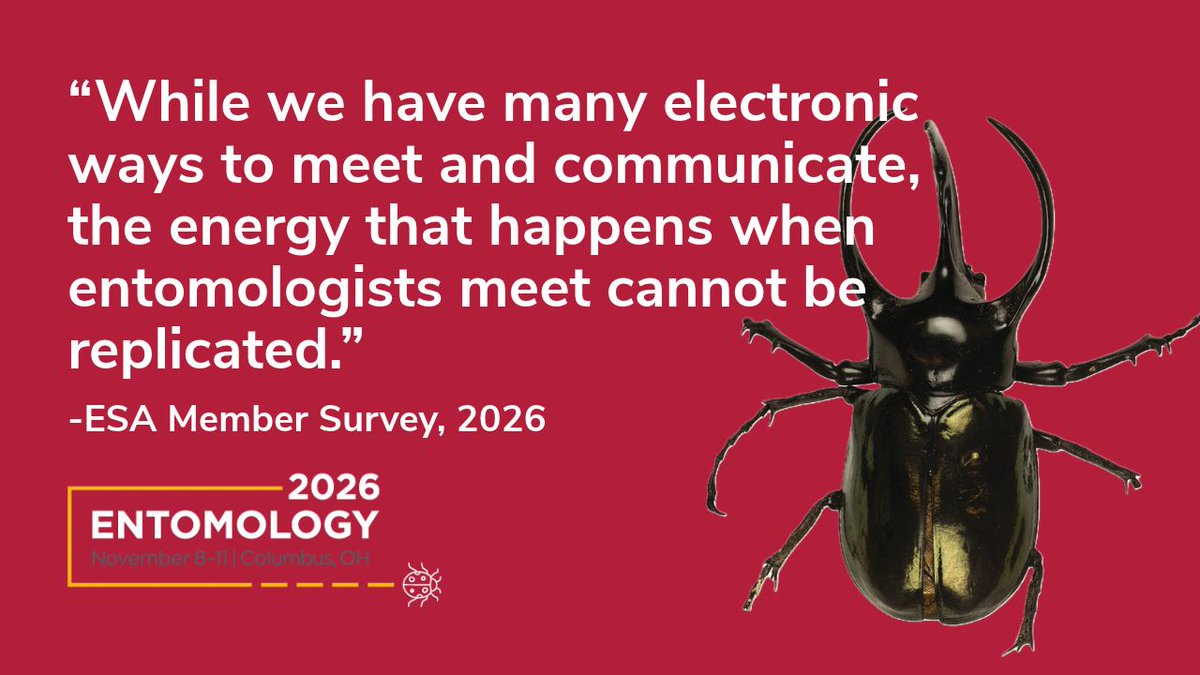
When surveyed, ESA members said the opportunities for networking, learning, and presenting research keep them coming back to the ESA Annual Meeting year after year.
See the energy for yourself at #EntSoc26 in Columbus, November 8-11: https://t.co/32sTy13XpP
Call for Photos! 📸🐞
Submit your best digital images of insects and related arthropods for consideration to be featured at the National Insect Photo Exhibition at #EntSoc26. Selected images may appear in ESA’s #arthropodPOTW series.
Deadline: October 12 https://t.co/VubHAd7OMZ
Arthropod Photo of the Week: September 23, 2026
Foxglove aphids
Aulacorthum solani
Hemiptera: Aphididae
Observed in Virginia, USA
By Tong Zhang, Virginia, USA
#arthropodPOTW
Happening tomorrow, September 23, at 12 p.m. ET! Learn more about AI tools in education and extension, including best practices, pitfalls, and practical applications ⤵️
ESA members, join the discussion live: https://t.co/QWKh06bO77
ESA Webinar | September 23: Find out what generative AI means for entomological education. Whether you’re a professor, K–12 teacher, extension agent, or other educator, this session will help you navigate the utility—and drawbacks—of AI tools. https://t.co/izCsec401G
Since Carl Linnaeus published Systema Naturae in 1735, taxonomists have classified over 1 million species. A new special collection in Insect Systematics and Diversity celebrates the past, present, and future of insect systematics: https://t.co/0pNw7VzYdJ @OUP_Academic
Four out of five respondents to the survey say federal policies since 2025 have caused an "extremely negative impact" or "irreparable harm" on their field of science. https://t.co/nO0ZEq7dwr
For a second year, a survey of nearly 1,000 scientists across a variety of life sciences details how federal government policies have created ongoing disruptions to American research and to the scientific workforce. https://t.co/nO0ZEq7dwr
🎥 Research sheds new light on potato leafhoppers. Co-author @Edel_PLopez discusses "Seasonal phenology of Empoasca fabae (Hemiptera: Cicadellidae) in Québec, Canada," the winning paper of Environmental Entomology's 2026 People's Choice Award. https://t.co/Rhn9UcW2Ip
@UCRiverside Said Schroeder, “Taxonomy is the cornerstone of conservation. If we don’t describe species, we don’t know they exist & can’t conserve them. Honoring Taylor [by] naming these species after her is a way to honor conservation science & bring attention to all the unknown diversity.”
There’s one less blank space in taxonomy: ESA members and @UCRiverside researchers Sarah Schroeder and Christiane Weirauch have named a new insect genus after pop star Taylor Swift.
https://t.co/ScYhBN2dfK
One telling data point from the study: Only 2.5% of at-risk insects and arachnids have nationwide protection under the U.S. Endangered Species Act, compared to 27.7% of at-risk birds. https://t.co/vxWmnjKHIv
Most U.S. insects and arachnids remain unassessed for conservation risk, and even many known at-risk species lack legal protection. A study quantifying this lag in arthropod conservation reveals a major blind spot in efforts to save vulnerable wildlife. https://t.co/vxWmnjKHIv