We’ve enjoyed the many ideas, new connections, and opportunity to interact with the broader evidence synthesis community during our time on Twitter/X. We’re pausing our activity on X, but you can still find us at @envevidence.bsky.social and on our LinkedIn page. See you there!
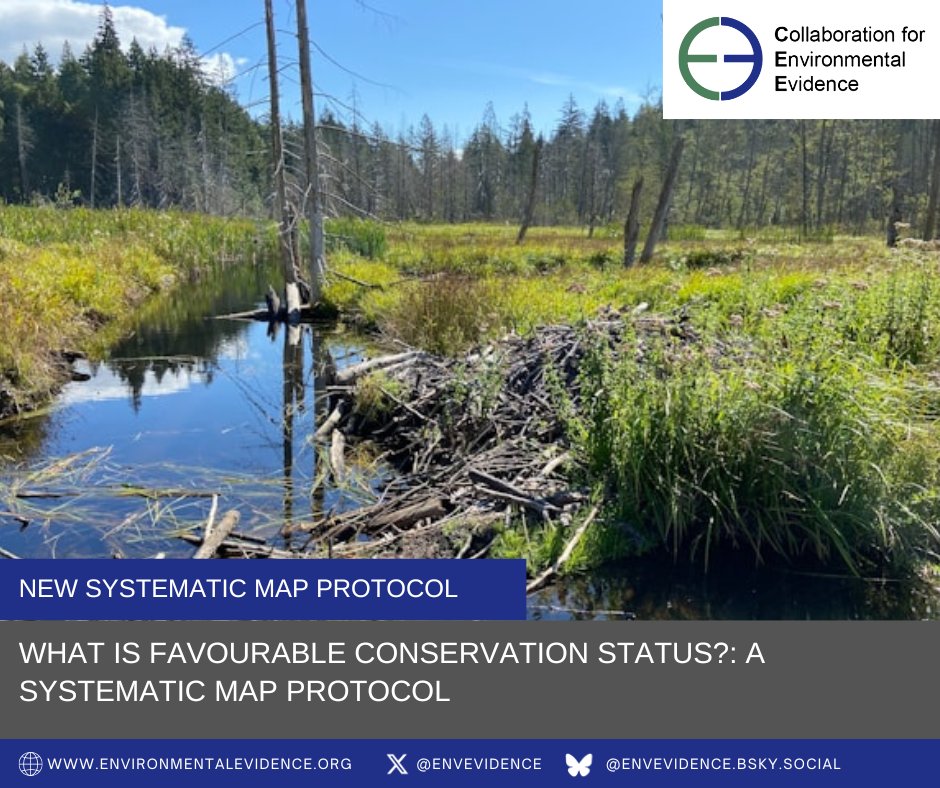
New #SystematicMap protocol! Oswald et al. will work to understand how ‘favourable conservation status’ is defined & applied in policy/practice #Science4Policy
Read it here: https://t.co/BQOuUhW8Ov
We are seeking #GreyLiterature for an ongoing @FishOceansCAN evidence synthesis on the effects of shoreline alteration activities (#dredging, etc) on temperate fish productivity. Please get in touch if you have any literature or data related to the topic! Deadline is Apr 30, 2025
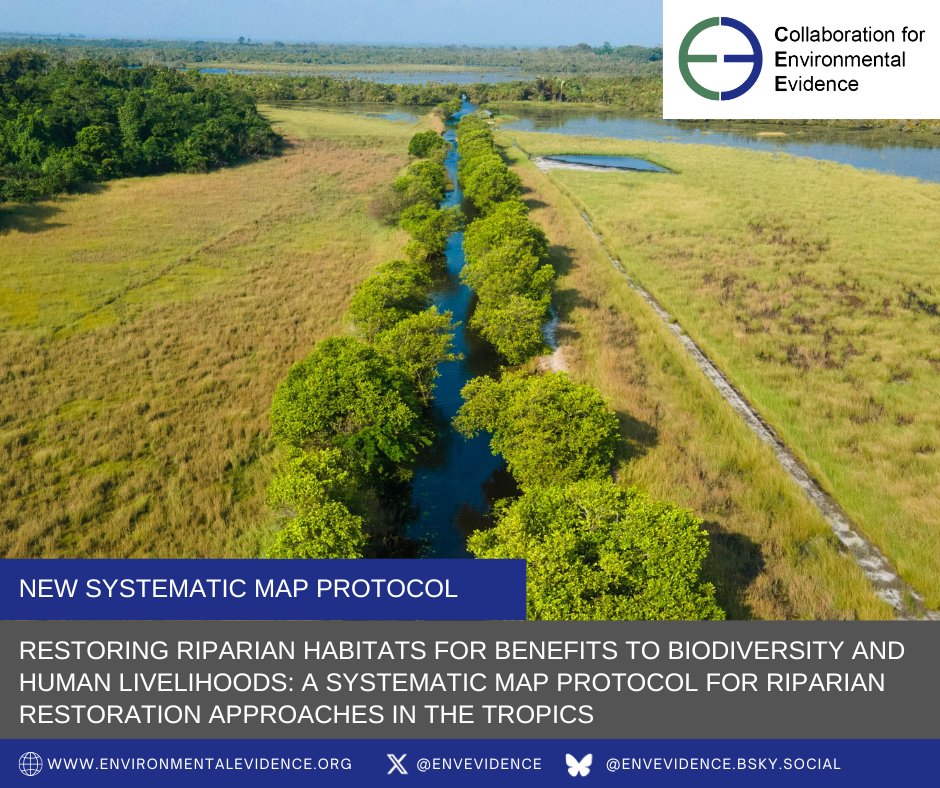
New #SystematicMap protocol published! Davis et al will identify and collate existing evidence of riparian restoration in the tropics.
Read the full article here:
https://t.co/K3NCCMX89K
Just published! Check out this new #SystematicReview on the effect of cropland to grassland conversion on GHG emissions from peat soils.
Read the full article here:
https://t.co/nhC4W0LEeR
Call for submissions! 📢
Environmental Evidence is calling for submissions to our upcoming Collection on current and future use of AI for systematic #EvidenceSynthesis in environmental management.
Submissions due: 28 February 2025
https://t.co/bIctX9pO2Q
What happens when collaboration meets evidence? 🌿🔗 @Kathryn_A_Monk, Chair of Collaboration for Environmental Evidence (@EnvEvidence), teamed up with Andrew Pullin and Natural Resources Wales (@NatResWales) to introduce systematic reviews for bigger #PolicyImpact.
https://t.co/9FddP9IHJr
Isaac et al (2024) set out to assess how ‘charisma’ is used in biodiversity conservation literature. Check out their #SytematicMap protocol.
https://t.co/4EwSE1eyiH
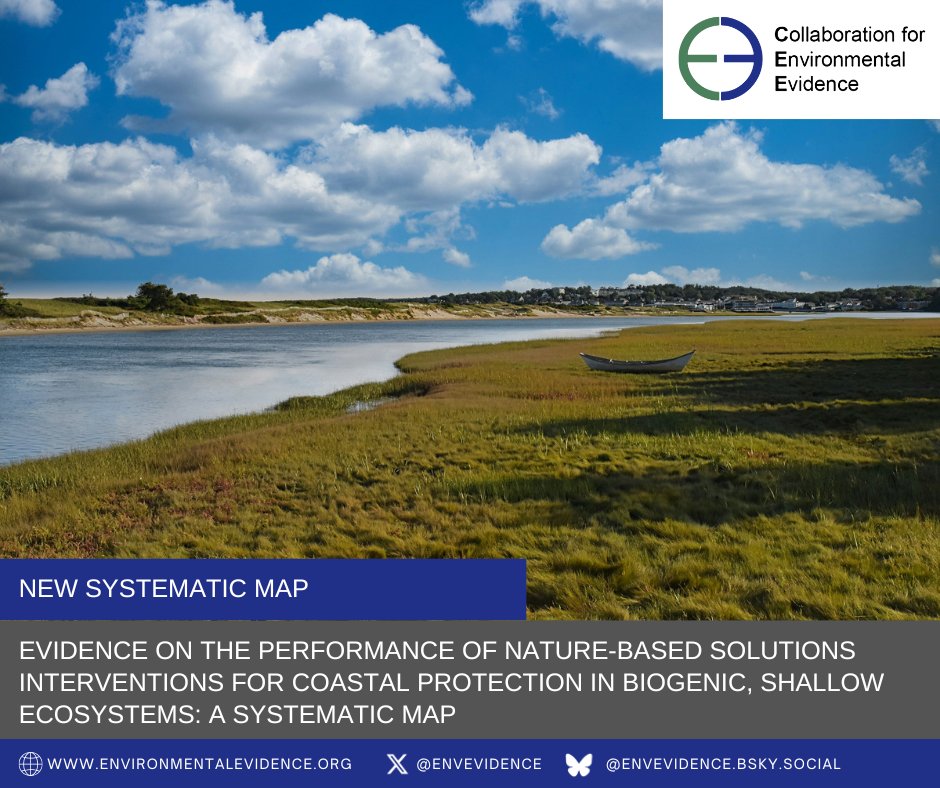
2/3 Paxton et al (2024) synthesize evidence on nature-based solutions for coastal protection. Their #SystematicMap provides insights on how these interventions can be managed to maximize co-benefits for people and nature.
https://t.co/3yvdI6e3rp
3/3 Ouédraogo et al. (2024) review the evidence on the ability of soils constructed from mineral wastes to support biodiversity. Their #SystematicMap helps managers understand the state of knowledge in an emerging field of research #WorldSoilsDay
https://t.co/5a6nRHbpCO
1/3 🌍 Happy World Soil Day! Today the Collaboration for Environmental Evidence is highlighting two recent evidence reviews from our journal relevant to the sustainable management of soil resources. #WorldSoilDay#EvidenceSynthesis#SciPol
2/3 Bekchanova et al. (2024) synthesize evidence on the impact of biochar amendments on sandy-textured soils. Their #SystematicReview offers policymakers insights on using biochar for sustainable nutrient management #WorldSoilDay
https://t.co/BHN8XNWt9d
@madina_Bekch
This #GivingTuesday2024 , join CEE in working towards a sustainable global environment! 🌍 Your gift helps us expand access to rigorous evidence synthesis for decision-makers tackling environmental and biodiversity challenges.
Just published! Check out this new #SystematicReview protocol which will examine #Evidence of bycatch of endangered leatherback sea turtles.
Read the full article here: https://t.co/D2t2r2JnAE
We have a brand new video! Watch part 6 of our guide to the CEESAT criteria, where CEE Executive Director Andrew Pullin explains how to interpret CEESAT Criterion 6: data coding and extraction https://t.co/lumtAMrQQF
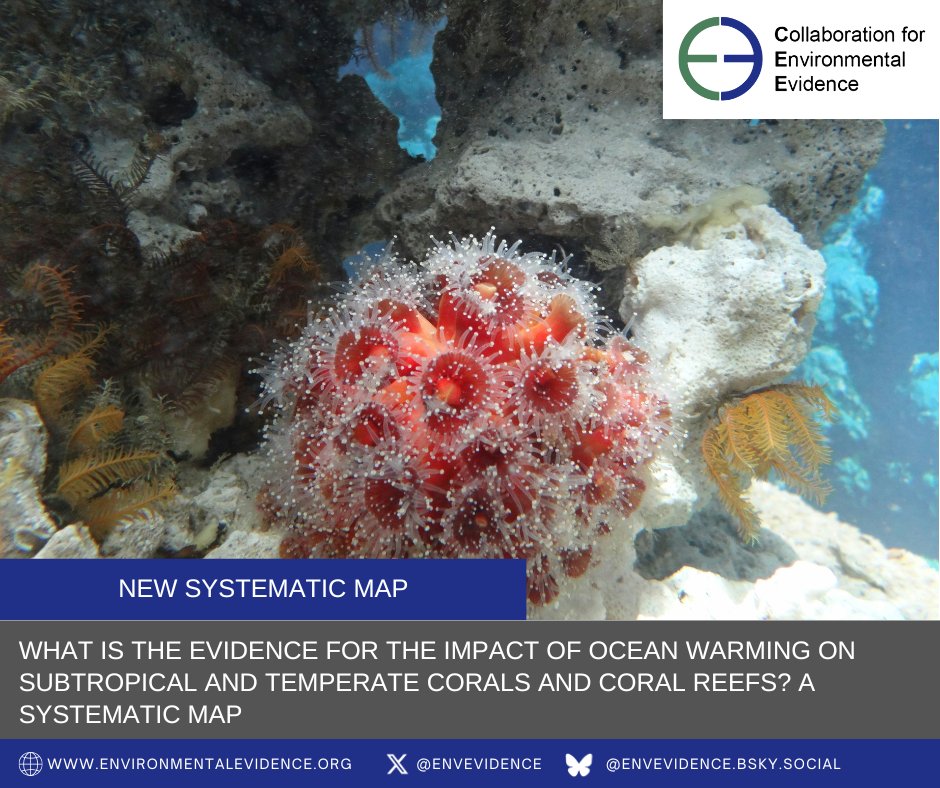
Just published! This #SystematicMap identified evidence of the impact of ocean warming on subtropical and temperate corals and reefs. Read the full article here: https://t.co/WPge0RUwcG