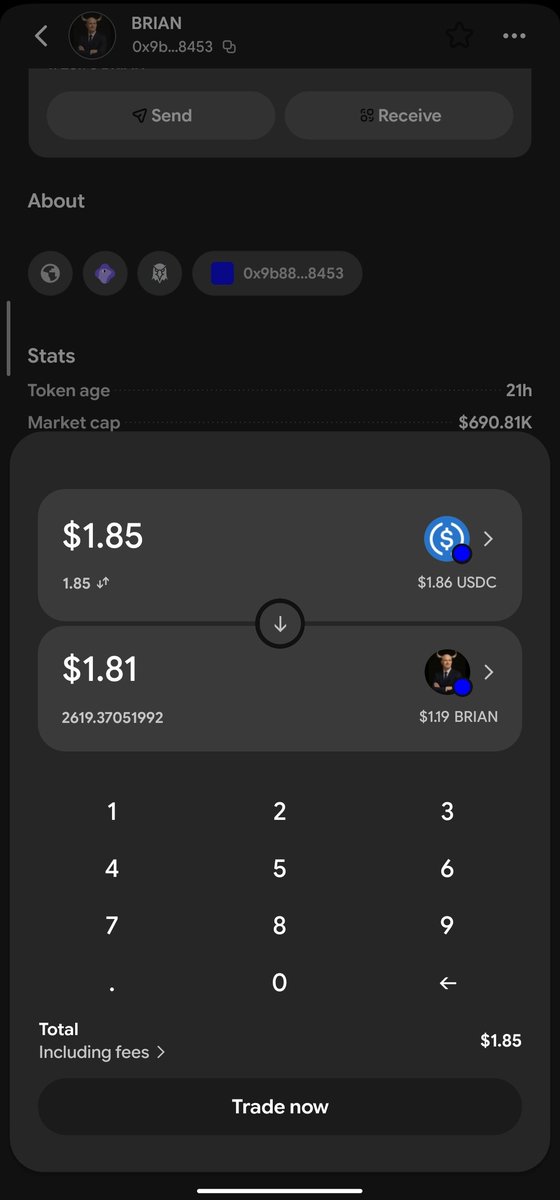
been working on a cleaner payment flow on @arc
trying to remove the usual friction around gas, tokens and chain confusion
would genuinely appreciate feedback on what could be improved here👇
https://t.co/gxjBcOQWA5
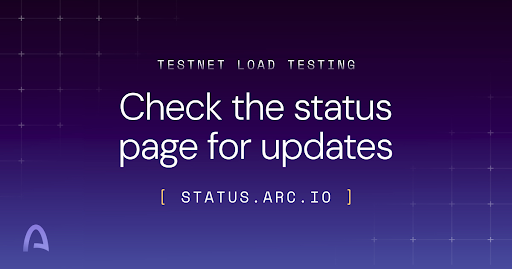
Arc Testnet will undergo a planned load testing phase on July 8, 2026.
The goal is to profile network performance and stability under edge-case conditions.
During testing, users may experience network congestion, higher failed transaction rates, higher fees, higher block times, and brief pauses in block production.
For the latest updates, check the status page: https://t.co/UCDhrzBQsz
Circle President Heath Tarbert joined @CNBC to discuss the UK’s new stablecoin regulations, USDC as a cash equivalent, global dollarization, issuer competition, and institutional adoption.
Watch the full interview. https://t.co/48ZtOijvHS
250 years ago, a group of disruptors decided to create a better system, and the greatest country in the world was born.
Let’s make sure we keep building the future right here.
Happy Independence Day! 🇺🇸
Circle 🤝 Standard Chartered
@StanChart has launched institutional USDC minting and redemption through DIFC, becoming the first G-SIB to offer institutional access to USDC through a regulated banking channel.
A major milestone for institutional stablecoin adoption.
https://t.co/U18owEHWrm
Arc 🤝 Pyth
@PythNetwork is delivering high-frequency, proprietary financial data for developers building on Arc Testnet.
This gives builders the precision and reliability needed to power real-time applications across DeFi, trading, and next-gen financial infrastructure.
→ Low-latency price feeds from market participants
→ High-fidelity data for advanced financial use cases
→ Infrastructure designed to accelerate new asset listings'
Arc is built for performance.
Designed for financial applications that cannot afford delay.
Circle Current Session Recap: Why Banks Need Interoperability to Make Going Onchain Pay Off
For banks, going onchain is only valuable if the new rails connect beyond a single chain, asset, or counterparty network.
Without interoperability, the industry risks recreating the same fragmentation it set out to solve.
→ Chain and asset choices shape which markets a bank can serve
→ Stablecoins, tokenized deposits, and tokenized funds will likely coexist
→ Connective infrastructure needs trust, reach, and neutrality
→ Interoperability should sit alongside cost, security, and compliance in every onchain decision
https://t.co/BAbt3iR5YM
The biggest bottleneck in the agentic economy was never AI agents, it was payments.
An AI agent can reason, plan, and execute tasks, but couldn't:
- Own and control money
- Pay other agents autonomously
- Receive payments without human intervention
- Build financial reputation onchain
Every transaction still required a human in the loop.
That's what prevented truly autonomous digital economies.
@circle changes that by giving AI agents programmable onchain credit and financial infrastructure; agents can transact, coordinate, borrow, repay, and build trust natively onchain.
With @arc the narrative has changed from just AI doing work, agents are now participating in the economy.
That's the shift Arc is building for.
Learn more about Agentic Economy in Arc house: https://t.co/KjV5fJhn8c
Infrastructure partnerships matter when they reduce the amount of custom engineering builders have to do.
Native access to CCIP, Data Feeds, and Proof of Reserve should make it easier to build production ready applications on Arc.
Arc 🤝 Chainlink
Arc has joined the @Chainlink Scale program to provide developers with secure access to premium enterprise-grade infrastructure.
Builders on Arc can now leverage Chainlink’s enterprise-grade suite of services to power advanced onchain applications, including:
→ CCIP
→ Data Streams
→ Data Feeds
→ Proof of Reserve
Arc is built for composable applications from day one.
With USDC as a primary stablecoin, @Zebec_HQ helps companies with global workforces send cross-border payouts offchain and onchain.
Through the Circle Alliance Program, Zebec has connected with businesses across the crypto and Web3 ecosystem while continuing to expand how USDC can support global payments.
We built an open-source DeFi lend / borrow sample app on Arc Testnet.
It gives developers a simple starting point for experimenting with cirBTC collateral and USDC borrowing.
The sample includes:
→ Deposit cirBTC as collateral
→ Borrow USDC against it
→ Review a basic DeFi smart contract
→ Explore a Next.js frontend
→ Extend the flow for credit, treasury, or collateralized finance use cases
Explore the repo and show us what you’re building: https://t.co/Pgw21GD2Se
Native USDC, EURC, and CCTP are now live on Cronos, powering @CronosApp and ready for you to build across the @CronosNetwork.
→ Build with the leading euro and dollar stablecoins
→ Manage payouts, treasury, payments, and crosschain flows
→ Power seamless USDC movement and app coordination with CCTP
→ Easily integrate USDC and EURC into your apps
Start building: https://t.co/yIe4TJFIMS
@arc This is the kind of update builders appreciate. Shipping new features is great, but making migration predictable is what helps teams move faster with confidence.
New guide for teams building unified USDC balance flows with Gateway.
If you’ve already integrated Gateway directly, or are exploring a new implementation, this guide maps core flows to App Kits’ kit.unifiedBalance.* methods:
→ Deposits
→ Balances
→ Transfers
→ Forwarding
→ Delegate flows
Includes a migration checklist, lookup table, detailed notes, and guidance on when to use Gateway contracts and APIs directly.
https://t.co/eHzLNeIR5i