Anyone can be a GRU Spy now.
AI learned every public playbook: it's in the weights. TTPs no longer tell you who attacked you.
But AI has an accent. The faster it moves, the more it confesses.
https://t.co/1oLtnh64YM
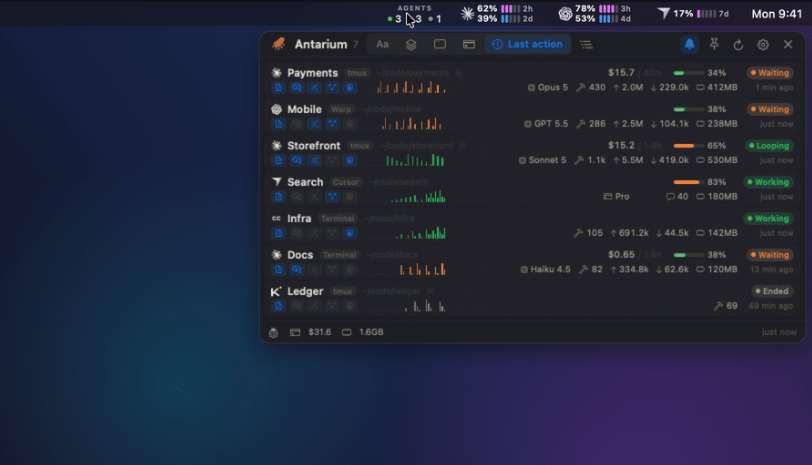
Running an ant colony of AI agents all with different harnesses across different machines?
Here's your queen's-eye view for mac-os to rule them all.
https://t.co/icPy8ot9XH
If you worked a lot with BaaS like Supabase or use vibe coding platforms like Lovable, you might? know they need they can leak quickly data. So I wrote a small tool: unruly.
Give it a URL, it shows you what an attacker can write or read.
https://t.co/KibVW2Wz5b
The window to patch software bugs is collapsing
Of the bugs hackers actually exploit, ~87% are now being attacked on or before the day the bug is public knowledge
That share was 23% in 2020
Charts of the Week: https://t.co/RfYfzHpbLI
Finally, a CISO Simulator that lets you feel the pressure. ..if you have a sunday afternoon, two bored kids + Codex Astra. Open source, MIT.😅
Super realistic!
https://t.co/VZrtPPqWa2
The goal is something worth reading in ten years, when today's questions have moved on. A high bar, and we won't clear it alone.
⁉️ One question: what would make you trust an observatory like this enough to cite in front of someone who matters?
We're retiring 🔴 ZeroDayClock's headline metric.
Measuring cybersecurity honestly is much harder than our industry admits.
I would rather show you where we are stuck than sell you certainty. 🧵
No licensed data. No proprietary models. No black-box numbers.
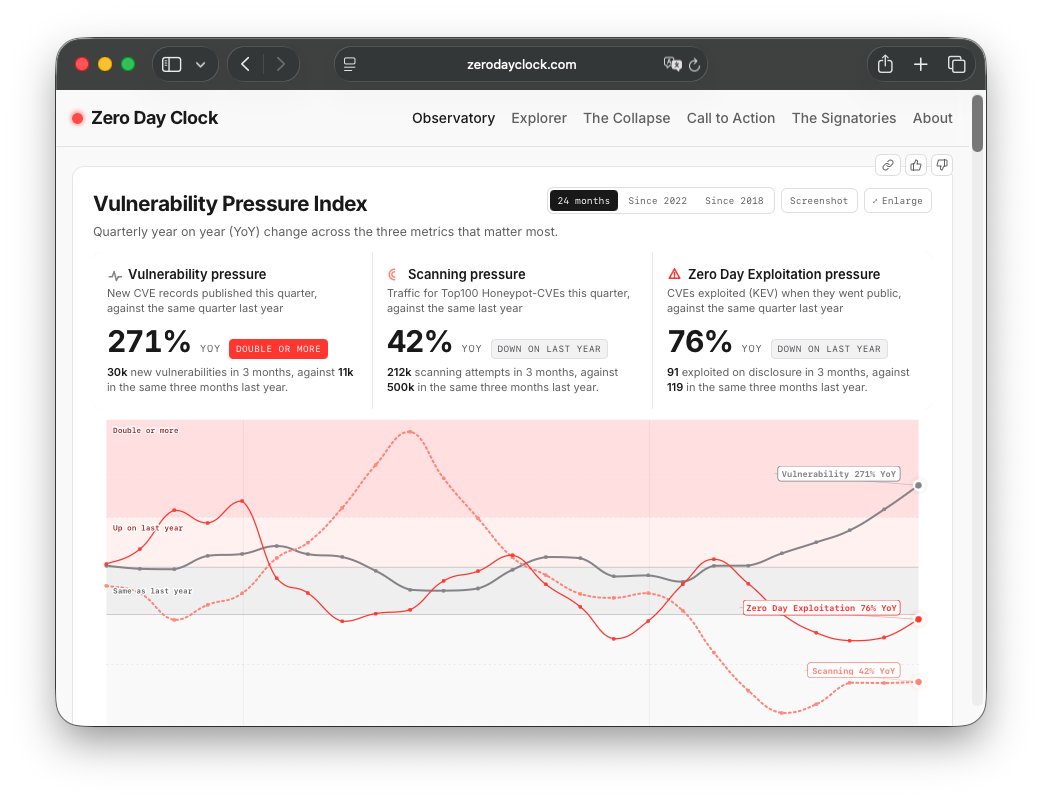
It tracks pressure across three live streams:
👉 Vulnerabilities entering the public CVE registry
👉 Catalogued exploitation arriving with no warning (KEV)
👉 Active scanning seen by honeypots
Friday afternoon @gadievron says "I'm working on a CISO community document for Monday. Want to collaborate? Releasing Monday." I said "Sure." (I have a problem with that word.)
@AnthropicAI had dropped Mythos on Monday. @cloudsa is running an emergency CISO Zoom on Tuesday. @SANSInstitute was already building BugBusters this Thursday with Ed Skoudis, Joshua Wright, and Chris Elgee. The entire community was asking the same question: what do we actually DO about this?
Three nights later we have a 30-page strategy briefing with 60+ contributors. "Sure" turned into barely sleeping Friday, Saturday, Sunday while @gadievron and @rmogull dragged this thing into existence. (My son checked to see if I was still breathing around hour 40. I think he was mostly concerned about if Uber Eats delivered Five Guys yet.)
The contributing authors list reads like someone raided a cybersecurity hall of fame: Jen Easterly, Bruce Schneier, Chris Inglis, @philvenables, Heather Adkins @argvee, @RGB_Lights, @sounilyu, @jimreavis, Katie Moussouris @k8em0, Jon Stewart, Maxim Kovalsky, David Scott Lewis, Joshua Saxe, John Yeoh, Ramy Houssaini and James Lyne. Every single one said yes within hours.
Cloud Security Alliance @cloudsa, @SANSInstitute, [un]prompted, @OWASPGenAISec -- four organizations that don't usually build things together at this speed. This is the start.
SANS reviewers who showed up: Chris Cochran @chrishvm, @edskoudis, Viswanath S Chirravuri @vchirrav, @bettersafetynet, Ciaran Martin
Thursday @edskoudis, @joswr1ght, and @chriselgee stop talking and start showing.
Live AI-assisted vulnerability discovery against real code. No slides about the future. Terminals and bugs. (The kind of demo where something breaks and that IS the point.)
Full reviewer list is in the doc. If you know someone on it, send them a note. They earned it.
But an even bigger thank you -- seriously -- from the entire cyber security community needs to go to @gadievron for once again bringing the avengers together -- like in Endgame (is that what Mythos is?) -- and you all know the scene -- but we need someone to create the meme with Gadi Evron with his shield and Mjölnir saying "Avengers..... assemble!" because that is exactly what he does. A lot it seems.
Read it: https://t.co/pppV1gi4Vc
Going to sleep now. Setting my alarm for Thursday. (Not joking.)
#CyberSecurity #AISecurity #SANSInstitute
An Expedited Strategy Briefing on Mythos, Glasswing, and building a security program for what comes next, by 250 CISOs, and the wider community.
It is still a draft, with some design incomplete, but we felt it was imperative to release.
Link:
https://t.co/pQc8LM6Tga
Zero stolen credentials to full AWS admin.
Eight minutes.
CVE to exploitation used to take 18 months.
Now it's under a day.
A SOC analyst isn't losing because they lack tools.
They're losing because the loop is too slow.
#cloudsecurity#CISO@EppSecurity@sysdig
You can now train @physical_int style robots in 1 day for only $5k. Anvil’s devkits have all the hardware, software, controls, cameras, and more ready-to-go. (1/5)
Last week I launched https://t.co/NbtVGIfAyJ.
It went viral. Here's why:
One graph. One question.
In 2018, attackers needed 2.3 YEARS to weaponize a vulnerability.
In 2026, they need 1.6 DAYS.
What this means for all of us 🧵
That's why we built the Zero Day Clock.
This isn't about selling anything. It's about making this data impossible to ignore - for CISOs, boards, researchers, and policy makers. If you need one slide for your board, this is it.
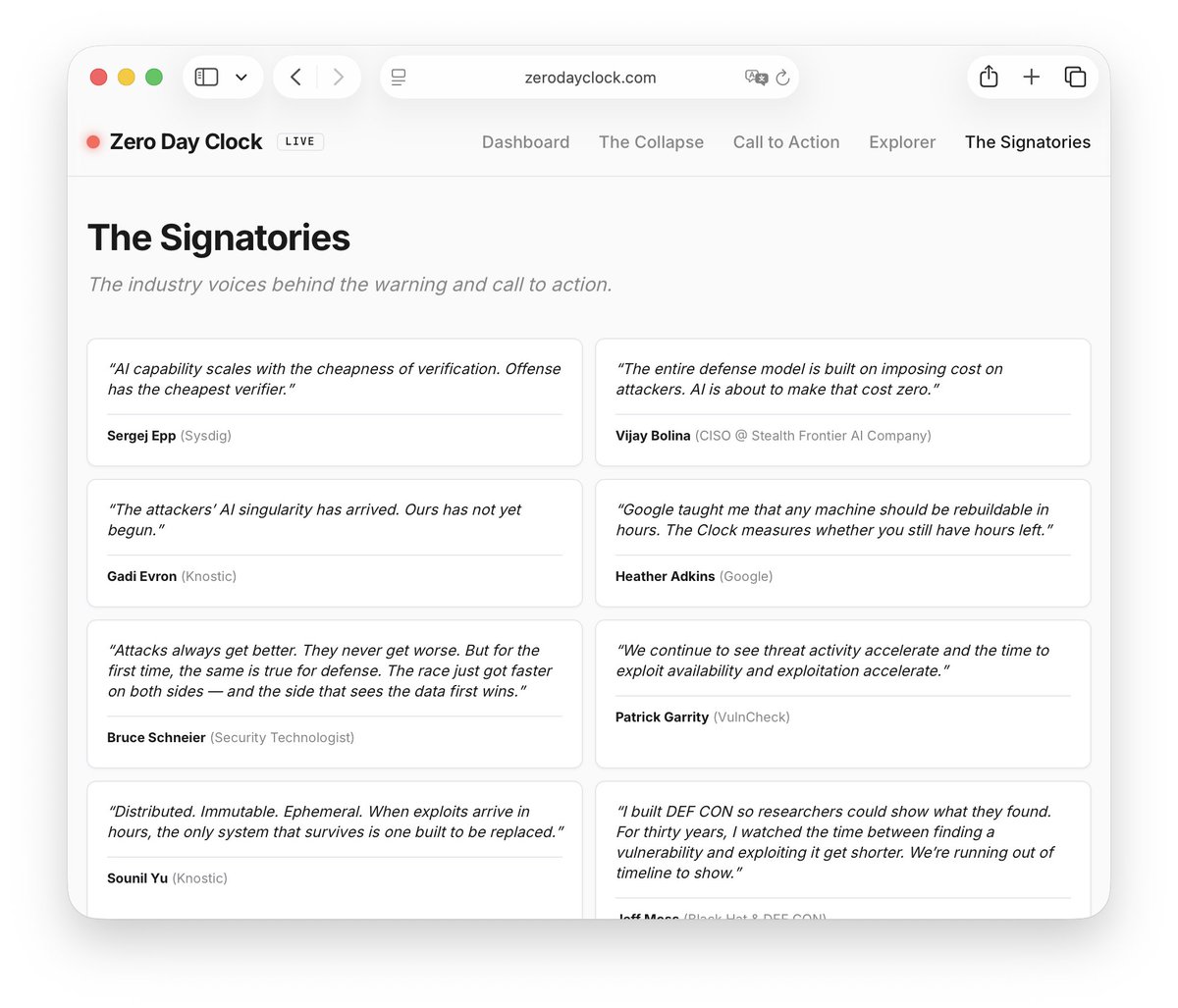
Backed by Schneier, Adkins, Moss, Evron, Venables.
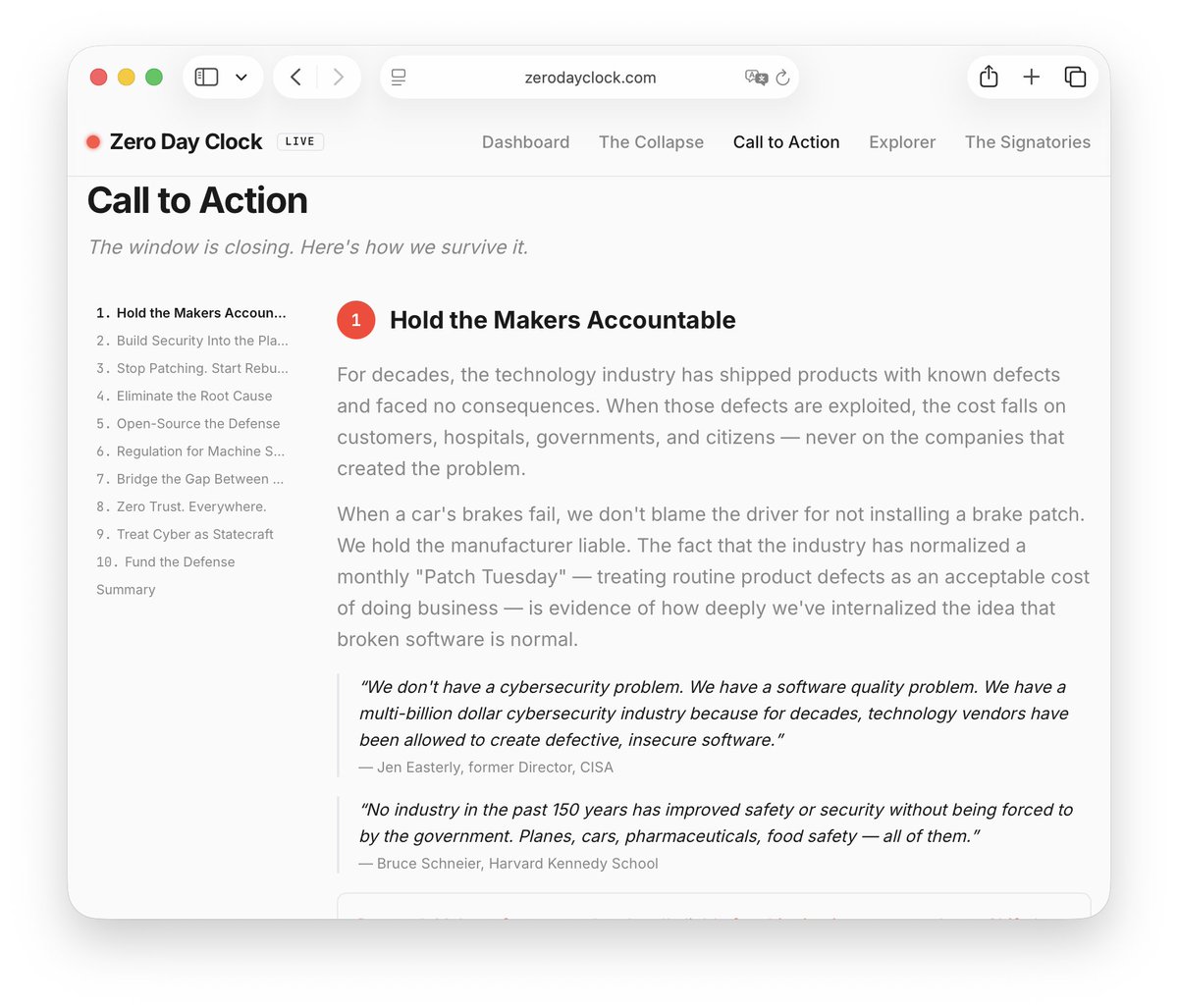
This isn't a tech problem. It's a market failure.
The people who build insecure software don't pay when it gets hacked. Users do. Hospitals do. Governments do.
No industry in 150 years fixed safety voluntarily. Not aviation. Not pharma.
Software isn't special. It's just late.
Five things to change. Today.
→ Software liability. Builders pay, not victims
→ Secure by design. Enforced, not suggested
→ Patch in hours. Monthly cycles are dead
→ Unleash defensive AI. Regulate insecure software.
→ Assume breach. Build to be replaced, not patched