Though i’ve seen it first-hand throughout my life, it still amazes me how much our circumstances act as multipliers to our health & illness. The intersection of disease & social determinants doesn’t truly register until you see it daily in the hospital.
Really hurts to see it.
Novartis’ phase III Lp(a)HORIZON trial of pelacarsen failed to prevent cardiovascular events.
Vessel dysfunction & inflammation from high lp(a) may not be meaningfully reversed in all patients. Perhaps subgroup analyses may support exploring early (subclinical?) therapy instead
No concern from tech companies.
No ability for parents to place restrictions.
No political will to govern and set limits.
Slow reaction from public schools on curriculum reform.
We cannot appreciate the implications of this radical change in human development. (4/4)
It truly was a privilege to be born in the 90s and grow alongside tech.
We were forced to learn how to ask questions and seek for answers, enjoying the advancements that made work easier as we had slowly built the skills to appraise the outputs.
1-2 decades later… (1/4🧵)
to AI for social connection. At ages where critical thinking could not possibly have developed, kids are thrust into a world with machines that pretend to be factual, all knowing, and cater to your exact preferences. It pretends to be your friend, companion, or more. (3/4)
Its astounding how much AI is de-skilling students. In the race to outcompete one another, there is immense incentive to cut corners with AI. This behaviour reinforces a cycle of offloading mental work in exchange for rapid results. Critical thinking is going the way of the dodo.
So people have dyslipidemia and most people today are at high risk for heart/vessel disease. Providing this treatment at population scale may bankrupt publicly funded models.
Will likely be first reserved for those at incredibly high risk (e.g., familial hypercholesterolemia).
Amazing results!
My thoughts:
(1) most helpful BEFORE plaque builds
(2) What is the efficiency of correction? How does % of corrected cells change over time with cell turnover? Might require repeat injection in some cases.
(3) cost and accessibility are MAJOR concerns vs statins
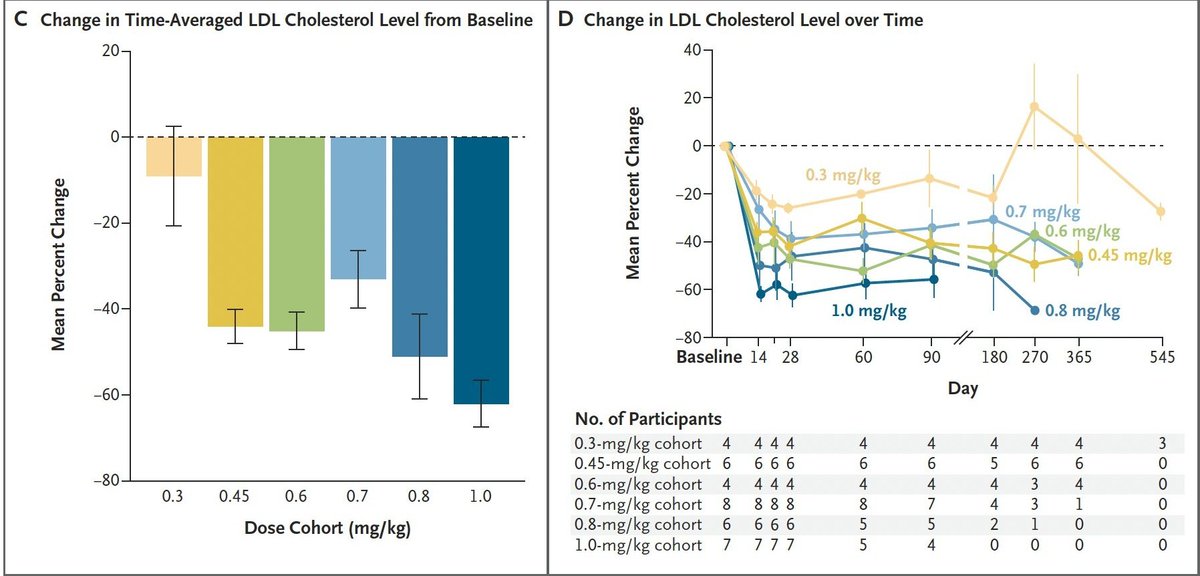
Eli Lilly has done it.
They've gone and made what seems to be a powerful, permanent gene therapy for LDL cholesterol.
That means they'll be able to effectively prevent most heart disease with a single infusion!
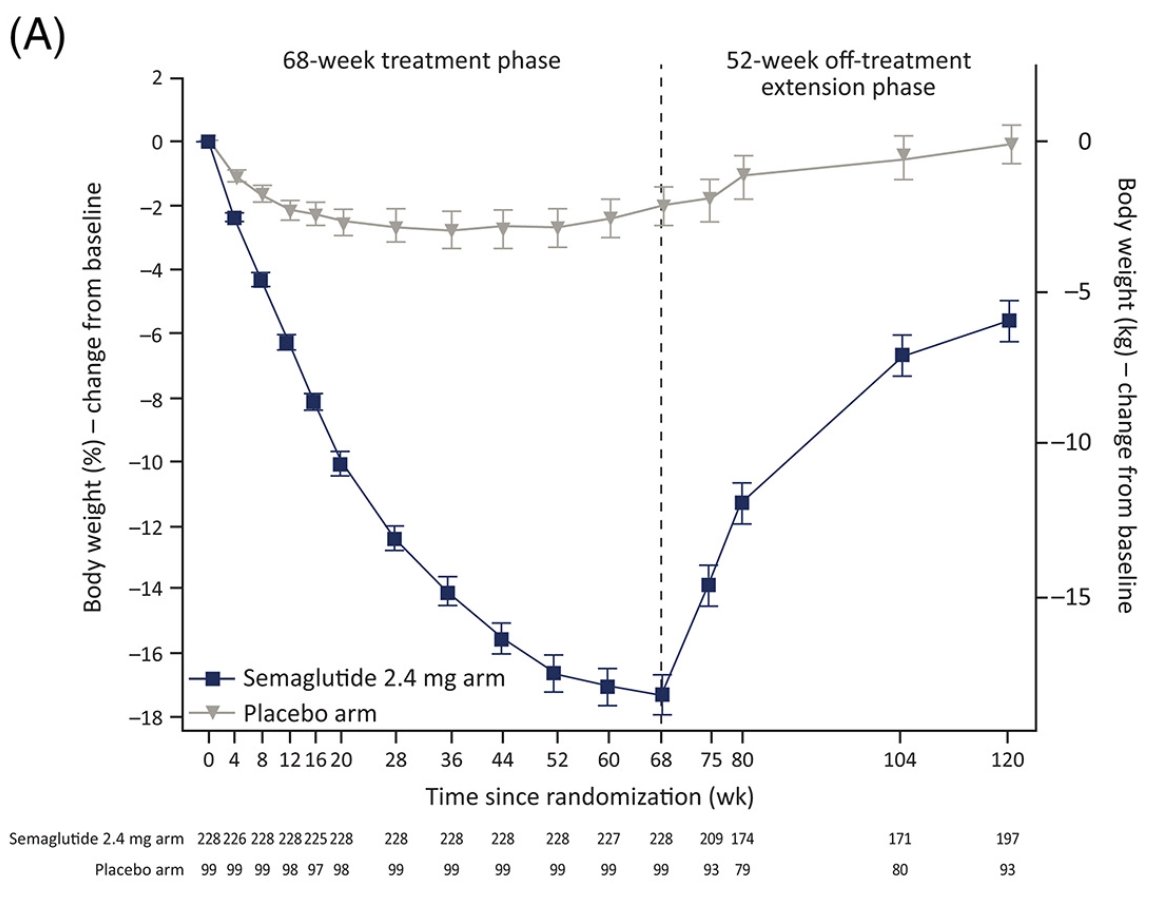
Proof that #weight loss on medications like #ozempic is not long-lasting, at least without lifestyle changes. Is there a place for these medications for patients? Absolutely! But lifestyle, the largest barrier to sustained weight loss, is constantly left out of this conversation
@BradStanfieldMD Fantastic as always Dr. Stanfield. It’s been very interesting seeing the hype train transition from “everyone should take metformin” to “whoops maybe not”. Good reminder that science communicators should be very cautious when generalizing rodent studies to humans
Why are Big Pharma/medical doctors not acting on Ivy League professor Dr. Joe Shmoe's billion dollar idea backed by mouse/cell culture data published in famous academic journals. They aren't acting because sufficient data doesn't exist to warrant their action.
Podcasts in the health space often misleadingly present possibilities as if they are realities. Without data from human trials, world-class speakers are making millions on a reasonable hypothesis at best. Ask about safety and effectiveness before you risk your money and health.
@NeilFlochMD In Canada with universal healthcare we spend ~8000 dollars per Canadian each year. Despite long-term savings, I imagine decision makers would struggle in the short-term to increase the budget by 30-50% based on number of Canadians who are obese and would benefit from treatment.
@NeilFlochMD I assume insurance companies are crunching the numbers, but you can bet it won't be easy to get wide-spread coverage for over hundreds of millions of people on drugs that would cost 10's of billions in the long run.
@LillyPad's Tirzepatide has received fast track designation from the FDA. Clinical trial results have been very promising, the potential to change millions of lives is there. Perhaps @GovCanHealth may consider following suit with priority review?
#obesity#weightloss#medicine
Compensation for publishing papers only increases the risk of fake data. Luckily the incentive is currently capped at a measly $165,000 for a first author publication.....
#AcademicTwitter#researchintegrity
https://t.co/VvYfbp1aRa