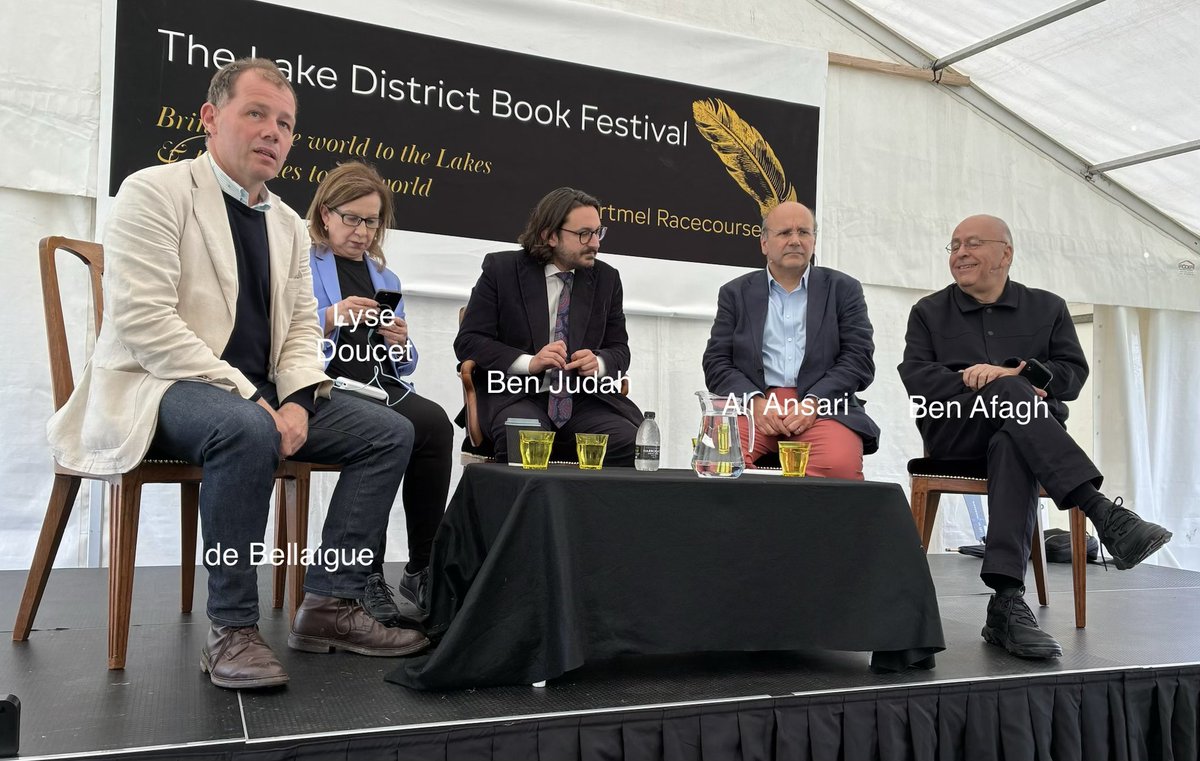
Saturday’s brilliant panel session on Iran; assertive Doucet on current street talk in Iran, Ansari’s succinct historical perspective, Judah’s experience of negotiating with the Iranian regime, Afagh (BBC Persian service) on the general mood, the desire for change and normality.
Hats off to a new book festival. Terrific line up on day 1. Margaret MacMillan and Tim Bouverie with newish insights on allied WWII leaders (mostly) working together, the risqué wit of David McWilliams on how economists don’t understand money. Plus, no sign of Bragg or Rebanks!
@Paulhughesgee@davidmcw@RoryStewartUK No one draws a bigger crowd than Rory; apparently more than Heseltine and many more than Lammy. But I’d bet we had more fun, laughs too, at the McWilliams session.
Politicos Heseltine, Stewart, Lammy ( still deputy PM?) there too, along with media folk Frei, Doucet, Hilsum. Improbable and awesome.
#lakedistrictbookfestival
Alex Younger, with whom used to play toy soldiers with as a boy growing up in the Borders half a century ago, was an intensely moral man, perhaps unusually for a successful intelligence officer. Privately he was forthright in his criticism of those, such as Netanyahu, who were happy to slaughter the innocents among their enemies. This line in his obituary rang very true to the man I knew: "He was acutely aware of the corrupting powers of espionage and of the compromises it requires, but decried the “pernicious myth that, somehow, intelligence services are moral equivalents; that the end justifies the means, whatever the cost”. MI6 was not the same as the services of authoritarian states. “If we undermine the values we defend, even in the name of defending them, then we have lost.”"
Incredibly sad to hear that we have lost Sir Alex Younger. He was a brilliant head of MI6 - totally professional but always full of warmth, humour and fun.He is pictured below on one of many extraordinary moments I shared with him, this time meeting Oleg Gordievski. RIP dear Alex
Plastic mesh near Blease Fell summit to ease transit over wet spots. Guess pre dates national park designation, is now tired, serves little use. Replace with Yorkshire Dales National Park flag stones?
#yorkshiredales
Aged hiker in Cumbria’s Howgills, looks down on the River Lune from Blease Fell.
The Lune Valley contains Agricola’s Roman road - 79, West Coast Main Line - 1846, M6 Motorway - 1970, and, hidden from view, ethylene pipeline from Grangemouth to Cheshire - 1990.
#yorkshiredales
Another hike into the Fell, near Roman road that once crossed nearby, look towards Cross Fell & see a dry stone wall enclosed oasis of green pasture.
Fell has trees planted by Lowther Estate - aided by generous government subsidy, but doubt they will survive..
#yorkshiredales
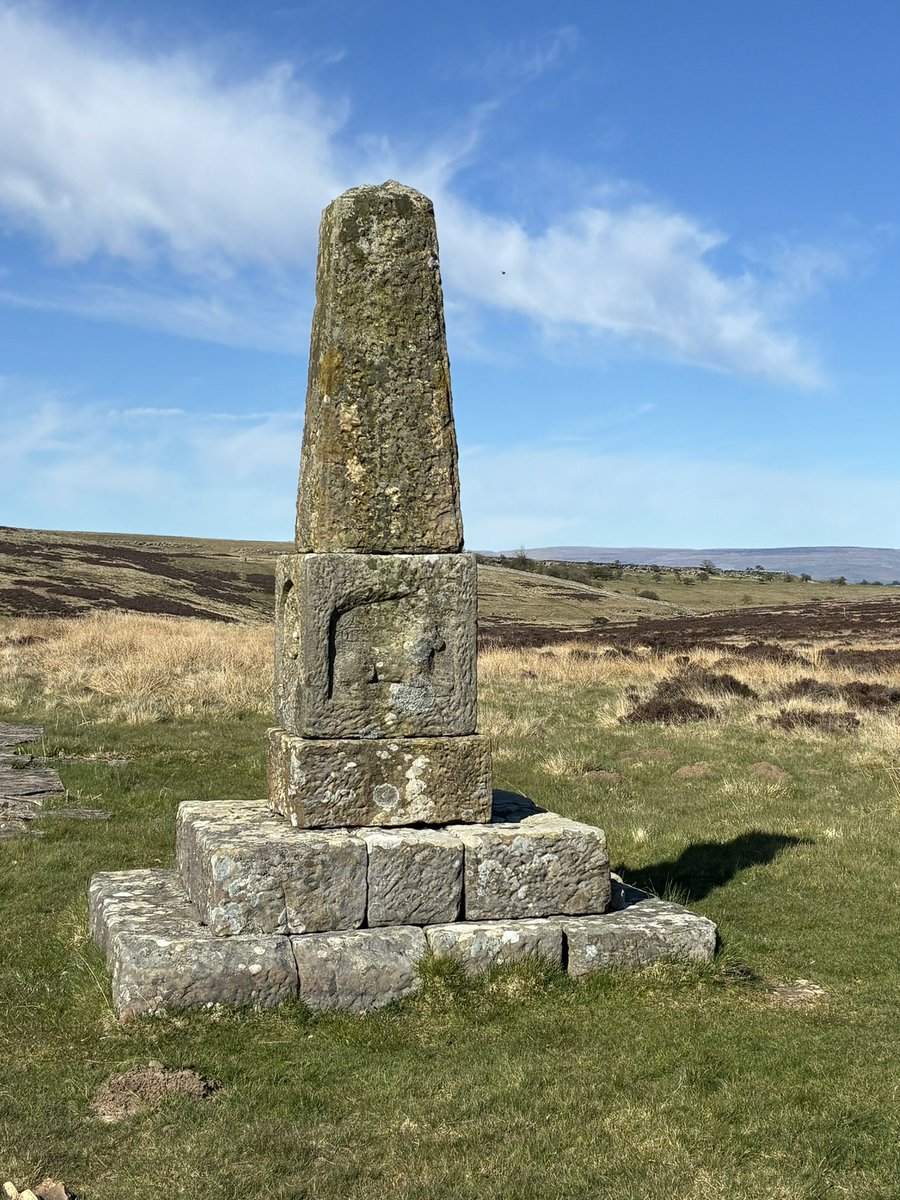
Aged hiker via Roman road to Cumbria’s Crosby Ravensworth Fell - vast open grassland, now with poncy Coast to Coast posts, dotted with stone circles, plus hard to find puny monument (19th folly?) to priapic Charles II.
#yorkshiredales
@timfarron At Highbury in mid 70s for an Arsenal vs Liverpool match (1-1) the Metropolitan Police Band came on, marched up and down as they played, a tenor sang O sole mio.
All met with a chorus of boos.
This is a welcome step forward for the 🇬🇧🇪🇺 reset, and will create new opportunities for young people, businesses and greater energy security for the UK and Europe. The Govt must now accelerate talks to ensure a swift conclusion by the upcoming 🇬🇧🇪🇺 Summit.
Imagine a Reform government with this power. Richard Tice mooted forcing the 86 Local Government Funds into something called a UK Sovereign Wealth Scheme.
Time to overrule the Pensions Minister – who’s hidden a dangerous power in the Pensions Bill.
I wrote to his boss (the Secretary of State) to say no government should have the power to choose where your savings are invested.
That’s your hard-earned cash, not theirs.
Yep. Wonder what he would think of the obscurely funded Adam Smith Institute which borrows the great man’s name to add prestige to its consultancy work and to promote its standing with potential donors. Shameless.
Me in @telegraph on the 250th anniversary of the publication of The Wealth of Nations >> Today we commemorate Adam Smith’s great work. We should remember him all year round https://t.co/izR6XlJaRG
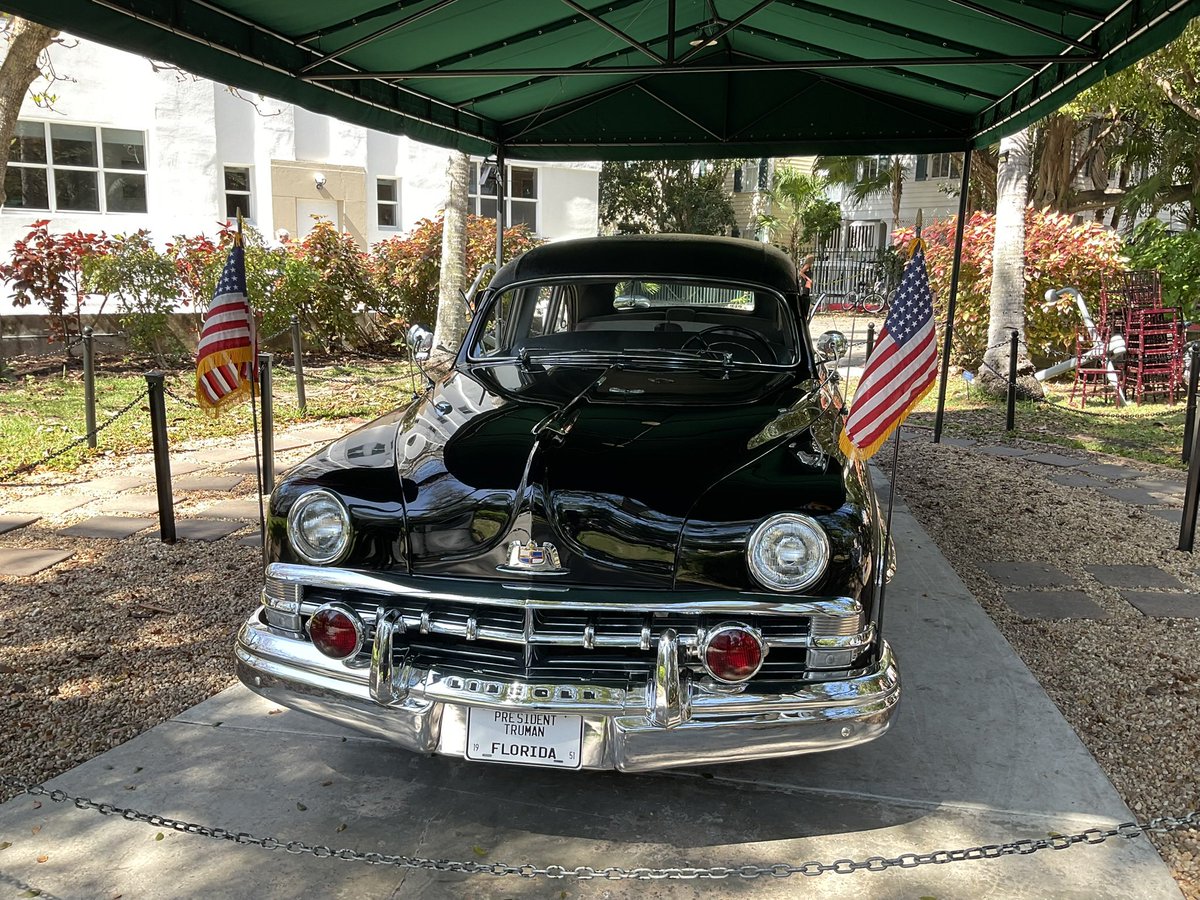
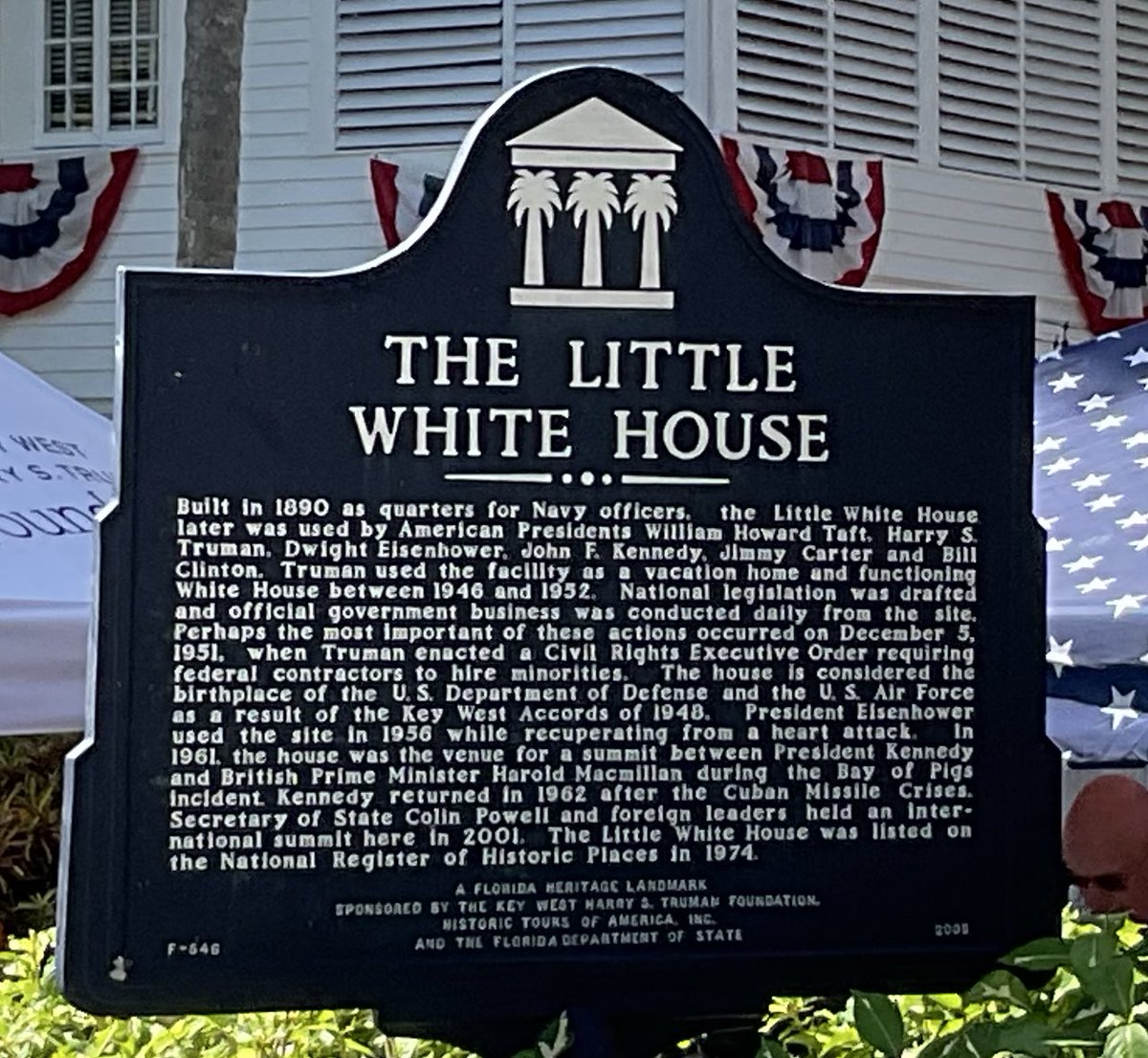
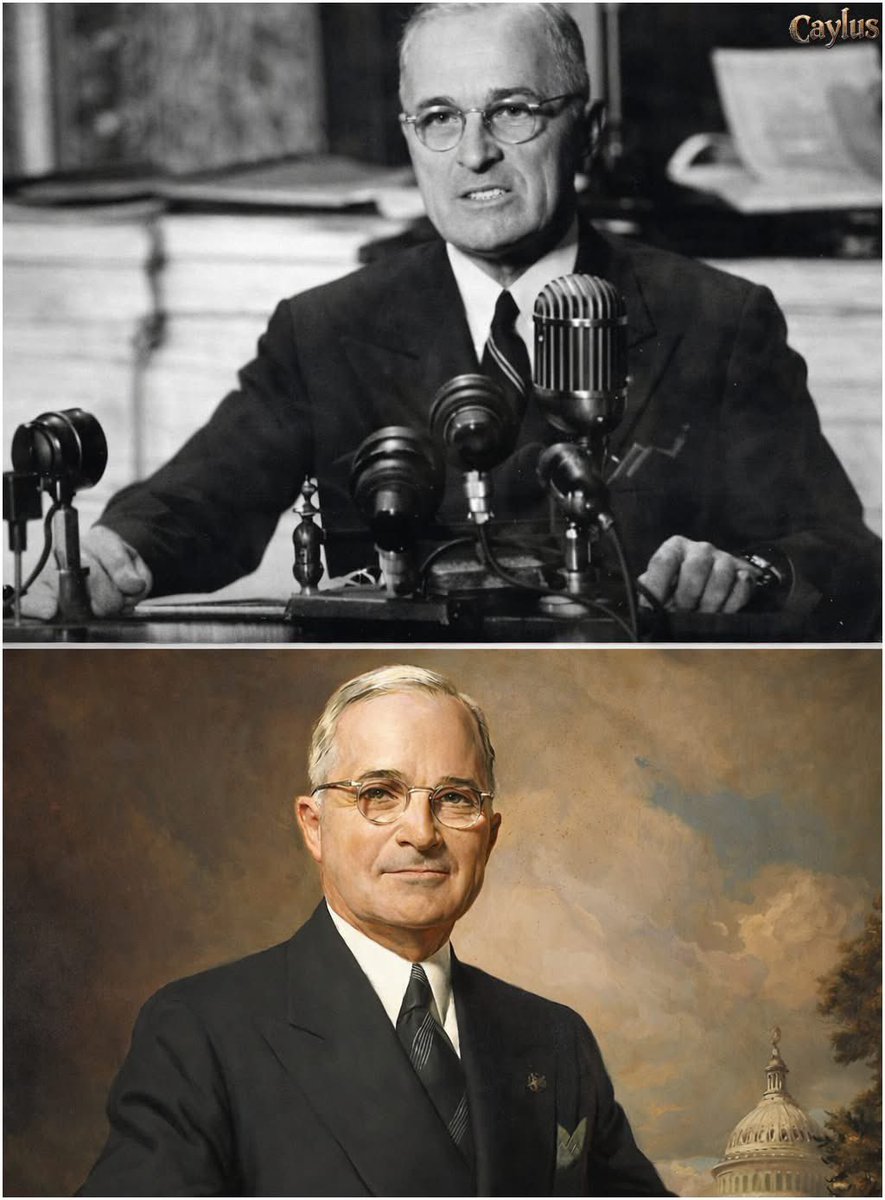
Harry Truman initiated the Marshall Plan and creation of NATO and, even more important, was USA President forming the institutions that created a world order that served for nearly 75 years.
His Little White House in Key West; modest, a place for work - it’s speaks for the man.
Washington, D.C., January 20, 1953.
Dwight D. Eisenhower had just been sworn in as the 34th President of the United States. The ceremony ended. The crowds thinned. And Harry S. Truman—who had led the nation through the final months of World War II, authorized the atomic bomb, and launched the Marshall Plan—walked to Union Station to catch a train home.
Not a private railcar. Not a military aircraft. A regular passenger train.
He bought his own ticket.
There was no press spectacle. No staged farewell. Truman simply boarded a Baltimore & Ohio train bound for Independence, Missouri, and took a seat among ordinary travelers. No security cordon cleared the aisle. No one was removed from the car. Within minutes, passengers began to recognize him.
They didn’t panic. They approached him.
They shook his hand, asked questions, shared opinions. Truman chatted easily, smiling, looking like a man relieved of an immense burden. One passenger later recalled him saying he was glad to be going home—that he had done his job.
What makes that ride even more remarkable is where he was going: not to wealth, but to financial uncertainty.
In 1953, former presidents received no pension. No staff. No office allowance. No benefits. Once out of office, they were private citizens again.
Truman’s only steady income was his modest Army pension from World War I—just over $100 a month. He had a house in Independence (owned by his wife Bess’s family) and little savings. Corporations offered him lucrative board seats. Companies proposed endorsements. Speaking tours promised easy money.
He refused them all.
Truman believed profiting from the presidency would cheapen it. The office, to him, was a public trust—not a brand to monetize. So he returned home and lived modestly. He wrote his memoirs to earn income. He sold family land. He walked the streets of Independence without escort, stopping to greet neighbors, visiting the barber, mailing packages himself.
This wasn’t performance. It was character.
Yet his financial strain embarrassed lawmakers. By the late 1950s, leaders in Congress agreed that former presidents should not face hardship after serving the nation. In 1958, the Former Presidents Act created a pension system for ex-presidents—largely in response to Truman’s situation.
Ironically, Truman hesitated to accept it. He worried it looked like charity. Eventually, he agreed—saying the system mattered more for future presidents than for himself.
That train ride symbolized something larger than a journey home. It reflected a time when a president could step away from immense power and return to ordinary citizenship. Truman never confused the office with his identity. He had served, and now he was done.
Today, security realities and modern expectations make such a scene unimaginable. Former presidents travel with protection, staff, and lifelong benefits. The presidency has grown into something far more insulated.
Truman died in 1972, still living in the same modest home in Independence. He never sought grandeur in retirement. The man who helped shape the postwar world returned quietly to private life.
That image—Harry Truman on a passenger train, chatting with strangers—remains a reminder of leadership defined not by privilege, but by humility.
Power, in his view, was temporary. Character was permanent.
And when his time was over, he simply went home.
#EducationalPurposesOnly #educationalcontent #knowledge #educationalpurposes #informationalpost