Contrastive independent component analysis
Scientists constantly face this challenge: you have data from two conditions—patients vs. healthy controls, treated vs. untreated cells, one species vs. another—and you need to find patterns unique to one group. Standard approaches either analyze datasets separately or lump them together, missing the comparative signal entirely.
Contrastive PCA addressed this by subtracting a scaled version of the background covariance from the foreground, then finding principal components of the difference. The problem: researchers must manually choose how much background to subtract. Different choices yield different patterns, requiring parameter sweeps and subjective judgment about which result looks best. Probabilistic contrastive PCA improved the statistical framework but inherited the same tuning burden.
Kexin Wang, Aida Maraj, and Anna Seigal propose contrastive independent component analysis (cICA), which eliminates this guesswork entirely. The key insight: by analyzing fourth-order statistics rather than second-order covariances, the method can determine exactly how much each background pattern contributes to the foreground—no manual tuning required. Moreover, each background component can contribute differently, rather than assuming a single global scaling factor as previous methods do.
The algorithm uses a hierarchical tensor decomposition on fourth-order cumulants, recursively extracting eigenstructure to recover the mixing patterns. This higher-order approach also inherits a fundamental advantage from classical independent component analysis: the patterns become uniquely identifiable, whereas PCA-based methods can only recover them up to rotations.
Results confirm the theoretical advantages translate to practice. On synthetic data, cICA recovers true foreground patterns with over 0.9 cosine similarity, substantially outperforming cPCA and probabilistic cPCA at their best hyperparameter settings. On mouse protein data distinguishing Down syndrome, cICA achieves the highest clustering score. Applied to human versus primate gene expression, the algorithm's top patterns prioritize genes independently validated as human-specific evolutionary drivers.
The practical upshot: when your question is "what's different about this condition?", moving beyond covariance to higher-order structure reveals patterns that simpler methods miss—and does so automatically.
Paper: https://t.co/PKXvACQm5p
Results I'm sad to share but must be told - branching coral are now functionally extinct in Florida - to learn more check out the full study https://t.co/Q9x5ej5Pnl and our personal context https://t.co/DIs4MO8gMO
Out in ME!
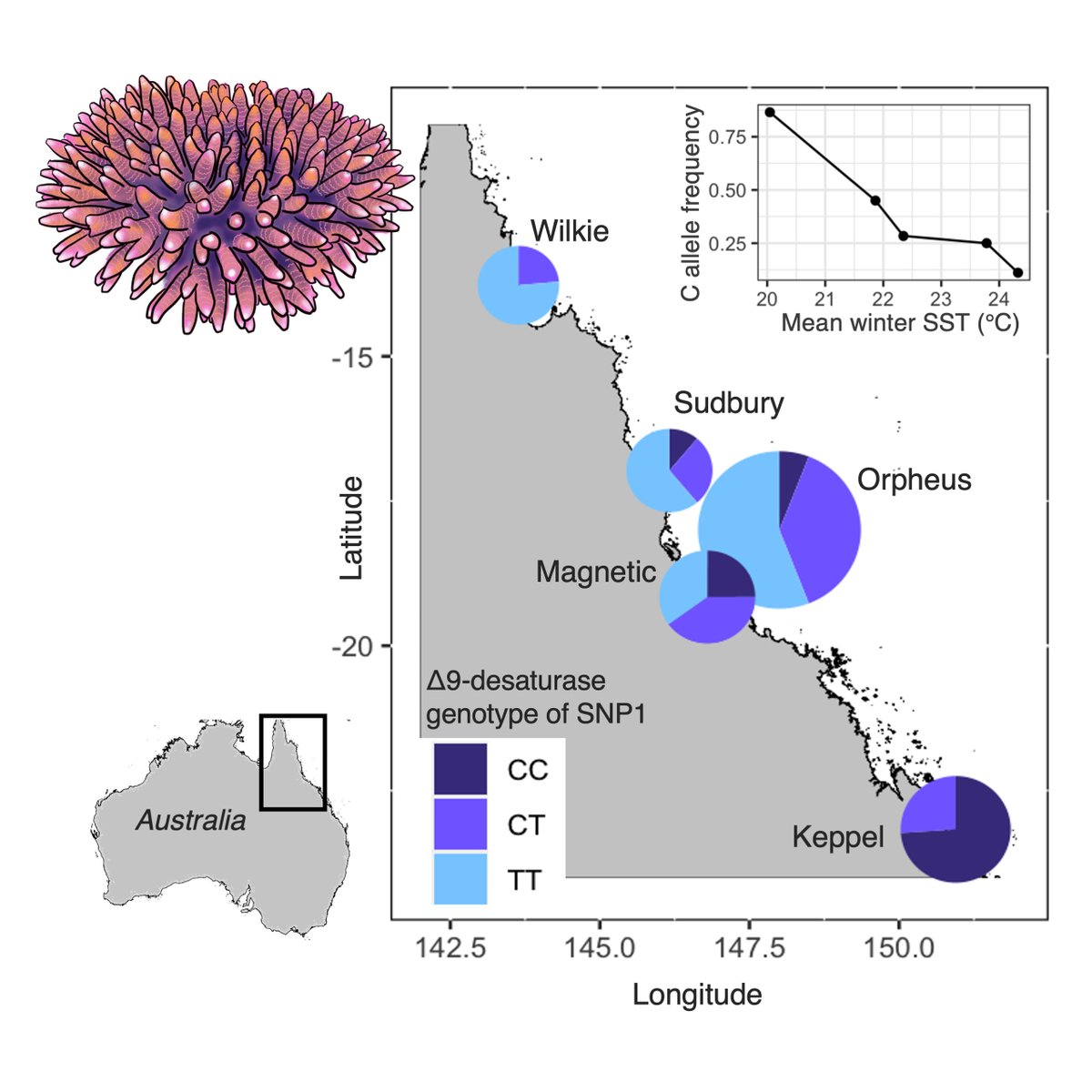
In the search for corals' resilience to heat, this new work unexpectedly identified a gene that seems to help them adapt to the cold. @kristi_leilani@LineKBay @heatshok @texas_IB @WileyEcolEvol
Read More: https://t.co/6NTsR9TDAk
📷: Kristina L. Black
New paper out! We show that heart cockles use bundled fiber optic cables to transmit light through "skylights" in their shell for their photosynthetic algae. The skylights filter out harmful UV radiation. These coral analogues are cool critters!! w/ @sonkelab@Dionne_Group
Bleaching doesn't only happen to corals. After bleaching events, giant clams must recover their numbers through reproduction. The only problem, UP MSI scientists found, is that many bleached giant clams don't produce eggs. Read the full paper: https://t.co/6EzLgTDrcX
We have two openings in the ComBi team @CNRS and @NantesUniv on ecological modelling of plankton communities (for monitoring ocean health): 1) https://t.co/ShCzBhZ3AO 2) https://t.co/bCQjcYKptv please RT! @TaraOceans_Sci@EU_AtlantECO@BlueRemediomics
🚨 #Job alert
@Senckenberg is looking for a Collection Scientist and Curator of Marine Invertebrates
An expert in sponge and/or Cnidaria (corals) taxonomy. Excellent young scientists are encouraged to apply!
⏳ Deadline May 30th
ℹ️ 👇 https://t.co/JfJjKqdfrJ
Every Michigander knows it’s not spring until they've had their first Oberon of the season 🌞
Cheers to Oberon Day, cheers to spring (fingers crossed), and cheers to Michigan! 🍻
Do you want to know more on the landscape of antiviral immune systems of marine, soil and human gut bacteria? Our @NatureComms article is out! Congrats to Angelina Beavogui for the great work! @CEA_Officiel@CEA_Jacob_@seqlab
https://t.co/80MLYrEYQD
crash course on "the coral microbiome in sickness, in health, and in a changing world", specifically addresses how climate change affects biology & guides future research! kudos to all coauthors! @UniKonstanz@NatureMicrobiol https://t.co/vd2hP46DFT
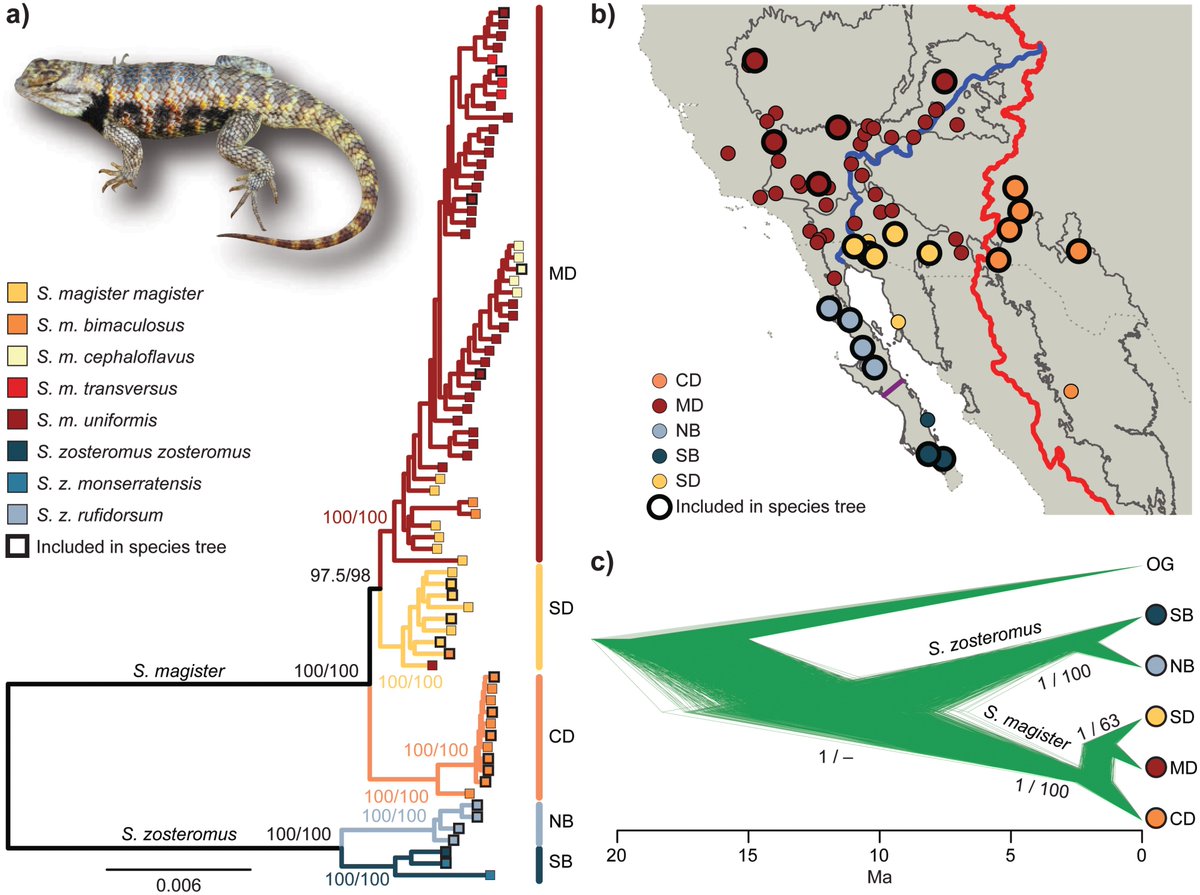
Check out our new paper in @systbiol ! We show how genomic data can be used to evaluate the role of geological features, geographic distance, and environmental heterogeneity in population differentiation using a cool group of desert-dwelling lizards: https://t.co/Pk3PQtnnlL
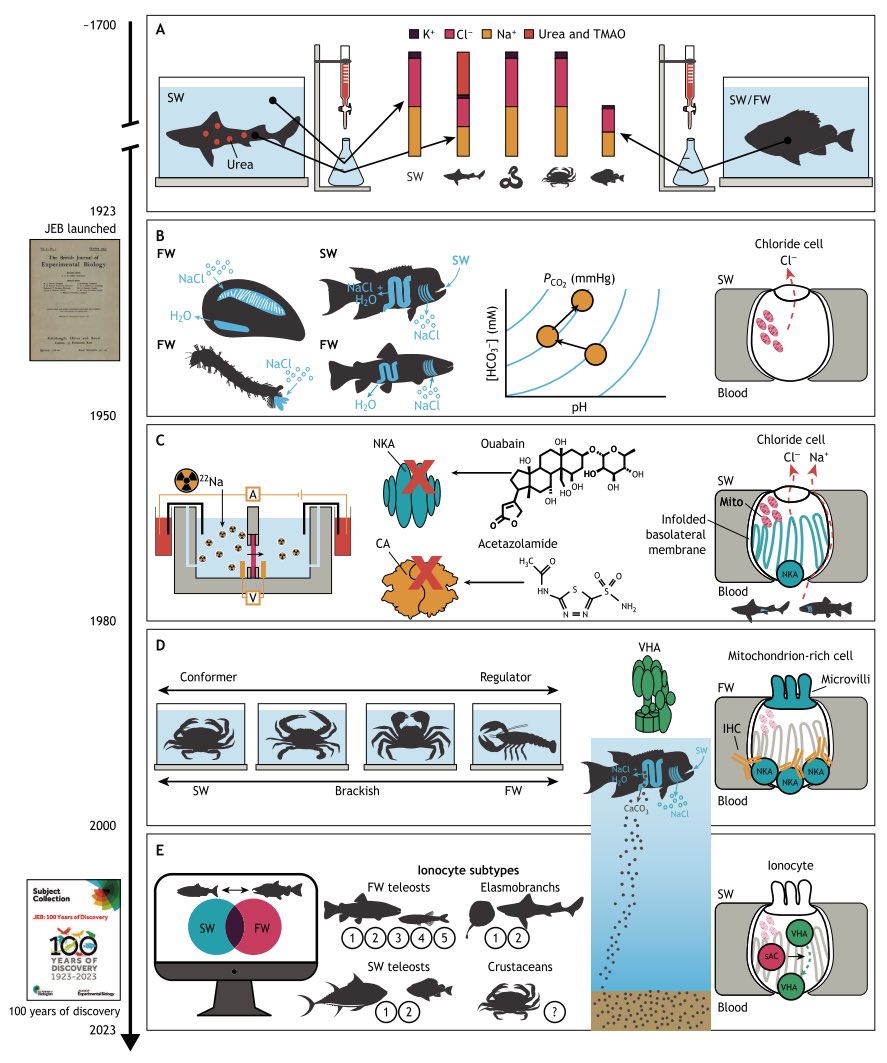
Putting together figures that span 100 years of @J_Exp_Biol and aquatic ionic, osmotic, and acid-base strategies was one of the most daunting and exciting task yet. Had an awesome time working with @martin3guerres and Alyssa. Here’s a sneak peek!