We are thrilled to announce a $300M commitment from @Manulife to grow CleanCapital’s portfolio of #solar and #energy storage projects. We are proud to lead the industry with this landmark investment, accelerating the energy transition across the U.S.
https://t.co/QnhgbHINI3
https://t.co/bL2Jq2CEjy, a platform to support social Giving Circles, is hiring for a Sales Development Rep (SDR). Plz share with good candidates. Also, consider checking out https://t.co/bL2Jq2CEjy :)
https://t.co/N9V1g5Tgcr
As a child, I learned "the principal will be your pal" as spell-check vs moral principles. Grade school failed to prepare me to discuss loan principle.
From @TechCrunch, I like revshare for VC, but find many startups get lured back to growth at all costs by industry talking points
https://t.co/URdhwRK3sX
Just in time for Thanksgiving, our 2nd @farmsteadapp hub is now open!
We went from 0 to launch in under 3 weeks. The first of many more to come.
@theobserver covered the launch with a video of our hub manager sharing an inside look at the warehouse.
https://t.co/tWbSzhAIdI
@GroundVentures Obviously, context specific! But debt on favorable terms is too often never considered by startups. If you’re successful, the equity you sell is super expensive (which is why investors sign up for the risks ☺️)
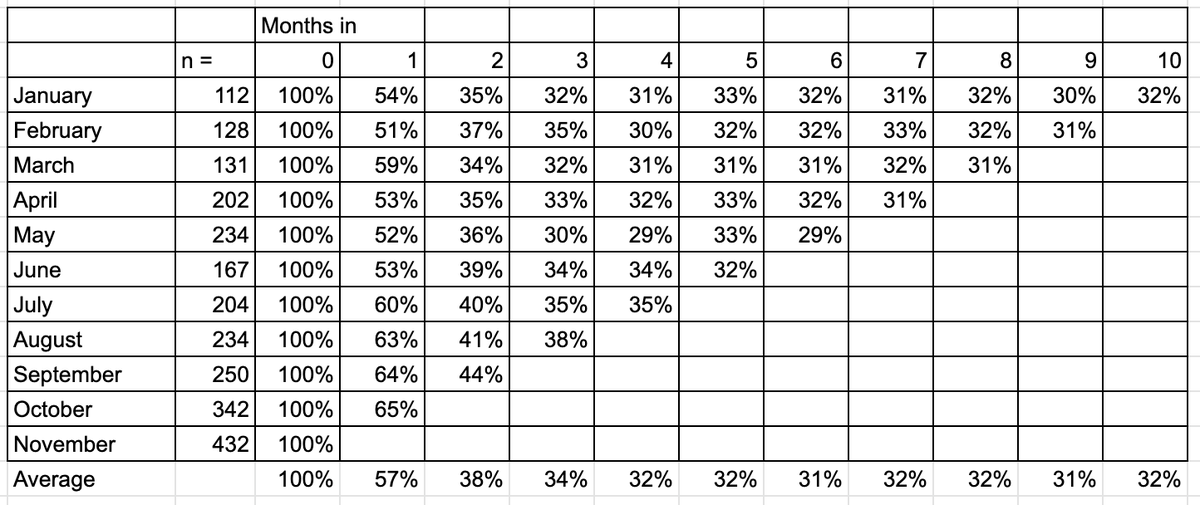
This is a great post! Simple and straightforward retention tracking. My only quibble is that many startups should be tracking this weekly, not just monthly
New post today 🚀
Retention is one of the most important growth metrics
However, it's not easy to measure so often it is measured incorrectly
I wrote a step by step guide with examples on how to measure retention correctly with cohorts
Here it is!
https://t.co/xyZYHhRetg
As investors, most of us won't know our financial ROI for years. In the short term, how can we evaluate our successes and positive impact on emerging markets?
I'm biased - Wayfair taught me that if something is hard, others probably avoided it so you're on to something and should keep going ... but at some point that's just masochism 🤣
Knowing when to pivot and when to persevere is tough, and can make or break a startup.
But pivoting can be a dodge to avoid challenges. Teams and their boards have the hard task of knowing the difference between a strategic pivot and problem-avoidance.
As an investor, I get a lot of red flags from entrepreneurs ‘pivoting’ without a plan, in what really just seems like seeking the path of least resistance. When do you change course for an easier way, and when do you go uphill?