@luke_broyles Anyone else get the Obamacare refund checks that are being mailed out? Quite the surprise as well. I immediately reinvested it. Same playbook here.
Bitcoin is an open, global reserve asset with absolute scarcity. The Investor Guide explores Bitcoin’s monetary properties, investment case, market structure, portfolio role, custody and risks. $BTC
https://t.co/MAt57RCG8y
Forget Yourself
It's an honor to stand here and welcome the third class at UATX, the most exciting university in America.
To the freshman: thank you for choosing us. I know you had options, and you picked our ambitious experiment. In return, we can promise you that we will stop at nothing to help you become worthy of great things.
***
In the 1830s, the French aristocrat Alexis de Tocqueville traveled across America and admired much of what he saw. But he observed a dangerous paradox in the American love of equality. As the old ties of class, tradition, and community dissolved, he predicted, each citizen would retreat into a small world of narrow concerns — until every American would end up "thrown back forever upon himself alone," confined at last "in the solitude of his own heart." A man with nothing above or beyond him has nothing important to strive for and becomes focused on himself alone.
Tocqueville called this danger individualism. Paradoxically, he worried that the more independent the citizen feels, the weaker and less independent he actually becomes. And weak men are more susceptible to being governed by others. They are dominated by the ideas and fashions of the majority and look to a government bureaucracy to take care of them. Tocqueville saw this individualism as a path to comfort in servitude.
America's version of individualism led to something quite different.
The pilgrims and pioneers were the most self-reliant people on earth. They persisted against nature and starvation to set up the colonies; they headed West on wagon trains even as they buried their children on the Oregon Trail. They formed volunteer fire brigades before any government services existed. They ran their own towns without deferring to a distant capital. They carved farms and opened shops and built railroads. They turned wilderness into civilization. Their grandchildren stormed the beaches at Normandy, and their great-grandsons walked on the moon.
That kind of relentless pursuit of greatness was self-uninvolved. It was strong and persistent, and the opposite of introspective. America's self-reliance and rugged individualism produced achievements that were only possible because we escaped the old aristocratic order and its unmeritocratic privileges of birth.
These great achievements begin, however, with the recognition that there's something greater beyond us, that much of life's meaning comes from duties imposed on us and loyalties we did not choose. To strive beyond ourselves we first need to understand ourselves, and that means fully understanding our inheritances before we presume to improve or criticize them.
Greatness starts with recognizing that we incurred a debt to the past, to the family that raised us, to the founders of our country, to the dead who built everything around us and fought our enemies so that we can live in freedom and prosperity. Greatness starts with the recognition of virtue.
For most of Western history, the highest compliment you could pay someone was to call them virtuous. A virtuous father was devoted to his children. A virtuous friend was loyal even when it was costly. But over the last century, virtue gave way to authenticity — being true to whatever feels right.
Today's young people are the most self-aware, validated and as Tocqueville warned us, individualistic. A free and enterprising America became the richest society in human history. And yet, your generation is the most anxious, fragile, and lonely.
American capitalism succeeded in producing unprecedented wealth and opportunity not by rewarding self-obsession. But instead, rewarding the founder obsessed with a product, the engineer obsessed with a problem, a doctor obsessed with getting his patient healthy. It's two bicycle mechanics from Dayton, Ohio taking their shop profits and betting on a wind tunnel in the back of the store. It's an immigrant entrepreneur taking his profits from an internet company and betting it on a rocket to take us to Mars.
Short of the military, our universities are the institutions best positioned to cultivate a free and virtuous citizen. Instead, they've become sanctuaries for the authentic self. Having lost the confidence to distinguish between good and bad, universities pretend that all ideas are equal and promise a curriculum to "reflect" your interests. They've traded the question of "what is true and good?" for the question "how does this make you feel?" Universities keep offering a self-affirming mirror when what you need is a window.
But not at UATX. You are here because you are the tiny minority in our country that wants something different. A place that hands you books chosen for you, where you will sit next to people not selected for "fit" but for raw intellect, a place that asks you to defend your opinions, and holds everyone to the highest standards. You are here because you want a real education that humbles you without humiliating you, that challenges you without flattering you.
You are going to live together, eat together, argue together. And, as you share the labor of maintaining a community, we trust you'll pass down to the class behind you what the class ahead passed on to you.
Freshman, look around. You are sitting near a classmate you don't yet know who will argue with you until late at night. They will be the friends standing by you at your wedding. In this room is a professor who will pour red ink on the margins of your essay. That professor will be the mentor you call when deciding what new job offer to take a decade from now.
So, to the class of 2030, the whole world will keep telling you to find yourself. We're hoping for something better: that you forget yourself and discover the durable joy of being absorbed in something greater than you.
Years from now, you'll be in a room where something serious is on the line. Maybe a dinner table where a troubling question gets asked, or a courthouse where a big decision is made, or a board meeting where a serious mistake is about to be made. Those rooms will need at least one person who knows how to think through hard things. We want you to be the person the rest of the room quietly turns to.
But today, we turn to you and ask you to forget yourself. We want you to read books that have no interest in your identity, and to wrestle with facts that don't care how they make you feel. We want you to help your classmate at an inconvenient hour, to listen and learn from the professors, and to find ways to contribute to this young university without demanding that it conforms to you. Forget yourself and find something greater than you.
Forget yourself today, then wake up tomorrow and forget yourself again. Spend four years doing that, and you will cross this stage in 2030 strong, free, surrounded by friends who will help you build a good, virtuous and successful life.
Welcome to the University of Austin.
— UATX President Carlos Carvalho’s Convocation Address (August 23, 2026)
If you use a Coldcard hardware wallet, please pay attention. If you know someone who uses one, call them. Text them.
This appears to be one of the most serious wallet security incidents Bitcoin has seen.
If you're affected, don't wait. If you need help, reach out.
⚡️This is the city converting grocery inflation into a permanent political dependency.
The 30% discount is real only at the register. The remaining cost gets pushed into taxes, municipal borrowing, subsidized property, public payrolls, supplier pressure, deferred maintenance, or operating losses.
The food did not become cheaper to produce. The accounting became less visible.
The launch will probably look successful. A carefully selected basket. City-owned space. Heavy publicity. No requirement to earn a return. Prices private stores cannot match because private stores must account honestly for rent, labor, theft, spoilage, insurance, capital, and failure.
Then the reflexive loop begins.
Subsidized stores weaken nearby private operators. Marginal stores stop investing or close. Their exit reduces competition and grocery access. City Hall cites the decline as proof that more public stores are needed. The program creates the evidence used to justify its own expansion.
Over time, groceries become political infrastructure. Procurement becomes influence. Store locations become favors. Hiring becomes patronage. Prices become campaign promises. Losses disappear into larger budgets. Product selection becomes vulnerable to lobbying and ideology. Every operational failure generates a demand for additional funding rather than liquidation.
The deepest obscenity is that New York helped construct the cost structure it now wants credit for bypassing. Commercial rents, restrictive development, permitting, taxes, energy costs, security failures, labor mandates, and administrative friction remain intact. Rather than repair the machinery making basic life expensive, the city builds a taxpayer-funded escape hatch and places the mayor’s name above it.
That is the governing pattern of institutional decline:
Create unbearable complexity.
Refuse structural reform.
Subsidize the visible symptom.
Make citizens dependent on the subsidy.
Use that dependence to expand political control.
Mamdani is building more than grocery stores. He is building a constituency whose affordable food becomes directly associated with municipal power.
The eventual price will be paid through worse fiscal discipline, weaker private competition, reduced choice, and a city increasingly required to operate ordinary economic life because its own policies made ordinary economic life impossible.
The 30% discount is the bait.
The permanent transfer of grocery distribution into the political system is the real project.
1/ It’s Monday and we have a big week ahead for the Clarity Act. As CCI goes back to the Hill, we are countering the Clarity myths and setting the record straight. 🧵
David Friedberg: The Socialists Are Coming for Your Private Property Rights
At a recent hearing held by NYC Mayor Zohran Mamdani, a speaker equated evictions with violence.
@friedberg says this demonization of landlords and the good/evil moralistic framing are signals that socialists are trying to erode private property rights in America.
“In 1787, John Quincy Adams had a comment, ‘The moment the idea is admitted into society that property is not as sacred as the laws of God, and that there is not a force of law and public justice to protect it, anarchy and tyranny commence.’
Private property rights are the foundations of liberty in America.
Because if you think about where everyone that came to America was coming from, there were these tyrannical governments where some overlord or some cabal could decide at any point to take the things that you have. You had no private property rights as an individual.
And it was that stasis that drove so many to come to the United States and say, ‘We want a place where individuals, one person, can say, I own something, and no one can take it from me.’
This idea that you can then claim acts of violence, that you can then claim circumstances of extraordinary extravagant wealth, and say to that individual, ‘I now have a right, the government now has a right to take your private property,’ ultimately leads to this tyrannical form.
And it starts out as being anarchic, and remember, anarchy is a temporary state. It's always in between one state and another.
All anarchies end up in tyranny, so anarchy and tyranny are one in the same.
And fundamentally, what's going on with these socialist principles is that, ‘We are taking your private property, and you no longer have rights on your private property. We now will have the right to come in and take your property and control it and take it from you.’
And it always starts with this framing of moralistic intent. ‘We are good, you are bad for the following reasons. You have committed violence against the people that live in your building.’
So the first framing is that the private property owner is evil, and that the private property owner has committed an act of injustice against those who don't have the private property. And that is the justification for taking away their private property rights.
And it is the beginning of this transition towards a tyrannical system, which will ultimately be what I call this kind of Great American Politburo or whatever socialist framework gets set up by the cabal of the socialists and what they're trying to put together.
So all of these little acts, while seeming ridiculous, and insane, and inappropriate, in aggregate are the same thing: They're a transition away from private property rights, which is the foundation of the United States of America.
That's why I think we should all be so shocked. And to John Quincy Adams' point, we need to vehemently defend those rights.
As soon as those rights start to slip away, even in the tiniest way, it is a cascading effect, and everything will become tyrannical, and it will be very ugly in the United States of America.”
He Called His Shot, Then Backed It Up: Josh Kerr took down one of track’s most untouchable records.
One of the most famous moments in sport is Babe Ruth pointing his bat towards the stands and calling his shot.
Josh Kerr just did him one better. In March of this year he announced Project 222, an attempt to break one of the hardest and most hallowed in sports, El Guerrouj’s 3:43.13 mile world record. Something that had stood for 27 years.
Kerr called his shot: “It’s time for that record to have a real go at it, and I’m going to be that guy to do it.”
Today, July 18th, Kerr backed it up. Running 3:42.66 to bring the record back to the UK, to join legends like Bannister, Ibottsen, Coe, Ovett, and Cram.
And the way he did it was impressive. Just look at his splits: 55.22 (400m), 1:51.06 (800m), 2:46.45 (1200m), and 3:27.6 (1,500m).
He had two rabbits that got him to 1,000 meters, but then had to make a long push home. And let me tell you, pushing for a lap and a half while you are riding the razors edge is HARD. During that push, his 100m split only varied between 13.67 and 13.88. Just incredibly consistent.
It was one of the most impressive performances I’ve seen. And Kerr has one of the most impressive mental games you could imagine.
Kerr’s M.O in his career has been confidence. It’s sometimes interpreted as cocky, but what it really is is a deep conviction that’s founded in the work. He and his coach, Danny Mackey, are methodical in preparation, and always keeping the main thing the main thing.
It’s one of the reasons why Kerr always shows up at the big meets. He’s got a history of coming through at championships when the lights are brightest. It’s so hard to do, and yet Mackey and Kerr almost always get it right.
Part of that comes from how they approach training and performance. They know what matters most: consistency.
“I don’t do crazy workouts or crazy mileage. I just don’t miss days. Consistency is my biggest weapon. I’ll break any athlete down with how consistent I’m going to be training wise and just getting the work done.”
They realize that the whole game is compounding. It’s not having one killer workout here or there. It’s putting together a body of work that prepares him. Too often at this level, we turn workouts into proving grounds, to show what we’re capable of. It’s easy to fall into that trap, both as an athlete and coach. Often, it’s the doubt and insecurity that pushes us to prove ourselves, especially in the era of strava and comparison.
“The way that I get fast is stacking. I’m stacking years, I’m stacking days, I’m stacking months.” It’s about winning the workouts. As Kerr said, “If you show up and put in the same level of effort regardless of how you feel, you’re winning every day.”
Putting in the work is step one. The second and just as important is: trusting and letting go.
Kerr uses the analogy of the work filling the cup: “If you can stand on a start line with a filled cup, you’re ready to go to war.” Then it’s time to release and show what you’ve done. You can see it in his pre-race talk. Yes, he’s after the record, but he’s chasing that feeling:
“That’s what I’m chasing with this record — full flow — like I’ve done every single thing I can. I’m now giving my body and my mind over to this experience. That’s living for me.”
On the starting line, trying harder is the enemy. If we overthink, try to force actions that are ingrained, we get in our own way. You turn down our impulse to overthink by trusting what's underneath. And that only works if you've built something to trust
It’s why famous sprint coach Bud Winter coined the term “Relax and win.” And jazz maestro Charlie Parker once said, “You’ve got to learn your instrument. Then you practice, practice, practice. And then when you finally get up there on the bandstand, forget all that and just wail.”
Kerr certainly let it wail. His similar philosophy could be seen in what he said before the race: his body was capable of the mark, so his job was “to have my mind be available to let my body do its job.”You spend years grabbing control. Then, in the moment that matters most, the skill is letting go of it. As Kerr alluded to, it’s not turning your brain off completely, it’s getting out of the way so you can focus on the task at hand and let you do what you’ve trained to do.
Kerr has some of the best insights and quotes on mental performance. But more so, what I’m thrilled about is that you can trust this record. I’ve known his coach Danny Mackey for almost two decades. He was right there with me in the hardest time of my life as a whistleblower. He put his career in jeopardy by stepping forward in the same situation. He loves the sport and respects it.
So celebrate this one. An absolutely amazing performance.
He called his shot. And got it done in the hardest event in track and field. Astonishing.
-Steve
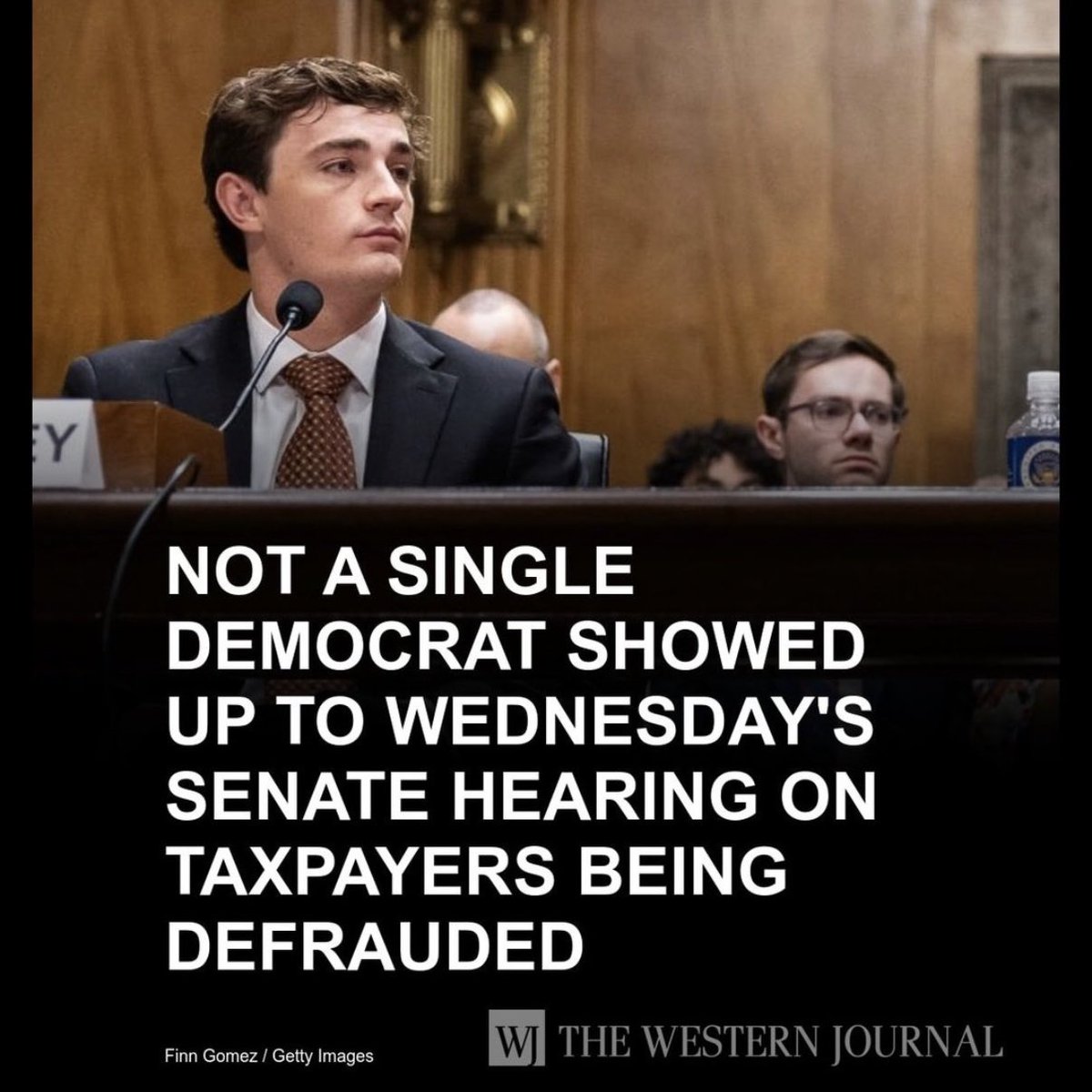
Imagine this: you get paid by our tax dollars and you don’t even show up to do your job when it involves our tax dollars being stolen.
Wtf are these people doing in office if they don’t even care about our money being stolen and wasted? They are simply working against us.