An email from a CFIB small business member who sells children's products:
"Consumers will hold off on purchases between now and Dec 14th. They will return purchases and cancel orders in order to re-purchase and save the GST. This will negatively affect sales.
Small businesses are currently struggling with the Canada Post strike. This will add to our challenges and could push some businesses too far."
It feels incredibly tone deaf of politicians to be cheering on Canada's economy based on GDP growth alone while so many Canadians are suffering financially. GDP growth has been supported almost entirely by population growth. It is not organic. This means that each individual sees less, not more. I honestly don't know a single person in Canada who feels like they are better off than they were just a few years ago, much less a member of the fastest-growing economy in the G7.
We all know what it feels like to be in a fast-growing and overheated economy. It was a party. Now that party is over. It's going to be very hard to convince us that the party is still on. This is probably the primary reason people are losing trust with the government. People tolerated a lot of dishonesty but at a certain point it becomes unignorable. That point is when it shows up in their household finances.
Today, Canadians suffer under the sustained weight of past inflation, increasing tax burdens, crippling debt, a housing crisis, and now, rising unemployment.
This is what 2 years of GDP per capita decline looks like. We can prop up GDP as long as we want to avoid a technical recession, it doesn't change a crucial fact: Individuals are in a recession in Canada. Politicians are ignoring it. No wonder young people feel hopeless.
A lot of people say I'm negative for talking about this, but it is not negative to see things as they are. It is a necessary step in fixing it. Acknowledgement, not denial, is the first step in facing this head on.
In the real world, you get paid for what you get done.
Realtors get paid for the # of homes they sell.
Builders get paid for the # they build.
My gov't will pay municipalities for the # of homes they permit.
Real world. Results driven. Common sense. Bring it home.
https://t.co/MSU9iPGu61
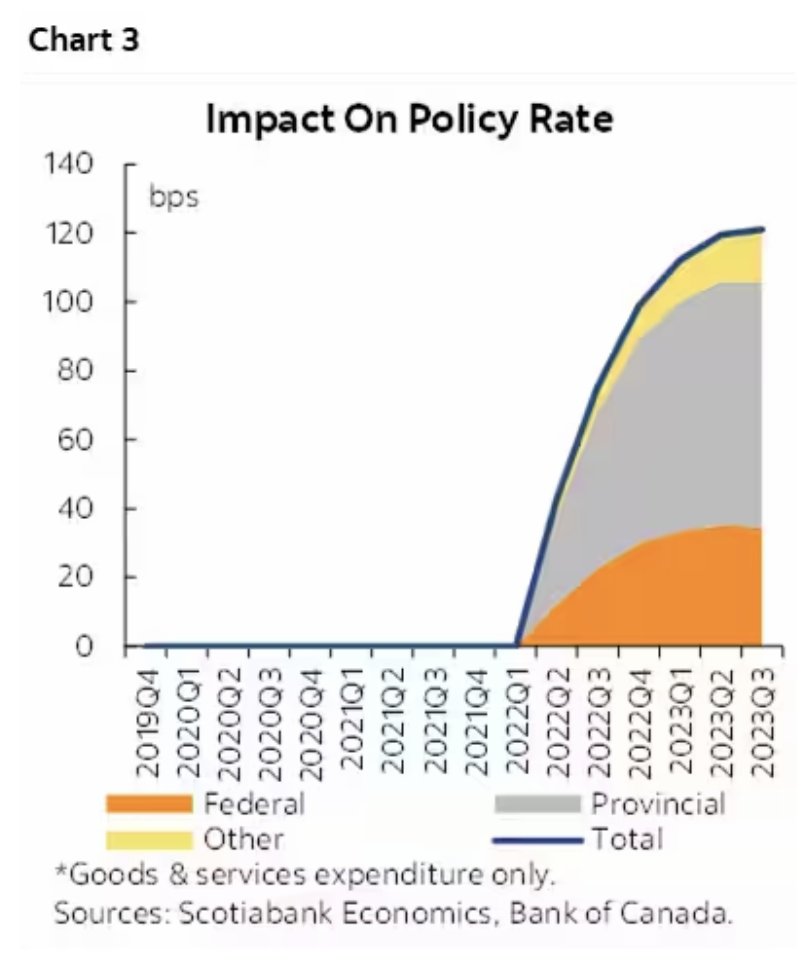
"We estimate that government consumption and pandemic transfers to households account for about 200 basis points of the 475 basis points increase in the Bank of Canada’s policy rate."
- @scotiabank
“The federal government will take dwellings, health care, infrastructure and important services into consideration when setting the country’s immigration targets”
❔🤨
Was this just never considered?
https://t.co/MFkafpujhh
** A lot of variables at play here. Market conditions, restrictive zoning rules, permit process, taxation, unaffordable Canadian labour, and a whole lot of GOV red tape are some major factors.
Not an easy fix. Curious how 2024 will play out. 💭🫡
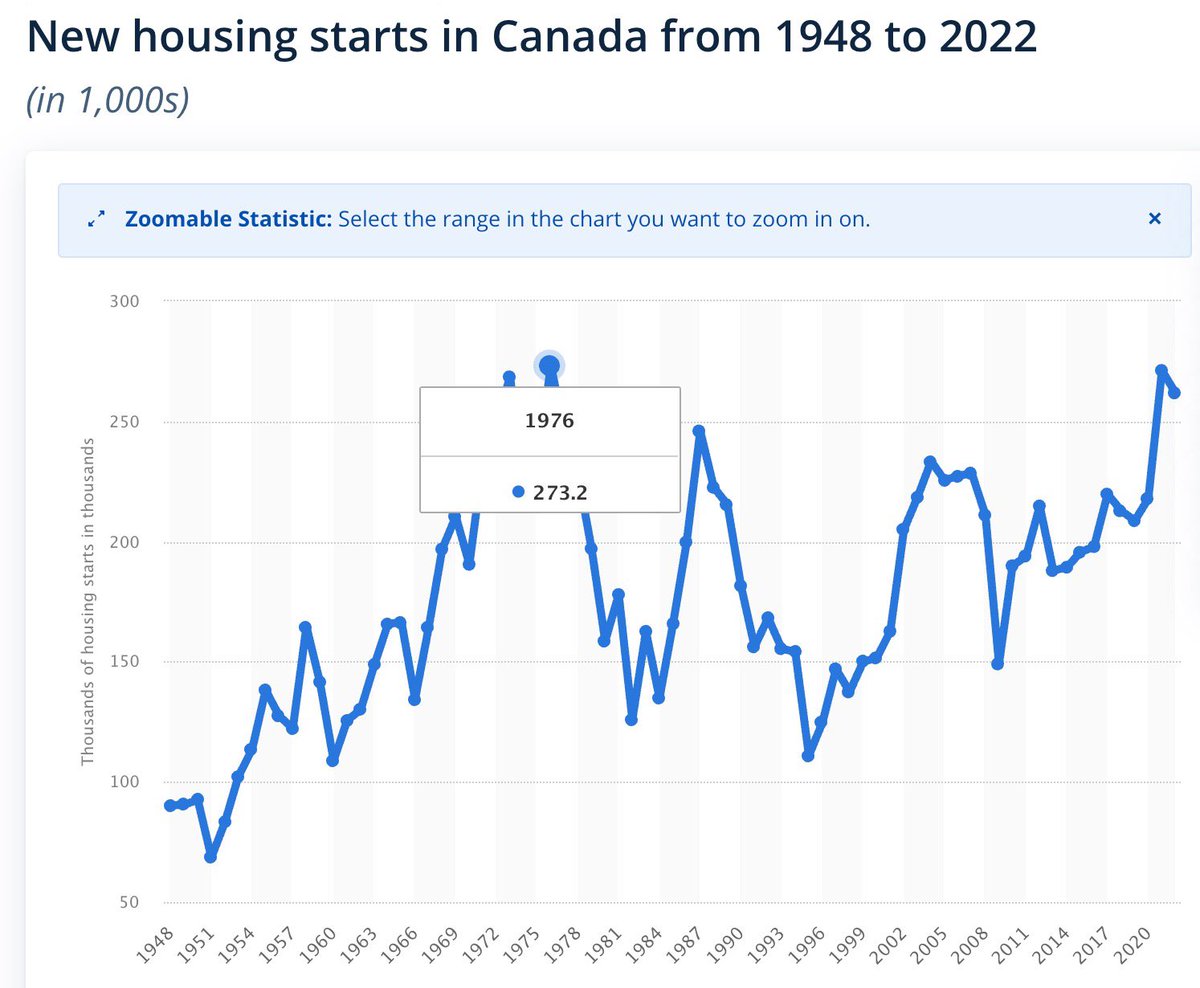
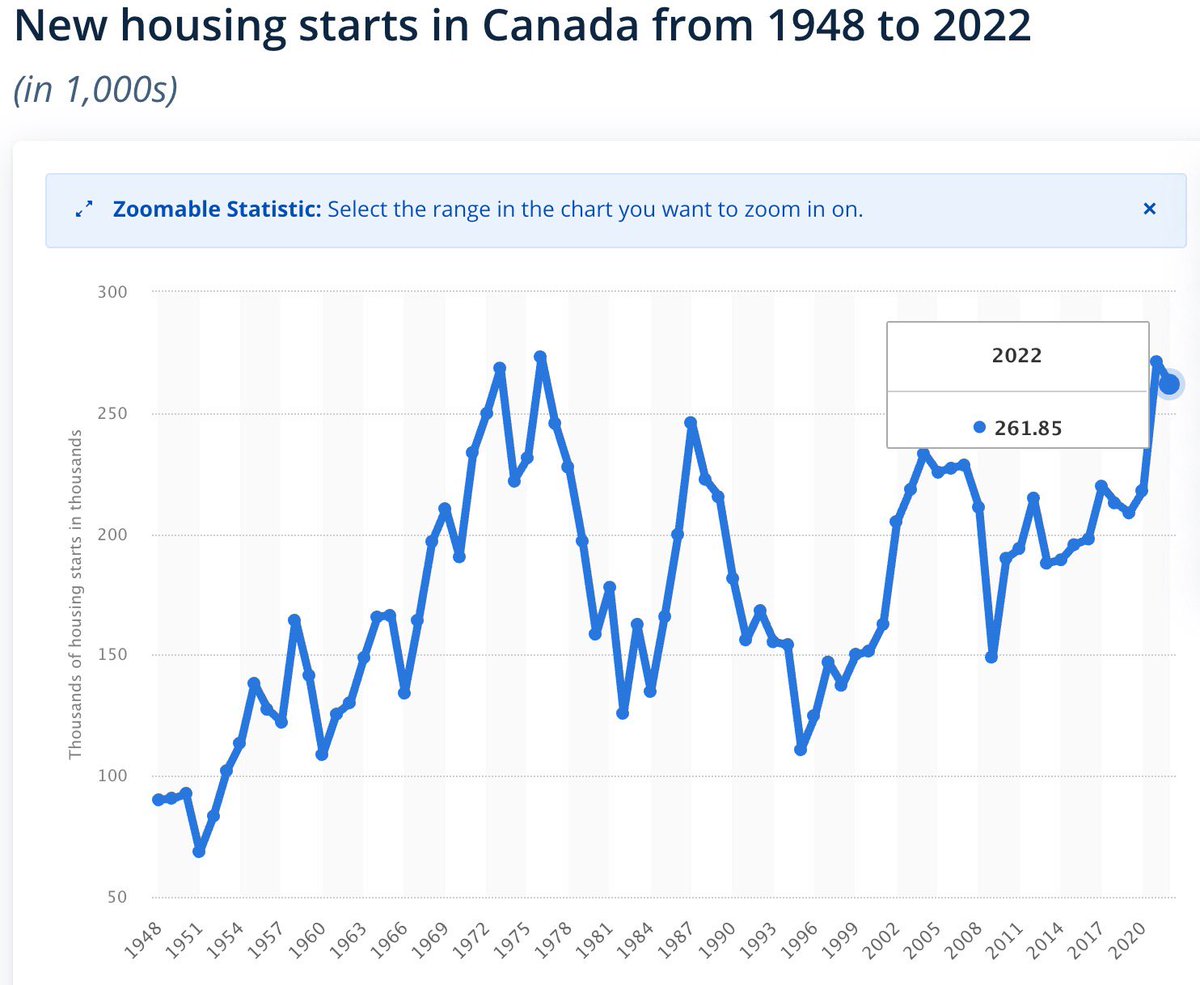
New housing starts?
1976 = ~273,000
2022 = ~261,000
Immigration targets 3X the new housing starts rate.
Population
1970 (~21M)
1980 (~24M)
2022 (~$40M)
Almost 2X the population with same output.
Canada was building more homes in the 1970’s than TODAY.
*Info from CMHC*
Canada needs market housing.
Canada needs rental housing.
Canada needs affordable housing.
🤯🤯
Total homes built in 1974 = 257,243
Total homes built in 2022 = 219,924
*1970-1980 only 3 years were bellow 2022 numbers*
*2010-2020 1 year hit 200,000+*
*info from StatsCAN*
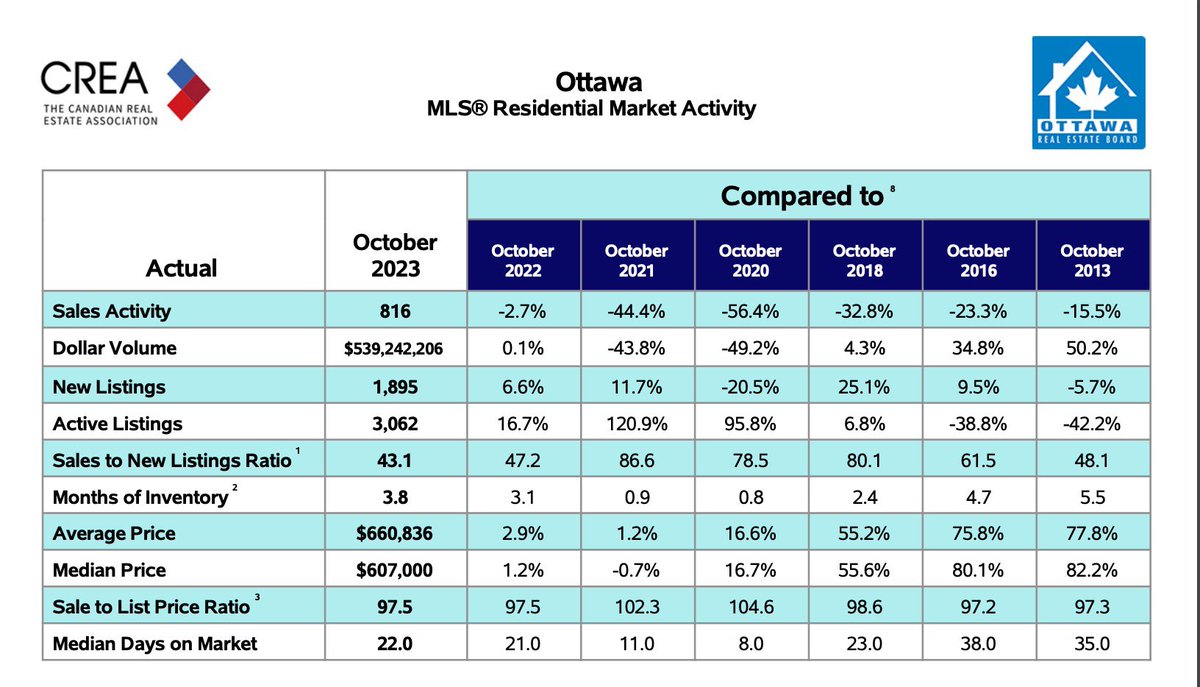
Entering a Buyers market.
Ottawa RE officially in a balanced market. We haven’t seen 3.8+ months of inventory since 2016.
Things are getting SLOOOWWW.
*stats from CREA*
#ottawarealestate#ottawa