“How to’ do SBRT in prostate cancer” consensus recommendations is to define minimum requirements, common practices and additional options for prostate SBRT based on scientific evidence, expert opinion and consensus. @RO_GreenJournal@ESTRO_RT
Read it 👉 https://t.co/vvkZQgUGwm
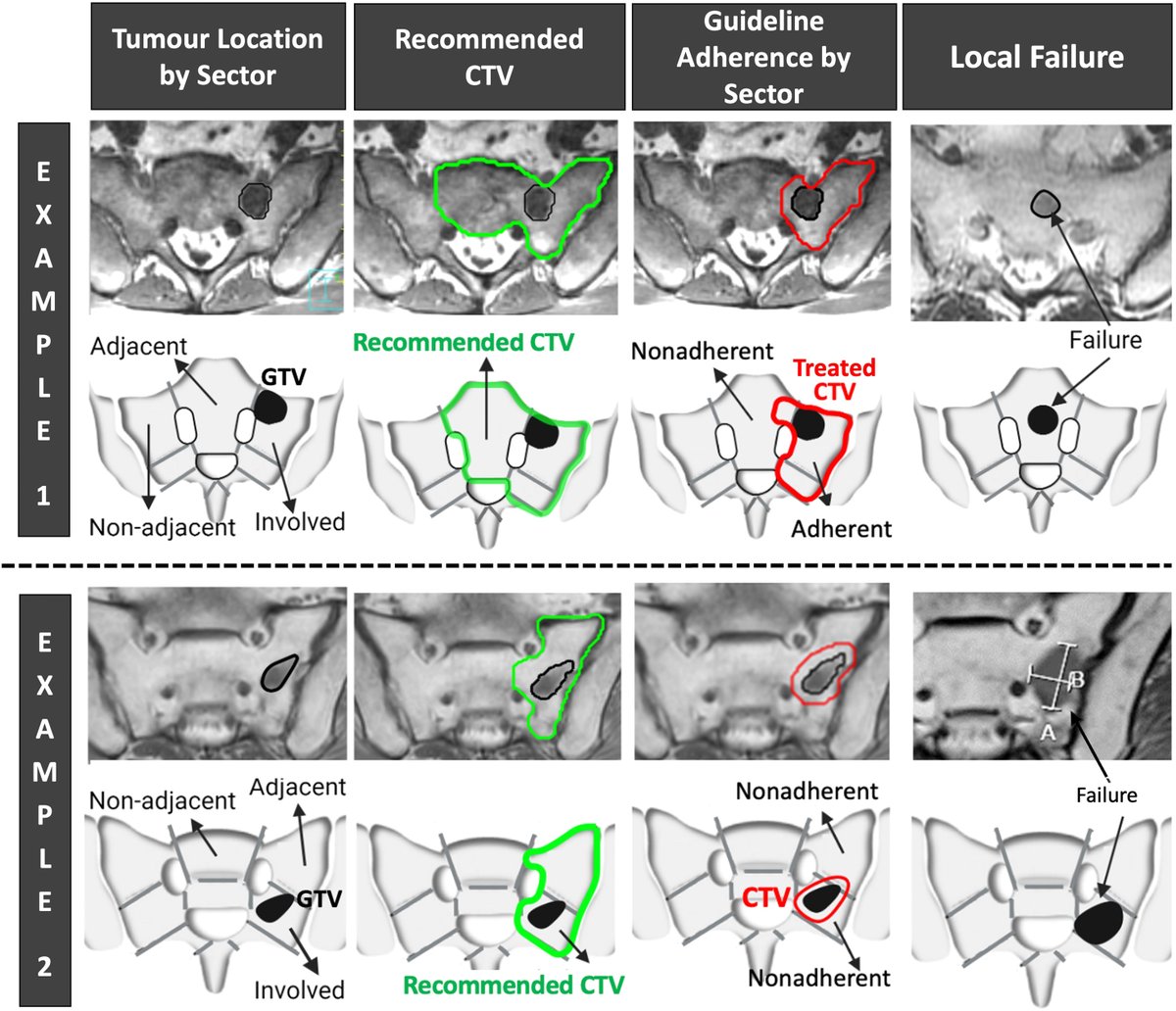
New in #practicalRO: Impact of Adherence to Target Volume Contouring Guidelines on Patterns of Failure in Sacral Stereotactic Body Radiotherapy. #radonc https://t.co/prkSUPDwa0
🚨 Just published in Clinical Oncology!
Meta-analysis of 5 phase III trials (5,172 patients): no OS benefit with whole-pelvis RT.
🎯 Routine elective pelvic irradiation is not supported in unselected patients.
👏 Congrats to all co-authors!
🔗 https://t.co/XdniOPxnmZ
New in #practicalRO: Cumulative incidence of toxicity between 2 and 5 years following SBRT to the prostate and pelvis nodes in patients with high-risk prostate cancer. #radonc https://t.co/osS5T1cMLz
🚨 New evidence for Active Surveillance in prostate cancer!
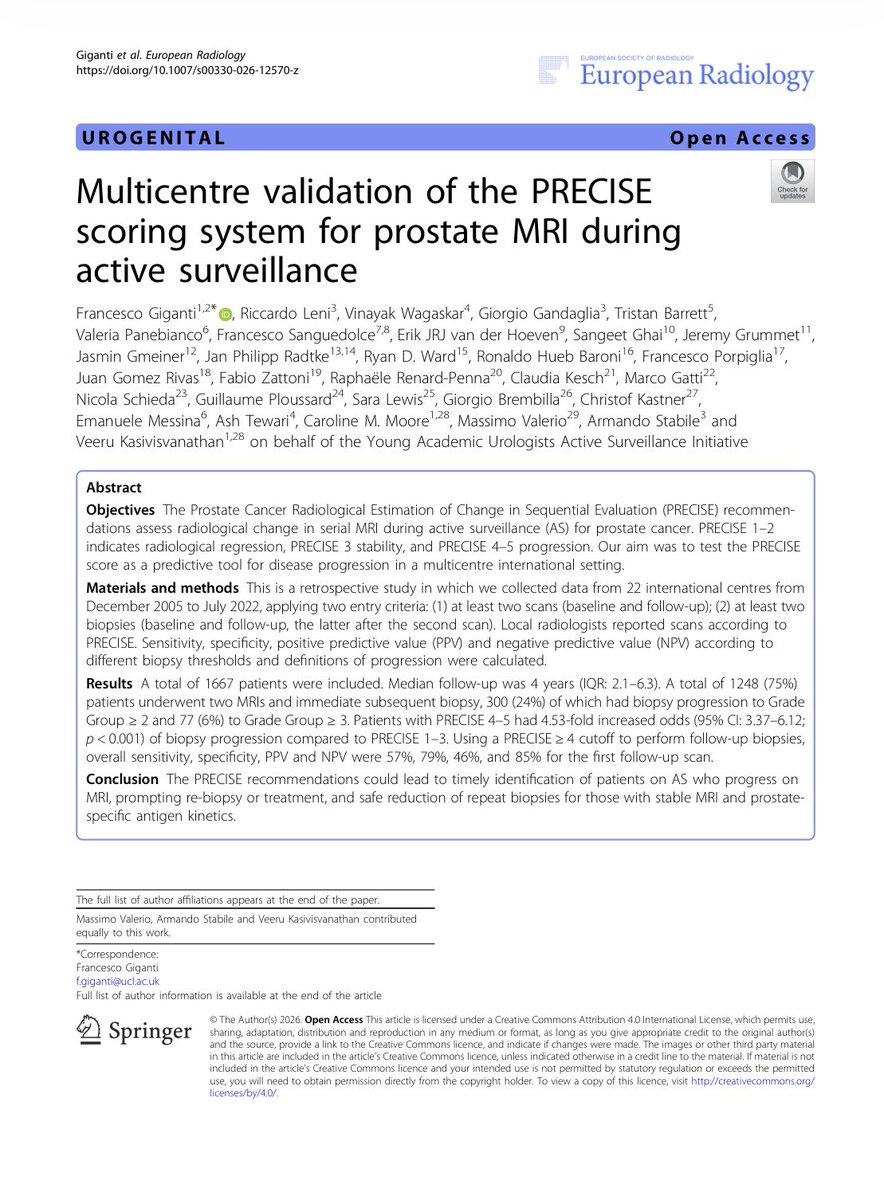
Proud to share this large international multicentre validation of the PRECISE scoring system for serial prostate MRI during Active Surveillance, now published in European Radiology.
🌍 22 centres | 1,667 patients | median follow-up 4 years
🔑 Key findings:
• PRECISE 4–5 was associated with a 4.53-fold higher odds of biopsy progression compared with PRECISE 1–3.
• At first follow-up MRI, PRECISE ≥4 achieved an NPV of 85% for GG ≥2 progression.
• An MRI-driven strategy using PRECISE ≥4 to trigger biopsy could potentially avoid 70% of repeat biopsies, although this comes with a risk of missing some GG ≥2 progression—highlighting the need to integrate MRI with other clinical parameters.
💡 Take-home message: PRECISE provides a standardized and clinically meaningful way to interpret MRI changes over time helping identify men who may need re-biopsy or treatment while potentially reducing unnecessary biopsies in those with stable disease.
https://t.co/50gXPHEFzs
#ProstateCancer #ActiveSurveillance #ProstateMRI #PRECISE #Urology
@giga_fra@GGandaglia@VPanebiancoIT@F_Sanguedolce@ArmandoStabile@Fabio_Zattoni@ClaudiaKesch@JPRadtke@JGrummet@veerukasi@mrsprostate
🎉 Now published in @ClinTransRadOnc!
Our prospective study of MR-guided adaptive SBRT to the prostate bed:
👥 31 patients
✅ No grade ≥3 adverse events
✅ 0% grade ≥2 GI adverse events
✅ Preserved quality of life
Congratulations to authors!
🔗 https://t.co/vHxxaRzb8G
1/
Fast-forward WBI has removed one of PBI's biggest advantages: fewer pt visits
Often heard ppl downplay the morbidity differences btw PBI and WBI.
From a contouring standpoint, WBI planning is much simpler than PBI
So why should we still care about PBI?
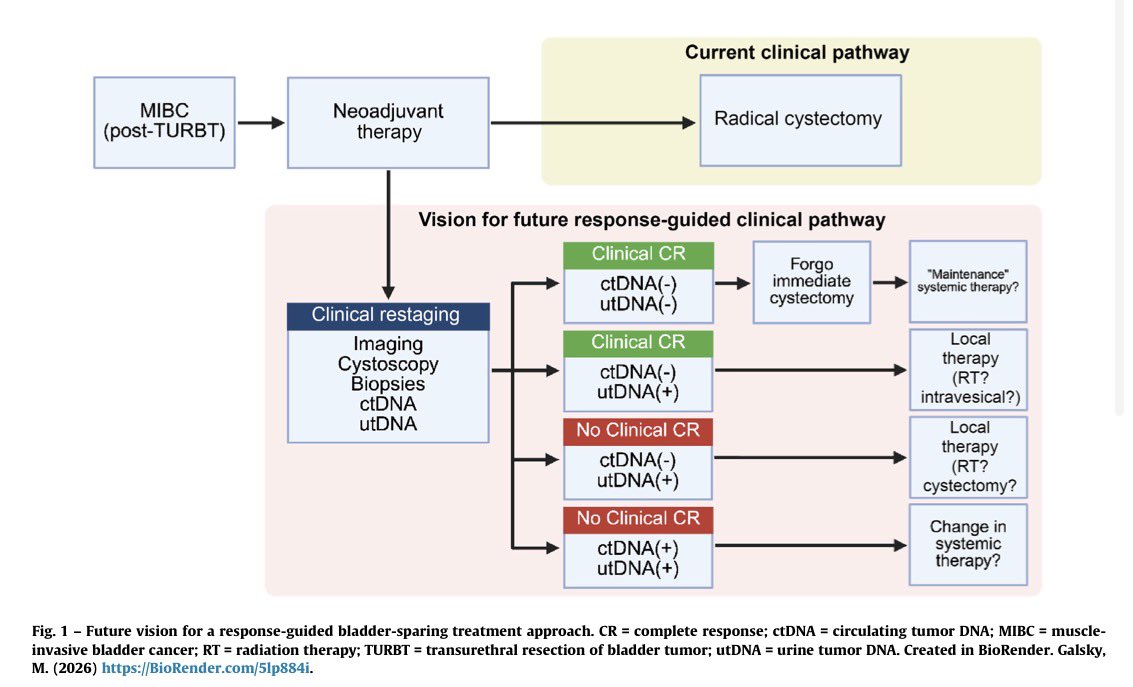
📌Response-guided bladder preservation in #MIBC
Standardised cCR (TURBT biopsies + urine cytology + imaging) as a robust composite biomarker to guide these strategies.
Prospective trials (EV-309, NEO-BLAST) will be crucial.
@OncoAlert@EUplatinum
https://t.co/qv8w6KdJ7x
Total Neoadjuvant Therapy With Long-Course Radiotherapy Versus Chemoradiotherapy in High-Risk Locally Advanced Rectal Cancer (TNTCRT): A Multicenter, Randomized, Phase III Trial | Journal of Clinical Oncology @OncoAlert https://t.co/R9US7YrBPY
Long live DRE, die DRE ☝️
DRE may be dying as a screening test, but it is far from dead. The latest evidence supports removing DRE from routine screening in asymptomatic men, yet it still retains an important role in clinical staging until imaging fully replaces it
https://t.co/CvHkYpEzoC
🔥off the press🔥
Changing Treatment Landscape of HCC: A RW Analysis of Treatment Algorithms & Outcomes of Patients over 10 Years
👉less use of TACE, more SIRT & systemic 💊
🫤but overall outcome still poor
👇my author link
https://t.co/4OQzLhikNa
@myESMO@ASCO@ILCAnews@EASLnews
Are you trying to make sense of conflicting data for treating oligometastatic lung cancers? Us too!
Here's a summary from our fellow Dr. Niall O'Dwyer: https://t.co/glojsvYZES
The trial I've been waiting years for is finally out (Wijesooriya et al, IJROBP). First randomized evidence that proactively sparing the blood- and immune-rich organs during lung SBRT - thoracic spine, lymph node stations, heart, great vessels - reduces radiation-induced lymphocyte kill. And it does it inside standard RTOG 0813/0915, so this isn't a research-only technique.
The numbers are hard to ignore. ALC preservation improved 13.4% overall and 29.5% for central tumors. Grade 3 lymphopenia went from 15.4% in the standard arm to zero in the optimized arm, with no toxicity penalty - if anything, fewer high-grade events. In treatment-naïve patients, exploratory 2-year OS was 94% vs 69%. Underpowered and hypothesis-generating, but the direction is striking.
Here's where I have to update my own priors. I've argued lung V5 was the last frontier for RIL, and I've framed immune sparing as a trade-off, step on the balloon, dose has to go somewhere. But lung V5 and V10 were essentially identical between arms. The dose taken off the spine and vessels wasn't relocated into lung; it was largely eliminated, and whole-body integral dose actually dropped. The balloon had somewhere better to go than I assumed.
One caveat I can't resolve from this report: the dosimetry is pooled, and the cohort is mostly peripheral tumors. For central tumors, where the spared mediastinum sits right against the target, I'd still expect lung V5/V10 to rise. We just can't see it broken out here.
And the metric that predicted survival wasn't EDIC. It was lymph node V5. Organ-specific beats the lumped immune-dose number, and that reframes how we should be optimizing these plans.
#OncTwitter #LCSM