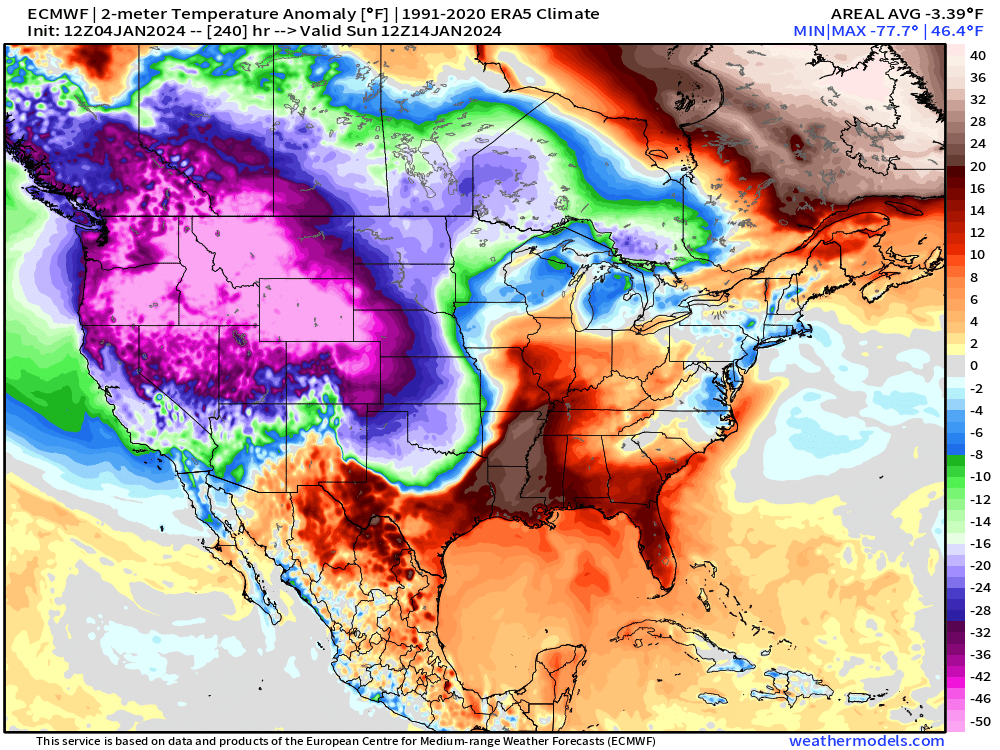
Well, the ECMWF HRES 12z model update puts an end to the Northwest U.S. with the most brutal Arctic blast possible. Nice knowing y'all.
77.7°F below normal temperatures. 📉
Actual temperatures in the minus 50s °F and wind chills
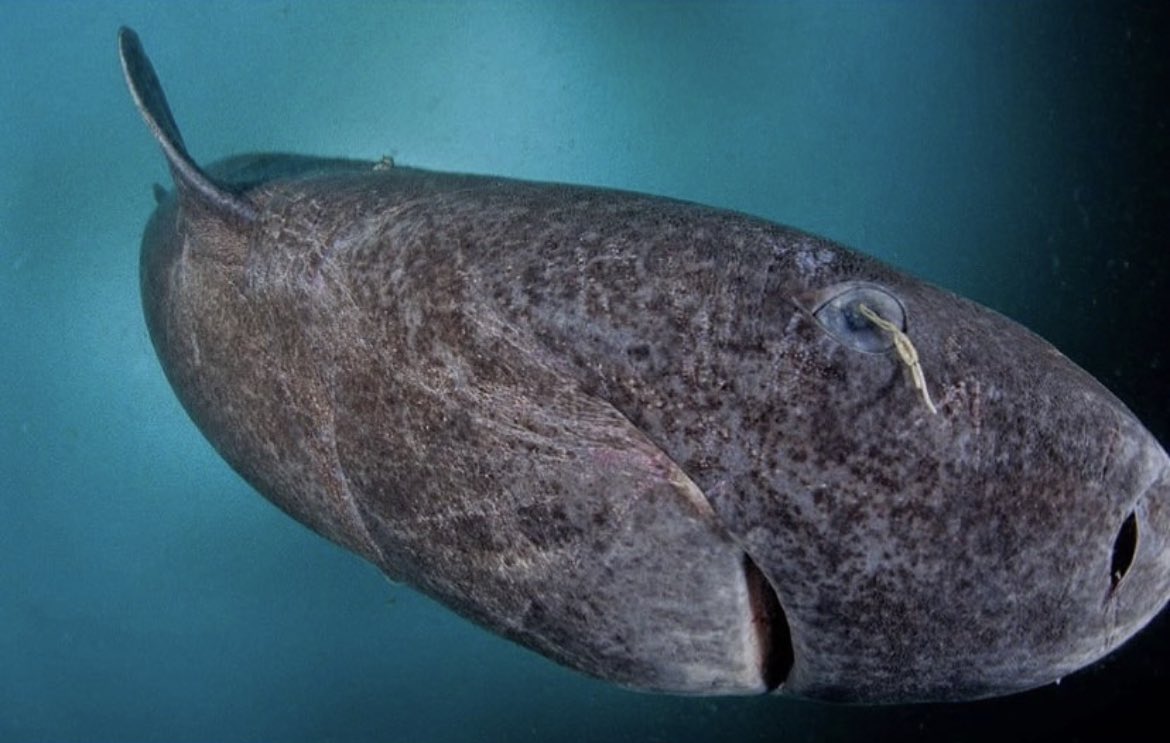
This particular shark is believed to predate the existence of the United States of America. A team of scientists discovered a cluster of Greenland sharks and concluded that some of them are the oldest known vertebrates alive today. These sharks inhabit the frigid waters of Greenland and were the subject of a study conducted in 2017, which examined 28 individuals. The eldest shark in the study measured 16.5 feet (five meters) in length and was estimated to be approximately 392 years old. The researchers established, with a "95 percent certainty," that the shark's age fell within the range of 272 to 512 years, with a most probable age of around 390.
While the exact reasons behind their exceptional lifespan remain unclear, it is believed that the arctic temperatures they inhabit (plunging below 29 degrees Fahrenheit) contribute to their longevity. These low temperatures result in reduced body temperatures and slower metabolisms, thereby minimizing damage to the sharks' tissues. Additionally, their growth rate is exceptionally slow, with less than half an inch (a centimeter) gained per year, suggesting a significantly longer lifespan compared to other vertebrates. Furthermore, the females of this species exhibit delayed sexual maturity, only beginning to mate at the age of 156.
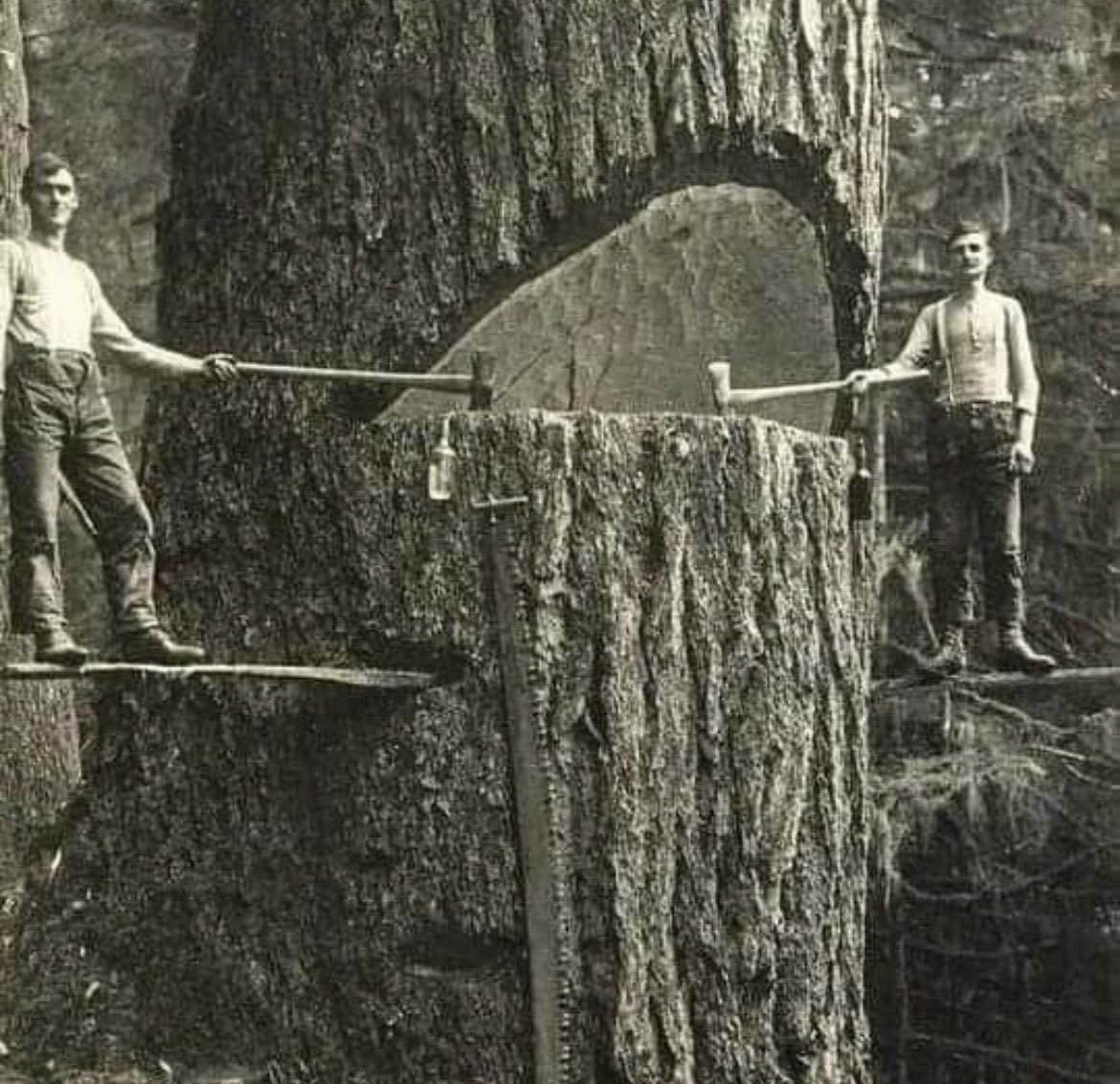
In the early 20th century, the Pacific Northwest region of the United States experienced a significant boom in the timber industry. This photograph shows two lumberjacks cutting a big tree in the Pacific Northwest in 1915.
During this period, the vast forests of the Pacific Northwest, particularly in states like Oregon, Washington, and Northern California, were rich in timber resources. Logging became a crucial industry, providing raw materials for construction, shipbuilding, and other growing sectors.
The demand for timber grew rapidly as the region's population expanded, and timber companies sought to exploit the vast forests. Logging operations often involved skilled lumberjacks who would venture deep into the forests to harvest the trees.
In the early 20th century, the tools and techniques used by lumberjacks were relatively primitive compared to modern logging practices. Two common tools used for cutting down trees were the crosscut saw and the ax. Lumberjacks would often work in pairs, cooperating to fell large trees. The process involved strategically cutting the tree at its base and utilizing leverage to control its fall.
The work of lumberjacks was physically demanding and dangerous. They faced numerous hazards, including falling trees, rolling logs, and rough terrain. However, the timber industry provided employment opportunities and attracted many workers, both locals and immigrants, looking for work and economic opportunities.
By the time of your specified year, 1915, the timber industry had become a crucial component of the Pacific Northwest's economy. It played a pivotal role in the region's development, shaping towns and cities, and supporting various related industries such as sawmills, pulp mills, and paper production.
Over time, concerns about sustainable logging practices and the preservation of forests grew. Conservation movements emerged to advocate for the responsible management of timber resources and the protection of natural environments.
Today, the history of the timber industry in the Pacific Northwest serves as a reminder of the region's rich natural resources and the complex balance between economic development and environmental conservation.
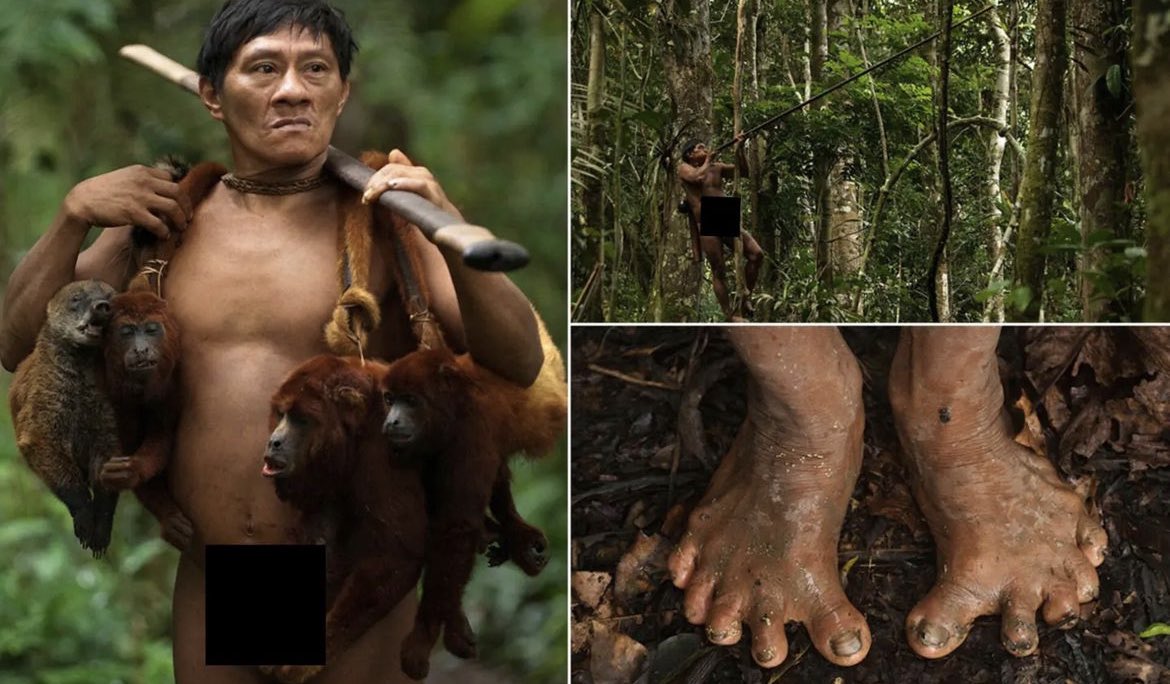
The Huaorani tribe, also known as Waorani or Waos, is an indigenous group residing in Eastern Ecuador within the Amazon rainforest. This isolated tribe, consisting of approximately 4,000 members, has a unique cultural and linguistic heritage. Their language is distinct and unrelated to any other known tongue, including Quechua, which is commonly spoken in Ecuador.
Due to their longstanding practice of tree climbing, a crucial skill for their way of life, the Huaorani people have experienced physical adaptations in their feet. The tribe primarily relies on hunting monkeys and other small game using spears and blow guns as a major food source. The combination of a limited gene pool, constant exposure to the challenging environment, and the necessity of climbing trees has resulted in the flattening of their feet. Some individuals within the tribe even exhibit the presence of six toes on each foot and six functional fingers on each hand. Interestingly, the structure of their feet undergoes changes over time, starting with straight toes at birth.
It is worth noting that the Huaorani tribe is not the sole example of human adaptation to specific environments. Certain tribes in Malaysia, for instance, have developed the ability to stay submerged underwater for extended periods to fish for pearls. Their lungs have evolved to process oxygen more efficiently in order to support this activity.
Moreover, the emergence of white skin in early humans who migrated to northern Europe can be attributed to the reduced sunlight in that region. White skin has a greater capacity to absorb vitamin D compared to dark skin, thus facilitating its production despite the limited sunlight.
In general, human feet may gradually become flatter over time when exposed to comparable environments, as the toes tend to spread out to provide enhanced grip and balance.
AH-CHOO! 🤧 | Grass pollen hit historic highs Tuesday, with the Oregon Allergy Associates listing the pollen count peak at 1,301. For reference, pollen count in the 200's is considered "High."
https://t.co/xNLdYgoH2P
AH-CHOO! 🤧 | Grass pollen hit historic highs Tuesday, with the Oregon Allergy Associates listing the pollen count peak at 1,301. For reference, pollen count in the 200's is considered "High."
https://t.co/xNLdYgoH2P