@JEChalmers@rebsemma@abcnews I had such hope when you commenced as treasurer. You have in recent weeks taken my hope and undone hard work, and time spent away from my family to set us up for a strong future. Lost my vote.
I strongly recommend this podcast with Lucy Beney - a counsellor - with @BritishThgtLdrs
She is BRILLIANT!
She tells the truth about mental health in schools and what happens to kids.
AMAZING! A must watch!
https://t.co/9My45go6ed
Forget the $100,000 investing courses.
In 1998, Warren Buffett quietly explained how to never lose money in just one hour. Almost nobody paid attention. The company built on those principles is now worth nearly $1 trillion. This is the closest thing to a cheat code you’ll ever see. Bookmark and save this before it vanishes from your feed forever.
Need a quick 2-minute example showing how to implement the science of learning? Use these techniques for any content. Evidence-informed strategies seen in this video:
Spaced retrieval, think and write, wait time, turn and talk, choral response, verify.
#learning
The Australian tour continues with a day at Churchie school in Brisbane. I spoke to all staff about how learning happens then met with faculty leaders, the pastoral team and observed a session with their professional development teams. Such an impressive school.
What really struck me is what's possible when an entire school has a shared understanding, vision and approach to improve learning and instruction.
Their Science of Learning program 'A Learner's Toolkit' is a real game-changer: https://t.co/pID8aNu7rJ
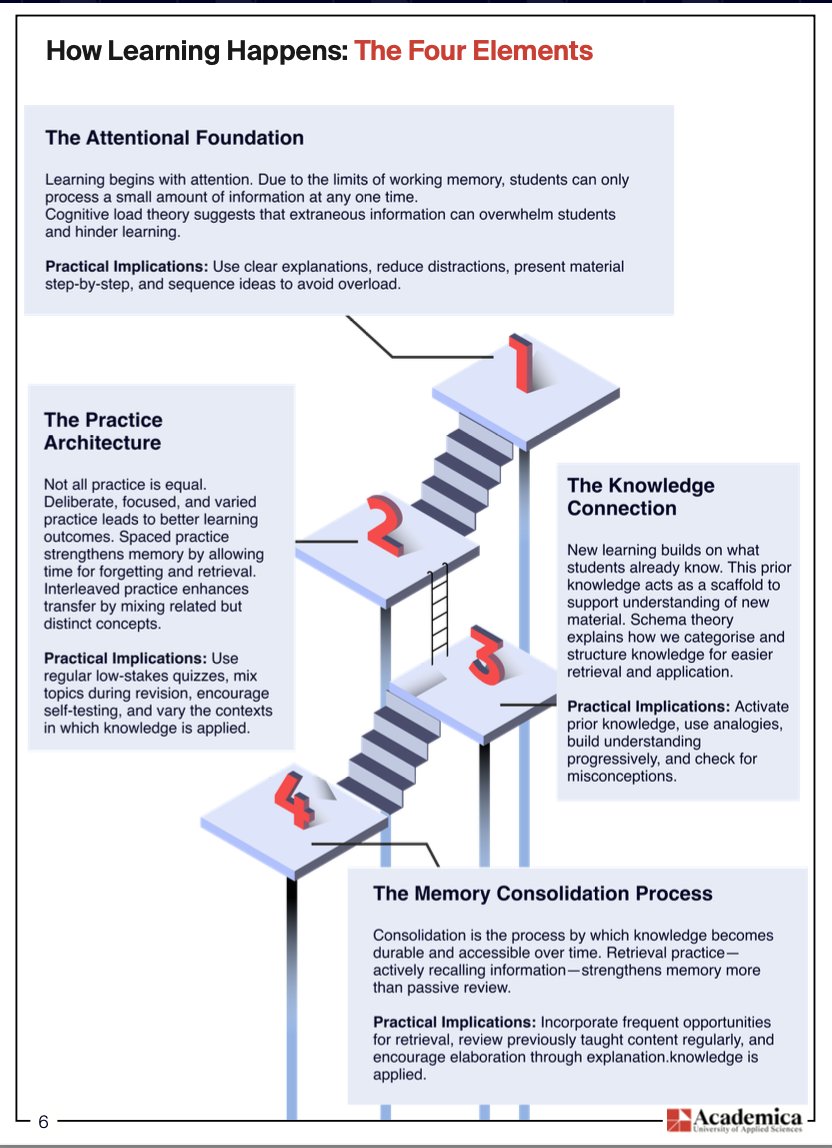
*FREE GUIDE* What is the Science of Learning?
Over the next few weeks, we'll be releasing support materials for the How Learning Happens course. These are aimed at schools looking to start their journey in implementing the science of learning. This first guide seeks to establish a shared understanding of how learning happens. Download here ⬇️ https://t.co/r9EtBdMCwX
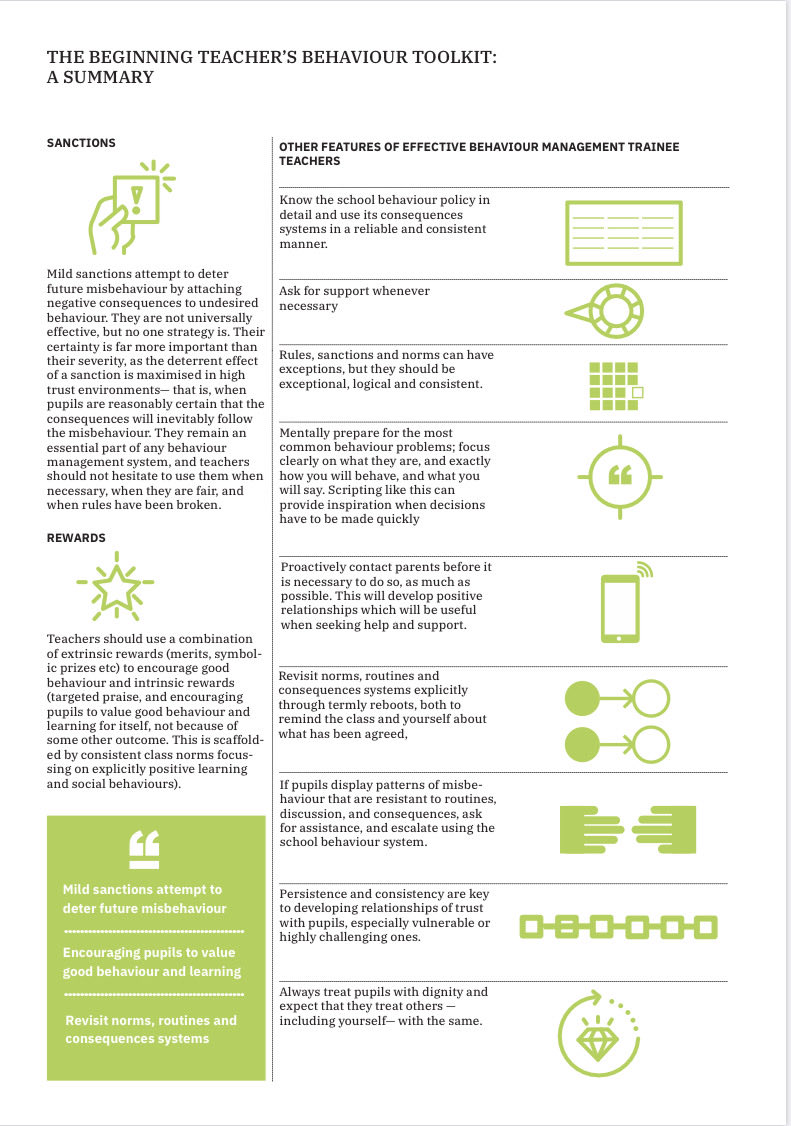
Behaviour Management: A Bill Rogers Top 10 https://t.co/igX6EbfYlE Not checked this in ages - amazingly my all time most-read post has now had 435,000 views (in 12 years.) People keep coming back to it, it seems.
💡 What do we mean by interleaving, spaced learning and retrieval practice?
Find out about cognitive science approaches in the classroom with our evidence review.
Download now: https://t.co/mi59JAXsTs
When there’s a right way to do a task & it’s familiar to the point of habit, it “hacks working memory”- that is, it allows students to complete the task with working memory focused exclusively on the content & not the details of the task.
https://t.co/UZS9xCczs3
I think I agree with this.
I’ve long thought that teaching may not be a profession but in fact a semi-profession as Kevin’s blog suggests.
We do not have a shared body of knowledge.
Our practices aren’t based on the best evidenced approaches, far too often personal opinion instead of pragmatic empirical evidence is used to decide upon teaching approaches
We experiment too often with the children that need us most
Compare that to surgeons who all have a shared understanding of the body and use the best evidenced techniques for their surgeries. Imagine if one hospital did it one way and another did it the other which resulted in too many casualties (similar to what happens with reading instruction, way too many casualties). What’s more, is that some of these professions allow for constant review and development of new practices (remember when doctors didn’t wear clothes and smoked in their surgeries, wild eh!) which means that the current best evidenced approaches can be changed when new evidence surfaces
The same can be said of dentistry, veterinary and law. And other professions.
What are your thoughts?
Picture taken for @Teacher_Fulton blog post
We know that students can catch cold from one another.
Can they "catch attention"?
This encouraging recent research says "maybe":
https://t.co/Sx8U1wzuuN