Low CAC doesn't mean static disease. In NATURE-CT, Aldana-Bitar et al. found noncalcified plaque progressed faster than calcified plaque, with low-attenuation plaque increasing from 9% to 23% over ~5 years. @RonKarlsbergMD
https://t.co/IOUi9yCePX
At LINC 2026, Annabel Groenenberg discussed LAMARR, a concept for live 3D stent-graft tracking from a single fluoroscopy image, with potential integration into markerless AR navigation.
Read more➡️ https://t.co/W6m5FsduhX
🩻 MI ruled out, max hs-troponin >5 ng/L. Does a routine outpatient CCTA prevent events?
TARGET-CTCA (NEJM): no reduction in MI or cardiac death.
👥 3,170 pts, 14 UK hospitals, randomised 1:1
📅 Median 3.0 y
❤️ MI or cardiac death: 7.1% vs 7.3%
📊 Adjusted HR 0.95 (95% CI 0.73–1.23)
🔎 What the CT did change
Obstructive CAD 22.6%, non-obstructive 42.5%
Statin at 3 y: 68.6% vs 55.6%
PCI at 3 y: 6.2% vs 4.9%
💭 My take
CT changed what we knew and what we prescribed, but not MI or cardiac death within 3 years.
In this trial, troponin alone did not justify routine CT. The better question is whether coronary disease is likely behind the pain.
Would you scan these patients? 🤔
📄 Lee KK, Wereski R, Lowe D, et al. Targeted use of computed tomographic coronary angiography in acute chest pain. N Engl J Med 2026.
@yesCCT #YesCCT #CardiacCT
How should we prepare for PCI in calcified coronary lesions? In VICTORY, super-high-pressure noncompliant balloons 🎈were noninferior to intravascular lithotripsy for stent expansion. #JACC#CardioX@SanjitSJolly@DrNataliaP@gmcioffi@MatthiasBossard https://t.co/kbzCFtYVrW
Procedural reporting may not be the most meaningful measure of competency, and survey results suggest an opportunity for reform. J. Dawn Abbott and John Messenger share more details in the full On Record: https://t.co/8DgeW6vGYd
@JDawnAbbott1@TCTMD_Yael
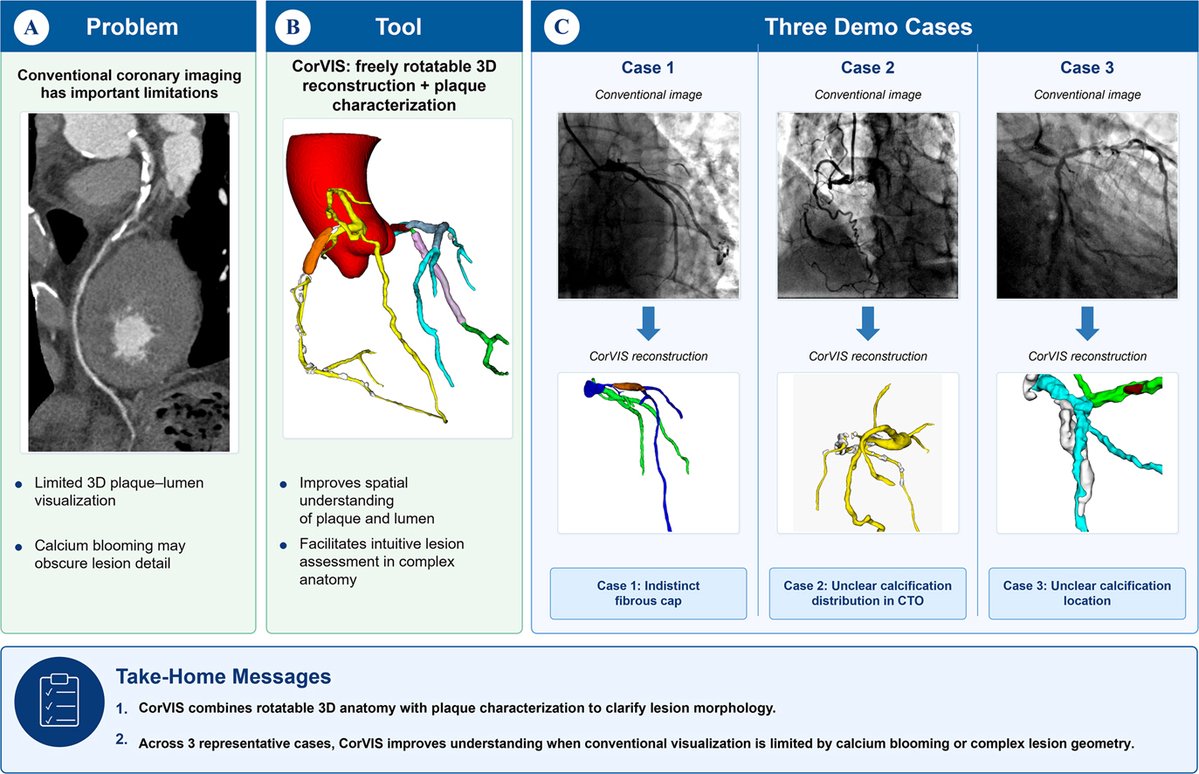
In 3 successful cases in #JACCCaseReports, the coronary visual intelligence system (CorVIS) provided freely rotatable 3D CCTA reconstructions w/ plaque characterization, informing key procedural decisions for complex #PCI.
https://t.co/n20Zb79Bws
⏰ENDS TOMORROW!⏰
This is your last opportunity to have your latest research and noteworthy clinical cases considered for our scientific program. Don't let your work miss its chance to be seen, shared, and discussed at #TCTAP2027.
👉Submit Now: https://t.co/kfvI4WDxBq
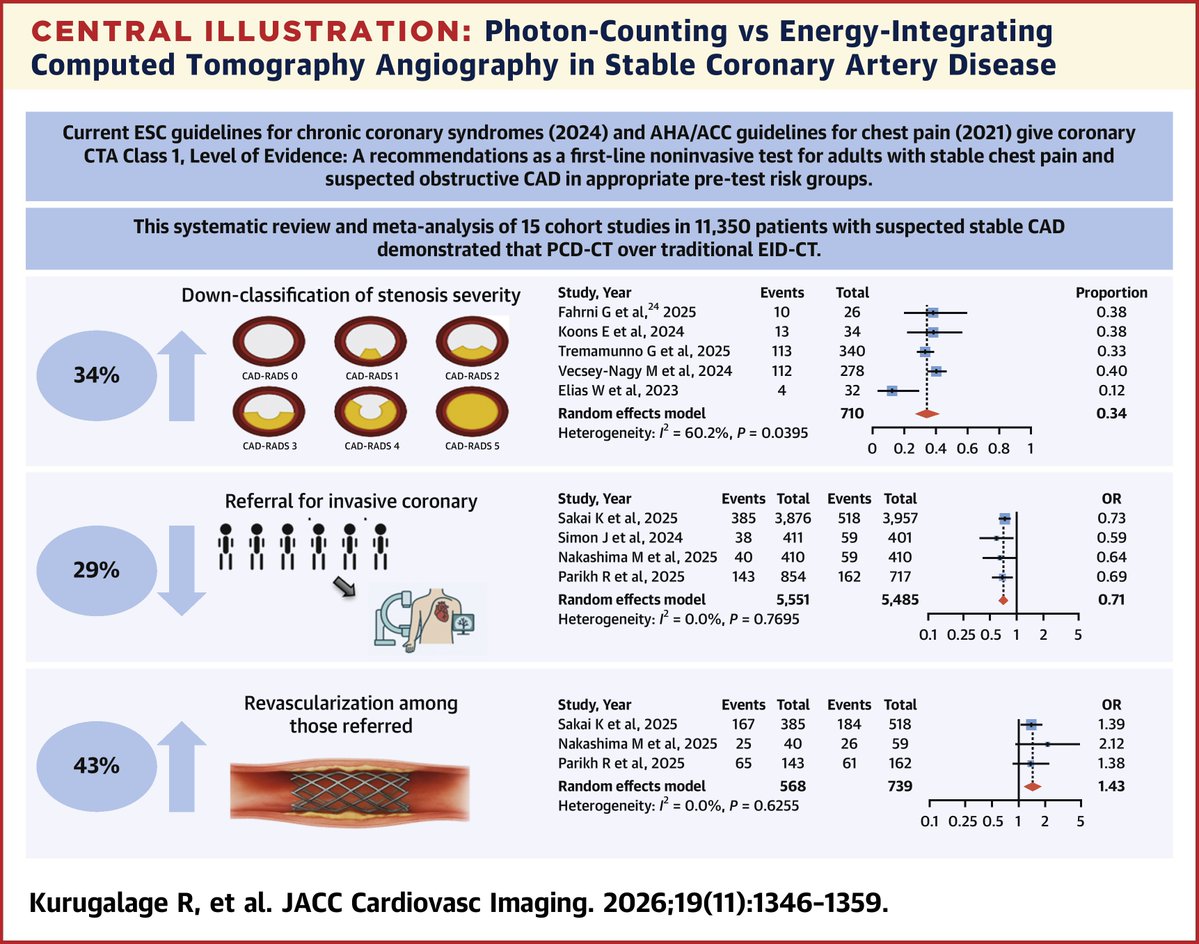
Meta-analysis of 15 studies (N=11,350): Photon-counting CT down-classified stenosis in 34% of vessels vs conventional CT, with lower odds of invasive angiography referral (OR 0.71) and higher #Revascularization yield when referred.
https://t.co/sAcZkYZjgD
#JACCIMG#yesCCT
🚨Final 48 Hours: Early-Bird Registration closes on Friday, November 20, at 11:59 PM KST (UTC+9) — just 2 days away. Register now and save!
🔗Register Here ▶️ https://t.co/TXUzU7v1KE
#LMSummit2026
Can we stop aspirin after just one month of DAPT following PCI without compromising ischaemic safety?
An analysis of 11 randomized trials involving 37,443 patients found that P2Y12-inhibitor monotherapy substantially reduced bleeding, with broadly comparable ischaemic outcomes following one- versus three-month aspirin withdrawal. However, an early ischaemic signal with near-immediate withdrawal highlights the importance of timing.
Does the future of post-PCI antiplatelet therapy lie in earlier aspirin withdrawal?
Read the study and share your perspective!
#Cardiology #CardioTwitter #PCI #AntiplateletTherapy #InterventionalCardiology
https://t.co/7p5kogItCT
@drhbulluck
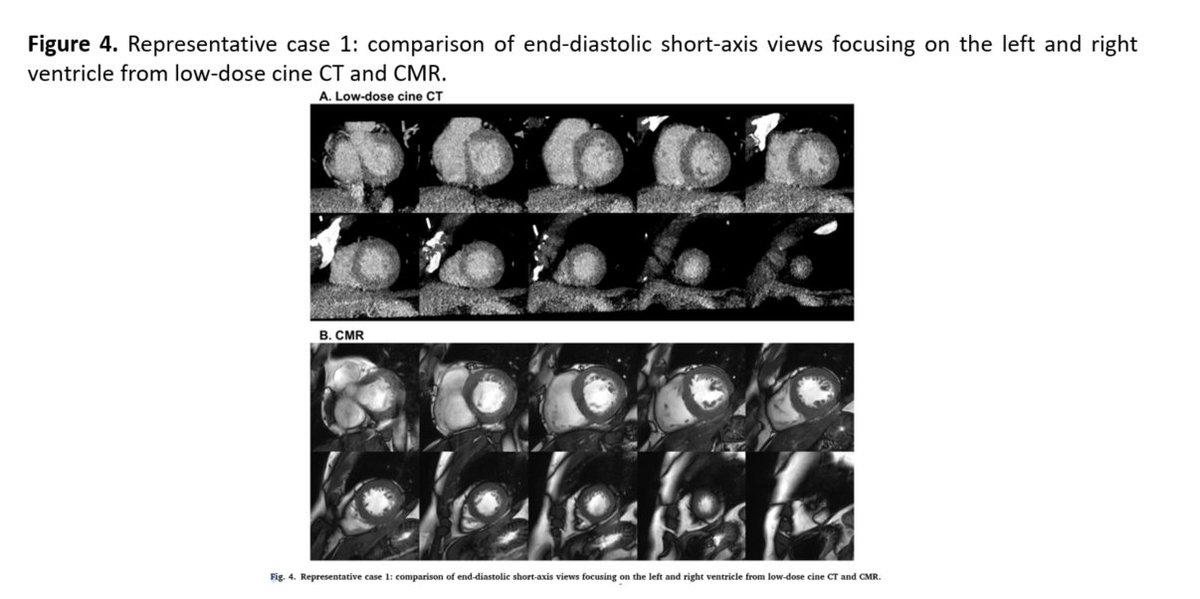
Yamaguchi et al. extend cardiac CT beyond coronary anatomy. Low-dose cine CT during the recirculation phase provided reproducible ventricular and atrial functional measurements compared with CMR.
https://t.co/NwD4mD48tZ
🌍 ISICAM 2026: A World-Class Interventional Cardiology Event!
A remarkable achievement and a new milestone for interventional cardiology in Indonesia!
🏆 2,111 Participants
📑 256 Abstract Submissions
🌏 67 International Faculty
🎓 39 Symposia
🤝 5 Joint Sessions
🔬 8 Workshops for Interventional Cardiologists
🩺 4 Workshops for Nurses & Allied Health Professionals
❤️ 18 Live Cases from 4 overseas centers across 4 countries
The 18th ISICAM 2026 brought together leading experts, international faculty, researchers, and healthcare professionals under the theme:
“Translating Evidence into Practice in Cardiovascular Intervention.”
Three days of scientific excellence, knowledge sharing, hands-on learning, international collaboration, and inspiring discussions.
Thank you to all faculty members, participants, abstract presenters, partners, and the organizing committee for making ISICAM 2026 an outstanding success!
ISICAM — Raising the Standard of Interventional Cardiology in Indonesia and Beyond! 🚀
#ISICAM2026 #WorldClassCardiology #InterventionalCardiology #CardiovascularInnovation #ScientificExcellence
BUYING A PHOTON-COUNTING CT SCANNER DOES NOT AUTOMATICALLY CREATE A PHOTON-COUNTING CT PRACTICE.
It gives you the technology.
NOT NECESSARILY THE EXPERTISE TO USE IT.
A new review published in Cancer Imaging explores the clinical applications of Photon-Counting CT in abdominal oncology.
Beyond the expected improvements in spatial resolution, contrast-to-noise ratio, and spectral imaging, the authors highlight something much more important.
PCCT REQUIRES A DIFFERENT APPROACH TO CLINICAL IMAGING.
Consider a few examples:
➤ 40 keV may improve pancreatic tumor conspicuity, but it is not necessarily optimal for detecting liver lesions.
➤ In renal imaging, low-keV reconstructions may increase pseudoenhancement and lead to incorrect lesion characterization.
➤ Ultra-high spatial resolution is not always the best choice for quantitative imaging.
➤ Better image quality does not automatically translate into better diagnostic accuracy or clinical outcomes.
MY TAKE
Photon-Counting CT is not simply conventional CT with a better detector.
It is a different imaging technology, with capabilities that require specific knowledge, protocols, reconstruction strategies, and interpretation skills.
And this has important consequences.
YOU CANNOT JUST COPY YOUR OLD CT PROTOCOLS, PRESS START, AND EXPECT A REVOLUTION.
You need dedicated training.
You need experienced radiologists and technologists.
You need protocol optimization, quality control, and continuous clinical evaluation.
And above all, you need to understand WHY, WHEN, AND HOW to exploit the technology for each patient.
The scanner is only the starting point.
THE REAL UPGRADE IS NOT JUST THE HARDWARE.
IT IS THE KNOWLEDGE BEHIND IT.
Jadav V et al. Clinical applications of photon-counting CT in abdominal oncologic imaging: a primer for developing a clinical practice. Cancer Imaging. 2026;26:159. DOI: 10.1186/s40644-026-01107-8.
#PhotonCountingCT #PCCT #Radiology #MedicalImaging #OncologicImaging #RadiologyEducation #ClinicalInnovation
PS: the exact same is true for Cardiovascular Imaging. If you think you get a PCCT and then you exploit the advantages by approaching it as the previous EiD CT scanner you are on the wrong track and you will lose time, money and opportunity. Research, education, and a complete change of approach are mandatory.
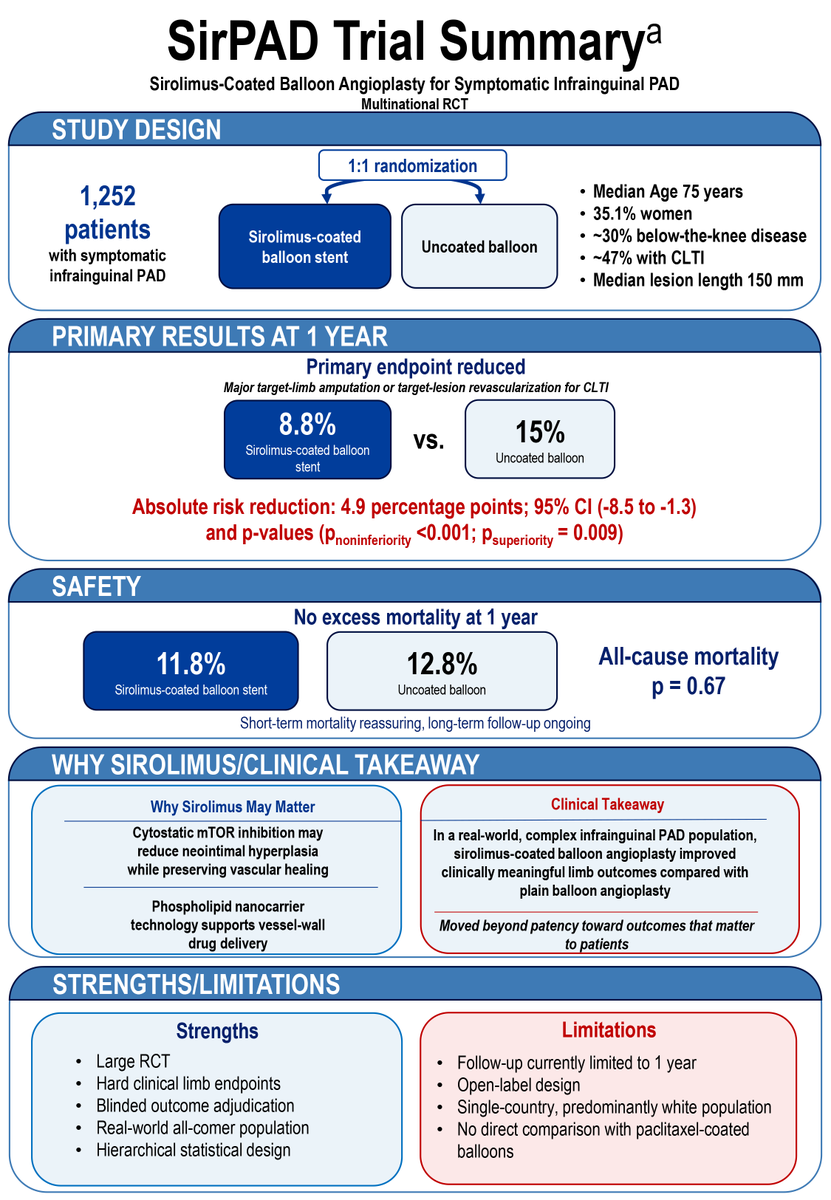
The SirPAD trial data established sirolimus-coated balloon angioplasty as an effective alternative to uncoated-balloon angioplasty for infrainguinal #cvPAD, with meaningful reductions in both amputation and CLI-driven #Revascularization.
🔗 Learn more: https://t.co/OWSTXEkE9d
#JACCCEP study: In persistent #AFib, baseline LA volume index did not predict arrhythmia recurrence after first-time ablation but was associated with higher AFib burden and persistent recurrence phenotype at 1-year postablation.
https://t.co/SF8JMunCAo
#epAblation
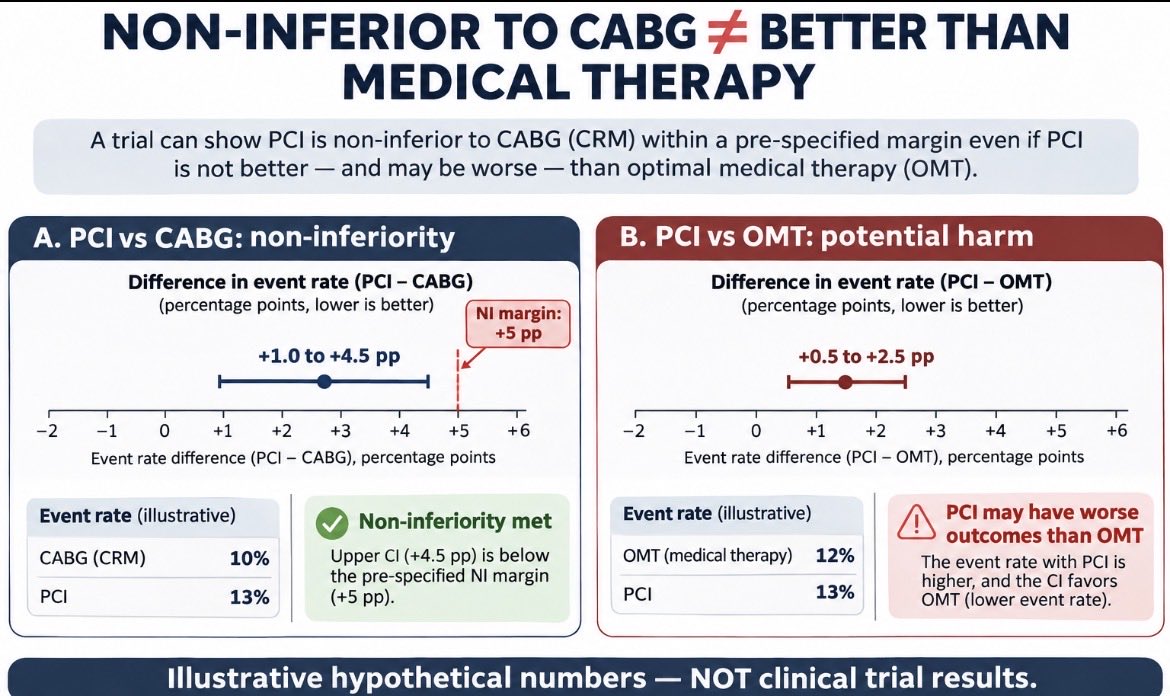
1/8 🧵
Can PCI be declared non-inferior to CABG while offering no benefit—or potentially worse outcomes—than optimal medical therapy?
YES.
This is one of the most overlooked methodological problems in coronary revascularization trials.
Here’s why. 👇