Interventional cardiologist with a keen academic interest. Author of Heart Reset 40. From #Mauritius, MBBS @PKU1898, PhD @UCL, CCT @UK. My tweets are my own
The results are in!
Peer review relies on people giving their time. How often do we ask reviewers how the system should work for them?
We’ve published the findings of the Pirevios reviewer survey, based on 200+ completed responses. Among those who responded:
• 71% had considered stopping reviewing in the past year.
• 58% named time demands as their main reason for declining a review.
• 73% selected payment or compensation as one possible improvement.
• 73% said they had never been asked how peer review should work.
This was a self-selected survey, so these figures do not represent all reviewers.
The full report includes detailed charts, written-response themes and methods: https://t.co/nWq4FrAXd9
The findings are helping shape what we’re building at Pirevios: a directory where reviewers can describe their specialities and availability, and say whether they are open to unpaid, paid or hybrid reviewing.
Our aim is to help journals find suitable reviewers sooner, reduce invitations that do not fit, and give more reviewers a chance to contribute without repeatedly approaching the same people.
Thank you to everyone who shared their experience. I’d welcome your thoughts on how we can make this genuinely useful for reviewers and journals. More about Pirevios: https://t.co/3uoYxKJV9Q
@mirvatalasnag@sbrugaletta@ncurzen@mmamas1973@gbiondizoccai@AnilMakam@dr_yakupergun@EslamAbady33@francisdeng@PTarantinoMD@ross_prager@LocasaleLab@DrNeilStone@drjohnm@DrDamluji@wisit661@Hemida_MD@BrettSperryMD@docmartin22@JadAbdelsattar@Azeem_Majeed@Dr_AmerZeidan@DrToddLee@doctorinigo@AmitGoyalMD@acorderofort@Elsayed_saidx@jtsaxon
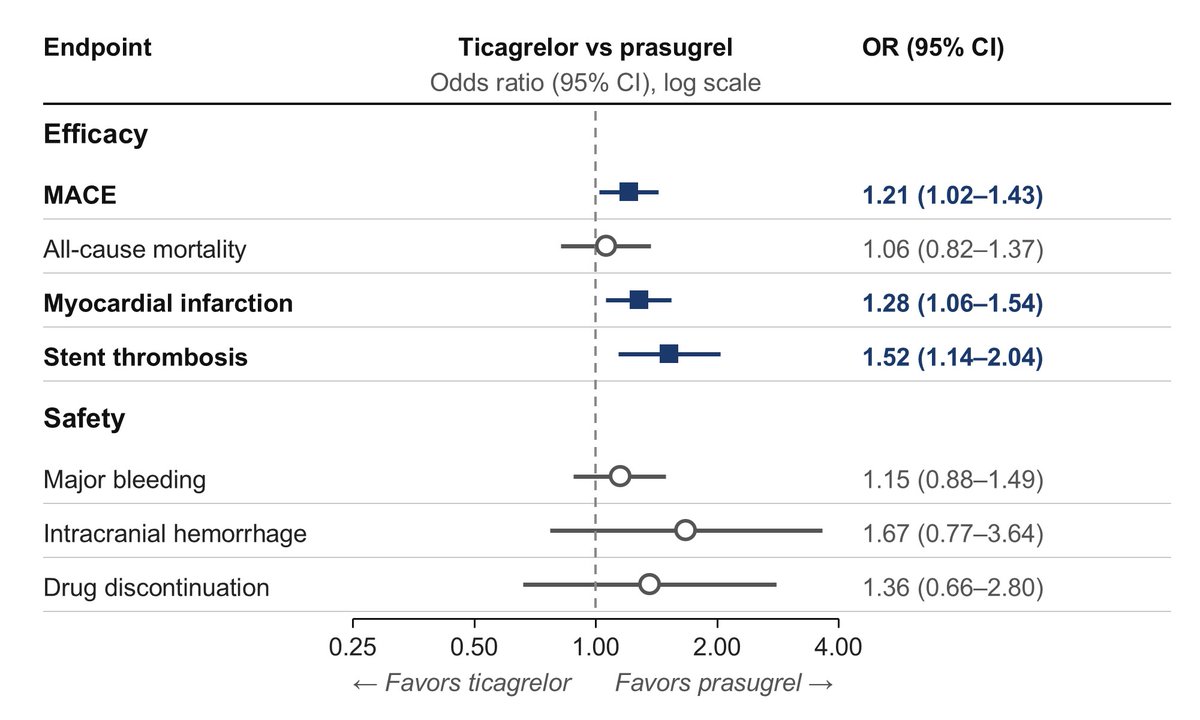
Two prasugrel trials from ESC Congress 2026, two different questions. In SWITCH-SWEDEHEART (17,095 patients), a prasugrel-default policy did not significantly reduce 1-year death, MI or stroke (11.1% vs 11.8% under a ticagrelor default); in PREMIUM, omitting aspirin at primary PCI in STEMI raised death, stroke or MI (11.0% vs 8.5% with DAPT) — aspirin should not be stopped at or within days of PCI.
@DrHBulluck@DLBhattMD
https://t.co/EesjfS2bNF
Small idea I can't stop thinking about.
Put one line on every review invitation: no reply in 7 days counts as a no.
The paper stops waiting on silence.
I'd still send a quick no. It's polite and the editor can move on.
Editors, would you add it?
#PeerReview
I've ignored review invitations. Not because I don't care.
An associate editor recently asked reviewers to at least reply, even with a no. Silence delays everything and the author pays.
The editor is right. Here's what the silence looks like from the reviewer's chair.
The volume. A surgeon wrote in the journal Surgery that with each review submitted, "at least 2 more invitations seem to appear."
The fit. Some invitations are well outside my field. Declining still means a login, sometimes a password reset. So it waits.
The diary. No journal knows I'm on call this week.
The deadline. A careful review of a clinical paper takes me evenings and weekends. Asked for it within a week, next to a clinical job, I hesitate. Hesitation becomes silence.
The work. It's unpaid for me, and almost nobody sees it. Some call it service, others call it free labour. Views differ.
None of that makes ignoring an editor right. It just explains why it's common. Editors are on the same treadmill too.
Invitations go out blind. I'm building Pirevios, where reviewers from any field record their expertise, their availability and whether they'd consider unpaid, paid or hybrid reviewing.
A fast no is a courtesy. Silence is a cost the author pays.
The Reviewer's Chair, issue 1. A new one every Saturday.
#PeerReview
Can we stop aspirin after just one month of DAPT following PCI without compromising ischaemic safety?
An analysis of 11 randomized trials involving 37,443 patients found that P2Y12-inhibitor monotherapy substantially reduced bleeding, with broadly comparable ischaemic outcomes following one- versus three-month aspirin withdrawal. However, an early ischaemic signal with near-immediate withdrawal highlights the importance of timing.
Does the future of post-PCI antiplatelet therapy lie in earlier aspirin withdrawal?
Read the study and share your perspective!
#Cardiology #CardioTwitter #PCI #AntiplateletTherapy #InterventionalCardiology
https://t.co/7p5kogItCT
@drhbulluck
🆕 in OpenSource: Cardiology
Should prasugrel replace ticagrelor as the default after PCI for ACS? And can it let you drop aspirin at primary PCI?
Two trials presented at ESC Congress 2026 and published in NEJM tested these questions. @DrHBulluck and @DLBhattMD conclude that the trials support neither a universal prasugrel default nor this specific immediate aspirin-free strategy.
• SWITCH-SWEDEHEART: a prasugrel-default policy did not significantly reduce 1-year death, MI or stroke (adjusted OR 0.90, 95% CI 0.77–1.06). Only 60.6% received prasugrel under the prasugrel default, vs 75.8% receiving ticagrelor under the ticagrelor default.
• PREMIUM: omitting aspirin with reduced-dose prasugrel at primary PCI in STEMI failed non-inferiority (HR 1.34, 95% CI 1.02–1.75), despite lower bleeding.
Either generic prasugrel or generic ticagrelor remains a reasonable choice for many ACS patients after PCI. Stopping aspirin after an uneventful first month is supported by randomized and meta-analytic evidence.
https://t.co/EesjfS1DY7
Free to read, no paywalls
@Manekin93273194 Blind community service rarely shows up on a CV. Views on recognition and payment differ. Pirevios lets reviewers from any field record expertise, availability and unpaid, paid or hybrid preference: https://t.co/2r12ph5TdE
@alperakay_@BiologyOpen Prioritising society and non-profit journals makes sense when big publishers lean on free peer review. Views on payment differ. Pirevios lets reviewers from any field record expertise, availability and unpaid, paid or hybrid preference: https://t.co/2r12ph5TdE
@BlaneyMD Staying within expertise and not over-committing is the practical bit. Pirevios lets reviewers from any field record their expertise and availability, plus unpaid, paid or hybrid preference: https://t.co/2r12ph6r3c
@EsophagusDoc@WasseemSkefMD@ebtapper Society membership after several reviews is one way people talk about recognising that time. Views differ. Pirevios lets reviewers from any field record expertise, availability and unpaid, paid or hybrid preference: https://t.co/2r12ph6r3c
@AcademicTruther@ebtapper Journals depend on reviewer time, and views on payment differ. Pirevios lets reviewers from any field record their expertise, availability and whether they'd consider unpaid, paid or hybrid reviewing: https://t.co/2r12ph6r3c
@JamesBarnesMD@WasseemSkefMD@ebtapper Feasibility matters when the invitation load sits on a small pool. Views on compensation differ. Pirevios lets reviewers from any field record expertise, availability and whether they'd consider unpaid, paid or hybrid reviewing: https://t.co/2r12ph6r3c
@WasseemSkefMD@ebtapper The free-labour point lands. Views on compensation differ. Pirevios lets reviewers from any field record their expertise, availability and whether they'd consider unpaid, paid or hybrid reviewing: https://t.co/2r12ph5TdE
@noahatwhere I see the irony! Feedback on your own draft is one thing, but an AI score is not a substitute for independent review. Secure tools could assist checks, with the reviewer verifying the outputs and making the judgement.
@Haw_Shiuan That would be worth tracking. Repeating the survey with comparable questions could help show how reviewers’ experiences change, while keeping suspected AI use separate from confirmed use.
@ThomasWolgast@FredOswald@APA_Journals@APA Public thanks are welcome. In our survey, 51% (112 of 221) chose promotion recognition among up to three improvements. Pirevios currently lets reviewers record expertise and availability. I’d welcome you on the Pirevios register: https://t.co/2r12ph5TdE
@PhDStudentTales@prof_kamilov Requests to cite a reviewer’s own work need a clear scholarly reason. In our survey, 73% (162 of 221) had never been asked by journals, publishers, institutions or funders how peer review should work. Register with Pirevios: https://t.co/2r12ph6r3c
@GK_Fellows Subject expertise still matters: the human reviewer judges. AI could assist checks in purpose-built tools with no manuscript sharing or training on it. You can record your expertise and availability on Pirevios: https://t.co/2r12ph5TdE
@xiwang92 Submission volume puts reviewer capacity in focus. In our survey, 52% (114 of 221) rated workload sustainability 1 or 2 out of 5. Reviewers can record expertise and availability. Register with Pirevios: https://t.co/2r12ph5TdE