Broader access. Open access. No paywalls.
Physician-led. Nonprofit.
Author incentives. Reviewer incentives.
Fair and timely reviews.
A system that works for us. Not them.
Follow us. Submit your manuscript. Sign up as a reviewer.
@opensourcecards
Myosin inhibition in nonobstructive HCM.
ACACIA-HCM was positive, ODYSSEY-HCM was not, yet KCCQ-CSS gains vs placebo were similar (+3.0 vs +2.7 points) as were changes in peak VO₂ (+0.67 vs +0.47 mL/kg/min).
@AlbertoAimo90@PanichellaG@IacopoOlivotto
https://t.co/69a3S9QQkC
This is true!
But it is also:
1. Unpaid labor that for-profit journals extract while charging authors thousands in APCs
2. Almost never recognized in a way that actually helps careers or promotion
3. Slow and high-friction, with weak incentives for timely or high-quality reviews
4. Buried in a system that makes science hard and expensive to publish and read
5. Done without real compensation, credit, or advancement pathways for the reviewers who do the work
Which is exactly what OpenSource: Cardiology is built to fix
@jtsaxon@BrettSperryMD
Peer review is:
1. Fun
2. A way to learn methods
3. A sneak peak at the future
4. A chance to shape the field
5. Community service
6. A way to become known for your expertise
My feed - for some reason - has endless complaints about peer review, requests for payment, etc
CMR GUIDE, the first randomized test of scar-guided ICD therapy at LVEF 36% to 50%, lowered sudden death (1.7% vs 5.8%) but not all-cause mortality (11.1% vs 11.0%), and added harms. Scar alone should not yet prompt an ICD.
@ramziw_@tamarappoo
https://t.co/FhObmlue6R
At a lower-volume center where one operator did 146 septal myectomies, in-hospital mortality was 0.7%, comparable to the highest-volume group in a national study. A single-operator model may build expertise closer to patients far from high-volume centers.
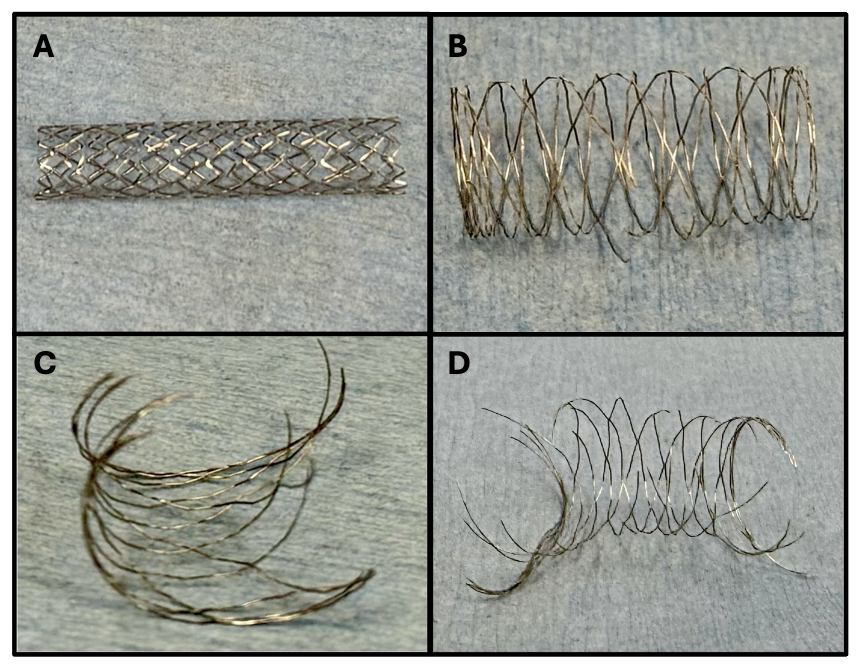
On the bench, 20 of 21 Onyx coronary stents (2–5 mm) fractured on 6–10 mm high-pressure balloons, most linearly (16/20), and smaller stents needed higher balloon-to-stent ratios. Important when managing stents in infants whose vessels will outgrow them.
The devil is in the details.
Even if both trials have positive primaries, ACACIA-HCM Had 10% reduced LVEF (most were managed just by downtitration similar to what you do in hypertension or what happened with sacubitril/valsartan), only 3% had to hold their dose, when 80% of patients were on max doses 15-20 mg within 8 weeks.
ODYSSEY had 20%+ low lvef, everyone had to hold drug due to its pk/pd, and 50% were on high doses only, and had many months to do that.
We will also get a wealth of data from FOREST HCM- a strategy of protocol and clinician driven titration.
Regardless of efficacy, if you have access to both, how can you as a clinician justify reaching for a drug with a significantly worse safety profile? We see the same double rate of LVEF reduction in oHCM as well.
In a patient-centered environment, I cannot see an argument for this. Safety in HCM is being marginalized in discussions that compare different therapeutic approaches. This is not what you observe typically in drug development or use -->safety first.
From an efficacy perspective, there are many other time points including EOT that shows you a KCCQ difference it 5+, +NYHA class, and +Ve/VCO2. The positive primary in a small sample size is a gateway to assess the rest of your relevant endpoints in a complex heterogeneous population. One cannot put the blinders on in this scenario unless there is an argument for a bias in endpoint assessment, which isnt the case. The trial and KCCQ assessments were the same throughout. The placebo arm had fluctuations in their response.
#CardioTwitter
🆕 in OpenSource: Cardiology
ACACIA-HCM After ODYSSEY-HCM: Different Verdicts, Similar Signals
One myosin-inhibitor trial in nonobstructive HCM was positive and the other was not, but the placebo-corrected effects were close:
KCCQ-CSS
• ODYSSEY-HCM (mavacamten): +2.7 points (95% CI −0.1 to 5.6; p=0.06)
• ACACIA-HCM (aficamten): +3.0 points (95% CI 0.5 to 5.5; p=0.02)
Peak VO₂
• ODYSSEY-HCM: +0.47 mL/kg/min (95% CI −0.03 to 0.98; p=0.07)
• ACACIA-HCM: +0.67 mL/kg/min (95% CI 0.22 to 1.11; p=0.003)
Both trials assumed a 5-point KCCQ-CSS effect, larger than either one observed. @AlbertoAimo90, @PanicellaG and @IacopoOlivotto show the contrast is sharper in the statistical verdict than in the observed efficacy. Their reading is a real but heterogeneous benefit: modest on average, potentially meaningful in selected patients, and offset by a need for structured LVEF monitoring.
https://t.co/is2ErzOCch
Free to read, no paywalls
🆕 in OpenSource: Cardiology
Can septal myectomy for obstructive HCM be done safely and effectively outside a high-volume center?
97% of high-volume centers are in large metropolitan areas. At LVHN, one surgeon performed 146 septal myectomies from 2006 to 2023 for patients living a median of 27 miles away. Outcomes compared favorably with national series.
The authors’ takeaway: at lower-volume centers, concentrating septal myectomy in a single operator may help build and keep expertise, and bring HCM surgery closer to home.
https://t.co/AbGzCPt52G
Free to read, no paywalls
@lvhnsm
🆕 in OpenSource: Cardiology
Your patient has an LVEF of 42% and late gadolinium enhancement on CMR. Should scar alone earn them a primary-prevention ICD?
CMR GUIDE was the first randomized test of that question. A new Critical Appraisal from Mayo Clinic argues the answer is "not yet."
• The primary endpoint was neutral: HR 0.76 (95% CI 0.37–1.58) • Sudden death fell (HR 0.26), but total mortality didn't move: 11.1% vs 11.0% • The scar-selected patients were lower risk than expected: about 1.1%/yr sudden death in the control arm vs 4%/yr projected • The ICD arm had more device complications and worse quality of life
The authors' verdict: on current evidence, scar alone should not yet prompt a primary-prevention ICD.
The under-70 subgroup (3.3% vs 10.0%, HR 0.28) is worth pursuing but remains hypothesis-generating.
https://t.co/hsEDiieK4Q
Free to read, no paywalls
@ramziw_@tamarappoo
🆕 in OpenSource: Cardiology
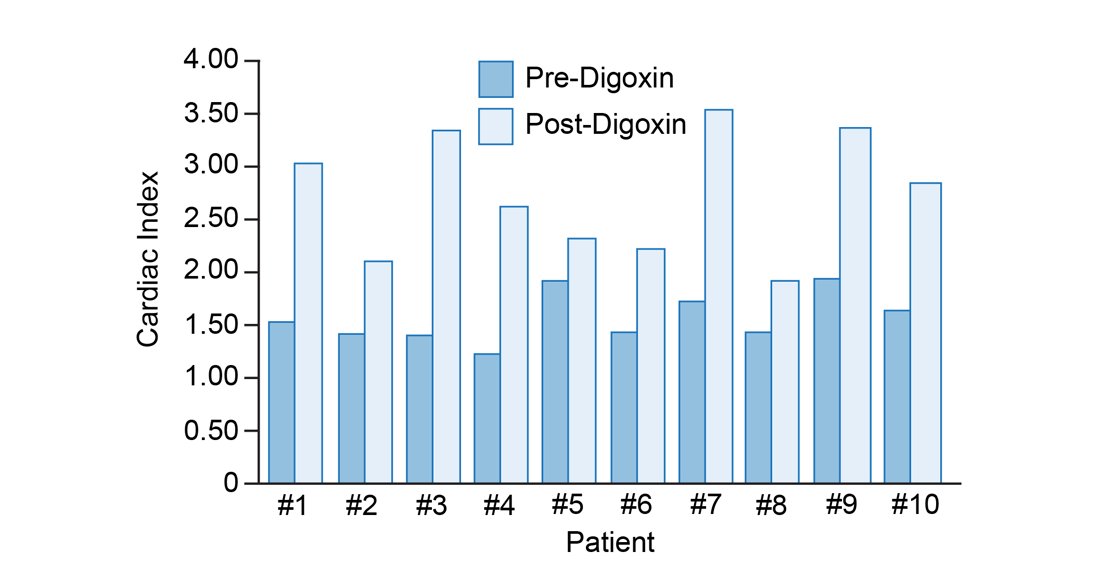
Can IV digoxin loading help get low-output HFrEF patients off inotropes?
Cardiac glycosides are the only oral agents with positive inotropic effects. Yet guidelines don't address their use in acutely decompensated HF or cardiogenic shock.
Research letter: Hemodynamic Impact with Intravenous Digoxin Loading in Low Output Heart Failure
This single-center HF ICU series reviewed 10 consecutive patients with PA catheters and Fick CI <2.2 L/min/m². Each received IV digoxin 0.5 mg, then 0.25 mg at 6 hours and 0.25 mg 6 hours later. Four were on stable dobutamine or milrinone, with the aim of weaning.
At 24 hours:
• Median cardiac index 1.45 → 2.70 L/min/m² (p=0.002)
• All 4 weaned off IV inotropes, with no decrement in CI or SvO₂
• No significant atrial or ventricular tachyarrhythmia or bradyarrhythmia during the ICU stay
The authors' read: IV digoxin loading may have contributed to the rapid CI improvement and may help facilitate inotrope weaning. The series is small, mostly young and uncontrolled, and concurrent vasodilators and diuretics also affected the hemodynamics, so a randomized trial is needed.
By @maz_hanna, Rajakrishnan Vijayakrishnan, Rodolfo Benatti, @ChonyAlbertMD, @WilsonTangMD, @NutritionHF, Guilherme Oliveira & @rcstarling
https://t.co/zLlUsgyQgm
Free to read, no paywalls
🆕 in OpenSource: Cardiology
An infant with pulmonary vein stenosis gets an Onyx stent. Even at maximal dilation, the stent will eventually be too small for the vessel. Can it be intentionally fractured later?
On the bench, Chelsea Miller, MD, and Michael Shorofsky, MD (@mjshorofsky), of the University of Virginia found that 20 of 21 Resolute Onyx and Onyx Frontier stents (2.0–5.0 mm) demonstrated:
• Complete fracture on 6–10 mm high-pressure balloons, median pressure 25 atm
• Most fractured linearly (16/20). That is the desired pattern, because it allows complete relief of obstruction and straightforward placement of a larger stent
• Smaller stents needed higher balloon-to-stent ratios: 3 for 2 mm stents vs 1.8–2 for 5 mm stents
• Only one stent, a 3.5 mm, napkin-ringed and never fractured
In vivo, the balloon needed for fracture may be too large to inflate safely in a small vessel. The authors stress that serial dilation remains the clinical standard.
https://t.co/c2i5BFKcrx
Free to read, no paywalls
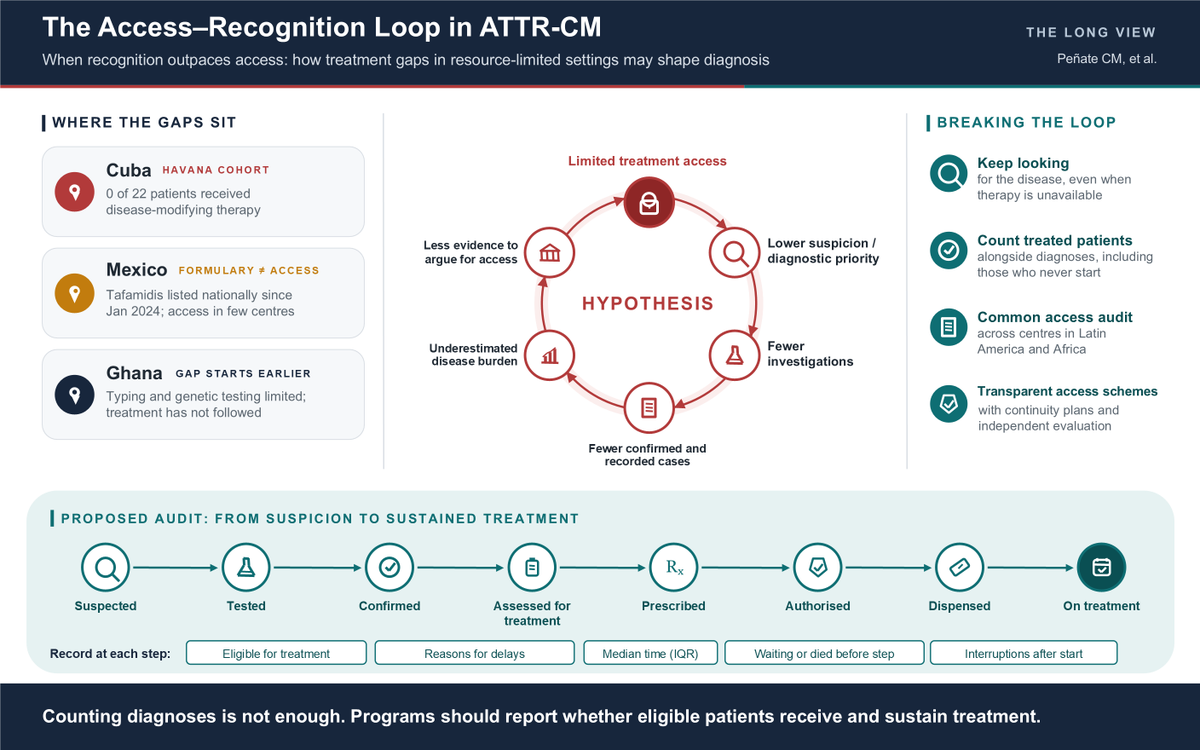
When Recognition Outpaces Access: How Treatment Gaps in Resource-Limited Settings Shape ATTR-CM Diagnosis
This essay by @Carlos_Penate6 argues that in countries where treatment is out of reach in ATTR-CM, disease recognition falters. Increased access is needed in developing countries to improve patient outcomes.
https://t.co/22w2ML8A9M
In a series of 10 low-output HFrEF patients, IV digoxin loading and vasodilator titration were associated with increased median cardiac index from 1.45 to 2.70 L/min/m² at 24 hours; all four on IV inotropes were weaned off. Time for an RCT with digoxin in low output HF.
https://t.co/zLlUsgyQgm
@maz_hanna@ChonyAlbertMD@WilsonTangMD@NutritionHF@rcstarling
🆕 in OpenSource: Cardiology
Do we look less for ATTR-CM when we can't treat it?
"When Recognition Outpaces Access: How Treatment Gaps in Resource-Limited Settings Shape ATTR-CM Diagnosis," an essay in The Long View by @Carlos_Penate6, Kenia M. Padrón, Andrew Dzebu and Orlando Henríquez Italín.
The authors draw on their experiences from Cuba, Mexico, and Ghana and note that limited access may lower suspicion, which means fewer recorded cases and less evidence to argue for access.
They propose an audit. Of the people in whom ATTR-CM is suspected, how many are tested, confirmed, assessed for treatment, prescribed, authorized, dispensed treatment, and still on it at 12 months?
https://t.co/22w2ML82ke
Free to read, no paywalls
PADN-HF-PH randomized 264 patients with PH due to left heart disease: pulmonary artery denervation cut clinical worsening (HR 0.49; 95% CI 0.30–0.82), but the trial was open-label with no sham arm.
Our critical appraisal looks at what the trial shows, what it doesn't, and why the sham-controlled PULSE-LHD trial matters before PADN is widely adopted.
@a_h_ghoneem@vikasaggarwalmd
https://t.co/4CINdqgykL
Do SGLT inhibitors meet the bar for a geroprotector? Across 13 placebo-controlled trials (90,413 patients), all-cause mortality HR 0.88 (95% CI 0.83–0.94); the authors call SGLTi the most promising candidate geroprotector, and call for a primary-prevention trial in low-risk middle-aged adults to test it.
https://t.co/5uCkZsYRLn
@DRJamesOKeefe; @MichaelNassifMD; @AndrewJSauer
Did CARDIO-TTRansform fail, or did it answer a different question? The effect of eplontersen depended on background stabilizer therapy.
New article at @opensourcecardiology walks through the monotherapy signal, the pooled silencer data, and why percent knockdown is harder to compare than it looks.
@BrettSperryMD@HamzahAliMD
https://t.co/twBI1p2MLT
🆕 in OpenSource: Cardiology
Can IV digoxin loading help get low-output HFrEF patients off inotropes?
Cardiac glycosides are the only oral agents with positive inotropic effects. Yet guidelines don't address their use in acutely decompensated HF or cardiogenic shock.
Research letter: Hemodynamic Impact with Intravenous Digoxin Loading in Low Output Heart Failure
This single-center HF ICU series reviewed 10 consecutive patients with PA catheters and Fick CI <2.2 L/min/m². Each received IV digoxin 0.5 mg, then 0.25 mg at 6 hours and 0.25 mg 6 hours later. Four were on stable dobutamine or milrinone, with the aim of weaning.
At 24 hours:
• Median cardiac index 1.45 → 2.70 L/min/m² (p=0.002)
• All 4 weaned off IV inotropes, with no decrement in CI or SvO₂
• No significant atrial or ventricular tachyarrhythmia or bradyarrhythmia during the ICU stay
The authors' read: IV digoxin loading may have contributed to the rapid CI improvement and may help facilitate inotrope weaning. The series is small, mostly young and uncontrolled, and concurrent vasodilators and diuretics also affected the hemodynamics, so a randomized trial is needed.
By @maz_hanna, Rajakrishnan Vijayakrishnan, Rodolfo Benatti, @ChonyAlbertMD, @WilsonTangMD, @NutritionHF, Guilherme Oliveira & @rcstarling
https://t.co/zLlUsgyQgm
Free to read, no paywalls