This study evaluated and compared the diagnostic performance of 4 major modalities: transcranial Doppler, transthoracic echocardiography, transesophageal echocardiography, and cardiac CT in patients with #EmbolicStroke of undetermined source: https://t.co/2xIOulNWOI
#Stroke
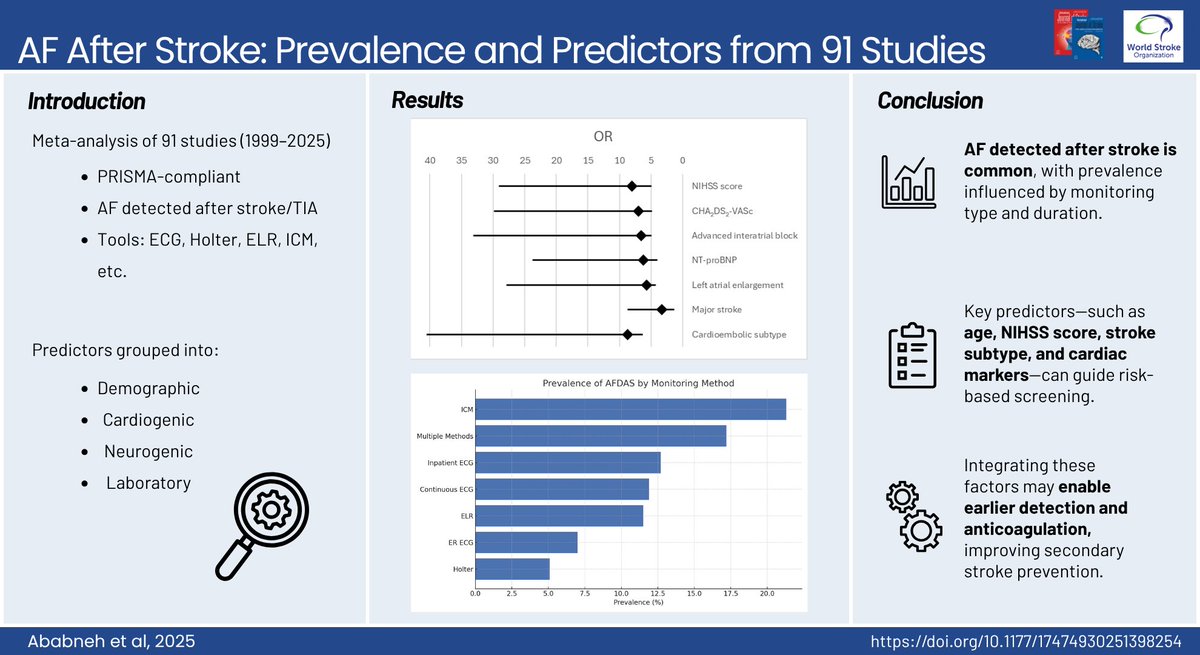
🫀🧠Atrial fibrillation detected after stroke or TIA (AFDAS): A systematic review and meta-analysis
📊AFDAS common but prevalence varied depending on monitoring duration and modality
Read more here!👇 https://t.co/NJjK1CM6SD @ghassaba03
🎉 New publication!
Our review on the role of Extended Reality (VR/AR/MR) in pediatric resuscitation training is now published in Current Emergency and Hospital Medicine Reports.
Proud to be part of this work!
#EmergencyMedicine#Pediatrics#XR#Research
Did you know nearly half of acute ischemic stroke (AIS) patients may have hidden cerebral microbleeds (CMBs)? 🧠🩸
A recent 2026 study of Chinese AIS patients revealed a 49.1% prevalence of CMBs.
Key takeaways from the research:
🔬 Highest CMB rates were found in patients with Large Artery Atherosclerosis (59.4%) and Small Vessel Disease (47.5%).
📈 The top independent risk factors for CMBs are Hypertension and severe White Matter Hyperintensity.
💡 Interestingly, lower LDL cholesterol levels were linked to a higher burden of 3 or more CMBs [4].
🧠 Deep and infratentorial microbleeds were heavily associated with Small Vessel Disease and severe white matter injury.
These findings are crucial for neurologists and care teams weighing the risks and benefits of antithrombotic therapies for secondary stroke prevention.
How does CMB burden influence your clinical decision-making for stroke patients? Let us know below! 👇
Zhu R, Yang Y, Chen X, Hou L, Cheng X, He M. Prevalence and Risk Factors for Cerebral Microbleeds in Chinese Patients With Acute Ischemic Stroke. Brain and Behavior. 2026;16(6):e71495. https://t.co/V6FlRYndAU
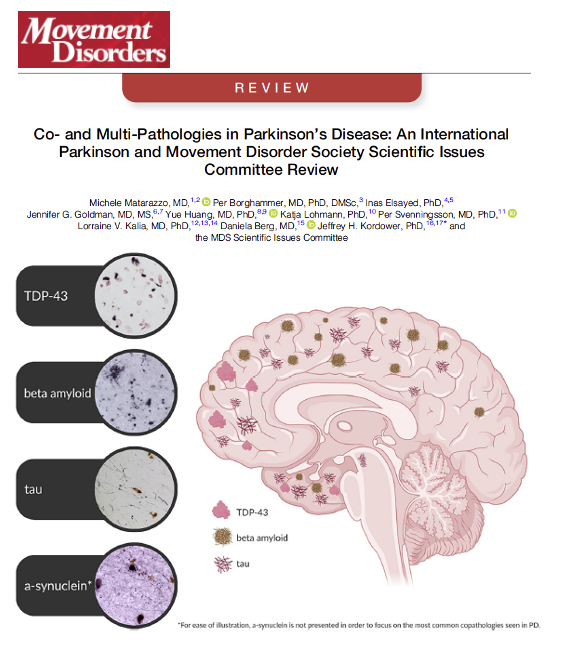
Parkinson’s disease may not be just one disease protein. Co-pathology means multiple abnormal proteins and disease processes may exist together in the same brain. Matarazzo and colleagues describe in a new paper in Movement Disorders how Parkinson’s disease frequently includes overlapping pathologies such as tau, beta amyloid, TDP-43, vascular disease and inflammation, in addition to alpha-synuclein.
Key points:
- Most folks w/ Parkinson’s disease appear to have multiple co-existing brain pathologies rather than a pure alpha-synuclein disorder.
- Tau, beta amyloid and TDP-43 pathologies were linked to faster progression, cognitive decline and more severe symptoms in many studies.
- The review highlights how genetics, inflammation, vascular disease, microbiome changes and immune dysfunction may all interact to shape Parkinson’s progression.
My take: This paper is important because it challenges the old idea that Parkinson’s disease is simply a dopamine disorder or just a synuclein disorder. The future of Parkinson’s treatment may require us to target multiple biological pathways simultaneously. We may need to think less about a single culprit and more about an entire ecosystem of interacting disease processes.
Here are 5 points that resonated w/ me:
1- Parkinson’s disease is likely more biologically complex than we previously imagined.
2- Co-pathologies may help explain why symptoms and progression differ so dramatically between folks.
3- Tau and beta amyloid pathology may contribute importantly to thinking and memory decline in Parkinson’s disease.
4- Inflammation, vascular disease and immune dysfunction may not just accompany Parkinson’s disease, they may actively shape progression.
5- Precision medicine approaches that combine biomarkers, genetics and pathology may ultimately help us personalize therapies and improve outcomes.
https://t.co/B3kZC2Mmmf @movedisorder




![freemanwd's tweet photo. Did you know nearly half of acute ischemic stroke (AIS) patients may have hidden cerebral microbleeds (CMBs)? 🧠🩸
A recent 2026 study of Chinese AIS patients revealed a 49.1% prevalence of CMBs.
Key takeaways from the research:
🔬 Highest CMB rates were found in patients with Large Artery Atherosclerosis (59.4%) and Small Vessel Disease (47.5%).
📈 The top independent risk factors for CMBs are Hypertension and severe White Matter Hyperintensity.
💡 Interestingly, lower LDL cholesterol levels were linked to a higher burden of 3 or more CMBs [4].
🧠 Deep and infratentorial microbleeds were heavily associated with Small Vessel Disease and severe white matter injury.
These findings are crucial for neurologists and care teams weighing the risks and benefits of antithrombotic therapies for secondary stroke prevention.
How does CMB burden influence your clinical decision-making for stroke patients? Let us know below! 👇
Zhu R, Yang Y, Chen X, Hou L, Cheng X, He M. Prevalence and Risk Factors for Cerebral Microbleeds in Chinese Patients With Acute Ischemic Stroke. Brain and Behavior. 2026;16(6):e71495. https://t.co/V6FlRYndAU](https://pbs.twimg.com/media/HJzOJtMXoAAR10n.jpg)