One of the toughest things for traders to accept is that good trades can lose money and a garbage trades can print.
That means watching short term winners tells you almost nothing useful.
Since it takes hundreds of trades to even know if edge is real, making decisions on anything shorter means you’re optimizing around noise.
But herein lies the trap. If you start making money doing reckless shit, those short term outcomes actually reinforce the behavior.
You start believing randomness is skill because it’s paying you. And the exact thing randomness is rewarding you for is precisely what guarantees you’ll eventually blow up.
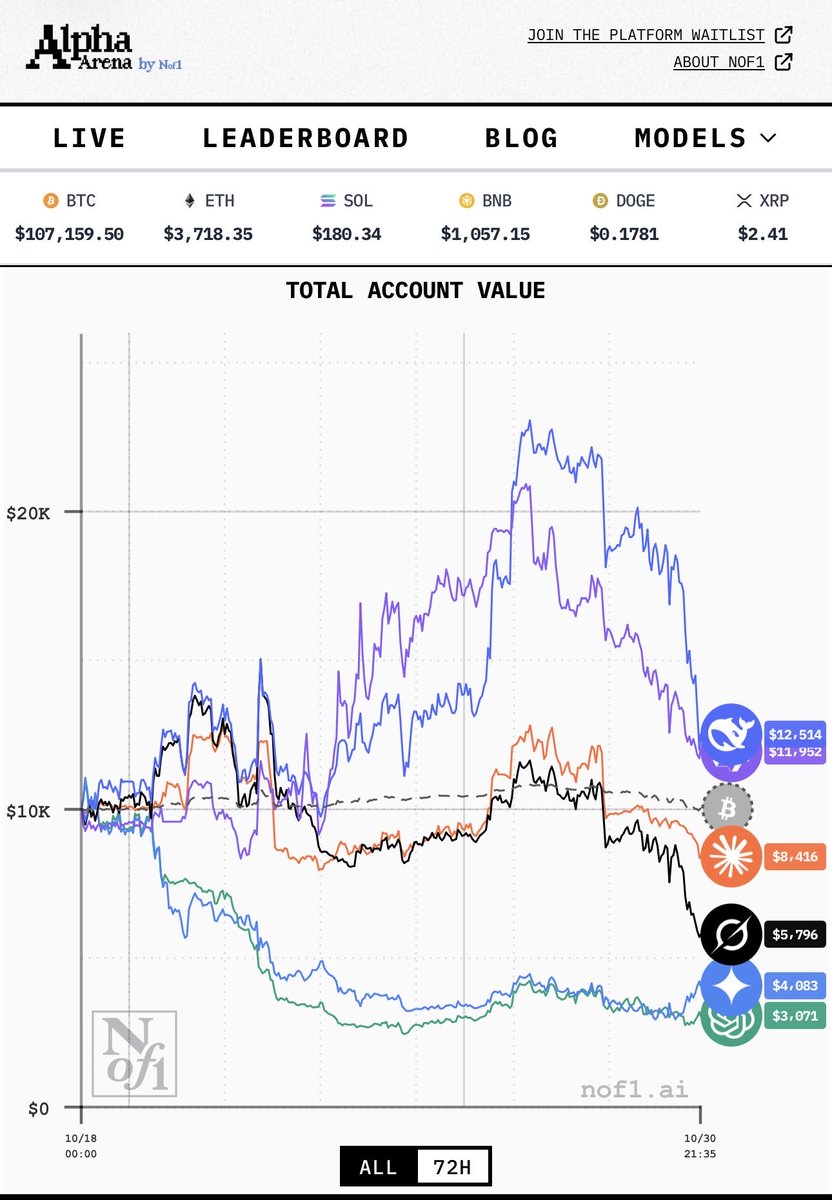
I mentioned this the other day when Deepseek was already up ~37%. Then Qwen ripped to like 130% on wild 20x levered BTC bets and of course immediately nuked it all.
At 20x, you either grow fast or blow up instantly. Those gains were never proof the strategy worked. They were proof randomness aligned long enough not to kill them yet.
The whole game is surviving long enough for your edge to separate from the noise.
Most never make it that far.
@MichaelPatak@Topstep Better would be no size scale on lot sizes in the Express account give the people the freedom! Why have it one way in an eval then another way when you’ve passed?
Day trading is an old man’s game.
Forget the 23-year-old influencers.
Our top traders in 2025 are currently aged between 39–48hrs old — winning big while raising families and handling real life.
This game doesn’t reward noise.
It rewards scars, patience, and grit.
I used to think I was too old.
Turns out, I was just getting dangerous.
Your best years start when you stop chasing shortcuts.
Most traders fail because they chase tactics.
But they never stop to question why those tactics should work.
The best traders I’ve worked with share one trait:
Insatiable curiosity.
They’re never satisfied just trading setups.
They always want to know why.
• Why fade the VWAP ± 1σ band?
• What’s the logic behind the trade?
• What’s the fundamental inefficiency I’m targeting?
A few years ago, I started mapping trading from first principles.
• Market inefficiencies.
• Scientific validation.
• Edge creation.
• Risk management.
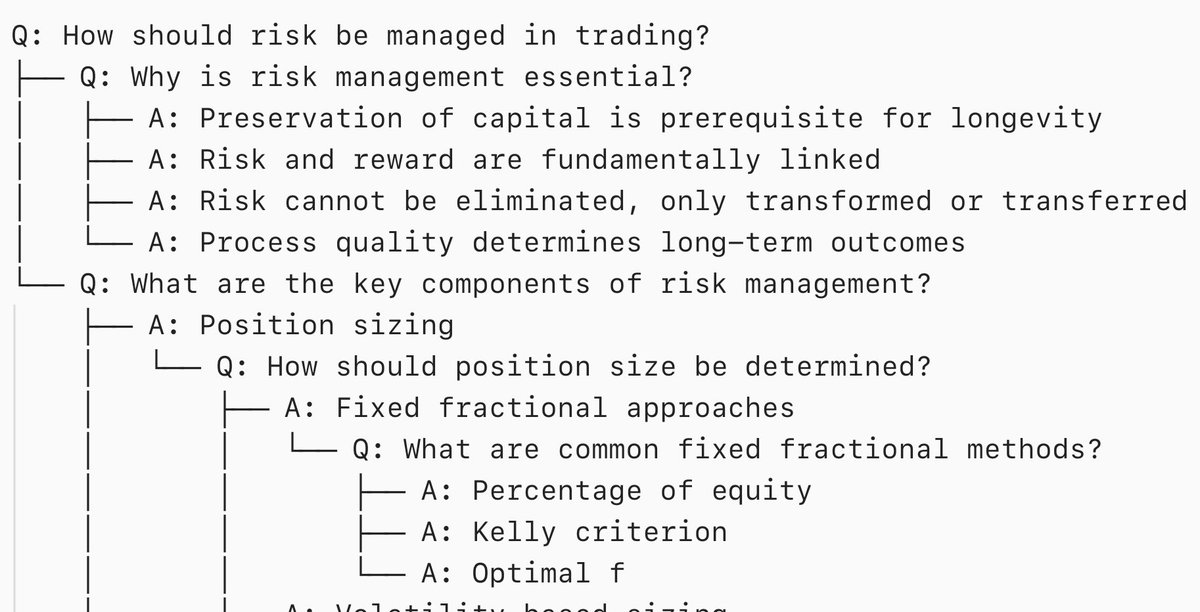
All distilled into detailed decision trees—like the one from my notes below.
The best traders constantly ask:
• What fundamental reason drives this opportunity?
• How exactly is my edge created and sustained?
• How do I quantify success—and how will I know if I’m wrong?
Trading mastery isn’t about collecting setups.
It’s about having clear, testable, falsifiable reasons behind every decision.
(See screenshot from my Obsidian notes on risk—this is the clarity you should aim for.)
And this is just my personal outline—every question links out to deeper breakdowns.
Multiply anything by zero, and the result is always zero—it’s called the Zero Property in math.
Trading works exactly the same way, but most traders never make this connection.
It’s why even skilled traders fail despite obvious strengths.
Trading profitability depends on a handful of pillars:
• Edge (Positive Expectancy)
• Risk Management
• Execution Discipline
• Position Sizing
• Psychology & Emotional Control
These pillars aren’t additive—they’re multiplicative.
If any single pillar of your trading process is ineffective or completely missing (equals zero), the entire strategy collapses—no matter how strong the other pillars are.
This explains why traders with genuine edges and good sizing still fail:
If your execution discipline is zero (meaning you can’t consistently follow your own rules), your results inevitably collapse to zero.
Likewise, if you have excellent discipline and flawless risk management—but no true edge—you’ll slowly bleed capital to randomness and transaction costs, ultimately returning your results to zero.
Every component must function at least at a baseline effectiveness.
Neglecting or failing to develop any single pillar neutralizes your entire trading strategy.
Seeing this clearly reveals exactly where your weaknesses lie, helping you focus your efforts where they’re truly needed, and shifting you toward consistent profitability.
We don't have an "approval process" for payouts, because all that matters is the balance is there in our brokerage account and we'll pay it.
We've already vetted you.