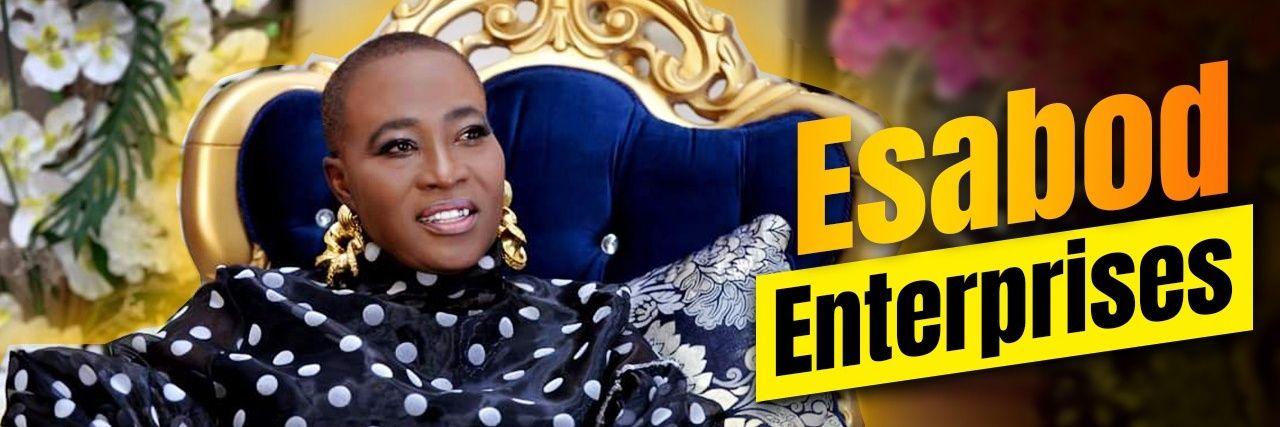
Our abducted children are back from Oyo park.
Thanks President Tinubu 🙏
No more fight from Esabod to you. Bandit Makinde shame on you oleee gomina...
Mrs. Rachael Folawe Alamu, one of the rescued teachers abducted in Oriire, Oyo State, has expressed heartfelt appreciation to President Tinubu and the security agencies for securing their release from captivity. 🙏🇳🇬
🥰🥰🥰🥰🥰
#mentionedyou #follower
Is Makinde becoming a victim of good conscience amid ‘dirty’ political powerplay? Ibrahim Adekola
There is a popular Yoruba saying that when a man clears a bush where snakes once found comfort, he should expect the reptiles to hiss before they flee. Politics in Oyo State has never been for the faint-hearted.
It is a chessboard where friendships often expire at the doorstep of ambition, where yesterday’s ally can become today’s fiercest critic, and where loyalty sometimes lasts only as long as the aroma from a pot of fresh soup.
Since Nigeria returned to democratic rule in 1999, Oyo has remained one of the country’s most unpredictable political theatres where governments have come and gone, parties have changed colours like the chameleon perched on an iroko tree, yet one thing has remained stubbornly constant: politics has largely revolved around powerful personalities rather than enduring institutions.
More often than not, men have become bigger than the platforms that produced them, and political influence has outweighed any form of ideology for governance. This suffices to why some have continued to likened Oyo’s politics to ‘Amala and gbegiri’.
As another African proverb reminds us, “When the drummer changes his rhythm, the dancers must also change their steps.” The unfolding political drama surrounding Governor Seyi Makinde appears to be another chapter in this long story.
Yet this time, there is an unusual twist. Increasingly, there are arguments that the governor is being painted as the villain not because he has done everything wrong, but because his style of governance has unsettled those who grew fat under the old political order.
To understand today’s political turbulence, one must first understand yesterday’s footprints.
From the administration of Late Lam Adesina to Rashidi Ladoja, from Adebayo Alao-Akala to the late Abiola Ajimobi, Oyo politics has often resembled a marketplace where the loudest voice attracted the largest crowd.
Political parties were important, but influential individuals frequently became the real centres of gravity.
Lam Adesina carried the progressive torch handed down from the Awolowo political tradition, yet internal rivalries occasionally threatened to dim its flame.
Then came the turbulent years of Rashidi Ladoja and the late Chief Lamidi Adedibu, a period that taught Nigerians that when two elephants wrestle, it is the grass beneath that suffers most.
The impeachment saga remains one of the darkest reminders of how personality clashes can swallow democratic institutions whole.
Under Alao-Akala, grassroots politics flourished through expansive patronage networks.
The late Abiola Ajimobi later sought to strengthen governmental authority and reduce the influence of entrenched political power brokers.
Yet every administration discovered the same hard truth: dismantling old political habits is easier said than done.
Throughout these years, loyalty often belonged to individuals rather than institutions. Political tents were pitched around personalities, not principles. It was less about the constitution or good governance, and more about who controlled the political compass.
When Seyi Makinde emerged in 2019, he entered Government House carrying a different political script and singing a different song; “I don’t have a political godfather, God and the masses are my political godfathers”.
Unlike many before him, his rise was not woven around the traditional fabric of political godfatherism. His reputation rested more on private enterprise, relentless philanthropy and administrative competence than on inherited political structures.
From the outset, he attempted to move governance away from personality worship towards institutional development. Government policies gradually became louder than political slogans.
Performance indicators began to speak where propaganda once shouted.
Read more on https://t.co/PFApVY9Rhy
You went to do your nails in a shop owned by a Yoruba indigene in Lagos state and you complained about her speaking her dialect that its making you uncomfortable....I really thought it was a joke till I watched the 2nd video of the lady explaini that the client came back with her huaband to create a scene....
Lagosians this is the best time to show some set of people pepper..
Limited-time deal: Mini Air Conditioner,Portable Air Conditioners,Evaporative Air Cooler Humidifier, 3 Speed Quiet Personal Cooling Fan, 7-Color LED Night Light, 4/8H Timer for Bedroom, Office, Camping, Room,Home https://t.co/rxnongp6Dd #Amazon via @Amazon
🚨🗣️This is a matter I intend to pursue to its logical conclusion.
A woman in Abuja, who allegedly claimed to be the wife of the Chief of the Naval Staff and was reportedly accompanied by a uniformed military personnel serving as her personal driver, is accused of assaulting a cake vendor who is currently serving as a member of the National Youth Service Corps (NYSC). It is further alleged that she instructed the military personnel to assault both the vendor and her logistics manager.
According to the complainants, the situation escalated when they reported the incident at the Wuye Police Station in Abuja. They allege that the woman directed the Divisional Police Officer (DPO) to seize their phones and delete video recordings of the incident. They also claim that the DPO slapped one of the complainants, detained them, and instructed the vendor to "go behind the counter."
The complainants further allege that the DPO told them not to speak while "the wife of a general" was speaking.
If these allegations are substantiated, they raise serious concerns about abuse of power, due process, and equal access to justice.
I will be taking this matter to the Commissioner of Police, FCT Command, CP Mohammad Sanusi, and requesting a thorough and impartial investigation. I also intend to contact the Nigerian Navy's spokesperson to verify whether the woman is indeed married to the Chief of the Naval Staff and, if so, to clarify the circumstances under which a uniformed military personnel was allegedly assigned as her personal driver.