💡 The study visits included community and youth centres, social services organisations, and cultural heritage sites, showcasing how local initiatives contribute to social inclusion, community engagement, and sustainable rural development.
👉 The Fifth General Assembly of the ESIRA Project was held in Druskininkai, Lithuania, from 20–22 May 2026, bringing together partners from across Europe to review project progress and plan future activities.
🔎 More: https://t.co/AXfhPOvNHC
🤝 The meeting was organized by the Lithuanian Centre for Social Sciencesand Druskininkų Vietos Veiklos GRUPĖ. Alongside meetings and workshops, participants explored a range of social economy initiatives in the Druskininkai region.
Participants also discussed future opportunities for market expansion, including local fairs and a potential ESIRA women entrepreneurs’ bazaar.
More: https://t.co/xqxaCb0F5q
🌿 A regional dissemination workshop held on 11 May 2026 in Leskovac, Serbia, brought together women entrepreneurs from rural areas, local development institutions, and experts in entrepreneurship, branding, and communication.
💡 The workshop highlighted the “Laboratory for Branding, Development and Networking of Women Entrepreneurs from Rural Areas” initiative, while the accompanying training session focused on branding, product presentation, and communication strategies.
🎮 As a community-driven social economy initiative, the association aims to create an inclusive and safe gaming and e-sports arena for young people and the wider local community in Kongsvinger, while fostering participation, collaboration, and digital engagement.
😊 We are proud to share that ARENA_Gaming Kongsvinger, one of the five ESIRA initiatives in Konsvinger, has officially been established as a non-profit association in Norway.
More: https://t.co/EbLR1GbnNr
📊 While social enterprises represent a more recent development, emerging in the late 20th century, the other forms have a longstanding history and continue to shape the sector across many countries.
👉 More about deliverable D4.2: https://t.co/Ivf0JvuSBu
🌍 Who are the key actors of the social economy?
🤝 Across Europe, the social economy is rooted in a long tradition of collective action, where communities have come together to respond to shared needs and challenges.
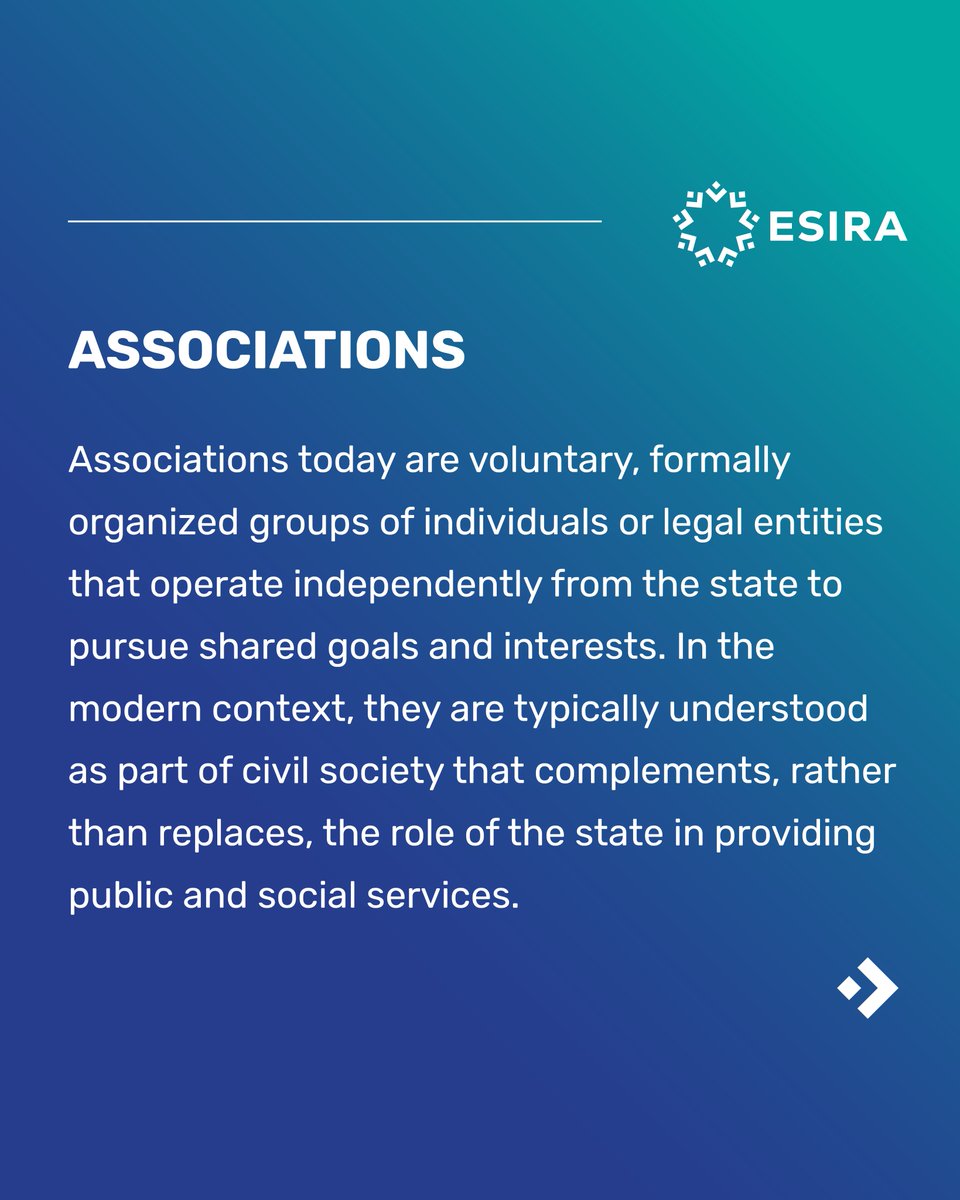
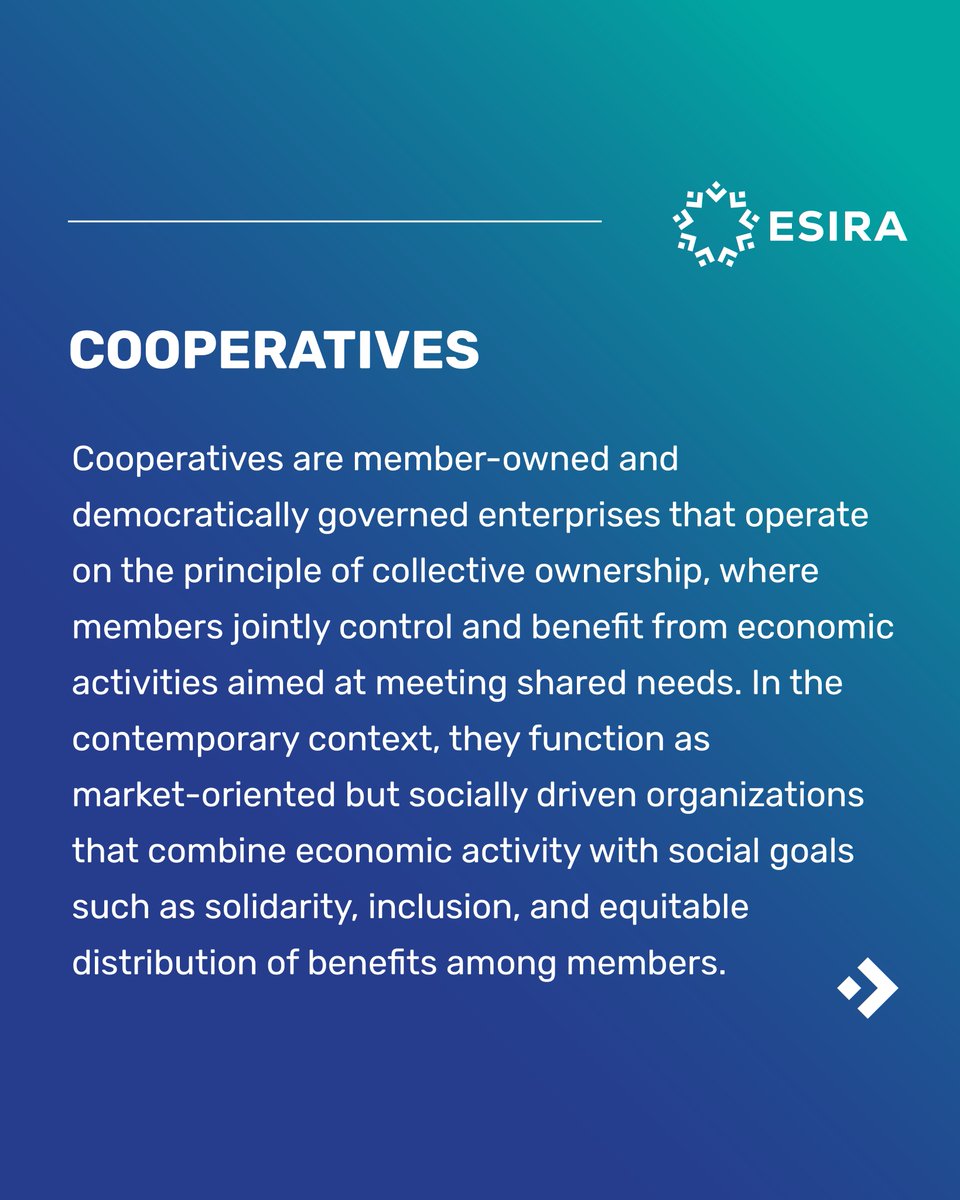
Today, this legacy is reflected in five main types of organisations:
🔵 Associations
🔵 Foundations
🔵 Cooperatives
🔵 Mutual benefit societies
🔵 Social enterprises
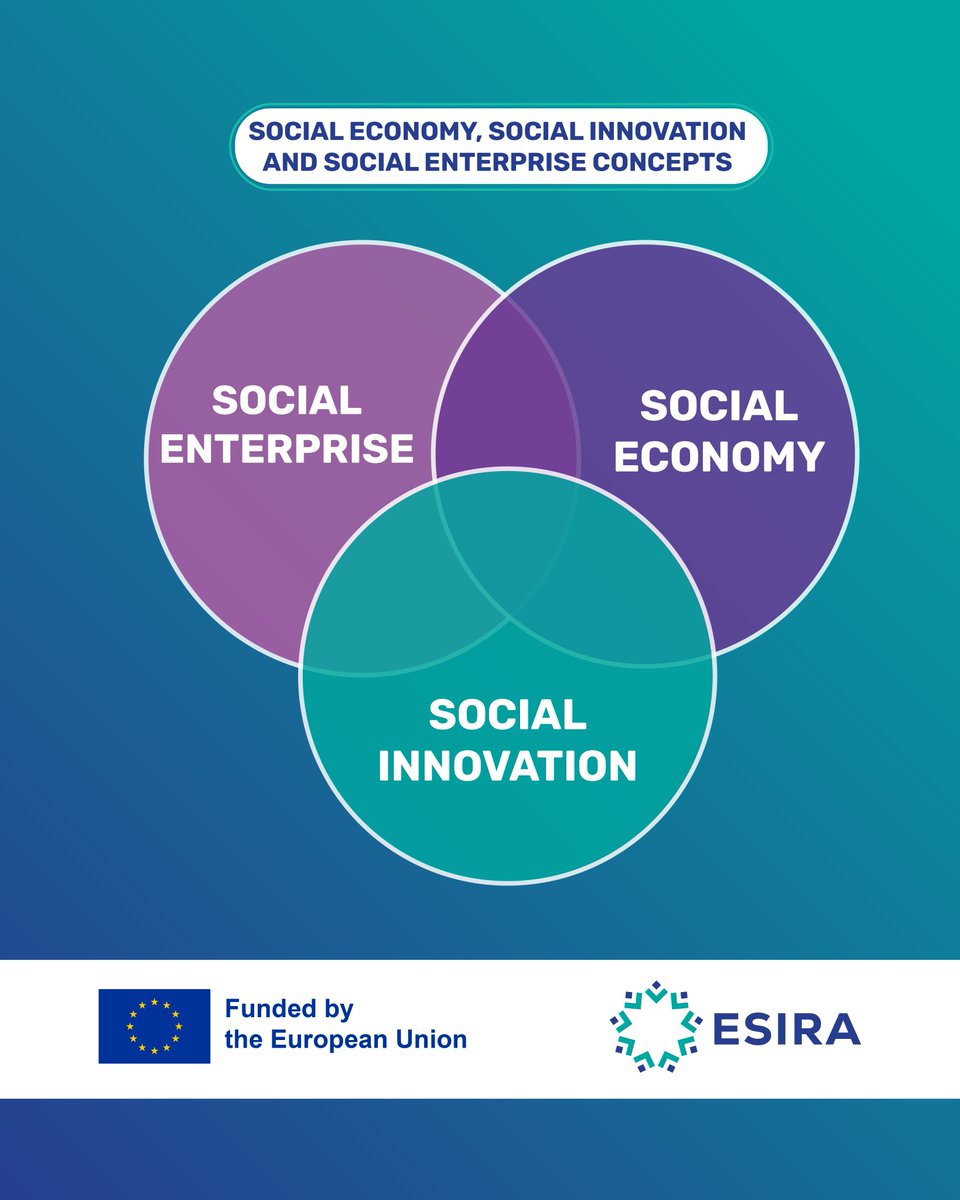
💼 Social Enterprise is an organisation that engages in stable economic activity (market-oriented), with an explicit social aim, and operates under governance and profit-distribution rules that ensure its social mission is safeguarded.
❓ Do you know the difference between Social Innovation, Social Economy, and Social Enterprise?
🔄 These terms are often mixed up or used as synonyms, which leads to misunderstanding and confusion.
🔎 More can be found on the ESIRA website: https://t.co/TG2HJeEg7K
🌍 Social Economy represents a system of organisations that carry out activities in the interest of members or society at large, prioritise people and social or environmental objectives over profit, reinvest most of their surplus, and apply democratic or participatory governance.
🤝 By fostering social innovation and closely engaging with local communities, ESIRA supports the transformation of these strengths into practical, scalable solutions that can benefit other rural regions across Europe.
🔎 More: https://t.co/gomC2Nkcp1
🌍 Rural areas in Europe face many challenges, but they also have strong potential.
📉 In ESIRA pilot regions, common problems include depopulation, limited access to services, and remoteness. These issues make everyday life more difficult and slow down development.
📊 ESIRA findings identify three main categories of assets: socio-economic, governance and community, and environmental. Together, they highlight that rural areas are not defined only by challenges, but also by their capacity for growth and innovation.
Don’t miss upcoming events and webinars from ESIRA’s sister projects and related initiatives:
📅 22 April 2026 | Remote Work Major Event (R-MAP Project EU / WinWin4WorkLife / REMAKING) | Mannheim & online | https://t.co/VUedQUz4iE
📅 6 May 2026 | @SERIGO_project Webinar – Women’s health in rural Europe | Online | https://t.co/y5BTQ3KhuS
📅 24–25 June 2026 | @ruralgranular & @RustikHEU Final Conference | Brussels | https://t.co/FHRtBDfQNJ