💡 A key takeaway: Social inclusion challenges are deeply rooted in local contexts. Participatory approaches help uncover overlooked needs, bridge data gaps, and generate valuable knowledge for more inclusive and evidence-based policymaking.
🌍 At the 4th European Rural Geographies Conference, held in Porto on 22–26 June 2026, researchers from the #IfLS presented insights from four #RUSTIK Living Labs, exploring social inclusion challenges across rural Europe.
🔗 https://t.co/tv4YhQvLxQ
📊 “Comparing Social Inclusion Challenges in Rural Europe: Insights from Four RUSTIK Living Labs,” highlights experiences from Germany, Finland, Wales, and Slovenia, addressing key issues such as access to training, immigrant integration, youth mobility, and food accessibility.
✅ Improve financial support and competitiveness for small farms.
✅ Market access, cooperation and local food supply chains.
✅ Rural diversification and agritourism.
✅ Sustainable and climate-resilient agricultural practices.
✅ Innovation and evidence-based policymaking.
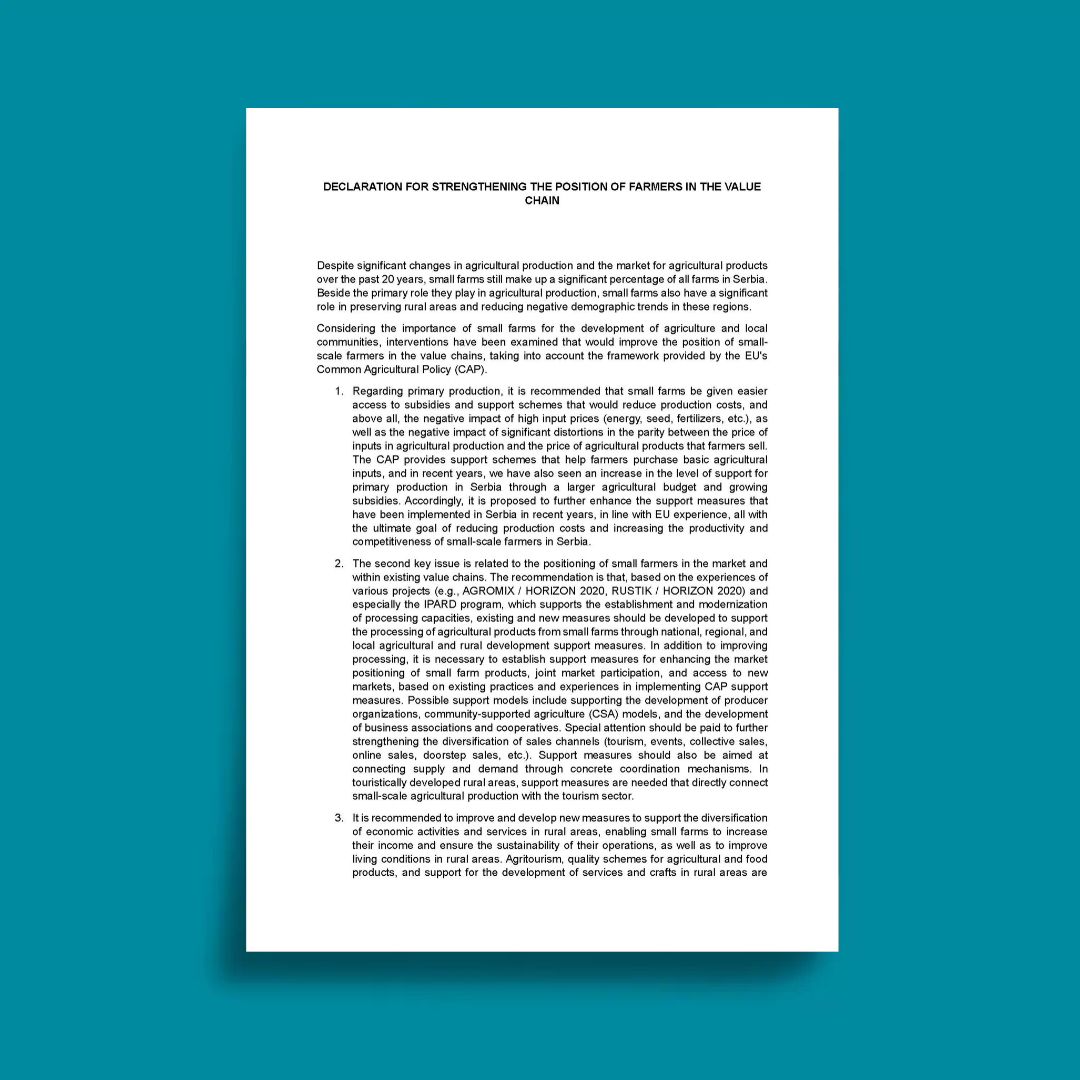
🌱🇷🇸 From Local Knowledge to Policy Action: Strengthening Small Farmers in Serbia!
The #RUSTIK Living Lab in Zaječar District, Serbia, has developed a Declaration on Strengthening Farmers’ Position in Agricultural Value Chains.
🔗 https://t.co/7LB4fHVv3U
🤝 Working with local stakeholders, the Living Lab has explored opportunities to strengthen local food supply chains, improve market access and connect agricultural producers with the tourism sector.
🌿 Galicia: A Decision Support System to identify priority areas for land revitalisation, wildfire risk reduction and agricultural support .
💧 Parma, Piacenza & Ferrara: Integrated water data and vulnerability mapping for better irrigation management and climate adaptation.
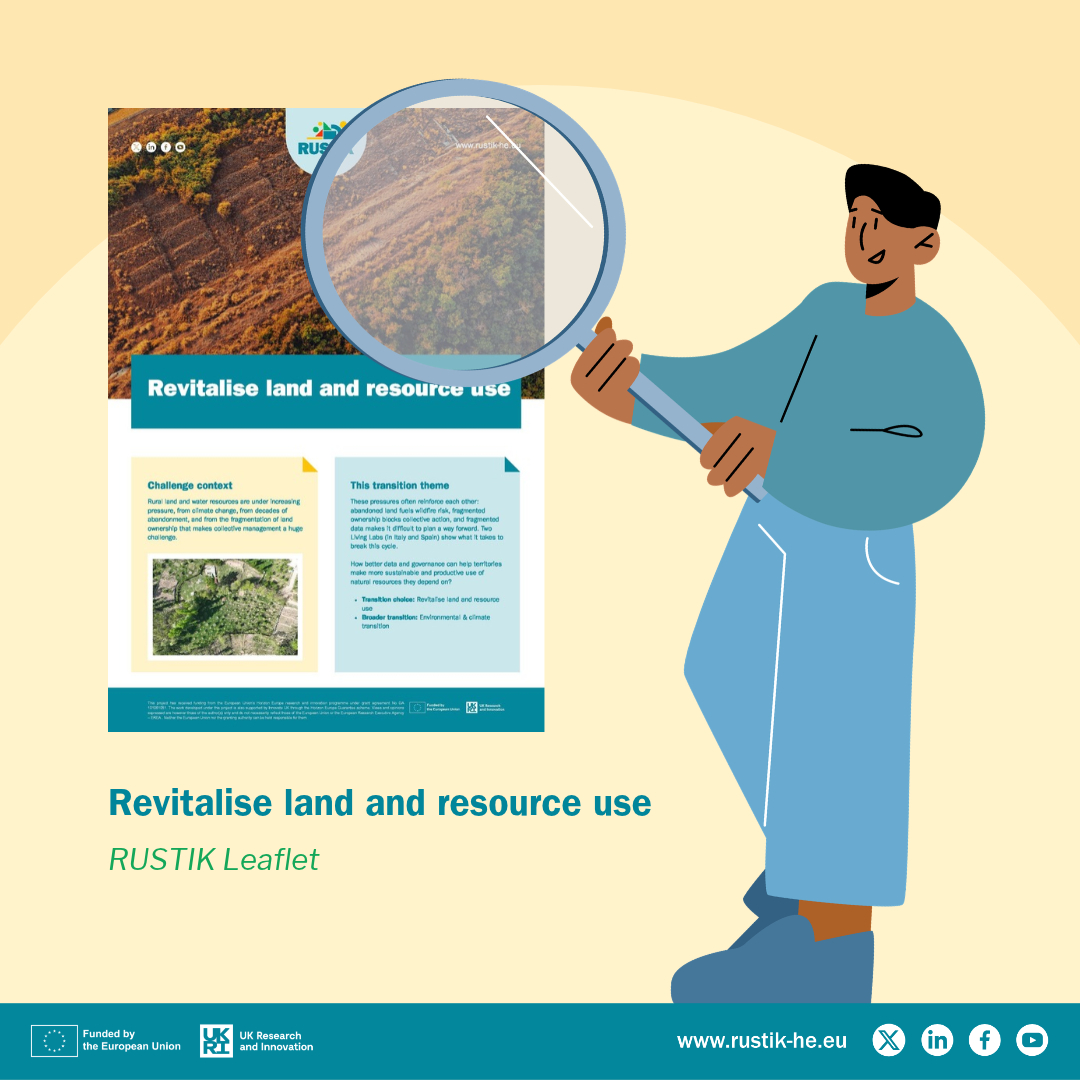
🌱 How can rural territories revitalise land and natural resources while adapting to climate change?
📢 #RUSTIK leaflet “Revitalise Land and Resource Use,” tackles rural challenges, from land abandonment and wildfire risks to water resource pressures.
🔗 https://t.co/8hh3izGzcd
@Euromontana 📊 Osona: A neighbourhood-level Quality of Life Index supporting evidence-based territorial planning.
💻 Gloucestershire: A smart dashboard helping rural community organisations analyse data, identify service gaps and improve decision-making.
🌍 How can digital tools support smarter, more inclusive governance in rural areas?
📢 #RUSTIK's new leaflet, “Digitise Socio-Spatial Governance,” shares innovative approaches to digitising socio-spatial governance
🔗 https://t.co/7bc0vykeVn
@uniofglos@CCRI_UK 🌱 Living Labs supporting learning and experimentation.
🤝 Stakeholder engagement and collaborative relationships.
🧩 The challenges of resource demands, institutional capacity and different policy contexts.
🏛️ Need to strengthen links between Living Labs and policy-making.
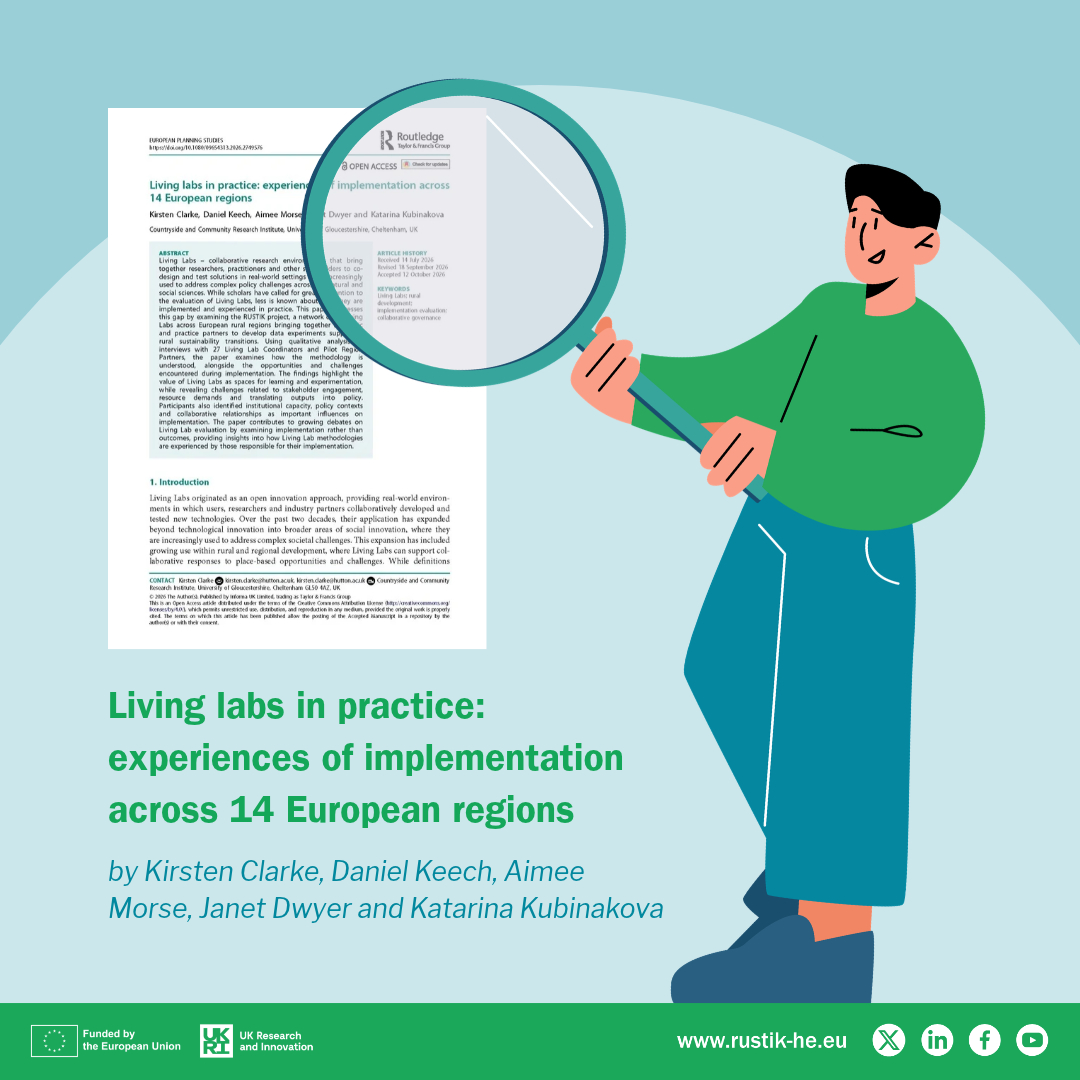
📢 New #RUSTIK scientific publication!
📚 “Living labs in practice: experiences of implementation across 14 European regions”
This article explores the experiences of the RUSTIK Living Lab network, bringing together insights from 14 rural regions.
📖 https://t.co/DdAQnKoHNU
❓ What connects the ESIRA and @RustikHEU projects?
👉 Both projects focus on rural areas and the opportunities to make them more resilient, inclusive and attractive places to live and work.
@Euromontana 🇮🇹 Garfagnana, Italy: mapping forest resources and addressing barriers to cooperation for more integrated, multifunctional forest management.
🌱🌳 How can local food and forest resources help rural communities thrive?
#RUSTIK’s leaflet, “Support sustainable food and forestry systems”, explores how communities can turn local resources into opportunities for resilience.
📖 https://t.co/MPahM3RMkc
@Euromontana 🇧🇬 Troyan–Apriltsi–Ugarchin, Bulgaria: working with restaurants to expand local sourcing and introduce seasonal menus.
🇷🇸 Zaječar, Serbia: mapping local food networks to connect producers with hotels and restaurants.
Based on surveys, interviews and regional dialogue formats, the publication offers practical perspectives for strengthening skills, participation and long-term attractiveness in rural areas. 🌱🏡
🇩🇪 How can rural regions better connect young people with career opportunities?
📚 The new #RUSTIK publication shares insights from the Rhein-Hunsrück Living Lab, which explored why vocational-training positions can remain vacant.
📘 https://t.co/vOfgot7eo7
🔎 The findings point to a key challenge: not a lack of opportunities, but a mismatch between expectations, information channels and practical conditions.
Personal encounters, internships, clearer communication and accessible mobility options all play an important role.
📢 Regions & cities going LIVE!
The @EU_CoR is launching the State of Regions and Cities EU Annual Report 2026, highlighting how local and regional authorities are helping shape a more resilient, secure and cohesive Europe.
🗓️ 12 October | 14:30 CET
👉 https://t.co/kq4sSOOXv1