Elon Musk sent every Tesla employee a memo that took authority away from their managers and handed it to them.
He never asks for more hours. Every rule moves a decision closer to the person doing the work.
Musk: “Excessive meetings are the blight of big companies and almost always get worse over time.”
Companies have a role for everyone who creates process and no role for anyone who removes it. Meetings and approval chains survive because removing them was never anyone’s job.
Musk: “Walk out of a meeting or drop off a call as soon as it is obvious you aren’t adding value.”
Attendance has always been treated as proof of commitment. He made it worthless, and contribution became the only thing that counts in the room.
Musk: “It is not rude to leave, it is rude to make someone stay and waste their time.”
Ordinary manners protect whoever called the meeting. He moved that protection to everyone else sitting quietly with real work waiting on them.
Musk: “Don’t use acronyms or nonsense words for objects, software, or processes at Tesla. Anything that requires an explanation inhibits communication.”
Internal vocabulary converts knowledge into status and charges every newcomer a fee to participate.
A company that speaks plainly can absorb talent at full speed.
Musk: “Communication should travel via the shortest path necessary to get the job done, not through the chain of command.”
Most good ideas die in transit, three levels below anyone with the power to act on them.
Musk: “Any manager who attempts to enforce chain of command communication will soon find themselves working elsewhere.”
The only threat in the entire memo. A manager who insists on being routed through is buying his own relevance with everyone else’s time. Musk put a price on it.
Musk: “Always pick common sense as your guide. If following a company rule is obviously ridiculous in a particular situation, the rule should change.”
Following a bad rule normally shields you. Exercising judgment exposes you.
He flipped which one carries the risk, and every rule now has to earn its place against the person applying it.
Every institution drifts toward protecting its own comfort. The ones that keep building are held together by people who rewrite the rules back down to something a single person can act on.
Nothing on that list requires a budget, a headcount, or a title.
You can run the entire memo from wherever you are sitting right now. Most people never test it and never learn it was permitted the whole time.
Zero debt.
7-8 hours of sleep per night.
Low body fat percentage.
Nutrition is perfect.
Mental health on track.
Zero alcohol and extremely hydrated.
This was my peak. I was 8 years old.
El 9 de agosto de 1921 ocurre la matanza del Monte Arruit: tres mil soldados españoles son asesinados después de entregar su armamento. Habían pactado con los rifeños marroquíes de Abd el-Krim la entrega de las armas a cambio de sus vidas y del regreso a Melilla.
Cette photo mérite absolument tous les prix. Elle a même sa place au Louvre.
Elle relate précisément l’inertie de l’individu face à l’effondrement.
Regardez la composition. Un chef-d’œuvre involontaire.
Au premier plan, le sable doré, les tongs abandonnées, la glacière. Le décor ordinaire du bonheur estival. Deux personnages assis, de dos, comme dans un tableau de Caspar David Friedrich. Sauf que Friedrich peignait des hommes contemplant le sublime. Ici, ils contemplent la catastrophe. Et ils ne bougent pas.
Au centre, le parasol. Publicitaire, criard, dérisoire. Un pastis face à l’apocalypse. C’est presque trop parfait : la France qui prend l’apéro pendant que le monde brûle. Aucun scénariste n’aurait osé.
Et puis le ciel. Les deux tiers de l’image. Cette muraille de fumée qui avale la lumière, ce dégradé d’ocre et de noir digne d’un Turner. La nature qui reprend la palette des maîtres pour peindre notre propre fin.
La femme photographie l’incendie avec son téléphone. Mise en abyme totale : nous documentons notre disparition au lieu de l’empêcher.
Cette image dit tout. Le déni, le confort, l’habitude. Nous sommes tous sur cette plage. Nous voyons tous le nuage. Et nous restons assis, parce que l’eau est bonne et qu’on a posé nos congés.
Les historiens de l’art parleront un jour de cette photo comme on parle du Radeau de la Méduse.
Sauf que cette fois, le naufrage, c’est nous qui le regardons depuis la plage.
💔🌍
As a general matter, my advice isn't really "go to this store" or "buy this brand." Rather, I encourage people to think about clothes in a certain way.
Let me show you how to shop for a good suit. 🧵
be iker jiménez
> te dan un programa de radio para un verano
> en la primera emisión te dice el técnico de sonido que se han borrado todas las grabaciones 30 segundos antes de entrar en directo
> improvisas y salvas el primer programa
> el verano va tan bien que en septiembre te dicen que sigues
> tu programa se convierte en líder absoluto de audiencia en su franja horaria
> decides llevar el formato a la tele
> te dicen que no va a funcionar, que nada que funcione en radio funciona en tele
> estaban equivocados, funciona
> en paralelo sigues con la radio
> un gobierno de derecha te da un toque porque te metes en un tema del que no les interesa que se hable (ébola)
> sientes que tu cadena te deja vendido y les dices que ahí se quedan
> te vas de la radio teniendo unas cifras de audiencia salvajes y te centras solo en la tele
> tu programa se convierte en uno de los más longevos de la historia de la televisión en españa sin cambiar de presentador (solo superado por jordi hurtado)
> llega una pandemia y la cadena paraliza la grabación de tu programa
> no te quedas quieto y te montas un programa en youtube desde tu casa
> lo revientas tanto en internet que la cadena te llama de urgencia para hacer un programa en prime time en directo
> ese programa también tira y decides cambiarle el nombre por si acaso decides seguir con él para hablar de otros temas cuando pase la pandemia
> te dicen que tú solo puedes hablar de ovnis y de fantasmas pero decides que el programa se centre en política
> aplastas sistemáticamente a la competencia directa en tu misma franja
> la cadena te propone pasar de hacer un programa a la semana a hacer cuatro a la semana
> dudas pero aceptas probar durante unas semanas a ver qué tal va
> va bien
> el presidente del gobierno (de izquierda esta vez) te llama bulero en el congreso de los diputados
> efecto streisand
> tu programa supera en audiencia a la gran apuesta de la televisión pública para esa misma franja
> tu mujer ha hecho cada uno de los programas contigo desde el día 1 de radio
> como no tienes suficiente con 5 emisiones a la semana, te da por componer música y te haces tú mismo la sintonía del programa
os caerá mejor o peor, pero es la cabra absoluta
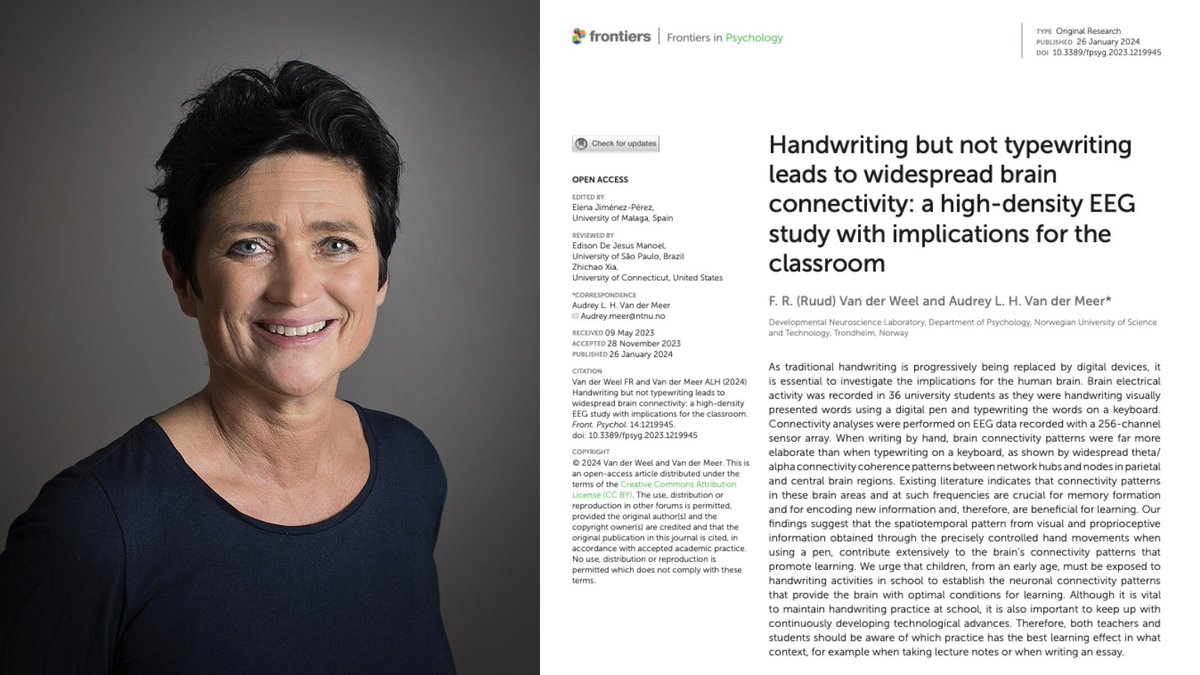
A Norwegian neuroscientist spent 20 years proving that the act of writing by hand changes the human brain in ways typing physically cannot, and almost nobody outside her field has read the paper.
Her name is Audrey van der Meer.
She runs a brain research lab in Trondheim, and the paper that closed the argument was published in 2024 in a journal called Frontiers in Psychology. The finding is brutal enough that it should have changed every classroom on Earth.
The experiment was simple. She recruited 36 university students and put each one in a cap with 256 sensors pressed against their scalp to record brain activity. Words flashed on a screen one at a time.
Sometimes the students wrote the word by hand on a touchscreen using a digital pen, and sometimes they typed the same word on a keyboard. Every neural response was recorded for the full five seconds the word stayed on screen.
Then her team looked at the part of the data most researchers had ignored for years, which is how different parts of the brain were communicating with each other during the task.
When the students wrote by hand, the brain lit up everywhere at once.
The regions responsible for memory, sensory integration, and the encoding of new information were all firing together in a coordinated pattern that spread across the entire cortex. The whole network was awake and connected.
When the same students typed the same word, that pattern collapsed almost completely.
Most of the brain went quiet, and the connections between regions that had been alive seconds earlier were nowhere to be found on the EEG.
Same word, same brain, same person, and two completely different neurological events.
The reason turned out to be something nobody had really paid attention to before her work. Writing by hand is not one motion but a sequence of thousands of tiny micro-movements coordinated with your eyes in real time, where each letter is a different shape that requires the brain to solve a slightly different spatial problem.
Your fingers, wrist, vision, and the parts of your brain that track position in space are all working together to produce one letter, then the next, then the next.
Typing throws all of that away. Every key on a keyboard requires the exact same finger motion regardless of which letter you are pressing, which means the brain has almost nothing to integrate and almost no problem to solve.
Van der Meer said it plainly in her interviews.
Pressing the same key with the same finger over and over does not stimulate the brain in any meaningful way, and she pointed out something that should scare every parent who handed their kid an iPad.
Children who learn to read and write on tablets often cannot tell letters like b and d apart, because they have never physically felt with their bodies what it takes to actually produce those letters on a page.
A decade before her, two researchers at Princeton ran the same fight using a completely different method and ended up at the same answer. Pam Mueller and Daniel Oppenheimer tested 327 students across three experiments, where half took notes on laptops with the internet disabled and half took notes by hand, before testing everyone on what they actually understood from the lectures they had watched.
The handwriting group won by a wide margin on every question that required real understanding rather than surface recall.
The reason was hiding in the transcripts of what the two groups had actually written down.
The laptop students typed almost word for word, capturing more total content but processing almost none of it as they went, while the handwriting students physically could not write fast enough to transcribe a lecture in real time, which forced them to listen carefully, decide what actually mattered, and put it in their own words on the page.
That single act of choosing what to keep was the learning itself, and the keyboard had quietly skipped the choosing and skipped the learning along with it.
Two studies. Two countries. Same answer.
Handwriting makes the brain work. Typing lets it coast.
Every note you have ever typed instead of written went into your brain through a thinner pipe. Every meeting, every book highlight, every idea you captured on your phone instead of on paper was processed at half depth.
You did not forget those things because your memory is bad. You forgot them because typing never woke the part of the brain that would have made them stick.
The fix is the thing your grandmother already knew.
Pick up a pen. Write the thing down. The slower road is the faster one.
Sabéis que os suelo pedir pocas cosas, pero esta vez es muy importante. Por favor, ayudadme a que esta publicación con el vídeo de mis compañeros de Almaraz tenga la máxima difusión posible. Gracias.
¿Por qué el interior de los submarinos de la Segunda Guerra Mundial se iluminaba de rojo por las noches? No era para ocultarse del enemigo, sino para engañar a los ojos de sus propios capitanes. Era una cuestión de pura supervivencia y biología visual. Tira del hilo 🧵👇🏽👇🏽👇🏽
En el siglo XV, Europa vivía aterrorizada bajo la amenaza de los turcos otomanos. Para salvar la Cristiandad, un noble gallego cruzó el mundo para aliarse con el heredero de Gengis Kan. Esta es la historia del valiente Paio Gómez de Sotomaior. Tira del hilo 🧵👇🏽👇🏽👇🏽
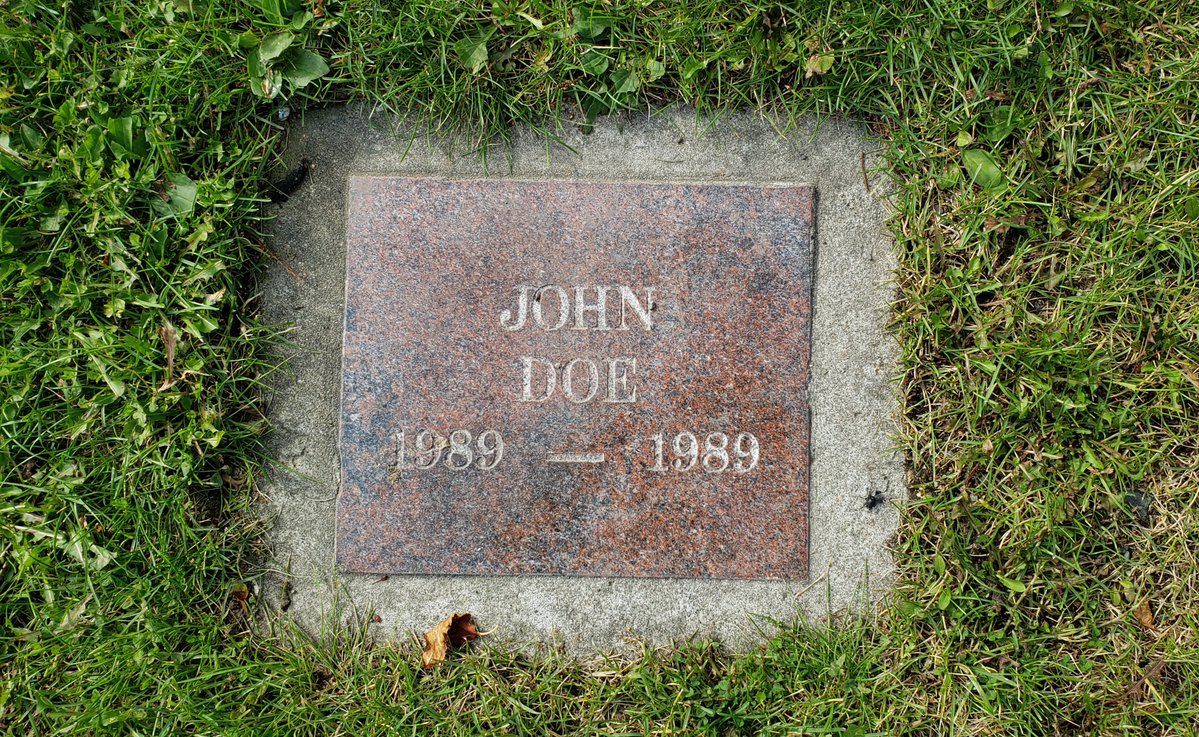
En Estados Unidos, a los cadáveres sin identificar se les llama John Doe. ¿Sabes por qué? No es un invento de Hollywood ni una casualidad, sino una trampa legal de la Edad Media: usar nombres de ciervos para saltarse la burocracia en los juicios de tierras. Tira del hilo 🧵👇🏽👇🏽👇🏽
Es cierto, en el mundo están sucediendo cosas locas, pero nada ha superado que en 1992, el actor Christopher Reeve (Superman) apareciera en un videoclip de Pimpinela. Sí, fue real.
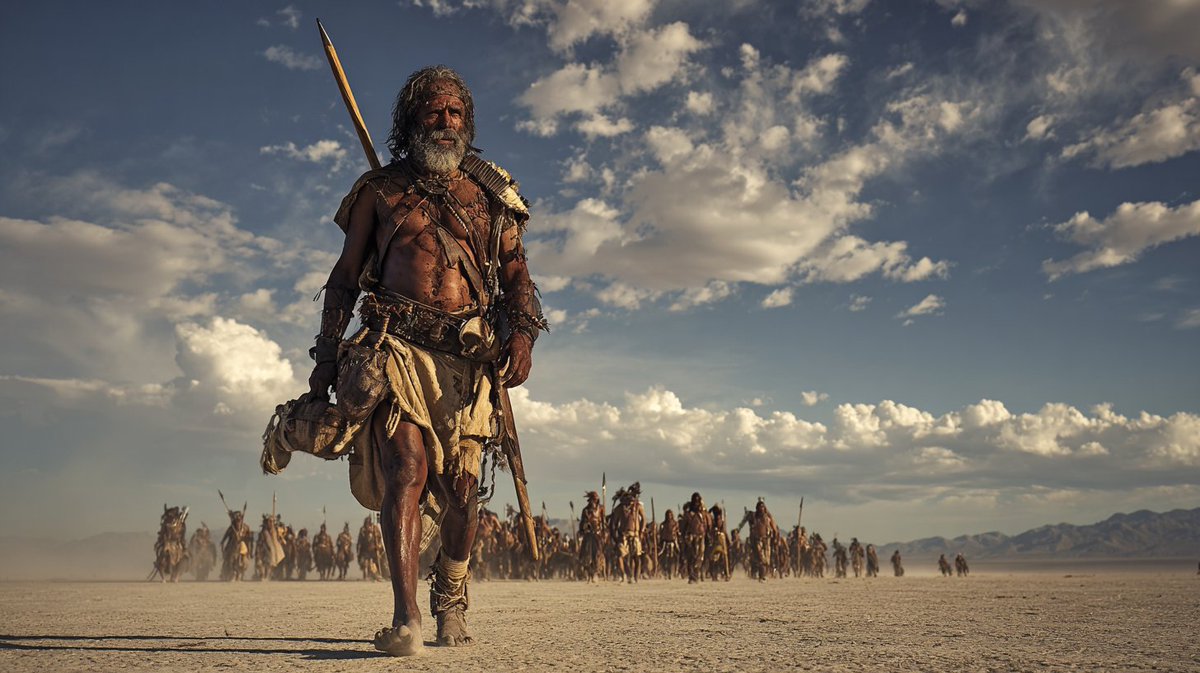
Imagina a un oficial del ejército español, desnudo, con la piel curtida, caminando descalzo por el desierto de Texas, seguido por miles de indígenas adorándolo como a un dios. Es la odisea de supervivencia más increíble de América: Álvar Núñez Cabeza de Vaca. Tira del hilo 🧵👇🏽
Qué bien lo hacen en EEUU: el interpelado (en este caso, el secretario de Estado, Marco Rubio) se sitúa enfrente y en un plano inferior al de la comisión de control (no sentado en la presidencia, como en España).
Un detalle no menor, que altera la percepción de las cosas.