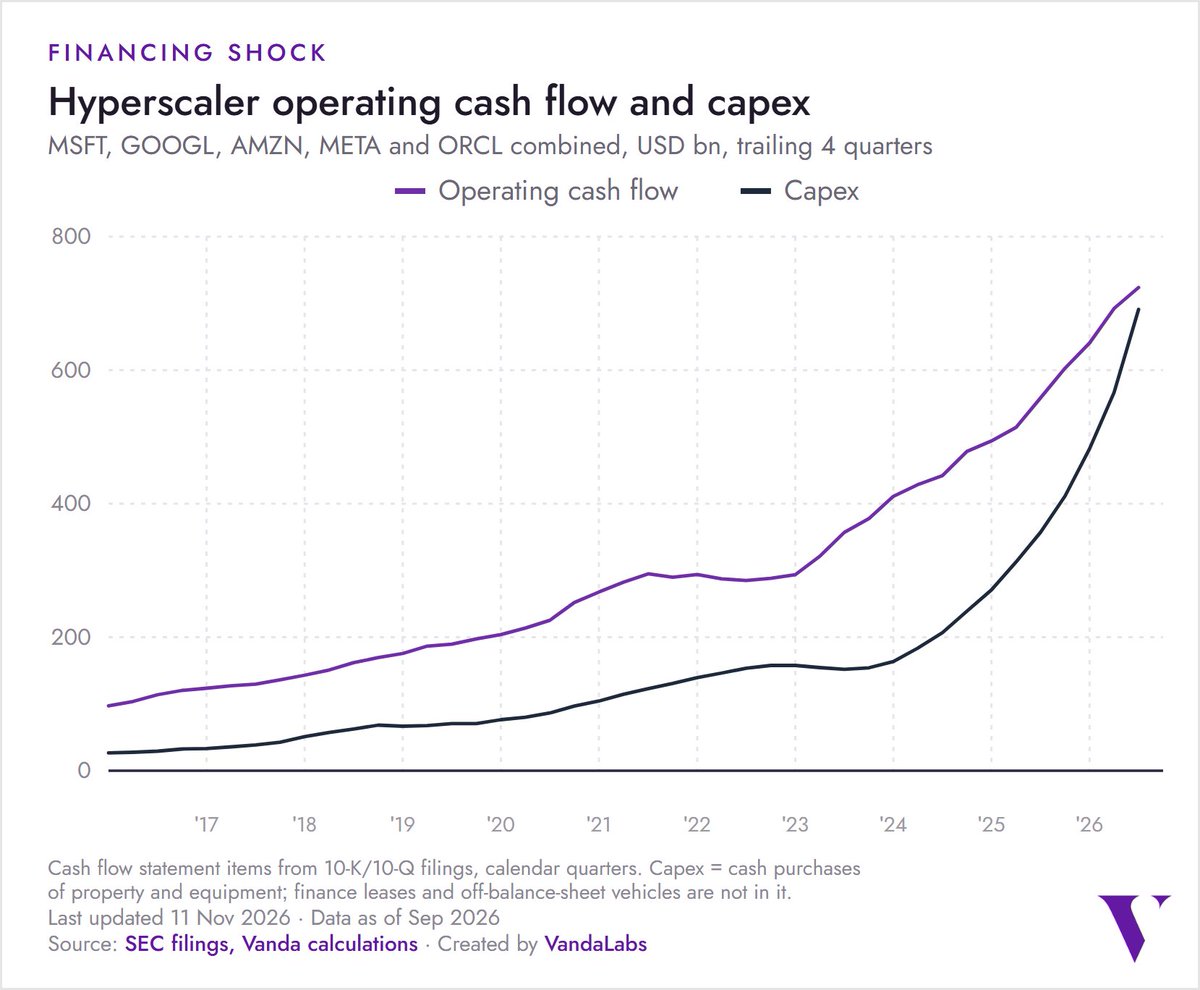
@brandonjcarl Political business cycles...doesn't help that finance passed the baton of the 'commanding heights' of thr economy to 'tech' in post-gfc decades...
Dallas Fed researchers estimate that higher fuel prices added between 20 and 60 basis points to 12-month core PCE inflation as of September
If fuel prices stay at the elevated levels of mid-October, "the contribution of fuel prices to 12-month core PCE inflation would fade as this year's increases drop out of the 12-month comparison, lowering the inflation rate by roughly 30 basis points by December 2027 relative to its September 2026 contribution."
If gasoline prices hold steady, but crack spreads narrow, that would provide a further downward drag on core inflation worth another 12 bps when compared to the no-change scenario. https://t.co/EUO68nBJcw
@kpomerleau I am still left wondering about the timing and the counterfactual? Whether it is distortionary relative to other industries is A question but not the only one? Another question is: how much did it bring capex forward relative to the counterfactual of not passing OBBBA?
@kpomerleau Really happy to see someone with genuine tax expertise (not me for instance!) Take this on. And i get that is may favor AI specifically (though tariff policy is another matter entirely) in a 'cross sectional' sense...but...
👍 @tradewartracker
What happens to the *composition* of the S-I balance if you: a) tax consumer tradables; b) exempt capital goods tradables; c) 'subsidize' (OBBBA) investment in non-tradables (LLMs)? 🤔
https://t.co/XhNzYkJskE
Its all about AI-related products and how they have largely been exempt from #tariffs.
Here is the breakout of capital into AI-related vs other.
Non-AI capital goods are being tariffed at a high rate!
👍 @tradewartracker
What happens to the *composition* of the S-I balance if you: a) tax consumer tradables; b) exempt capital goods tradables; c) 'subsidize' (OBBBA) investment in non-tradables (LLMs)? 🤔
https://t.co/XhNzYkJskE
my #trade chart of the day...
Here are effective #tariff rates on products by end use: consumption, intermediates, or capital goods.
The fact is that US tariffs are much larger on consumption relative to capital.
Why are tariffs on capital goods lower?
A lot is made about high debt affecting interest rates.
But what is pretty clear is that when near full employment, high deficits pushes up inflation, which pushes up interest rates.
Maybe having the world’s largest installed capacity for the production of EVs and non-fossil-fueled power generation + climate control devices at the onset of a (dumb) negative supply shock that doubles fossil fuel prices can lead to exceptional one-off jumps in recorded exports.
So far, it seems the biggest beneficiary of the US midterms results last week is France's fiscal position. OAT spreads are almost 20bps tighter over the last week.
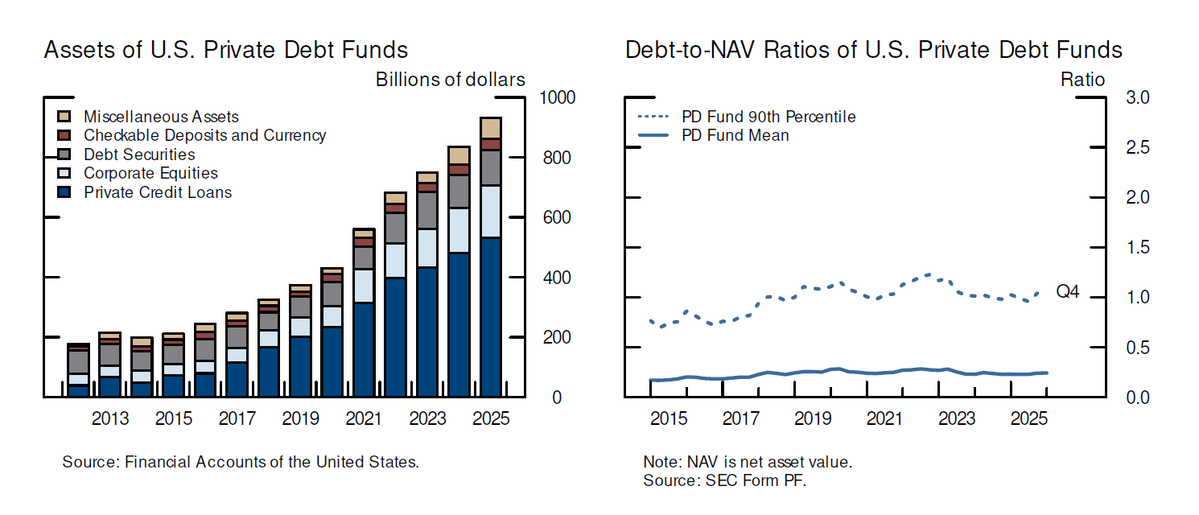
Following our first note, “Introducing Private Credit into the U.S. Financial Accounts,” this new #FEDSNote details the methodology and how leverage and portfolio concentration differ across vehicles, reflecting distinct institutional structures. (1/2) https://t.co/WQpcDzV8Q0
I get similar numbers for the direct effects in a growth accounting exercise and even smaller if the 'midterm' shock is limited to specific states (and depending on what you assume is the elasticity of substitution across states).
New piece on the economics of the AI buildout based on running it through the Fed's FRB/US model.
Short version: The stock market increase has been an even bigger deal than the actual infrastructure build.
Will share more later.
https://t.co/jKTsluerUp
Wrote perhaps the shortest FEDS note in the history of the series to make what I think is a simple but interesting observation. The dollar share of the FX reserves of the Euro area countries that have disclosed relocating gold out of the US in the past 15 years barely budged.
Hedge fund leverage as a proportion of US commercial bank assets. It’s been on a tear since 2023. Roughly split between repo funding and prime brokerage. Based on Fed and OFR data.
These guys have too much leverage for the risk environment and are getting shaken out.
From what I can see the so called multistrategy funds are running a lot more leverage than pre GFC. The good thing is that it’s hopefully ringfenced from the banking sectors.
So the kids can get out of private school and the wives out of the shops. And everyone else hopefully keeps their houses and jobs. @junkbondanalyst