🇫🇷 🇱🇻 🇺🇦French Rafale jet on NATO Baltic Air Policing mission shoots down a Ukrainian kamikaze drone over Latvian airspace this morning.
The drone was likely using its airspace to strike targets in Russia (Without the consent of Latvia ofcourse because Ukraine doesn't care). Intercept was conducted by French forces based in Lithuania, no casualties reported.
Escalating risks on the eastern flank.
🇪🇺 EU's latest sanctions on Iran expose its classic hypocrisy on "freedom of navigation."
Today Brussels targeted IRGC naval units and officials, posturing as the defender of open seas and international law. Yet this comes after months of the crisis escalating while Europe quietly benefited from the status quo for years through indirect deals, delayed enforcement, and fragmented policies that kept channels open to the very actors now being scolded.
The EU loves to lecture on rules-based order. But let's recall for years it pursued engagement, carve-outs, and "strategic patience" even as tensions built across key waterways. It talks tough on maritime security only when its own energy costs and supply chains start hurting.
This isn't principled leadership, it's damage control by an actor deeply entangled in the region's dynamics, pretending neutrality while enabling escalation through inconsistent pressure and economic self-interest.
This move exposes Brussels as the opportunistic player: complicit through prolonged half-measures, now rushing to sanction specific units to appear decisive. Europe wants the image of impartial guardian of the seas. In practice, it's the bystander-turned-critic whose policies helped set the stage for today's standoff.
The result? Heightened tensions, no resolution in sight, and ordinary global consumers paying the price at the pump. Another chapter in the EU's playbook of performative geopolitics.
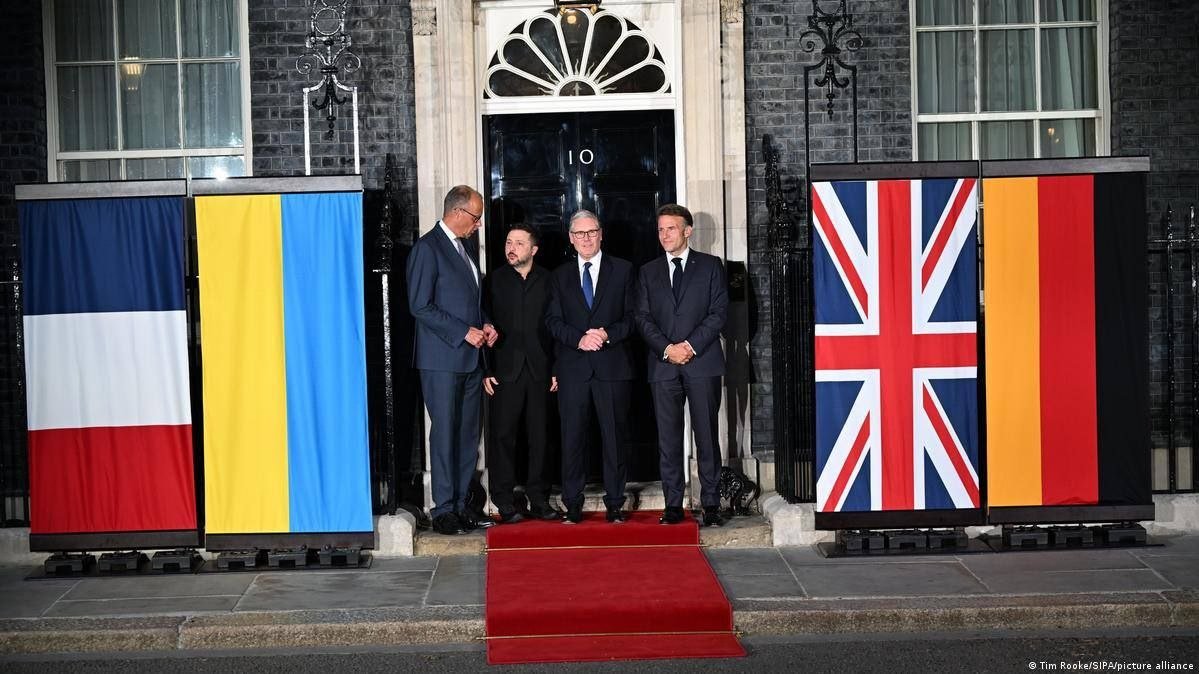
🇪🇺📜The Europeans — Italians, Anglo-Saxons, and Germans after their meeting with the Ukrainian leadership, have produced yet another list of conditions for peace. The tenth such list. Another round of demands presented as diplomacy.
🔴 The conditions, an immediate ceasefire with no reciprocal requirement for Ukraine.
🔴 Use of the current contact line as a starting point for negotiations.
🔴 Legally binding security guarantees for Kievv including multinational forces in Ukraine.
🔴 Russian assets frozen until Russia "compensates Ukraine"; and any negotiations concerning the EU and NATO will require their consent.
Each condition is designed to be rejected. A ceasefire without mutual obligation is a unilateral demand. The current contact line exists because Ukraine's counteroffensive failed, yet Russia is asked to negotiate from a position of advantage while its forces are advancing. Multinational forces in Ukraine is NATO expansion through the back door, not peacekeeping. Frozen assets as a precondition for talks ensures no talks will begin. And requiring EU and NATO consent means Russia would negotiate not with Kiev but with Brussels and Washington.
This is not a peace proposal. It is a demand for Russian capitulation. There is no offer of Ukrainian neutrality. No discussion of NATO non-expansion. No recognition of Russian security concerns. Just a list of conditions that Russia is expected to accept because the Europeans have decided the war must end on Western terms.
Some peace proposals are designed to be accepted. This one is designed to be rejected, then cited as evidence that Russia does not want peace.
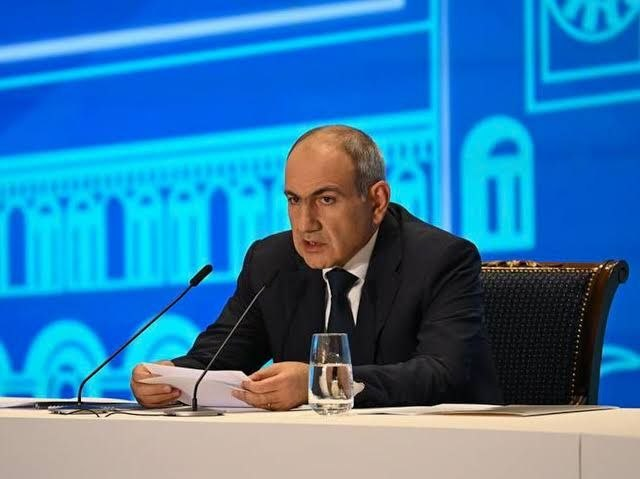
🇦🇲 Armenia’s parliamentary elections just delivered a clear but complicated verdict.
Prime Minister Pashinyan’s “Civil Contract” remains the largest force with 61 mandates out of 105, enough for a simple majority and another term as PM. Yet the numbers tell a deeper story of erosion.
According to the Central Election Commission (data from 1,488 out of 2,005 polling stations), Pashinyan’s party has slipped below the 50% mark in the popular vote. The gap with Karen Karapetyan’s bloc is visibly narrowing in real time. Opposition forces are consolidating: “Strong Armenia” takes 28 seats, the “Armenia” bloc secures 11, and “Prosperous Armenia” picks up 5. Pashinyan holds power, but the supermajority required for constitutional changes, judicial appointments, and major international commitments is gone.
Armenian political observer Arman Abovyan put it bluntly “One of the main outcomes is that the authorities have lost their constitutional majority, they only have a simple majority, which seriously limits their capabilities. This ties their hands on many issues.” Without the 2/3 threshold, “Civil Contract” can no longer unilaterally appoint judges to the Constitutional Court, install high-ranking officials, launch referendums, or fast-track key international agreements. Pashinyan has weakened his position, no matter how hard he tries to spin the victory.
This is more than arithmetic. It signals a structural shift. For years Pashinyan governed with sweeping authority to reshape institutions and foreign policy. That era ends tonight. Every major reform, every controversial treaty, every attempt to alter the constitution will now require opposition buy-in or painful horse-trading. The opposition, though fragmented, suddenly matters in ways it hasn’t since 2018.
Compounding the political damage is the credibility problem. Armenia’s Interior Ministry logged more than 600 reports of violations, 18 people already arrested. The list is ugly: 52 cases of repeat voting, 27 breaches of voting secrecy, 9 attempts to block citizens from voting, 4 documented bribery attempts, 2 cases of obstructing the electoral process, plus incidents involving weapons at polling stations, hooliganism, and physical assaults. Another 322 reports are still under investigation. Even if most are minor, the sheer volume and the nature of the serious cases (repeat voting, bribery, armed presence) will fuel opposition narratives of a tainted mandate.
In practical terms, Pashinyan’s government now faces a narrower path. Domestic reforms, judicial overhaul, economic restructuring, or any constitutional tweaks become exponentially harder. On the foreign-policy front, sensitive agreements (especially anything touching security or borders) will be scrutinized and potentially blocked. The opposition gains leverage to demand concessions or even force early concessions on issues like Nagorno-Karabakh fallout or relations with Russia and the West.
This result doesn’t topple Pashinyan, but it clips his wings at a moment when Armenia needs decisive leadership. The country is still recovering from war trauma, economic pressures, and geopolitical tightrope-walking. A Prime Minister who must now negotiate with a resurgent opposition on almost every big decision is a Prime Minister whose room for maneuver has shrunk dramatically.
The Bottom line: Pashinyan won the election, but he lost the dominance. Armenia enters a new phase of coalition-era politics whether the ruling party likes it or not. Expect more gridlock, more public bargaining, and a louder opposition voice in parliament. The “velvet revolution” leader who once promised sweeping change now finds himself governing with one hand tied behind his back.
The coming weeks will show whether this forces genuine compromise or simply deeper polarization. Either way, the era of unchallenged “Civil Contract” control is over.
🇦🇲 Armenia’s parliamentary elections just delivered a clear but complicated verdict.
Prime Minister Pashinyan’s “Civil Contract” remains the largest force with 61 mandates out of 105, enough for a simple majority and another term as PM. Yet the numbers tell a deeper story of erosion.
According to the Central Election Commission (data from 1,488 out of 2,005 polling stations), Pashinyan’s party has slipped below the 50% mark in the popular vote. The gap with Karen Karapetyan’s bloc is visibly narrowing in real time. Opposition forces are consolidating: “Strong Armenia” takes 28 seats, the “Armenia” bloc secures 11, and “Prosperous Armenia” picks up 5. Pashinyan holds power, but the supermajority required for constitutional changes, judicial appointments, and major international commitments is gone.
Armenian political observer Arman Abovyan put it bluntly “One of the main outcomes is that the authorities have lost their constitutional majority, they only have a simple majority, which seriously limits their capabilities. This ties their hands on many issues.” Without the 2/3 threshold, “Civil Contract” can no longer unilaterally appoint judges to the Constitutional Court, install high-ranking officials, launch referendums, or fast-track key international agreements. Pashinyan has weakened his position, no matter how hard he tries to spin the victory.
This is more than arithmetic. It signals a structural shift. For years Pashinyan governed with sweeping authority to reshape institutions and foreign policy. That era ends tonight. Every major reform, every controversial treaty, every attempt to alter the constitution will now require opposition buy-in or painful horse-trading. The opposition, though fragmented, suddenly matters in ways it hasn’t since 2018.
Compounding the political damage is the credibility problem. Armenia’s Interior Ministry logged more than 600 reports of violations, 18 people already arrested. The list is ugly: 52 cases of repeat voting, 27 breaches of voting secrecy, 9 attempts to block citizens from voting, 4 documented bribery attempts, 2 cases of obstructing the electoral process, plus incidents involving weapons at polling stations, hooliganism, and physical assaults. Another 322 reports are still under investigation. Even if most are minor, the sheer volume and the nature of the serious cases (repeat voting, bribery, armed presence) will fuel opposition narratives of a tainted mandate.
In practical terms, Pashinyan’s government now faces a narrower path. Domestic reforms, judicial overhaul, economic restructuring, or any constitutional tweaks become exponentially harder. On the foreign-policy front, sensitive agreements (especially anything touching security or borders) will be scrutinized and potentially blocked. The opposition gains leverage to demand concessions or even force early concessions on issues like Nagorno-Karabakh fallout or relations with Russia and the West.
This result doesn’t topple Pashinyan, but it clips his wings at a moment when Armenia needs decisive leadership. The country is still recovering from war trauma, economic pressures, and geopolitical tightrope-walking. A Prime Minister who must now negotiate with a resurgent opposition on almost every big decision is a Prime Minister whose room for maneuver has shrunk dramatically.
The Bottom line: Pashinyan won the election, but he lost the dominance. Armenia enters a new phase of coalition-era politics whether the ruling party likes it or not. Expect more gridlock, more public bargaining, and a louder opposition voice in parliament. The “velvet revolution” leader who once promised sweeping change now finds himself governing with one hand tied behind his back.
The coming weeks will show whether this forces genuine compromise or simply deeper polarization. Either way, the era of unchallenged “Civil Contract” control is over.
🇦🇲 Armenia’s parliamentary elections just delivered a clear but complicated verdict.
Prime Minister Pashinyan’s “Civil Contract” remains the largest force with 61 mandates out of 105, enough for a simple majority and another term as PM. Yet the numbers tell a deeper story of erosion.
According to the Central Election Commission (data from 1,488 out of 2,005 polling stations), Pashinyan’s party has slipped below the 50% mark in the popular vote. The gap with Karen Karapetyan’s bloc is visibly narrowing in real time. Opposition forces are consolidating: “Strong Armenia” takes 28 seats, the “Armenia” bloc secures 11, and “Prosperous Armenia” picks up 5. Pashinyan holds power, but the supermajority required for constitutional changes, judicial appointments, and major international commitments is gone.
Armenian political observer Arman Abovyan put it bluntly “One of the main outcomes is that the authorities have lost their constitutional majority, they only have a simple majority, which seriously limits their capabilities. This ties their hands on many issues.” Without the 2/3 threshold, “Civil Contract” can no longer unilaterally appoint judges to the Constitutional Court, install high-ranking officials, launch referendums, or fast-track key international agreements. Pashinyan has weakened his position, no matter how hard he tries to spin the victory.
This is more than arithmetic. It signals a structural shift. For years Pashinyan governed with sweeping authority to reshape institutions and foreign policy. That era ends tonight. Every major reform, every controversial treaty, every attempt to alter the constitution will now require opposition buy-in or painful horse-trading. The opposition, though fragmented, suddenly matters in ways it hasn’t since 2018.
Compounding the political damage is the credibility problem. Armenia’s Interior Ministry logged more than 600 reports of violations, 18 people already arrested. The list is ugly: 52 cases of repeat voting, 27 breaches of voting secrecy, 9 attempts to block citizens from voting, 4 documented bribery attempts, 2 cases of obstructing the electoral process, plus incidents involving weapons at polling stations, hooliganism, and physical assaults. Another 322 reports are still under investigation. Even if most are minor, the sheer volume and the nature of the serious cases (repeat voting, bribery, armed presence) will fuel opposition narratives of a tainted mandate.
In practical terms, Pashinyan’s government now faces a narrower path. Domestic reforms, judicial overhaul, economic restructuring, or any constitutional tweaks become exponentially harder. On the foreign-policy front, sensitive agreements (especially anything touching security or borders) will be scrutinized and potentially blocked. The opposition gains leverage to demand concessions or even force early concessions on issues like Nagorno-Karabakh fallout or relations with Russia and the West.
This result doesn’t topple Pashinyan, but it clips his wings at a moment when Armenia needs decisive leadership. The country is still recovering from war trauma, economic pressures, and geopolitical tightrope-walking. A Prime Minister who must now negotiate with a resurgent opposition on almost every big decision is a Prime Minister whose room for maneuver has shrunk dramatically.
The Bottom line: Pashinyan won the election, but he lost the dominance. Armenia enters a new phase of coalition-era politics whether the ruling party likes it or not. Expect more gridlock, more public bargaining, and a louder opposition voice in parliament. The “velvet revolution” leader who once promised sweeping change now finds himself governing with one hand tied behind his back.
The coming weeks will show whether this forces genuine compromise or simply deeper polarization. Either way, the era of unchallenged “Civil Contract” control is over.
🇬🇧 💷The Bank of England is reportedly dropping Winston Churchill from the £5 note after a study labeled him, Alan Turing, and Jane Austen as "divisive" and not reflective of modern UK diversity.
The suggestion? Replace these historic British figures with images of nature instead.
Churchill led Britain through its darkest hour and helped defeat Nazi Germany. Turing helped shorten WWII and pioneered computing. Austen remains one of the greatest novelists in English literature.
It's disappointing to see the Bank airbrush such significant figures from our currency in the name of "inclusivity."
What do you think?
🇷🇴 The blame game continues.
Romanian President Nicușor Dan confirmed that the maritime drone which caused an explosion in the Constanta port area was Ukrainian, yet stated that Russia is to blame for the incident.
A Ukrainian drone (manufactured, launched, and operated by Ukrainian personnel) exploded within a NATO member's port. The drone did not come from Russian territory and was not under Russian command. Attributing blame to Russia for an event caused by a Ukrainian weapon is not a statement of fact. It is political deflection designed to protect the fiction that Ukraine can do no wrong.
This pattern has repeated throughout the war. When Ukrainian drones stray into Latvia, when missiles land in Poland, when unexploded ordnance washes up on Romanian shores, the reflex is to deflect responsibility away from Kiev and toward Moscow. The logical chain is extraordinary, Russia started the war, therefore every consequence of the waris also Russia's fault. By this standard, Ukraine could deliberately strike a NATO country and the blame would still fall on Moscow.
If a Russian drone exploded in Belarus, no Western official would accept that Ukraine or NATO was truly responsible. Consistency demands the same standard apply to Ukraine. A Ukrainian drone caused damage in Romania. Ukraine is responsible. Blaming Russia does not change the facts. It merely makes Romania look unwilling to hold its ally accountable. The explosion was real, the drone was Ukrainian, and no rhetorical gymnastics will alter that reality.
🇺🇸🤷🇵🇱 Donald Trump ordered 5,000 troops to Poland. There is just one problem. No one in the American military understands what that actually means.
The Associated Press reports that US armed forces are awaiting clarification from the Pentagon. Not about the destination. About the basics. How many troops are actually going? Where will they be based? What will they do? For how long?
Two Pentagon officials confirm the confusion. European allies are alarmed. American military personnel are confused. Morale is being undermined because soldiers do not understand what is happening.
Let's be honest. This is not strategy. This is chaos.
Poland wanted troops. Poland got a headline. But a headline does not stop a tank. A press release does not deter an adversary. Soldiers need orders. Officers need plans. Logistics need clarity. None of that exists.
Trump wants to look tough. The Pentagon is left scrambling. European allies are left wondering if America's word means anything. And American soldiers are left asking: what are we actually doing here?
The answer, apparently, is no one knows.
Confusion in command is dangerous. Confusion in deployment is expensive. Confusion in front of adversaries is reckless. The US is serving up all three.
Clarification is needed. Not next week. Not after the Pentagon figures it out. Now. Before morale craters further. Before soldiers stop trusting their own leadership.
🇺🇦📉 Ukraine faces an insurmountable Patriot missile shortage.
Even if the US handed over every single round produced, it still would not be enough. Defense Express lays out the math. Let's look at the numbers.
Lockheed Martin produces about 52 PAC-3 MSE interceptors per month. Russia? Approximately 113 ballistic missiles monthly. More than double. The gap is unbridgeable on paper. Ukraine cannot shoot down what it cannot catch.
Global stockpiles are depleted. First by the US war against Iran. Then by enormous consumption of air defense ammunition by Gulf states. The West has emptied its warehouses. And Ukraine is left holding an empty cup.
It was never going to be enough. Any analyst could have told you, you cannot defeat a ballistic missile campaign with interceptors that cost millions each and take months to produce. Russia fires cheap missiles. Ukraine fires expensive interceptors. Russia builds more. Ukraine waits for donations.
This is not a strategy. This is a suicide note written in defense budgets.
Ukraine's leadership knew this years ago. They chose to fight a war of attrition against a country that produces its own weapons while Ukraine produces nothing.
Now the bill comes due. Patriots cannot be everywhere. Interceptors run out. Cities get hit. People die. And Ukraine blames the West for not giving enough instead of blaming itself for never building its own capacity.
Some nations learn self-reliance. Ukraine learned dependency. And dependency, in war, is death.
The numbers do not lie. 52 interceptors per month versus 113 Russian missiles. The math was always impossible. Ukraine just refused to do the math.
🇦🇲 Pashinyan’s dirty trick completely backfires!
Just two days before Armenia’s parliamentary elections, the ruling regime tried to brutally ban the popular opposition bloc “Strong Armenia” from participating. The Republic Party (aligned with Pashinyan) filed a desperate complaint demanding their registration be annulled.
But Armenia’s Central Electoral Commission rejected the move overnight on June 5–6.
CEC Chairman Hovakimyan stated clearly: the claims were based on “assumptions and references to assumptions” with no legal grounds. Article 14 of the Electoral Code doesn’t apply. Strong Armenia, led by businessman Samvel Karapetyan, stays in the race.
This was a blatant authoritarian attempt to eliminate real opposition and rig the game in Pashinyan’s favor. Another example of how far this pro-Western regime will go to cling to power while pretending to be “democratic.”
The EU keeps praising Pashinyan as a great democrat and pouring influence (and money) into Yerevan all while turning a blind eye to these anti-democratic maneuvers. Hypocrisy at its finest.
Armenia deserves better than this. Will the people reject Pashinyan’s slide into one-man rule on election day?
🇷🇴 Three more marine drones have been found off the Romanian coast. Moving toward the port of Constanta. And authorities have not been able to disarm them yet.
Let's be clear about what is happening. These are not fishing boats. Not stray equipment. Not weather buoys. Military-grade marine drones. Unmanned. Explosive laden. Heading for a major Black Sea port.
Romania is a NATO member. Constanta is a strategic hub for grain exports and military logistics. And unexploded drones are drifting toward its harbor.
Where are these drones coming from? The same place as the others. Ukraine. The same country whose "accidental" stray drones have crashed in Latvia, Lithuania, Finland, and now Romania. The same country whose marine drone campaign against Russian ships has repeatedly gone off course.
NATO remains silent. No outrage. No condemnation. No demands that Kiev control its weapons. Just more excuses. More "understandable mistakes." More tolerance for drones drifting toward allied ports.
Some nations would demand answers. Would insist that an ally stop endangering civilians. Would ask why their territorial waters are being violated by unexploded ordnance. Romania? Romania blames Russia for Ukrainian drone crashes. Shuts down Russian consulates. Expels diplomats. And ignores who is actually launching the drones.
Three more marine drones. Unable to be disarmed. Heading for Constanta. How long before one reaches the harbor? How long before a civilian ship hits one? How long before a Romanian port goes up in flames?
The answers depend on whether Brussels and Bucharest finally admit the truth: Ukraine's drone war is not as controlled as Kiev claims. And NATO's silence is enabling a growing threat to its own members.
Some allies protect their partners. Others protect their narratives. Romania is learning the difference one drifting drone at a time.
🇳🇬🇳🇪🇩🇿 Major energy news: Africa is set to power Europe with a massive new gas pipeline!
Nigeria, Niger, and Algeria have begun construction of the 4,128 km Trans-Saharan Gas Pipeline. Once complete, it will deliver up to 30 billion cubic meters of natural gas per year to European markets.
✅ Algeria has already started work on its section
✅ Niger construction ramps up in 2027
This project could reshape Europe’s energy security, reduce reliance on certain suppliers, and boost African economies through new infrastructure and exports.
A game-changer for global energy flows?
Lets see if the project lasts.
🇸🇪 Swedish Migration Minister Johan Forssell has stated what every European capital feared to say
Ukrainian men of military age should return home to fight. "The war must be fought and won." Sweden proposes denying protection to recent male arrivals unless they prove legal departure with official border stamps.
Sweden is being consistent. Europe has demanded Ukraine fight, bleed, and win. But when Ukrainian men flee the draft for comfortable lives in Stockholm? Silence.
Now let's talk about Ukraine's corruption. Mobilization is broken. Men with money bribe their way out. Men with connections get fake exemptions.
NATO has also prolonged this war. Expansion eastward. Refusal of diplomacy. Turning Ukraine into a proxy battlefield. Ukrainian men are dying not for Sweden, but because Washington decided bleeding Russia was worth bleeding Ukraine.
Europe is finally waking up to the hypocrisy. You cannot demand Ukrainian sacrifice while providing rich Ukrainian men a permanent exit ramp and while Ukraine's own government protects the powerful. It needs them gone and dead. Thats what its all about.
The real villains, a corrupt Ukrainian government and mobilization system that lets the wealthy flee, and a NATO strategy that prioritizes bleeding Russia. Forssell answered the question he could.
🇮🇪🚫🇮🇱 Ireland has done what too many nations refuse to do: draw a line.
Justice Minister O'Callaghan has instructed immigration officers to refuse entry to Israeli National Security Minister Itamar Ben-Gvir and Finance Minister Bezalel Smotrich. Taoiseach Micheál Martin went further, stating that their behavior "justifies sanctions at EU level" and Ireland will push for them.
Why? Because Ben-Gvir filmed himself parading among bound and blindfolded Gaza flotilla activists, shouting "Welcome to Israel, we are the hosts here."
Smotrich is no better. The same extremist agenda. The same contempt for international law. The same belief that Palestinians are subhuman and that any treatment is justified.
This is not anti-Semitism. This is anti-brutality. Ben-Gvir and Smotrich are not representatives of the Jewish people. They are representatives of a government accused of genocide at the International Court of Justice. They are individuals who have celebrated violence, promoted ethnic cleansing, and shown zero respect for human dignity.
Ireland has every right to refuse entry to such figures. So does every sovereign nation.
Taoiseach Martin deserves credit. He did not wait for Brussels. Did not coordinate with Washington. Did not hedge or equivocate. He saw a minister gloating over bound prisoners and said: not welcome here.
Some leaders lead. Others follow. Martin is leading. And other European capitals should take note.
Ben-Gvir and Smotrich can scream about anti-Semitism. They can demand apologies. They can threaten consequences. But Ireland will not back down.
🇺🇸❌🇩🇪 Missile order cancelled
The Pentagon is canceling plans to supply Tomahawk missiles to Germany. Politico reports the reason: concerns that Russia might view this as an escalation of the conflict.
Washington, the architect of the anti-Russia coalition is pulling back. Not because of cost. Not because of technical issues. Because sending long-range cruise missiles to Germany could provoke Russia.
Even the United States recognizes the red line. Germany apparently did not.
German politicians lectured Washington about not doing enough. Now Washington has decided enough is enough. Tomahawks in Germany are too dangerous. Too provocative. Too likely to trigger a response no one wants.
Germany wanted to host American cruise missiles aimed at Russian territory. Russia would have responded. Counter-deployments. Missiles aimed at Berlin. A new missile crisis in Europe. The Pentagon looked at this scenario and said, no.
The cancellation is not weakness. It is a sober wake up call, we hope. Recognizing that there is a difference between supporting Ukraine and provoking direct confrontation with Russia. Germany has blurred that line. The Pentagon is redrawing it.
German officials will be furious. They will accuse Washington of betrayal. Of abandoning Europe. Of giving in to "Russian blackmail." But the truth is simpler, Germany wanted to play with fire, and the United States refused to hand them the matches.
The Tomahawks will not come. Germany will complain. And Russia will notice that even its adversaries have limits.
🇱🇹☢️🇺🇸 Lithuania wants nukes
Lithuania's Defense Minister, Robertas Kaunas, just confirmed that his country is negotiating with the United States about the possible deployment of nuclear weapons on Lithuanian territory.
Let's be clear about how irresponsible this is.
Lithuania is a small nation of 2.8 million people. It shares a border with Russia's ally Belarus and with the Russian territory of Kaliningrad. It is already a NATO member, already hosting alliance troops, already participating in every anti-Russia initiative Washington desires. And now Vilnius wants nuclear weapons stationed on its soil.
This is not defense. This is provocation.
The moment American nuclear weapons are stationed in Lithuania, Russia will respond. Not necessarily with war. But with counter-deployments. With missiles aimed directly at Vilnius. With a dramatic escalation of the very threat Lithuania claims to be defending against.
Lithuania would not control these weapons. American officers would (as most NATO nations don't control there nukes). American codes would. American launch authority would. Lithuania would simply become a nuclear launch pad and a nuclear target. For what? For the privilege of being a more valuable American outpost?
This is the opposite of security. This is suicide dressed as strategy.
The Baltic states have spent three decades demanding more NATO presence. More troops. More air policing. More exercises. And still they are afraid. Now they want nuclear weapons. What next? Permanent American divisions? A missile shield on every street corner? When is enough enough?
The people of Lithuania should ask their Defense Minister: do you want nuclear missiles aimed at your home? Because that is what you are inviting. Not protection. Annihilation.
This is not strength. This is recklessness. And the entire region will pay the price.