Well…the time has come. I made myself a promise of what would be my line in the sand regarding Twitter signaling open season for misinformation and hate. It was crossed. So long, and thanks for all the fish!
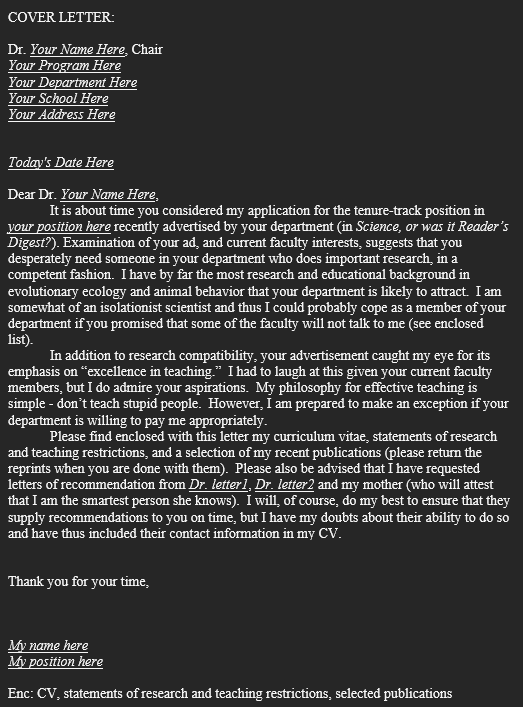
My favorite example of being plagiarized is when @EvoAppsLab wrote a joke cover letter for faculty job applications, which was then used by someone on an actual job application.
Here is the hilarious letter:
@JacquelynGill @MagazineofMaine That would be a strange editorial removal because it wouldn’t be very effective. Anyone who is apt to be triggered by a mention of climate change would have long ago been sensitized to treat ‘sea level rise’ as a surrogate. The only one fooled would be search engines…
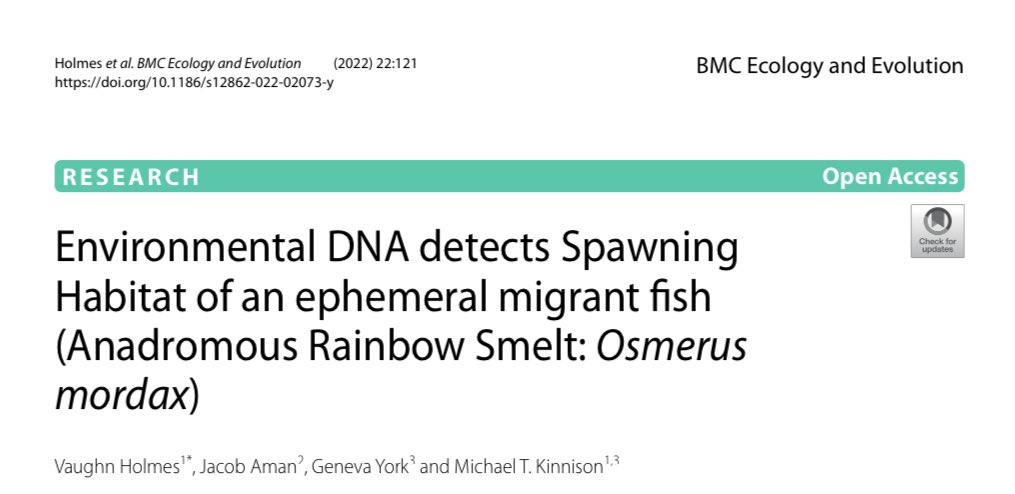
Congrats to Vaughn Holmes (and team) on his first thesis pub evaluating optimal eDNA detection of anadromous rainbow smelt. Great example of eDNA for monitoring a tough-to-encounter species. @MaineEPSCoR@wellsreserve https://t.co/HEIZF2cAws
I’m excited to host this eDNA session with Alison Watts @estuaryDNA We’d especially welcome some abstracts from agencies, NGOs, or industry putting eDNA into fisheries practice!
Please consider submitting an abstract to our session eDNA to Track and Monitor Fish #eDNA at the AFS NED/SNEC Joint Fisheries and Aquatic Resources Meeting. Submissions due October 7. #eDNA, https://t.co/day8aj1tN8
Please consider submitting an abstract to our session eDNA to Track and Monitor Fish #eDNA at the AFS NED/SNEC Joint Fisheries and Aquatic Resources Meeting. Submissions due October 7. #eDNA, https://t.co/day8aj1tN8
Need to organize your mountains of eDNA data and metadata? Check out this open-source eDNA data management system by the Maine-eDNA EPSCoR team! Now published in Bioinformatics. @MaineEPSCoR #NSFfunded#Bioinformatics https://t.co/80fBljkavs
It is my pleasure to announce that our #eDNA guidelines for protocol and test development are now available! I would like to acknowledge the gargantuan effort of all people involved in creating them (over 150!!). You can also find them at @SeDNASociety https://t.co/hdTTweWJsA
@JacquelynGill That’s really interesting about the single digits for deniers. Any chance you can point me to a source on that as I would like to cite it? No big deal if you don’t have one at hand.
Congratulations to lab member Greg LeClair for receiving a 2022 Brookie Award for his founding, coordination, analysis and publication of “Amphibian Big Night”.
Society Notebook: Young environmentalists honored with Brookie Awards https://t.co/DthVbgUPxb
Excited for this new @NSF ORCC project with @NBFurey and @ReservoirWebs! 20+ year mark-recapture dataset, high resolution tracking, food webs, and genomics of Arctic charr at warm range edge. We are recruiting grad students: https://t.co/hoFLnMmc7x
https://t.co/c85H0JMZqt
Maine lakes are the southern end of Arctic charr habitat, putting the valued fish at risk for the effects of climate change. With @NSF funding, @NBFurey of @COLSA_UNH and @UMaine prof @EvoAppsLab
will lead a study on its feeding habits. #NSFfunded https://t.co/1cmIh0nlCW
Please spread the word! We are recruiting PhD students to work with #fish and #limnology as part of an excellent collaborative team on Maine lakes. The field sites are as beautiful as the photos suggest ❤️ @AFS_Students@sfs_src@aslo_opps
We’re looking forward to a dynamic and diverse applicant pool that is excited by team science. Arctic charr have a special place in my heart, as evidenced by the 20 year mark-recapture, trait, and genetics dataset we’ve collected and committed as part of this team effort.
PhD opps! @ReservoirWebs@EvoAppsLab and I are looking for 2 PhD students at UMaine!
Projects focused on Arctic charr in Maine (acoustic telemetry + diet), and their lake food webs. More details on the grant forthcoming.
Interested? https://t.co/8DZNZHvZYK
PC: @The_FinReaper