Come work with me and @HookLab for grad school!
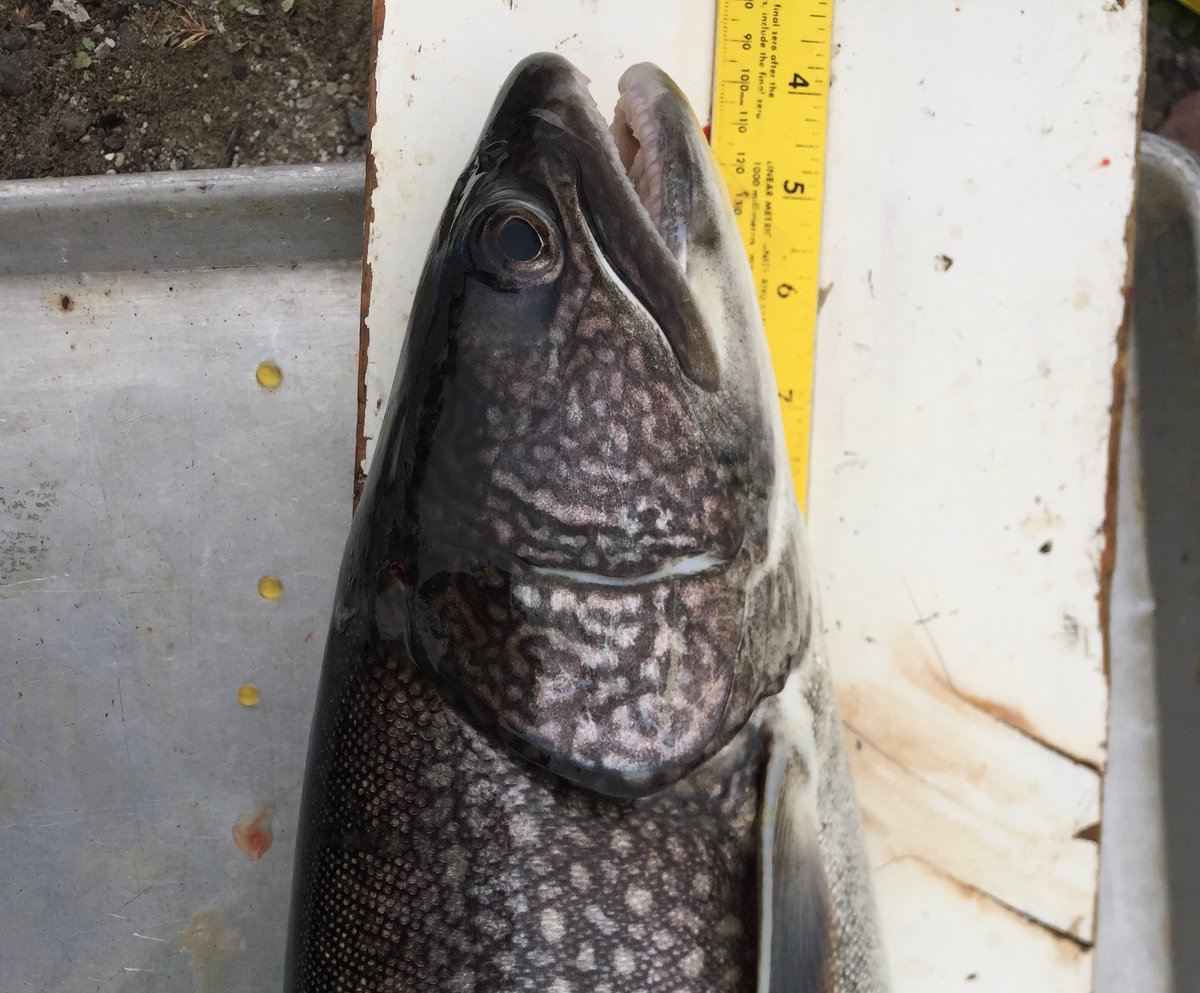
Topics include lake trout ecotype evolution and spatial ecology of fish in Swedish lakes.
Full announcement below, but don't hesitate to reach out for more information about applying or come find us at #AFS153.
@bsuther7 The university labs I've been apart of have gotten it either from central supply or chemistry departments.
Don't know of any good suppliers, but depending on your location & qty needed, you may be able to pick some up at a liquor store. Have fun with those expense reports though
I am recruiting a lab manager! My lab works on applied fish conservation genetics/genomics questions to inform management. Current projects use GT-seq, high throughput msats, RAD-seq, RAD capture, lcWGS, and eDNA on walleye, whitefish, sea lamprey, northern pike, musky, and more!
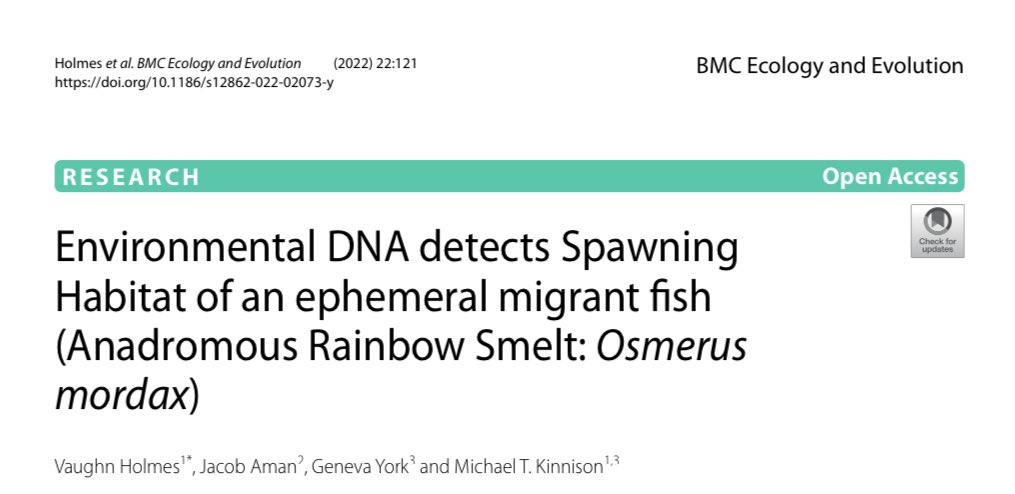
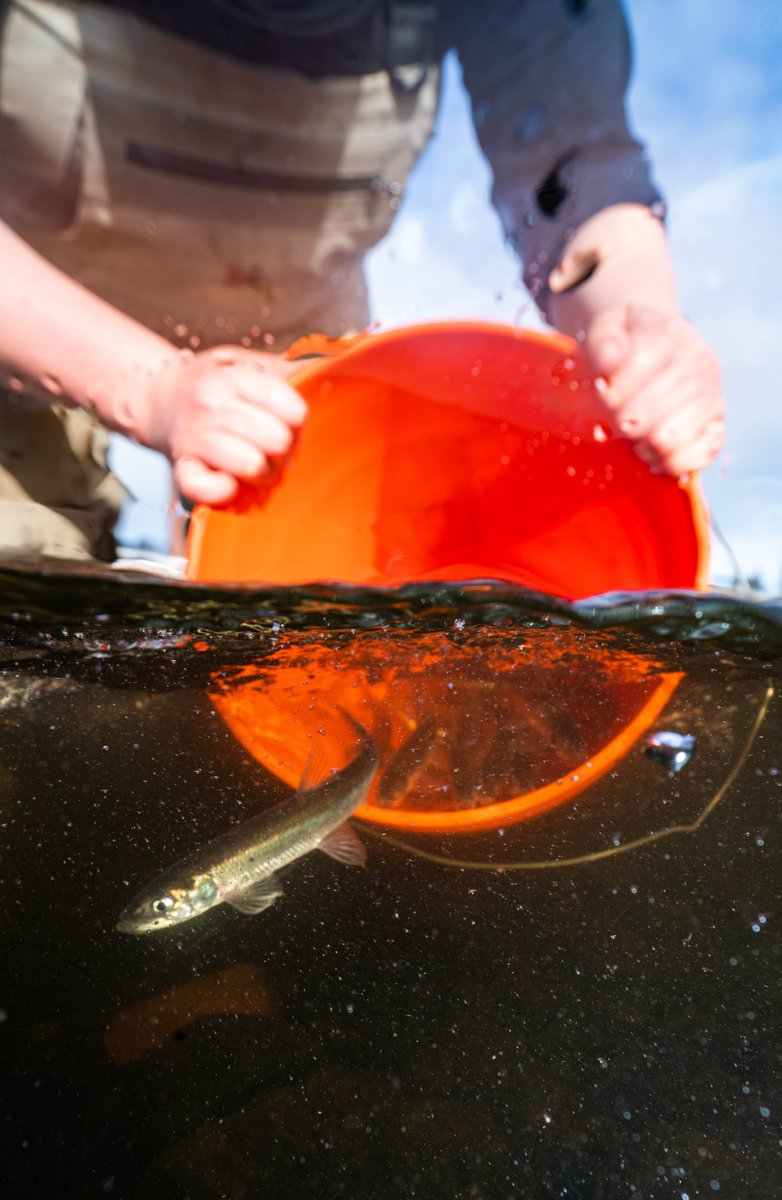
Congrats to Vaughn Holmes (and team) on his first thesis pub evaluating optimal eDNA detection of anadromous rainbow smelt. Great example of eDNA for monitoring a tough-to-encounter species. @MaineEPSCoR@wellsreserve https://t.co/HEIZF2cAws
I'm hiring a senior technician and lab manager! Are you interested in fish biology, working with a diverse team of students, postdocs, and staff, and collaborating with agencies and non-profits? Passion for field work? Please apply. Pls RT.
https://t.co/yIpOPEg9Ek
DM me with Qs
@SolomonRDavid@riverrat090@MDC_online@TJNear Bigger issue would be using only 1 locus for hybrid detection. For example, assuming fixed differences of LNG & SNG (best case scenario), 50% of F2s would assign as pure LNG or SNG and 50% of F1 x backcrosses would assign to the parental spp
Fantastic opportunities working with knowledgeable & caring mentors on transdisciplinary science. I've been lucky enough to spend the last 6 years working on these systems and can attest to how fascinating and beautiful they are. Please help spread the word🙏📢
PhD opps! @ReservoirWebs@EvoAppsLab and I are looking for 2 PhD students at UMaine!
Projects focused on Arctic charr in Maine (acoustic telemetry + diet), and their lake food webs. More details on the grant forthcoming.
Interested? https://t.co/8DZNZHvZYK
PC: @The_FinReaper
How to make #eDNA sequencing quantitative? Our paper, led by Ole Shelton, is now in preprint. https://t.co/SepG51hTBX Comments/thoughts welcome! @ZackGold15 @eandrusz @CetusGenes@sealnERD @eDNAcollab A ton of work, but we learned a LOT in the last couple years.
Interesting paper by Waples et al. - reviewing the implications of large effect loci for conservation.🐟
Still questions left to answer, but helps highlights some arguments for and against using these loci to define conservation units
https://t.co/805kYVug9T
New Naturalist Selections podcast with Dr. Zach Wood! We're talking about his @ASNAmNat paper with @EvoAppsLab demonstrating non-congruent predator-mediated trait responses in introduced mosquitofish. Different populations exhibit distinct plastic and evolved trait responses!
@FishConGen Thanks, Craig. I agree that SNPs would be much less of a headache, but think we'll be in this boat for a while with the increasing use of msat GT-seq panels. Thankfully NGS should make those efforts much easier/faster though!
Check out our new paper on Midwestern brook trout population genetics. 8,454 individuals, 188 wild populations, 26 hatchery strains, a glaring lack of hydrological structure, and a great example of why we should standardize markers
https://t.co/Ut03xUjHSd
@rebekahoomen @SJC_fishy @FisheriesRobert@louisechavarie@AllomeDNA We've had mixed success with citizen scientists using Q-tips on charrs. Nanodropped (😬) concentrations avg 45ng/ul (median = 31.8ng/ul). Although, I should note that we were using them for msats and my instructions were to swab as much mucus as possible.
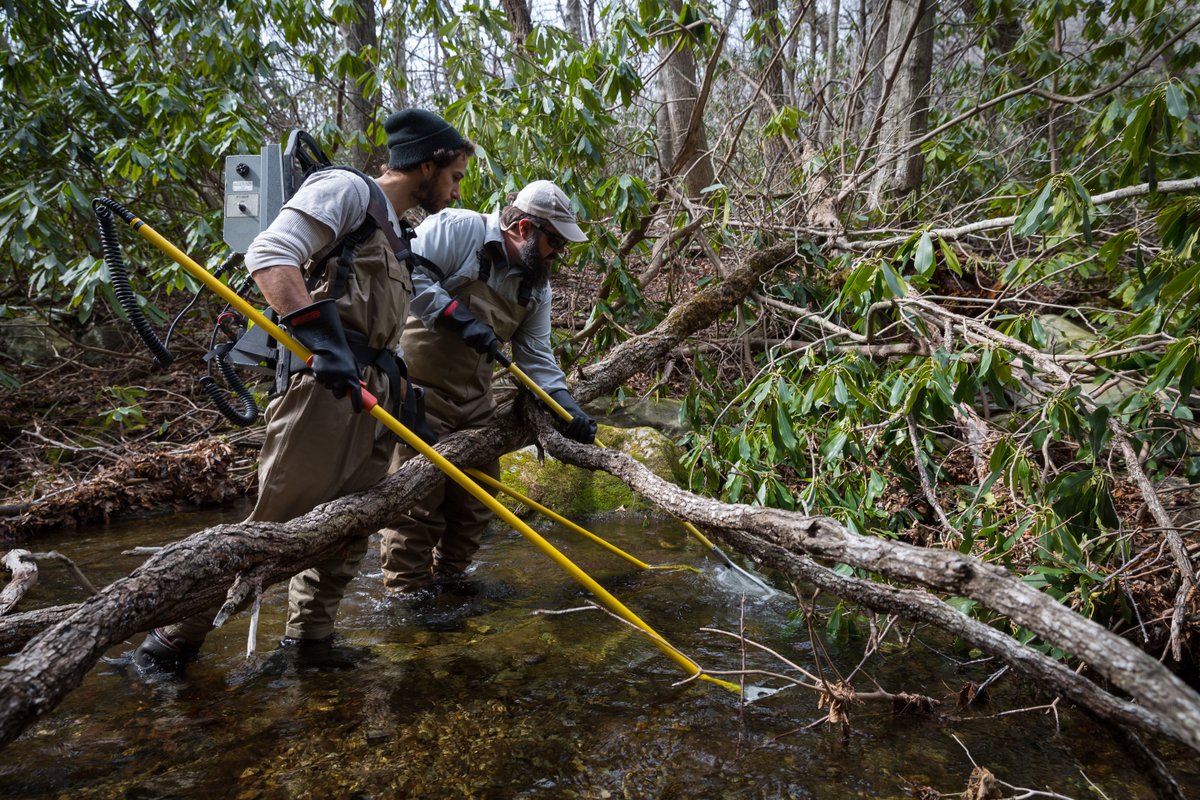
New Featured Paper from @USGS EESC, examining and characterizing broad-scale patterns of genetic diversity in wild Brook Trout. What are the implications for the management and conservation of this important yet imperiled fish? https://t.co/zm4Nr102OF 📸P. Yeomans and T. Harvey
Congratulations to Samantha Silverbrand on successfully defending her MS thesis using New England Aquarium (@NEAQ) displays as large mesocosms to evaluate eDNA metabarcoding for Gulf of Maine vertebrates and invertebrates
This is a great technical support position for someone excited to work with a team of >60 eDNA researchers tackling projects from rivers to the sea, from plankton to white sharks, and from pre-colonial times to the present.
I'm recruiting an MS student that is interested in using genetic tools to assess brook trout stocking practices in Wisconsin. Get in touch by Fri 10/29 if you're interested.
https://t.co/qILS3lmYiO
Genetic signatures of historic fisheries management. In a new paper on Michigan's inland cisco, we find genetic evidence of historic releases of cisco from the Great Lakes into inland lakes, which is corroborated by stocking records. #GreatLakes#Fisheries https://t.co/KIt9dPLPOy