Shell & Tube Heat Exchangers: Still a Reliable Choice for Industrial Heat Transfer
When it comes to industrial heat transfer, choosing the right exchanger depends on more than thermal efficiency.
https://t.co/RNhWnufesb
#HeatExchanger#ProcessEngineering#IndustrialEngineering
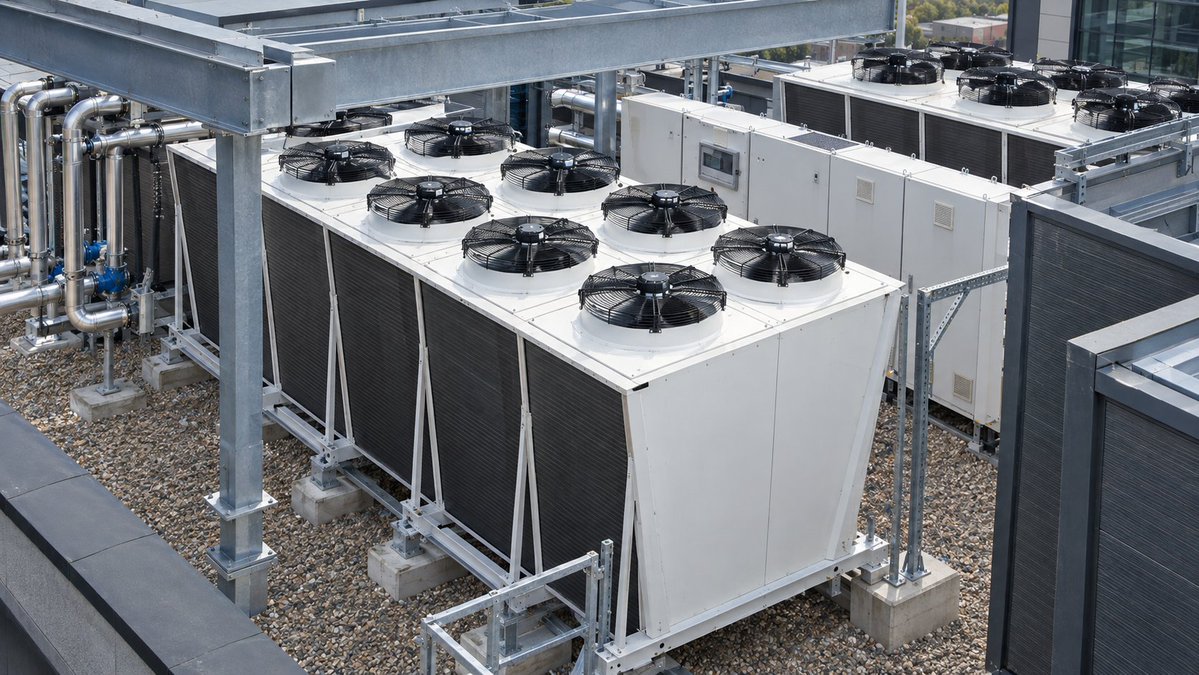
Chiller coil performance is essential for HVAC system efficiency. ❄️
Dirt buildup, scaling, corrosion, and restricted water flow can reduce heat transfer and increase energy consumption.
Regular inspection and proper maintenance help keep your chiller running efficiently.
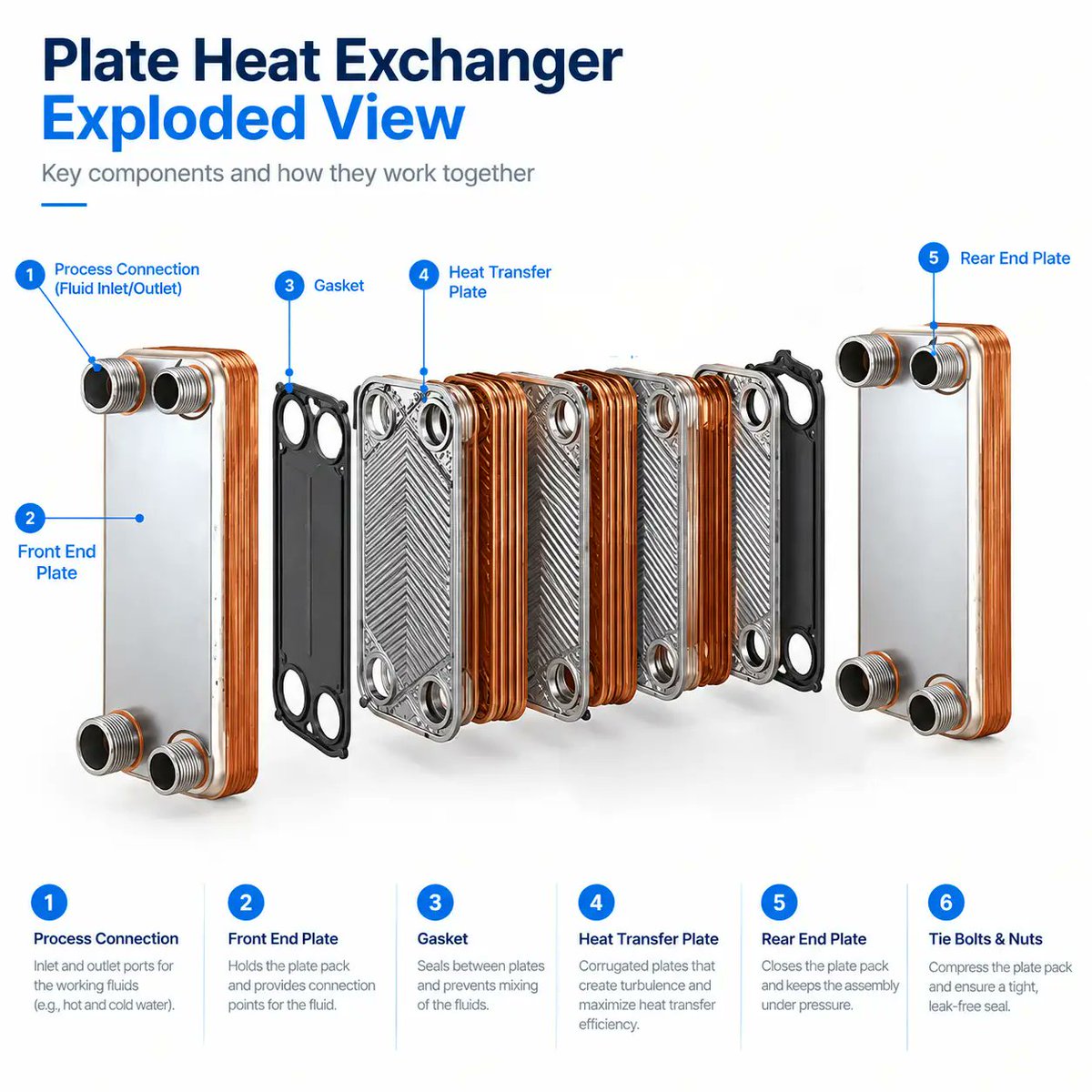
🔧 What’s inside a plate heat exchanger?
From corrugated heat transfer plates to gaskets and tie bolts, every component plays a key role in efficient heat transfer and reliable performance.
Understand the parts. Improve performance. ⚙️
#HeatExchanger#Engineering#Exerland
Why does operating pressure matter when selecting a heat exchanger?
Operating pressure directly affects the required plate/tube thickness, material selection, gasket compatibility, design standards, and ultimately the safety and service life of the heat exchanger.
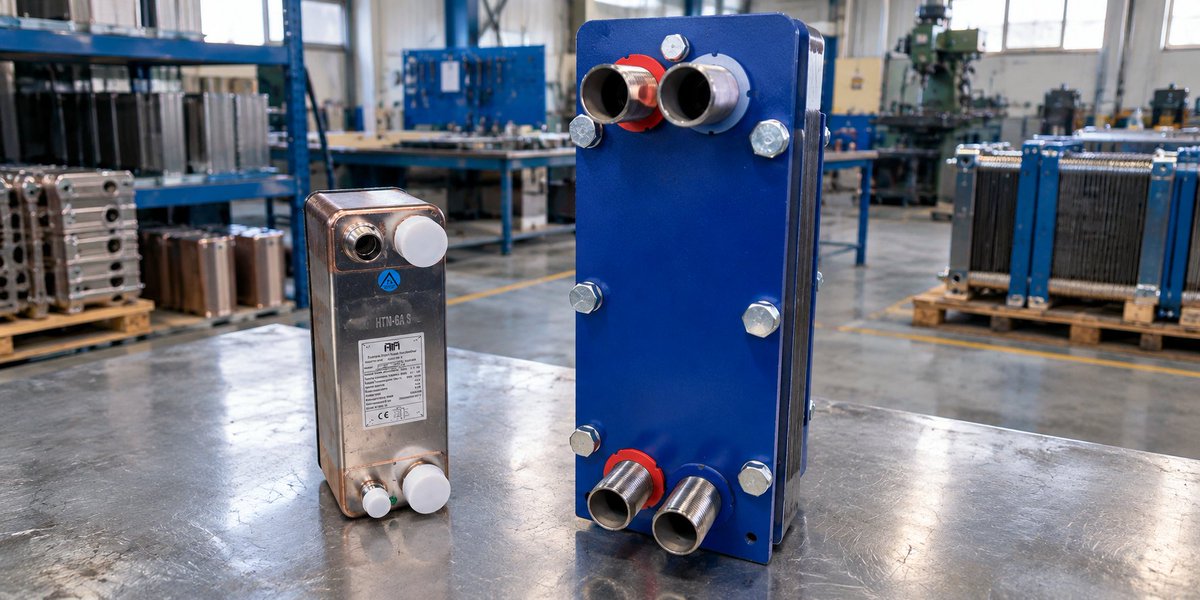
🔧 Gasketed Plate Heat Exchangers
Compact, efficient, and easy to maintain — gasketed plate heat exchangers are a practical choice for many industrial and HVAC applications.
Need a custom design?
📱 WhatsApp: +98 936 381 7581
One of the key design trade-offs in a Plate Heat Exchanger:Higher turbulence → better heat transfer
but also potentially:Higher turbulence → higher pressure drop
That is why PHE selection should balance:Heat Duty + ΔTlm + U + Area + Pressure Drop + Fouling
Not just surface area
A Plate Heat Exchanger is not simply more plates = more performance.
Real performance depends on:
• Flow rate
• Plate geometry
• Turbulence
• ΔT
• Fouling
• Pressure drop
• Fluid properties
• Material compatibility
Thermal design and hydraulic design have to be evaluated
The outlet temperature is getting higher every week.
Heat duty hasn't changed.
What would you check first?
Fouling? Flow rate? Cooling-water temperature?
@WECNuclear The real engineering challenge is turning heat into stable, controllable power. Closed Brayton cycles are a fascinating approach especially when paired with heat pipe technology. The operating data from this test bed should provide valuable insights into thermal efficiency.
@Gaurab Heat exchangers are far more than just components in a refinery they are the backbone of thermal management. Reliability material selection fouling control and maintainability can directly determine whether a process keeps running or stops. The real bottleneck is often not energy
یک اشتباه رایج در انتخاب چیلر صنعتی؟
انتخاب چیلر فقط بر اساس ظرفیت اسمی یا قیمت اولیه میتواند هزینههای عملیاتی را در بلندمدت افزایش دهد.
دما، شرایط محیطی، بار واقعی، مصرف انرژی و نوع کاربرد باید همزمان بررسی شوند.
انتخاب درست، از محاسبه درست شروع میشود.
#چیلر_صنعتی#چیلر
Plate vs. Shell & Tube Heat Exchanger 🔥
• Plate: Compact, high heat-transfer efficiency, easy to expand.
• Shell & Tube: Robust, high-pressure/high-temperature applications, easier to maintain.
In short: Plate = compact & efficient | Shell & Tube = robust & versatile