CEO @Solugen | MD/PhD building the modern chemical industry | Making molecules that power humanity | Takes on manufacturing, energy, molecules, and biology
We spent $15,000 on billboards targeting one person: the guy controlling all the chemical spend at a saltwater disposal company in Texas. We mapped his commute and bought every billboard between his house and the oil field. When we finally called, he said "I see your billboards everywhere." That landed us our first oil field contract. At the time our entire operation was a $10,000 reactor built from PVC pipes from Home Depot, turning corn sugar into industrial chemicals. People keep trying to throw it away. It still works. That leaking reactor started a multibillion-dollar company. @ycombinator visited our plant in Houston. The original PVC reactor is still on the floor next to the Bioforge.
A ballooning spider gets most of its lift from silk that is thinner than a wavelength of light.
It climbs to a high point, checks the wind and lets out 50 to 60 strands of silk, each about 200 nanometers thick and about 3 meters long. At that size, the drag mainly depends on how long a strand is. If the wind is wrong, the spider cuts the strands and spins new ones. An updraft of 0.1 to 0.5 m/s then carries off the 20 mg spider.
Since 2022 the FCC has required satellites in low orbit to come down within five years of the end of their mission. Engineers want satellites to use thin wire to do that. A charged wire drags against the charged gas in low orbit and slows the satellite until it falls back into the atmosphere. Like ballooning silk, the wire gets its pull mainly from its length, so it can be very thin and light. On paper, 5 km of aluminum wire weighing 55 grams could lower a 260 kg satellite by 100 km a year.
Spiders spin silk from a protein solution in water, at air temperature. Synthetic high-performance fibers need harsh solvents, high temperatures or extreme pressures. Companies have tried to make spider silk for over a decade. A 2026 review of artificial silk research says labs can now make silk proteins large enough, and under carefully tuned conditions their fibers match the strength of natural silkworm silk. Further progress, it says, will require copying the conditions inside a spider's or silkworm's silk gland.
Video: https://t.co/AG65I0aSUd
Uranium is similar to any other raw material industry. The mines are competitive when the refinery is nearby. Enrichment is the uranium refinery and it doesn’t exist in the US… so mining barely exists. Make enrichment exist and so will mining.
bon pour vous expliquer très concrètement ce qui se passe avec Riemann sans vous noyer dans le jargon, imaginez en gros que tous les nombres de l’univers sont fabriqués en assemblant des briques de base qu’on appelle les nombres premiers
quand on les regarde défiler on a l impression qu’ils tombent un peu au hasard comme des gouttes de pluie mais Riemann avait deviné qu’en les traduisant sur une carte spéciale (avec la fameuse fonction zêta) tous leurs points clés s m’alignent pile sur une seule ligne droite jusqu’à l’infini un peu comme les battements réguliers d un cœur qui empêchent l’univers de partir dans tous les sens
donc si la vérification finale confirme qu’on vient VRAIMENT de prouver cette règle cachée, on passe littéralement du brouillard total à la pleine lumière sur les fondations mêmes de la science
comme je vous l’ai expliqué dan sles prevendenys tweets ça débloque instantanément des centaines de découvertes qui attendaient ce feu vert en informatique, en cybersécurité et en physique quantique pour comprendre par comment les atomes se tiennent entre eux
et surtout ça montre qul’une IA capable de vérifier chaque pas logique sans jamais se tromper va bientôt pouvoir attaquer de la même manière les grands mystères de la médecine, de l’énergie et du vivant
plus rien ne sera jamais comme avant PUTAIN DE MERDE!!!!
We came in second at the MIT $100K business plan competition. Second place paid $10,000. I thought: "Either this works or I go be a doctor."
10 grand doesn't buy you a lot of equipment. A proper peroxide plant costs over $100 million. That constraint forced us to think creatively. Sean and I drove his Subaru to Home Depot and bought the biggest PVC pipe we could find.
We rented a corner of a warehouse behind Dallas Love Field that we could barely afford and ripped out the ceiling panels to fit the reactor. Three weeks later it was leaking, held together with zip ties, but making peroxide.
We had no room for inventory, so we had to sell everything it made immediately. Our first customers were float spa owners. Within a couple of months the reactor was cash flowing $10,000 a month.
Furukawa, a Japanese company, makes more than half of the world’s ultra-pure arsenic. Radar, 5G networks, defense electronics and AI data center optics use gallium arsenide chips. Arsenic makes up half the atoms in those.
BCG puts the whole upstream market at about $50M. Almost no company lists arsenic as a supply risk.
Furukawa’s top grade is 99.999995% pure, which leaves just 5 parts in 100 million for everything that isn’t arsenic. Furukawa reaches that purity by turning arsenic oxide into a chloride, distilling it and reducing it with hydrogen. I build chemical plants. None of those steps is exotic. The tricky part is the purity. Furukawa started research in 1961 and reached mass production in 1972. Their plant is in Iwaki, Fukushima.
The US hasn’t produced arsenic metal since 1985. From 2021 to 2024, China supplied 95% of its arsenic metal imports and Japan 3%. Peru produces more arsenic oxide than any other country. CSIS found that neither Peru nor Chile can purify it to chip grade.
Last year the US Geological Survey proposed taking arsenic off the US critical minerals list. The Pentagon objected on national security grounds.
Japan estimates the seafloor around Takuyo No. 5, a seamount 1,800 km southeast of Japan, holds 88 years of its cobalt demand.
Along its path, Earth has flown through debris from exploded stars, and some of those atoms are now in rock on the Pacific seafloor.
The rock is a crust of iron and manganese that grows about a millimeter every 400,000 years. In 2021, Anton Wallner’s team analyzed a piece of Pacific crust from JOGMEC, Japan’s state minerals agency, dredged in 1995, and found iron-60 and plutonium-244. Neither could have survived from Earth’s formation. Both fell in from space. The iron-60 came in two pulses, about 3 and 7 million years ago. The plutonium-244 came from a stellar event more than 100 million years ago.
Japan’s 2020 test brought up 649 kg of crust. The crust is bonded to the rock underneath it. Nobody has found a way to separate it at a profit.
We were taught that Earth orbits the Sun in a closed circle. In reality, Earth has never returned to the same point in space once in 4.5 billion years.
Right now, the Sun is carrying Earth and every planet around the center of the Milky Way at 230 km/s (828,000 km/h), more than 18,000 kilometers every 80 seconds.
Because the Solar System is tilted 60.2° to the galactic plane and bobs up and down through the galactic disc roughly every 30 million years, the planets trace open 3D corkscrew helices across deep space rather than flat loops.
The last time the Sun stood where it stands today, one Galactic Year (230 million years) ago, the very first dinosaurs were only beginning to appear on Earth. Since forming 4.6 billion years ago, our Sun has completed only 20 laps.
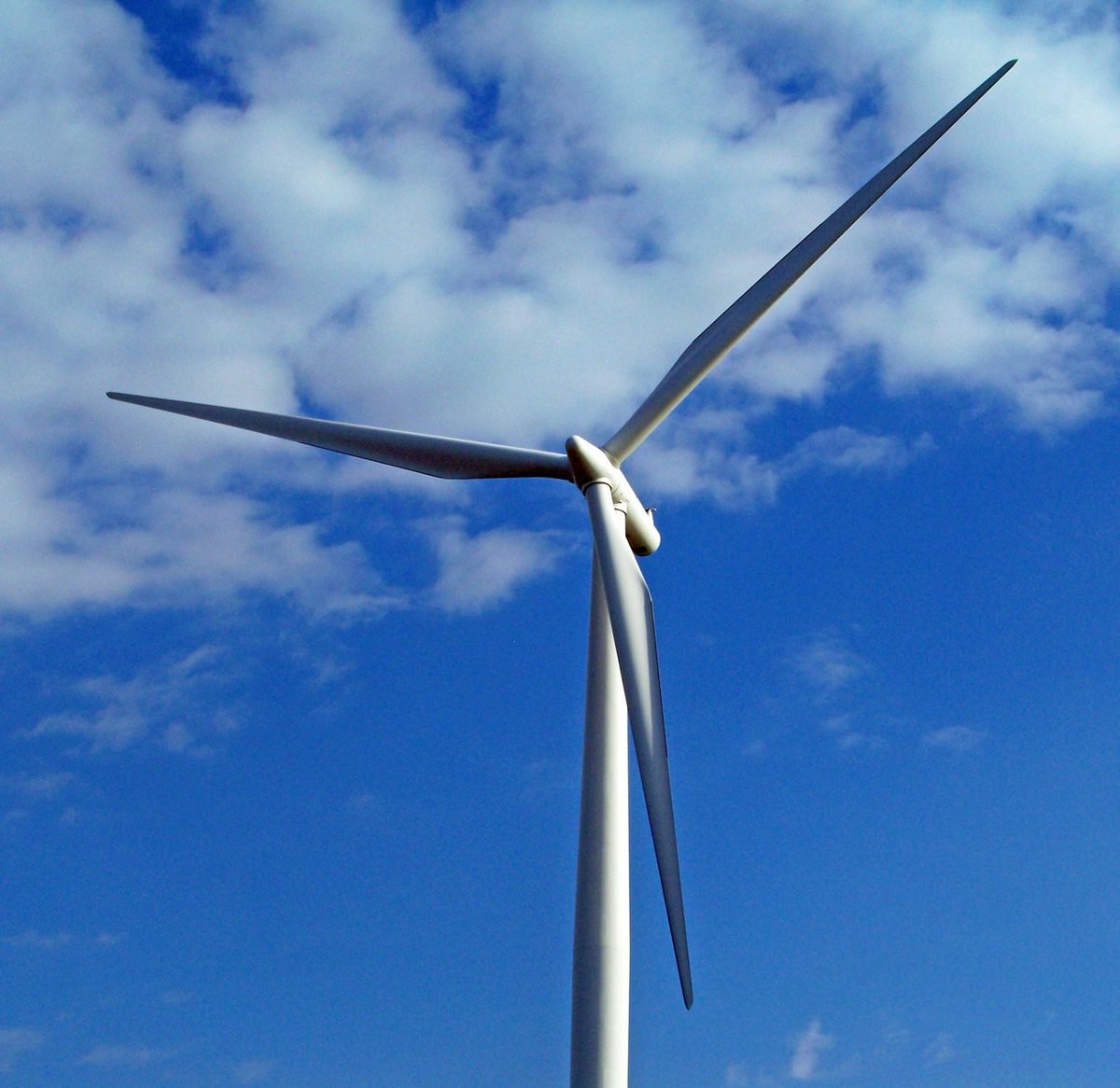
Some recent wind turbine models hold nearly a ton of rare earths, worth ~$100,000, Paladin EnviroTech estimates. Turbines with rare-earth magnets are starting to come down. Recyclers mainly take the copper. The rare earths generally end up in slag.
We build chemical plants. Rare earths are harder to separate. A turbine magnet is about 30% rare earths, alloyed with iron and boron. In a steel furnace, neodymium binds oxygen far more strongly than iron does, so it oxidizes and ends up in the slag. Separating the rare earths to high purity takes hundreds of solvent-extraction stages, because neighboring rare earths differ so little chemically. The copper comes to several tons per turbine at roughly $14,500 a ton.
MidAmerican Energy has already replaced nearly 1,500 of its 3,700 wind turbines. Only a fraction of the older models being replaced have rare-earth magnets.
Taking down one turbine costs around $90,000 to $100,000. On a turbine with nearly a ton of rare earths, those would roughly cover it.
Paladin works with Critical Materials Recycling in Boone, Iowa, which is commercializing a leaching process developed at Ames National Laboratory. Luke Wray of Paladin has lined up about 500 turbines across the US, and Paladin expects turbine magnets to make up about 40% of the magnet scrap it processes next year.
https://t.co/U147O7VjBy
A million people on the full-dose Wegovy pill need about 9.1 tonnes of semaglutide a year. A million people on the weekly shot need about 0.125 tonnes. Novo sold about $811M of Wegovy pills in Q3, up 68% from Q2.
A patient who switches from the shot to the full-dose pill goes from 2.4 mg of purified semaglutide a week to 175 mg. Each daily pill contains 25 mg because only 1% to 2% of the semaglutide in it reaches the blood.
On bivalirudin, a shorter blood-thinner peptide, Bachem and ChromaCon used a twin-column process to cut the material needed per kilogram of purified peptide from about 5,200 kg to 1,400 kg, and raised yield from 57% to 62%. That is about 4 times better. The pill takes about 73 times more semaglutide per patient.
A million people on the pill would need about half of all the GLP-1 peptide the world will use this year.
SubCom is the only American company that both makes and lays undersea internet cables. Inside, the glass fibers sit in a plastic tube filled with gel. Twenty-four steel wires go around the tube, and a copper sheath, seam-welded along the full length, goes around the steel. The copper carries up to 15,000 volts out to the repeaters that boost the light every 50 to 90 km. Polyethylene goes over the copper.
Near shore, anchors and trawlers drag the seabed, so SubCom adds galvanized steel armor wires covered in tar and two layers of nylon yarn soaked in tar. Galvanized steel gives off hydrogen when seawater reaches it, and hydrogen dims optical fiber. The seam-welded copper sheath keeps it out.
The company that opened SubCom’s Newington plant in 1953, Simplex Wire & Cable, helped build TAT-1, the first transatlantic telephone cable, in 1956. TAT-1 carried 35 calls at once. Its armor was finished with two layers of jute soaked in tar.
Seventy years later the fibers carry data for Google, Meta, Amazon and Microsoft. The outer layer is yarn and tar. Nylon replaced the jute.
US voters backed limits on data center development in 40 of 41 local ballot measures on Nov. 3. Two days later, OpenAI pledged to pay the full cost of power at future campuses it owns and operates.
This won't stop the AI buildout, but it makes turbines and transformers even scarcer for everyone who needs power, from utilities to chemical plants.
More data centers now make their own electricity with gas turbines, transformers, and switchgear. GE Vernova is selling turbine slots for 2032 delivery. Anthropic agreed in September to pay $3.4B to take over a Texas equipment supplier's two-year-old order for 1.7 GW of Caterpillar gas generators. In August, Musk said SpaceX will cast its own turbine blades and vanes, because that is the limiting factor for gas turbine production. US generator step-up transformers had lead times above 160 weeks this year. Power transformer prices are up 77% since 2019.
Musk also said SpaceX and Tesla are each building factories that can make 100 GW of solar panels a year, and that natural gas will still be needed for several years.
https://t.co/JLsYBwC1Gq
Since the 1970s, progress happened in the world of bits and stalled in the world of atoms. AI needs atoms. Like electric light and cars before it, it needs power plants, factories and supply chains built around it. Can America still build that fast?
We've done it before. In 1941 the US made almost no synthetic rubber. By 1945 it made more than 800,000 tons. The government paid to build 16 butadiene plants, 5 styrene plants and 15 rubber plants at the same time. Tire, oil and chemical companies ran them and shared their patents. The War Production Board handed steel, copper and aluminum down the chain to the subcontractors.
Today the money comes from four companies that plan more than $700B of capex this year. In 2015 the US spent 14 times as much building chemical plants as data centers. Now it spends more than twice as much on data centers, and chemical plant spending has barely moved.
I build chemical plants. If America wants to build that fast again, the whole supply chain has to work together.