🎉 Steplab Summer Reads #5
Win "Ausubel’s Meaningful Learning in Action" by Sarah Cottingham!
Our Research Lead & ex-teacher shares how meaningful learning builds deep, lasting knowledge.
✅ Follow
❤️ Like
🔁 Share
🏆 Winner Fri!
Every word of this post is beautiful & true. It is all too easy to lower our expectations of what children can do. We must guard against this by being open to challenge about whether we expect enough, not just with respect to curriculum, but also with behaviour & character.
🧵 Here are 10 facts that proponents of the private school (PS)-VAT proposal don't want you to hear:
1. PSs provide over £1.4 billion of fee assistance per year, with 1 in 3 families receiving help
2. Around 8000 students at PSs have an EHCP + 112,000 pupils receive SEN support
The next time someone argues that private schools are only the preserve of the rich, have no benefit to wider society, and are keeping state education down, a reminder of the above wouldn't go amiss.
🧵🔚
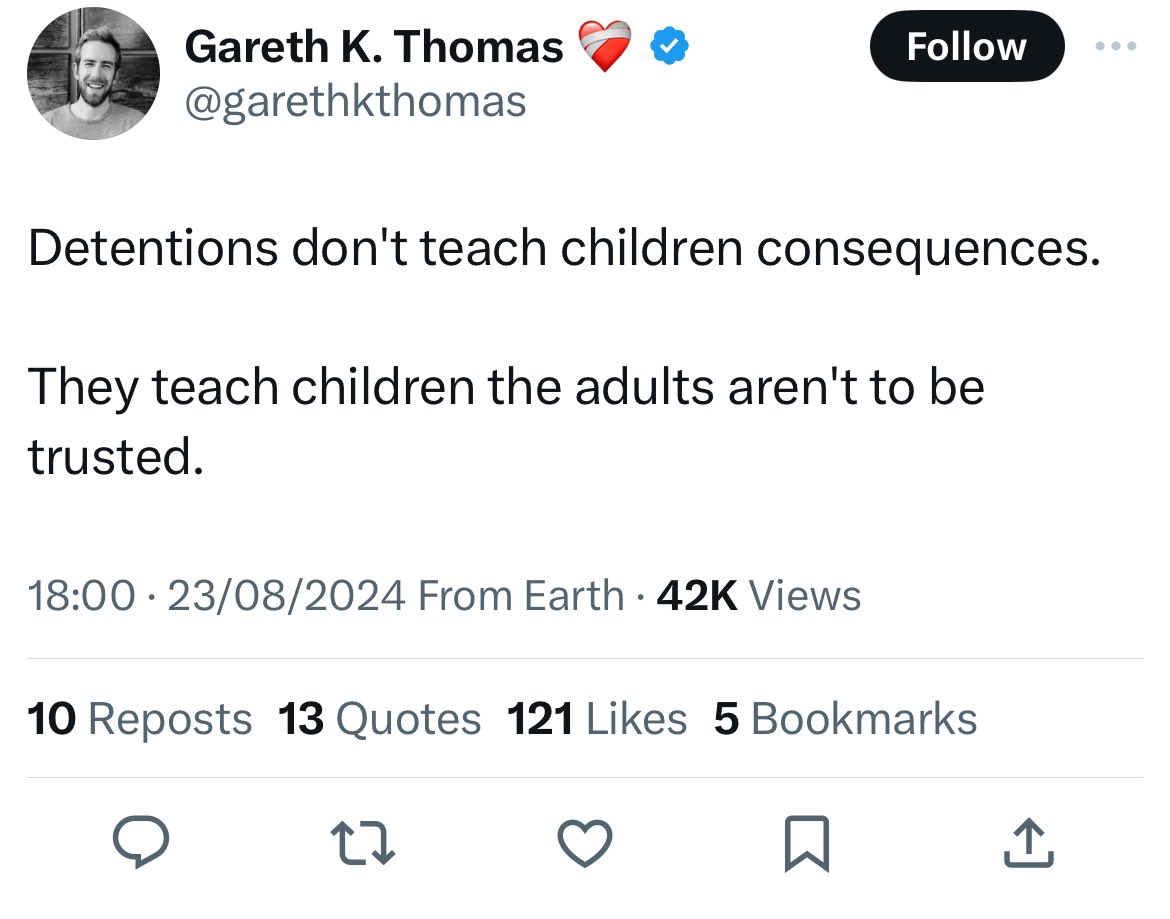
Telling a child that their actions have consequences, and then ensuring those consequences happen, is *exactly* how you teach someone to trust you. Because you meant what you said.
Never holding a child accountable for their actions, never challenging, never penalising them, is how you teach them that you, and other people are inconsequential, and they are untouchable. Which is a terrible lesson to teach, and one that bears bitter fruit in adulthood.
'Rosenberg acknowledged many of these children were challenging to teach, and said teachers must have the freedom to send a child out of the classroom when they were misbehaving.'
Here we have the Removal Paradox: students can be removed from the classroom if their behaviour becomes unbearable, but they *must not be sent anywhere*.
I thought I would fact check this bizarre article from this weekend's Observer (not, as people keep saying, the @guardian, which normally is much better for quality education coverage). It's almost easier to find out what is true, than to deal with all the inaccuracies. 🧵
A 🧵 on unintended consequences of mental health interventions, and why some school and workplace schemes may be contributing to the problem they were designed to solve. 1/10
This needs to be addressed @AnnaFazack1. I’ve worked in tough schools and classes for well over a decade. The claim quoted below in your article is completely false, and is a serious slur on my professional reputation. Please retract and correct this. This was not hard to check. @GuardianEdu@guardian@ObserverUK https://t.co/rduuZZAOT9
SUSPENSIONS. Quick reminder:
1. Schools with challenging intakes need more disciplinary responses than ones without
2. Suspensions are one way to help reduce exclusions
3. Schools that need to suspend, need to suspend
4. If they don’t, the environment gets much worse for children
5. Not all behaviour issues can be resolved by a kind word
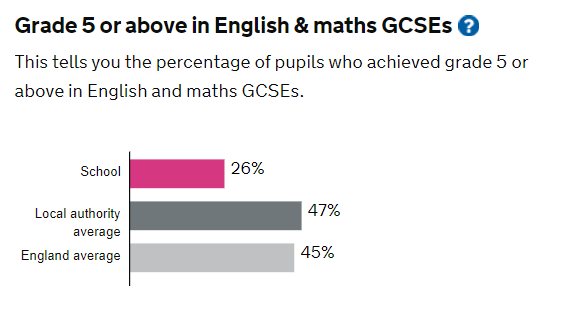
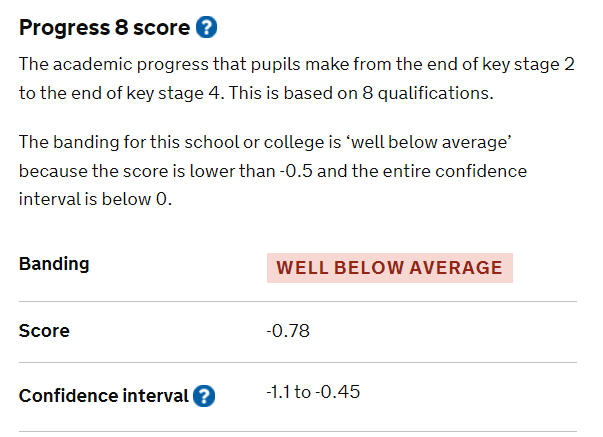
6. Criticising a school for above average rates of exclusion, demonstrates a misunderstanding of what ‘averages’ means
7. Don’t shame schools you couldn’t run
On November 7th, 1920, in strictest secrecy, four unidentified British bodies were exhumed from temporary battlefield cemeteries at Ypres, Arras, the Asine and the Somme.
None of the soldiers who did the digging were told why.
The bodies were taken by field ambulance to GHQ at St-Pol-Sur-Ter Noise. Once there, the bodies were draped with the union flag.
Sentries were posted and Brigadier-General Wyatt and a Colonel Gell selected one body at random. The other three were reburied.
A French Honour Guard was selected and stood by the coffin overnight of the chosen soldier overnight.
On the morning of the 8th November, a specially designed coffin made of oak from the grounds of Hampton Court arrived and the Unknown Warrior was placed inside.
On top was placed a crusaders sword and a shield on which was inscribed:
"A British Warrior who fell in the GREAT WAR 1914-1918 for King and Country".
On the 9th of November, the Unknown Warrior was taken by horse-drawn carriage through Guards of Honour and the sound of tolling bells and bugle calls to the quayside.
There, he was saluted by Marechal Foche and loaded onto HMS Vernon bound for Dover. The coffin stood on the deck covered in wreaths, surrounded by the French Honour Guard.
Upon arrival at Dover, the Unknown Warrior was met with a nineteen gun salute - something that was normally only reserved for Field Marshals.
A special train had been arranged and he was then conveyed to Victoria Station, London.
He remained there overnight, and, on the morning of the 11th of November, he was finally taken to Westminster Abbey.
The idea of the unknown warrior was thought of by a Padre called David Railton who had served on the front line during the Great War the union flag he had used as an altar cloth whilst at the front, was the one that had been draped over the coffin.
It was his intention that all of the relatives of the 517,773 combatants whose bodies had not been identified could believe that the Unknown Warrior could very well be their lost husband, father, brother or son...
THIS is the reason we wear poppies.
We do not glorify war.
We remember - with humility - the great and the ultimate sacrifices that were made, not just in this war, but in every war and conflict where our service personnel have fought - to ensure the liberty and freedoms that we now take for granted.
Every year, on the 11th of November, we remember the Unknown Warrior.
At the going down of the sun, and in the morning, we will remember them.