Associate Professor at @HopkinsMedicine; PhD;
Science of psychedelics and other altered states of consciousness
@TheYadenLab
@JHPsychedelics
@psychedelethics
Is the psychedelic hype bubble about to burst?
Might that be best for the field?
In a new @JAMAPsych article w/ me, @jpotash1, & R. Griffiths, we argue for moving beyond overly negative AND positive extremes to embrace the actual evidence
@JHPsychedelics
https://t.co/LnkkUMO0tj
@TetsunoHikari Very glad to hear you found it of some interest! Yes questions of consciousness seem connected to the topic of altered states but it is difficult for me to see how, exactly, they relate to one another. I tend to write about how they may not be as related as they first seem!
Excellent news! Nature is expanding Registered Reports to all the fields in which they publish! A great result by all those proposing this strong solution to publication bias and selective reporting (and getting expert feedback before data collection)! https://t.co/lVrQcNDVJT
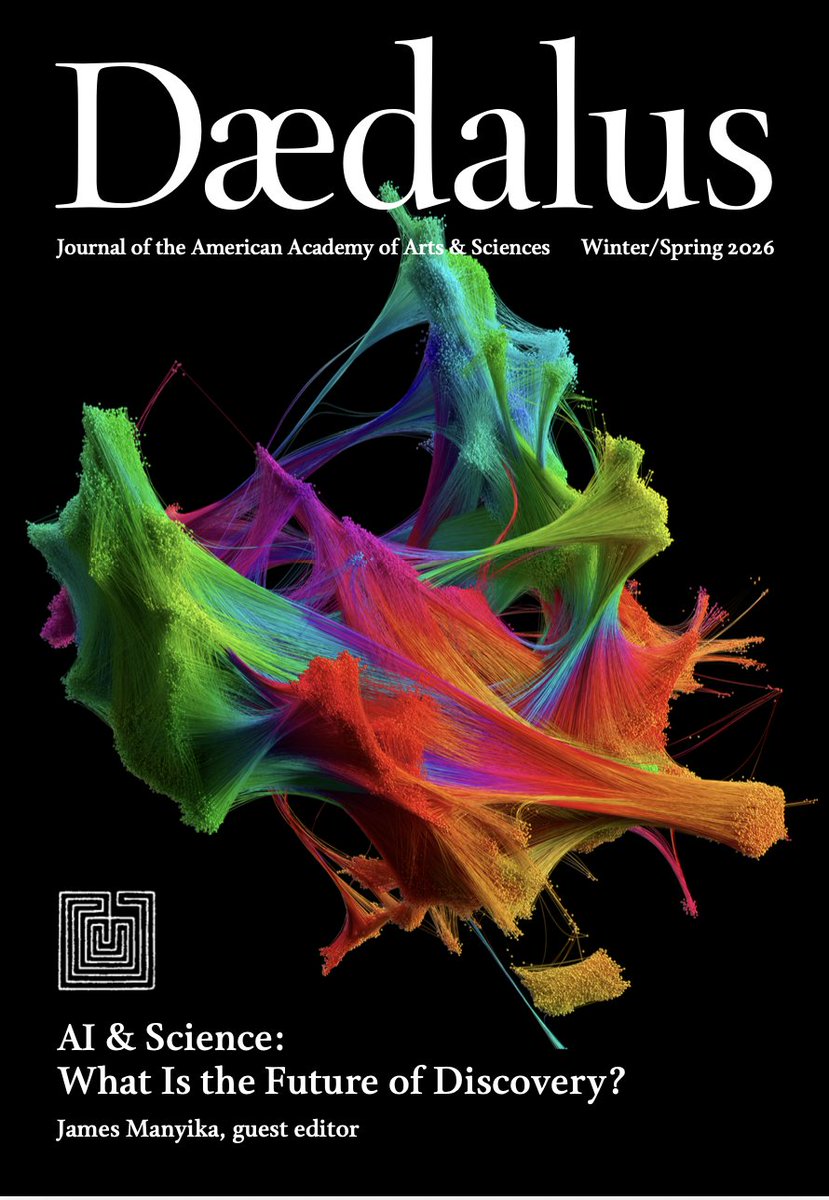
The new issue of Daedalus, the open-access Journal of the American Academy of Arts and Sciences, is chock full of good material on AI. w/@demishassabis@ylecun@alondra@pushmeet and so many others
I wrote about the future of AI-facilitated medicine
https://t.co/UMPKLcpuq5
Cherry picking seems to be a common denominator across both sciences and humanities - selective reporting of results in sciences, using quotes that support one’s point but are not representative of the text as a whole in the humanities
Psychologists p-hack, report only significant effects, and pretend post-hoc hypotheses were in their minds from the start. What are some Questionable Research Practices in philosophy?
Check out this thoughtful interview with Dr. Bit Yaden and @Josh__Hardman at @Psyched_Alpha, discussing a collaborative educational project between Johns Hopkins, NYU, Penn, and Yale. The project focuses on training resident psychiatrists on the most important aspects of prescribing psychedelic medicines, including safety, equity and inclusion, and understanding the unique profiles and clinical uses of various psychedelic substances. https://t.co/EZ3LoO5Gv8
This is maybe a weird way to put it, but I always thought it was kind of a problem that thought experiments rarely seem to have positive controls. Like any other method, you want to know that it gives you the right answer when it should in a context where you know what it is.
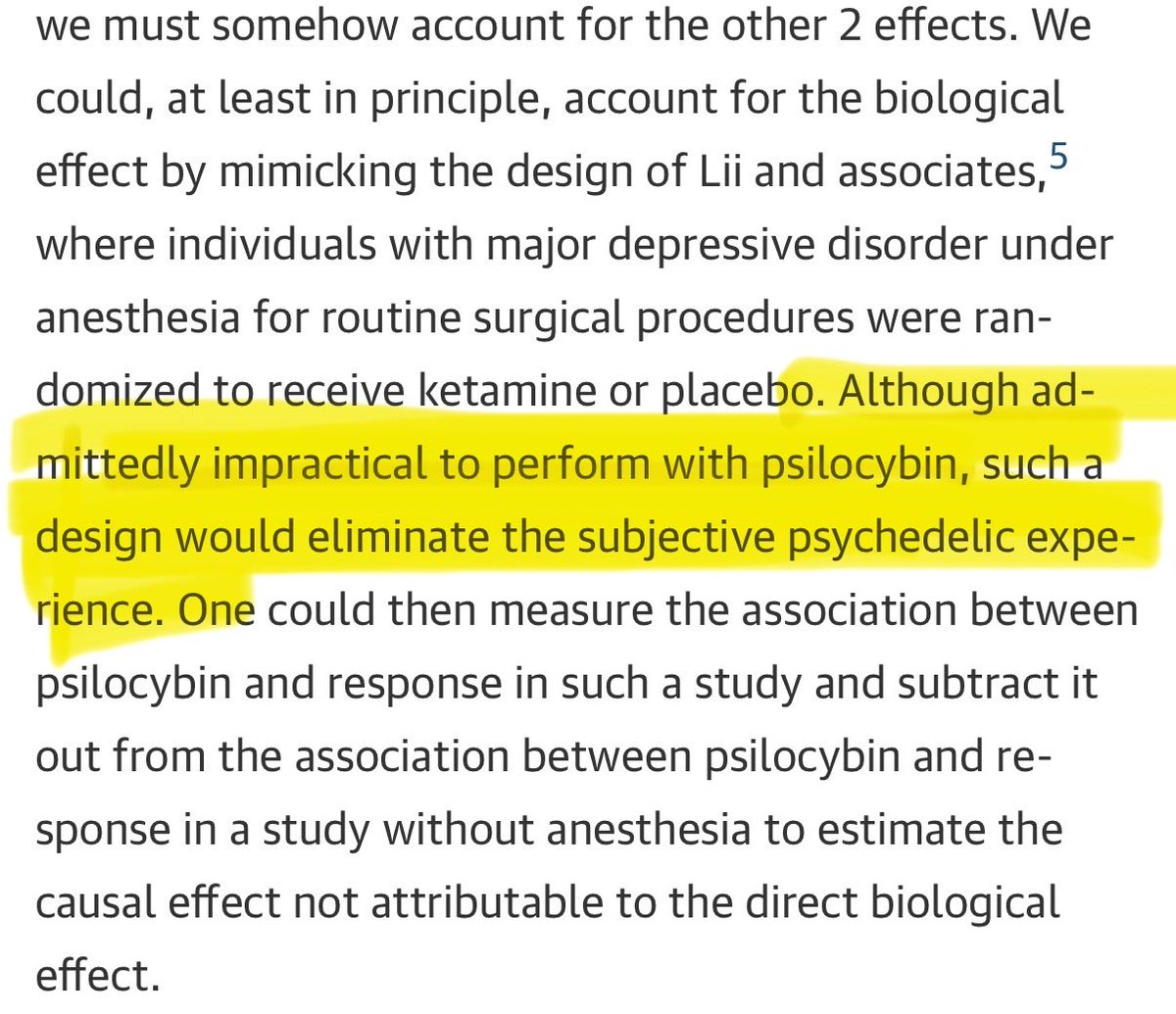
@MichaelHaichin Anesthesia on its own is a little more complicated than we thought - and even with out psilocybin isn’t devoid of experience. Up to 90% of people report experiences under anesthesia *if you ask*, so the suppression of experience idea is a bit more nuanced… paper soon, but also:
maybe we could anesthetize people on psilocybin…Impractical? 😂 that’s my favorite type of study
Though I can already tell you anesthesia does not eliminate subjective experience
A little perspective on psychedelic exceptionalism! I’m convinced that altered states are worth visiting, but not sure which (if any) should be privileged- sometimes the feeling of insight is just the feeling of insight…
I appreciate the congressman said research on psychedelics is important as we need to learn more about risks/benefits/therapeutic potential. & I don't doubt he's heard stories of great benefits.
*BUT*, we now have enough data to know "magic cure" is not at all evidence-based...
🫧 Bubble bubble, will hype cause trouble?
"Psychedelics promise to be that magic cure, that fixes not only mental health, PTSD, but alcoholism, drug addiction, and a host of other things; maybe Alzheimer's as well."
https://t.co/uQVC0VpJOi
I can't think of a single indication for which the word "cure" is warranted for a psychedelic, based on the available data.
Yes, some benefit tremendously-but some just a little, others not at all. Some report persisting difficulties... Just like most other psych treatments.
I've written about dangers of hype & statements (extreme positive AND negative) out of keeping with the available evidence: https://t.co/ivLF3tYLTX
One is people try it without awareness of risks. Another is participant/patient disappointment when expectations don't match reality
Is the psychedelic hype bubble about to burst?
Might that be best for the field?
In a new @JAMAPsych article w/ me, @jpotash1, & R. Griffiths, we argue for moving beyond overly negative AND positive extremes to embrace the actual evidence
@JHPsychedelics
https://t.co/LnkkUMO0tj
New interactive simulation in my online textbook illustrating publication bias in meta-analyses, and some techniques to model bias-adjusted effect sizes. None of these work perfectly. We need an unbiased literature to draw valid inferences. https://t.co/Tr1mqiBJT1