A Westchester non-profit, FCWC envisions a county where an environmental ethic defines and shapes all public and private decisions affecting natural resources.
That “pollinator seed mix” might be planting a problem.
A University of Washington study grew out 19 wildflower seed packets and found something wild: Every single packet contained invasive species. Not one or two bad mixes. All 19.
Some had 3 invasive species. Some had 13. Eight contained plants considered noxious weeds in at least one state. A third of the packets didn’t list contents at all. And only 5 accurately listed what was inside.
The most common species? Bachelor’s button. Pretty? Sure. But absolutely harmful. It can spread into native grasslands and crowd out the plants local insects actually evolved to use.
That’s the trap.
People buy “wildflower” mixes because they want to help bees and butterflies. But vague seed packets can introduce aggressive nonnative plants that make the problem worse.
Better move: Buy region-specific native seed mixes. Use local native plant nurseries. Check with your state native plant society. Look for packets that list every species by name.
In EU glyphosate sales rose more than 44% between 2015 and 2024
How many millions of Bees have they wiped out
and then they pretend they want to restore nature Action speaks louder than words https://t.co/hhf5ZILsrH
What does crossing 1.5°C really mean for our planet, our economies, and our lives? And why is it still possible to change course?
Watch this quick explainer — then dive deeper into the data and pathways forward. Read the full breakdown: https://t.co/5oCZmpTEju #WRIExplains
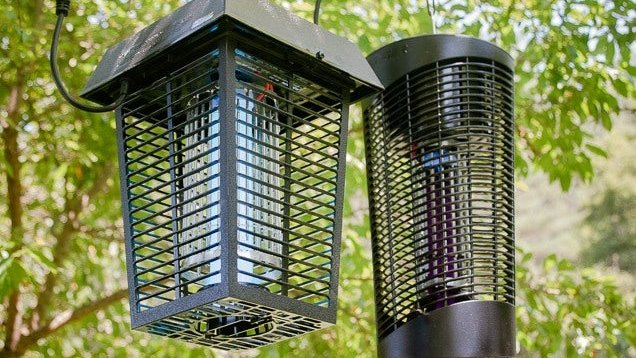
If you have a bug zapper up, it's time to take that shit down.
A landmark University of Delaware study (Frick and Tallamy, 1996) counted nearly 14,000 insects killed by residential bug zappers over a single summer.
Mosquitoes were 31 of them. A mere 0.22%.
The other 99.78% were moths, beetles, midges, fireflies, and the night-shift pollinators your yard depends on.
Mosquitoes don't navigate by light. They find you by your carbon dioxide, body heat, and skin chemistry. Your bug zapper is invisible to them and lethal to almost everything else.
Harvard Medical School's Zika page specifically warns against bug zappers because they may increase mosquito populations by killing the predators that eat them.
What actually works: eliminate standing water within 100 feet of where you spend time outside.
Bug zappers are 1970s technology built on a 1970s misunderstanding of mosquitoes. It's time to take it down.
Running a gas leaf blower for one hour pollutes as much as driving a car 1,100 miles.
That figure is from the California Air Resources Board, comparing one hour of a commercial gas leaf blower to driving a 2017 Toyota Camry from Los Angeles to Denver.
The reason is the two-stroke engine: it burns oil and fuel together and has no real emissions controls, so it throws out enormous amounts of smog-forming hydrocarbons and ultrafine particulates, the kind that lodge deep in human lungs. A 2011 Edmunds test found a two-stroke blower emitted nearly 300 times the hydrocarbons of a Ford F-150 pickup.
And that's just the air pollution aspect of it. The blower also strips the yard of everything a healthy ecosystem needs: it blasts away the leaf litter where moths, fireflies, and native bees overwinter, scatters the topsoil, and kills or displaces the insects living in it.
A rake does the same job with zero emissions, zero noise pollution, and none of the collateral damage. Or you leave the leaves where they fall, which is better for your local ecosystem anyway.
Textile waste is a global issue connecting exporting and importing countries alike. Join our cross-regional panellists to discuss the realities of textile waste trade, key media angles, and why stronger international controls are urgently needed.
https://t.co/nB3xIDF50r
My Op-Ed on the Packaging Reduction & Recycling Infrastructure Act in the Times Union w/ @DeborahJGlick.
The benefits of PRRIA are clear: lower costs for taxpayers, reduce pollution and eliminate toxic chemicals in packaging.
The time to pass it is now.
https://t.co/Y5VQOkFqjC
.@HaubLawatPace welcomed the 2026 Summer D.C. Externship cohort for a multi-day bootcamp preparing students for environmental law & policy practice in Washington, D.C. Thank you to the faculty, alumni, practitioners, and students who helped prepare this year’s externs!
NEWS: The University of Maryland Center for Global Sustainability just published its first Greenhouse Gas Inventory and Analysis — tracking U.S. emissions across every major sector from 1990 to 2024. ⬇️
Chances are you know the climate is changing, and that means trouble.
From rising emissions to melting permafrost and economic risks, these 7 graphs break down the climate crisis today.
Ahead of #WorldEnvironmentDay, explore UNEP data and why the world must act #NowForClimate: https://t.co/biQyCggjAC
This is 𝘊𝘰𝘳𝘺𝘯𝘰𝘳𝘩𝘪𝘯𝘶𝘴 𝘵𝘰𝘸𝘯𝘴𝘦𝘯𝘥𝘪𝘪. With ears like that, he can hear your thoughts. So please think 𝘐 𝘭𝘰𝘷𝘦 𝘣𝘢𝘵𝘴 whenever possible 🥰
🦇 Townsend's big-eared bat
📸 Don Endicott/ iNaturalist
“Scaling action for nature – how the circular economy can help deliver the Global Biodiversity Framework”
♻️ Discover how circular approaches can reduce pressures on biodiversity across sectors
📅 May 14
⏰ 8:00 (EDT)
🔗 https://t.co/vjQK1NOaod
More: https://t.co/tKuXqcMtMB
🍃Trees can make it feel up to 14 degrees cooler. Yet analysis shows many cities are not using them to full potential.
As city leaders are searching for solutions that are effective, affordable and scalable, trees can provide just that👉 https://t.co/KzZwhQrhWZ
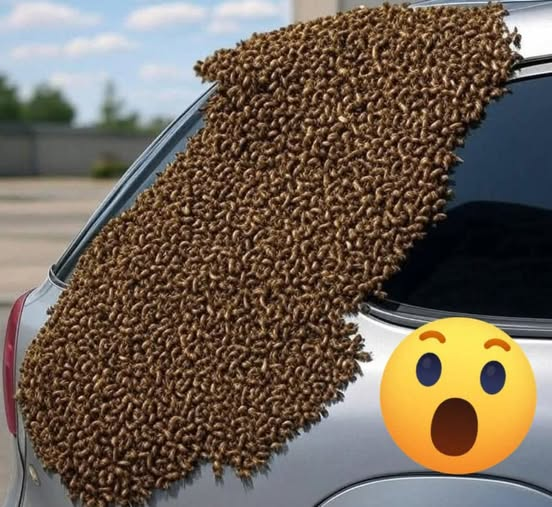
Quand tu vois des abeilles comme ça, n’aie pas peur ! N’appelle pas les pompiers ni la protection civile, ne les déplace pas, ne les empoisonne pas, ne les tue pas !
Ce sont des abeilles en déplacement. Elles ne vont pas te faire de mal. Elles ne s’arrêtent que pendant environ 24 heures. Ne les dérange pas et évite de t’en approcher.
Si tu veux les aider, tu peux placer une assiette plate ou un récipient peu profond avec une fine couche d’eau sucrée. Observe-les se nourrir, reprendre de l’énergie, puis repartir sur leur chemin.
Nous devons tous protéger les essaims voyageurs. Les abeilles sont notre assurance de survie.
Si les abeilles meurent, nous mourrons ensuite. Sans abeilles, aucun être humain ne restera sur la surface de la Terre.
S’il te plaît, fais attention et ne tue pas les abeilles !
Crédit : propriétaire original
#fblifestyle
In Germany, 4 million people use plug-in solar to reduce their utility bills and carbon emissions. You can buy them at IKEA.
We should be able to do the same in NY.
https://t.co/T0ylABQi0z
We are likely the last generation to see Fireflies..
Fireflies are becoming harder to find in many places, as the conditions they depend on continue to disappear. Wet habitats are drained or developed, pesticide use reduces their larvae, and artificial light interferes with the signals they use to find each other.
In North America, multiple species are already considered at risk. The decline is gradual, but visible, turning what was once a common summer presence into something less certain year by year.
Bamboo can grow up to 91 cm (about 35 inches) in a single day, making certain species the fastest-growing plants on Earth according to Guinness World Records. Hemp yields up to 250% more fiber than cotton while requiring significantly less water—often 50–90% less, depending on conditions and studies (e.g., around 2,000–5,000 liters per kg of fiber for hemp vs. 10,000+ liters for cotton).
Both plants have deep historical roots, cultivated for thousands of years across civilizations: hemp dates back over 10,000 years (with evidence of fiber use as far as 50,000 years ago), serving as a source of textiles, paper, rope, food, and medicine in ancient China, India, Europe, and beyond. Bamboo has similarly ancient uses in Asia for construction, tools, and daily life.
Today, bamboo is increasingly used in construction as a sustainable alternative to steel and concrete in applications like reinforced composites, scaffolding, beams, and low-rise structures—thanks to its high strength-to-weight ratio and renewability (though it doesn't fully replace them in heavy-duty or large-scale projects due to variability and engineering limits).
Hemp's versatility shines in modern innovations: it produces bioplastics (stronger and biodegradable alternatives), biofuels (ethanol or biodiesel from stalks/seeds), paper (higher yield than trees with less environmental impact), insulation (hempcrete for eco-friendly buildings), and even battery components (hemp-derived carbon for supercapacitors that rival graphene in performance but at lower cost).
These two ancient, rapidly renewable plants offer powerful tools for reducing reliance on resource-intensive industries that harm the planet—yet their full potential remains under-discussed and under-scaled compared to conventional materials. With growing investment and innovation, they could play a much larger role in sustainable futures.
One mature tree absorbs ~20–48 lbs of CO₂ per year while giving us clean oxygen.
Scale it: Planting 1 trillion more trees could eventually store roughly 750 gigatonnes of CO₂. That’s equivalent to about 20 years of current global fossil fuel CO₂ emissions — a massive one-time drawdown of legacy carbon while forests regrow.
Trees also cool cities, rebuild soil, boost wildlife and give great hugs! We don’t need to wait for governments. Plant Trees & protect what already exists.