Parents, educators, researchers, and others concerned about the promotion of Facilitated Communication, a thoroughly discredited but persistent technique.
Yes. Eye-tracking technology can be a legitimate form of AAC, but in the FC/S2C/RPM studies w/eye tracking, facilitator cueing and control over letter selection was not ruled out by blinding the facilitator from test stimuli and putting the device on a stable surface.
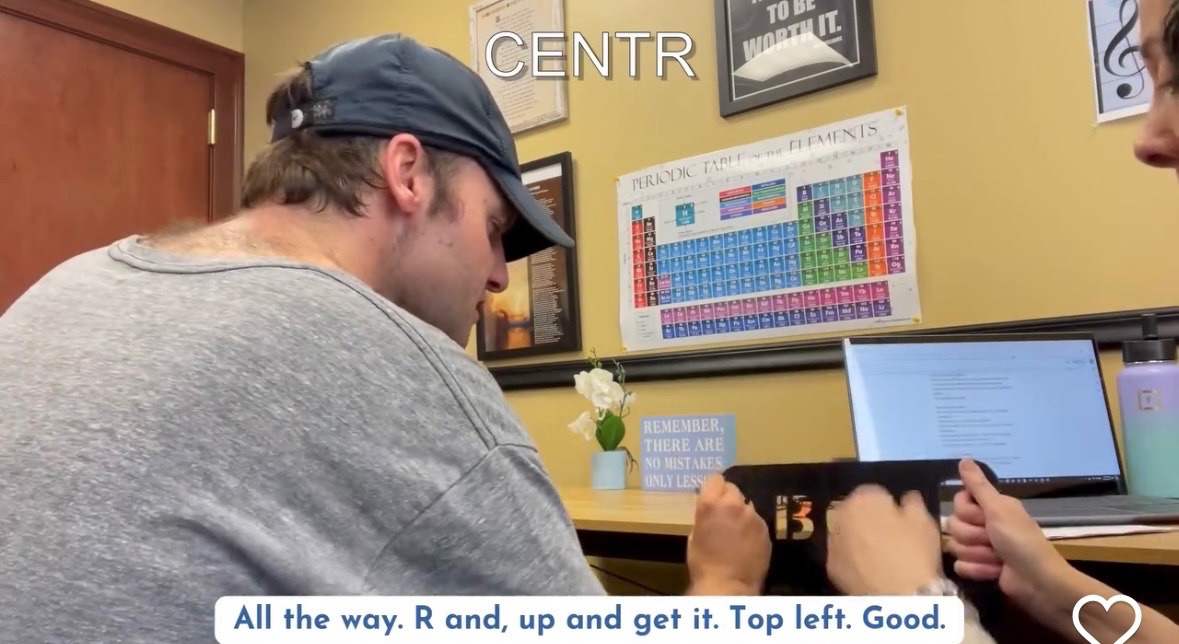
"All the way. R and, up and get it. Top left. Good." Plus, I'm sure the facilitator is wittingly or unwittingly moving the letter board toward the R to aid in letter selection.
Who, may I ask, is doing all the work?
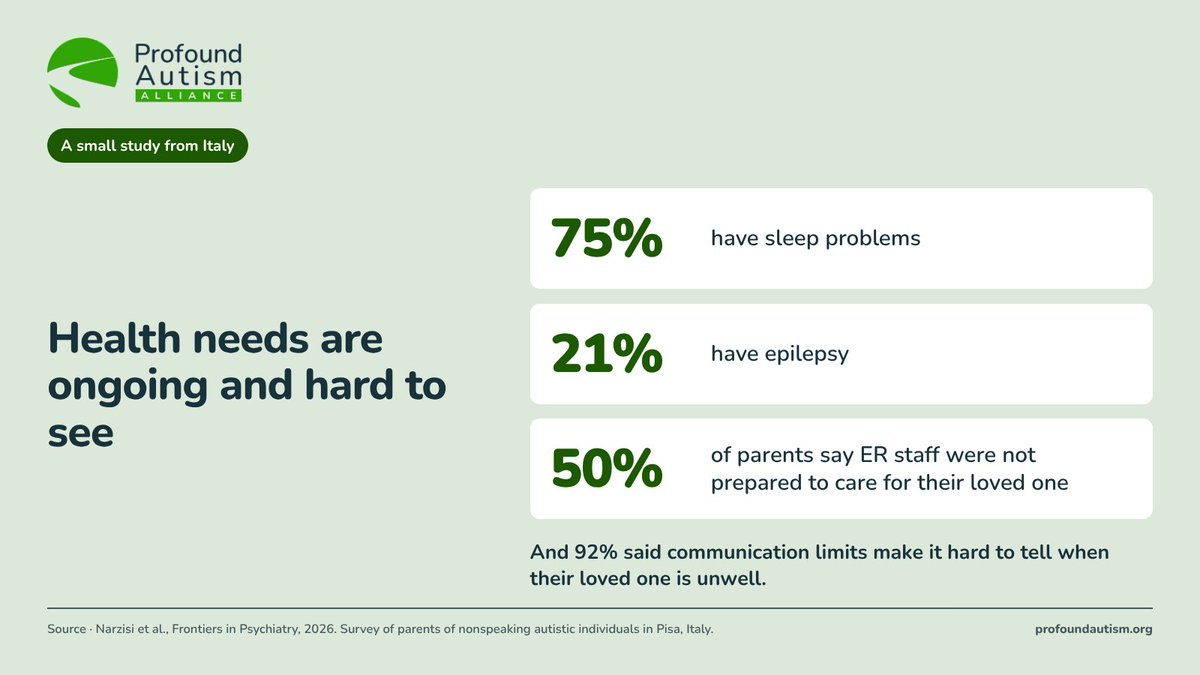
A small study from Italy tells a familiar story. Parents of nonspeaking autistic individuals describe ongoing health needs, support that never pauses and little public help. Now imagine sustaining that for 40 years. That is profound autism.
https://t.co/rbOjg3yC4i
A magic trick done well is entertaining and fun--and takes a lot of practice on the magician's part. But, it's not a psychic ability. Mediums have all kinds of tricks they use to fool motivated sitters.
Here are examples of reliably controlled authorship studies & systematic reviews. Please read them.
https://t.co/70QjHXXKd1
https://t.co/k9sChJ6kr6
Reminder: We're happy to review reliably controlled studies addressing concerns about FC/S2C/RPM facilitator cueing/control over letter selection and prove claims of communication independence with facilitator-dependent techniques. Testimonials, anecdotes are not evidence.
I’ve had a few people tell me off recently for my use of language. They say, there is no such thing as severe or profound autism. There is only autism, and then co-occurring disabilities such as intellectual disabilities. Autism itself can’t be severe.
I used to agree with this, but I’ve changed my mind. My mind has been changed by talking to many families of children who are (they would say) severely or profoundly autistic. They say that they clearly see in their children how autistic features like lack of early shared attention, or lack of social interest in babyhood, have led to their severe disabilities now. They say that their learning disabilities are part of their autism, not something separate to them.
And I also reflected on my own experience as a diagnostician and clinician, which also clearly shows that what we define as autism can certainly vary in severity. Just think about repetitive behaviour and restricted interests - this can range from a passionate engagement with horses or trains, to severe self-injurious head-banging. Both could fit that diagnostic criteria, but one clearly has a more serious impact on a person, and is more disabling. It makes no sense to say they are of the same magnitude.
So that’s why I will use severely or profoundly autistic when it is appropriate to do so. Because I have listened to the people most affected by this, and they have told me that it’s important to them that the language reflects their experience.
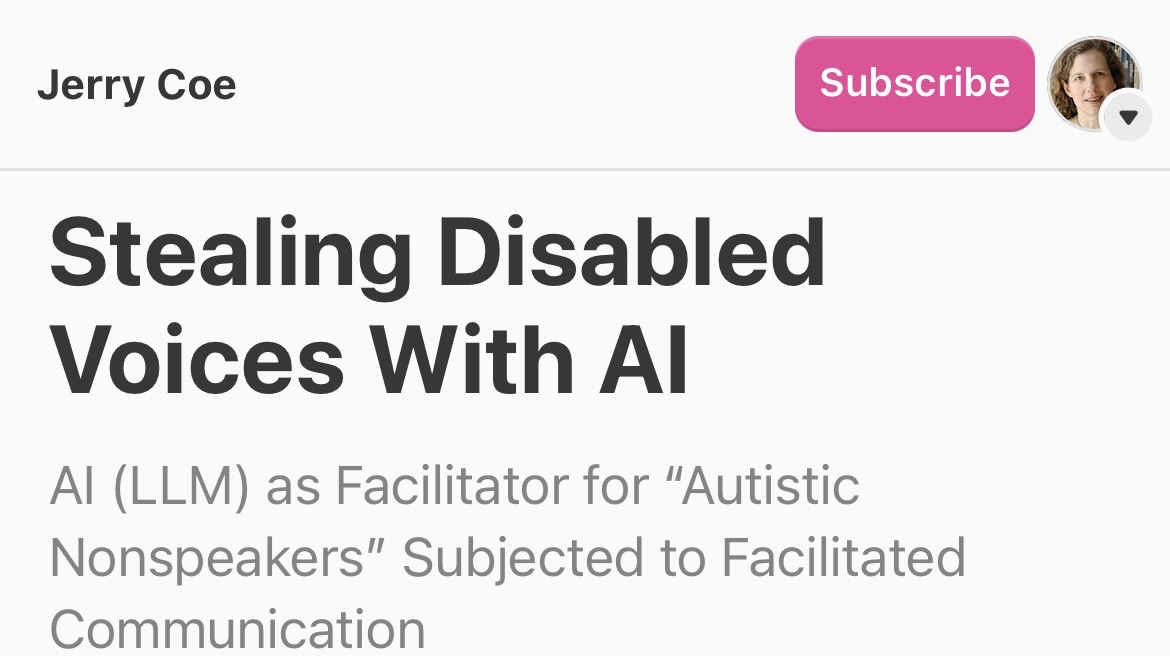
This highlights the need to continue educating people about the difference between stories and personal opinion (even when AI generated) and legitimate, evidence-based research.
@FCisnotScience They've gone and added an AI disclaimer to the post now which doesn't quite admit the whole damn thing is AI generated https://t.co/VdEroPt4zi
"Kaufer seems to have an exorbitant and unfounded fear of message passing tests that, in his article, he projects onto his nonspeaking or minimally speaking clients and loved ones—so much so that I wonder if he’s read the original studies."
Proponents post images and "personal" messages of their clients (often young children) in public forums and then throw a buggy when critics of FC/S2C/RPM point out the techniques are pseudoscientific and likely facilitator generated. They can't have it both ways.
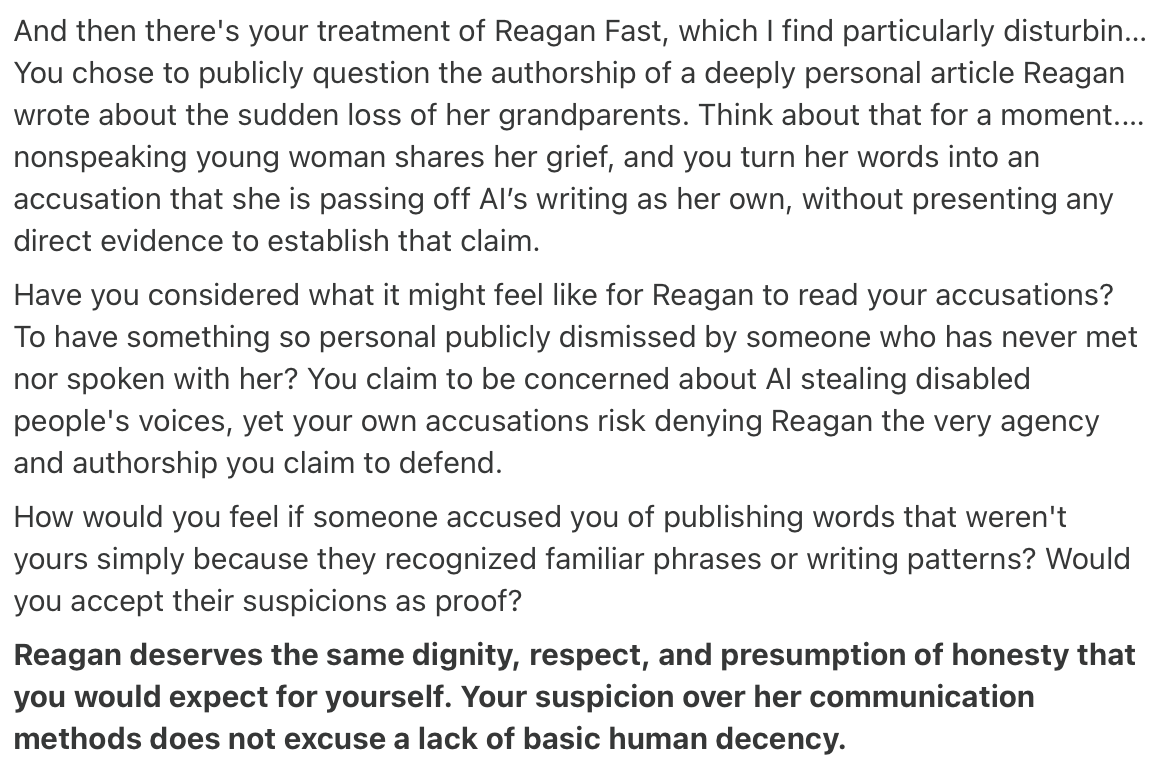
Also dig FC influencer David Kaufer's AI generated comment on my piece, where he (or rather his AI) accuses me of lacking basic human decency for recognizing AI when I see it:
Just a reminder to proponents: bullying, personal attacks, testimonials and anecdotes are not evidence. Samples of what we mean by reliably controlled studies and systematic reviews can be found at these links:
https://t.co/70QjHXYi2z
https://t.co/k9sChJ6SgE
The "but still" part of your comment is the part proponents of FC/S2C/RPM and telepathy count on and never resolve. Reliably controlled testing would, most likely, resolve the "but still." If not, then tests could be set up to resolve questions that arise from the first tests.
Some of that was impressive and some of it was complete misses. I want to see more.
I mean, if that kid and the person in the room with them were really blind to the target, "Grazing" is an amazing hit. Plus, the dream with the sphere and for stars. Not controlled but still interesting.