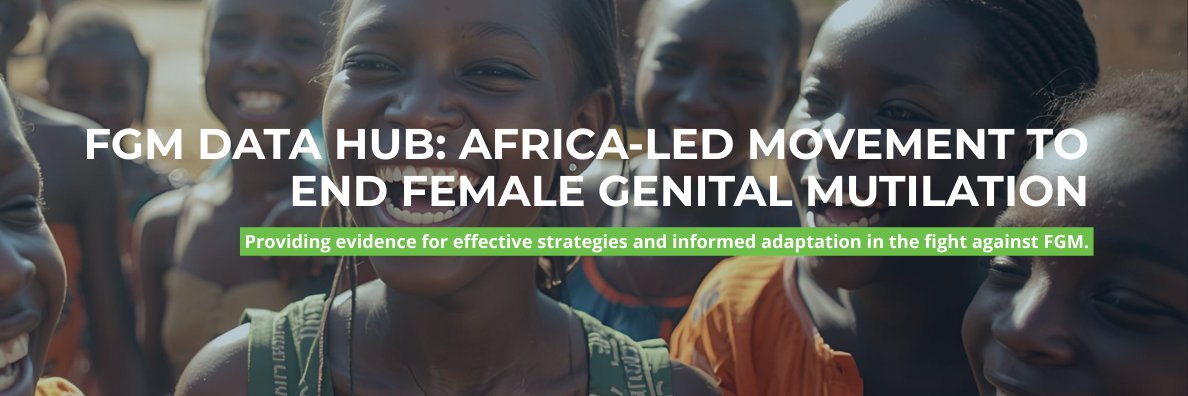
The FGM Data Hub is providing evidence to inform the design, implementation, adaptation, and scaling of effective strategies to end Female Genital Mutilation
Dennis Matanda, Research Associate at Population Council – Kenya, joins Wisal Ahmed, Christina Pallitto, and Abdul Rashid in this BMJ editorial to explore the path to eliminating female genital mutilation (FGM) by 2030.
Read here https://t.co/aHF0SOQ6KN
What does it take to end FGM faster? Evidence.
At #CSW70@MatandaDennis shared insights from Kenya showing how real-world data is shaping smarter, scalable interventions.
You can read more on the study
https://t.co/KGlT1wOnxm
What does it take to end FGM faster? Evidence.
At #CSW70@MatandaDennis shared insights from Kenya showing how real-world data is shaping smarter, scalable interventions.
You can read more on the study
https://t.co/KGlT1wOnxm
At the 2026 CSW70, New York, we shared what’s working to end female genital mutilation (FGM) based on research from Kenya. The message is clear: using data & evidence from real-world implementation helps us design smarter programs that can be adapted and scaled to end FGM faster.
In this newly published editorial in BMJ, together with colleagues, we remind the world that ending Female Genital Mutilation (FGM) by 2030 is possible, but only if we accelerate action now. https://t.co/LVo4PzNVen
Pushback against FGM laws and rights-based programming is growing, including attempts to “medicalise” the practice.
Our @bmj_latest editorial explains why no form of FGM is safe and why rights must remain non‑negotiable.
Read more ⬇️⬇️
https://t.co/Qn3V85K15X
We are honored to have Mr. @MatandaDennis representing us to discuss our approach to utilizing data for adaptation rather than mere reporting, and to share insights on influencing knowledge, beliefs, and behavior.
To mark Zero Tolerance Day 2026, The Girl Generation–ALM and the FCDO brought together partners, survivors, researchers, government representatives and grassroots leaders to reflect on what it truly takes to end FGM , and what must endure beyond the programme cycle.
The conversation focused on five critical questions:
What have we learned about shifting knowledge, beliefs and behaviour?
What does survivor leadership look like in practice?
How do we use data to adapt and not just report?
How do we integrate FGM into broader systems so it’s not treated in isolation?
And what does sustainable, locally-led funding really require?
Across the discussions, it was clear that progress must be evidence-driven, survivor-informed, community-rooted, and built to last.
Over the coming days, we’ll be sharing key reflections and voices from the convening.
#ZeroToleranceDay2026 #NoEndWithoutCommitment #EndFGM #InvestDontRest #TheGirlGen
What does it really mean to centre survivors?
“Any movement to eradicate FGM has to work with survivors - they are the experts, they need to tell their stories.” Mumina Jirmo Chairperson of the @survivorsNKe speaking at the convening to mark Zero Tolerance Day 2026 in London with the @FCDOGovUK .
She reminded us that they are not beneficiaries of this work they are leaders within it!
“SLI gave me something that I never had before. A a safe space of fellow survivors who understood me. This was the beginning of my healing journey where I was able to rediscover my voice, my value, my world, my self esteem.” Mumina
When survivors lead, the narrative shifts. The strategy shifts. The impact deepens.
#ZeroToleranceDay2026 #NoEndWithoutCommitment #EndFGM #InvestDontRest #TheGirlGen
“TGG-ALM has a culture of partnership with an emphasis on adaptation. Using data and reflection, we take what we see, interrogate it and then adapt the programme as a result.” Claire Arnott, Senior MEL Lead - @Amref_UK speaking at the event in London to mark Zero Tolerance to FGM Day.
From the day, has always looked to data first. Researchers and implementers have been working side by side through the @FGM_Data_Hub to define what to measure, how to measure it, and why it mattered.
Early findings showed knowledge was increasing but attitudes and beliefs weren’t shifting yet. So the approach changed and dialogue moved from public forums into households, where decisions are actually made. There was still conflict and disagreement, but also space to come to a collective and more binding decision on FGM.
The result?
More confident girls.
More girls in leadership.
More open conversations where FGM was once taboo.
A surge in survivor activism.
Projects spreading beyond their original communities.
#ZeroToleranceDay2026 #NoEndWithoutCommitment #EndFGM #InvestDontRest #TheGirlGen
This work has always been about people—survivors, advocates, practitioners, and partners showing up with care and purpose.
Today, we honour the progress made together and the impact built along the way.
But Zero Tolerance Day is also a reminder: we cannot slow down.
Girls and women are still at risk. Too many girls are still navigating risk without the protection they deserve.
#ZeroToleranceDay2026 #NoEndWithoutCommitment #EndFGM #InvestDontRest #GirlsRights #TheGirlGen
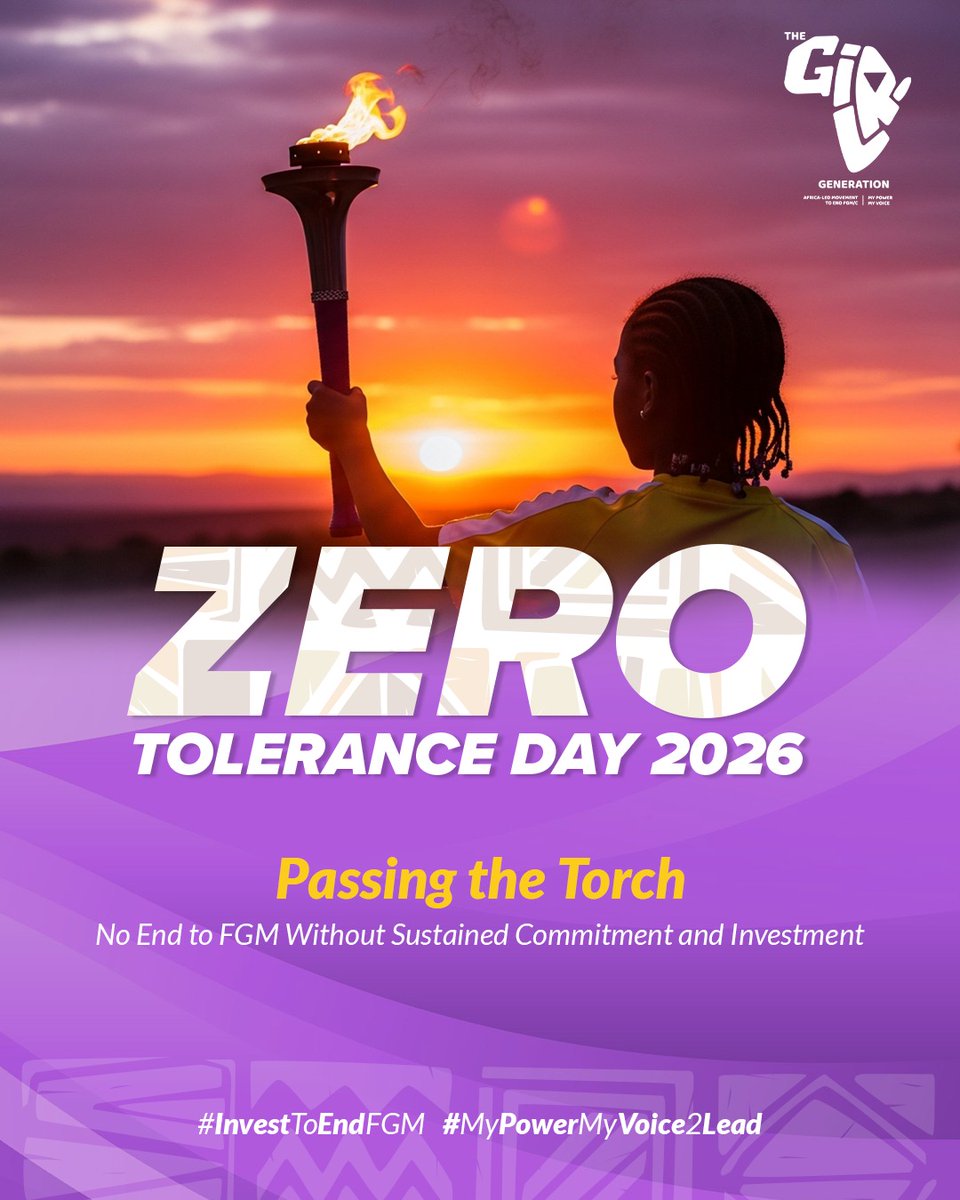
Zero Tolerance Day against FGM is almost here!
This year’s theme: No end to FGM without sustained commitment & investment.
📅 3–4 Feb
We’re sharing evidence from lived implementation and passing it to the movement ,where it belongs. Stay tuned!
#ZTD2026 #InvestDontRest #EndFGM #WhatWorks #EvidenceInAction #MyPowerMyVoice2Lead
As we continue working to end FGM once and for all, consistency remains key. The strategies we know work; Centering survivors, strengthening policy, providing safe spaces, challeneging harmful language and beliefs and funding small organizations
Now, let’s keep at it. 💪
What else can you do to support the movement to end FGM?
#InvestDontRest #EndFGM #MyPowerMyVoice2Lead #FGMisViolence #TheGirlGen
✨ Findings from Isiolo, Kenya: A pilot study using opinion polls + vignettes uncovers the gap between personal beliefs and perceived community norms on FGM.
Understanding these hidden attitudes is key to driving real change.
🔗 Read more: https://t.co/0sgVtRy3GT
✨ Résultats d’Isiolo, Kenya : Une étude pilote utilisant des sondages d’opinion + des vignettes révèle l’écart entre les croyances personnelles et les normes perçues autour des MGF.
Comprendre ces attitudes cachées est essentiel pour impulser un vrai changement.
✨ Findings from Isiolo, Kenya: A pilot study using opinion polls + vignettes uncovers the gap between personal beliefs and perceived community norms on FGM.
Understanding these hidden attitudes is key to driving real change.
🔗 Read more: https://t.co/0sgVtRy3GT
🔹 Il existe un véritable décalage entre les paroles et les convictions.
À Isiolo, 70 % des personnes interrogées s'opposent personnellement aux MGF, mais supposent que seulement 35 % de leurs proches partagent cette opinion.
🔹 There’s a real gap between what people say and what they believe.
In Isiolo, 70% personally oppose FGM, yet assume only 35% of their relatives do.
Many people are practicing not because they want to, but because they think everyone else does.
🔹 Il existe un véritable décalage entre les paroles et les convictions.
À Isiolo, 70 % des personnes interrogées s'opposent personnellement aux MGF, mais supposent que seulement 35 % de leurs proches partagent cette opinion.