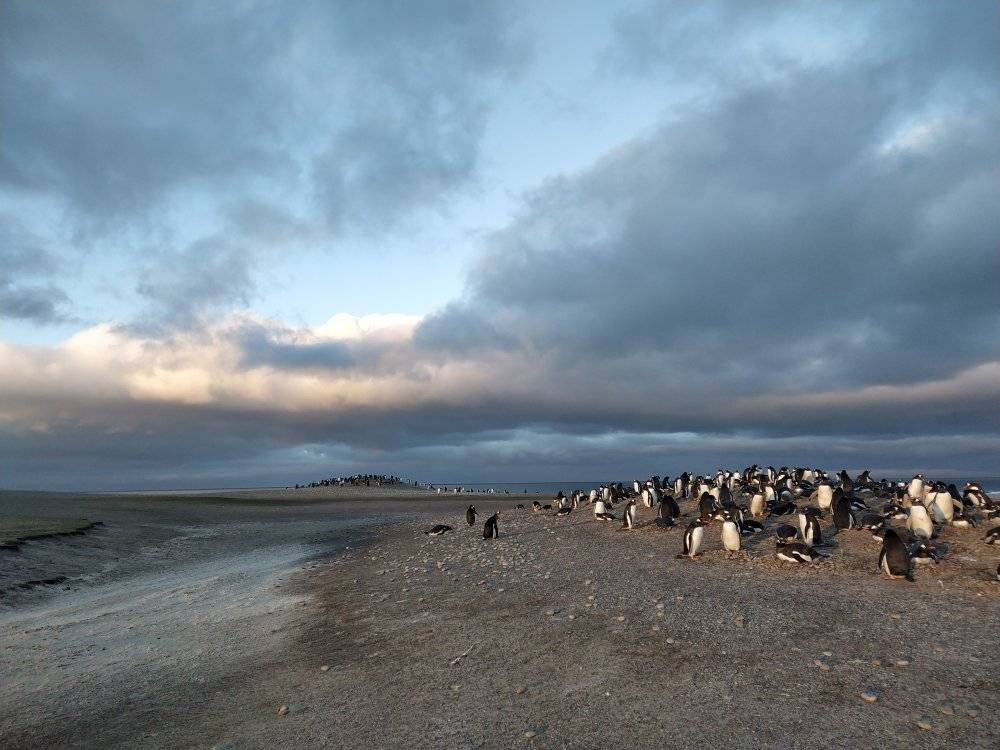
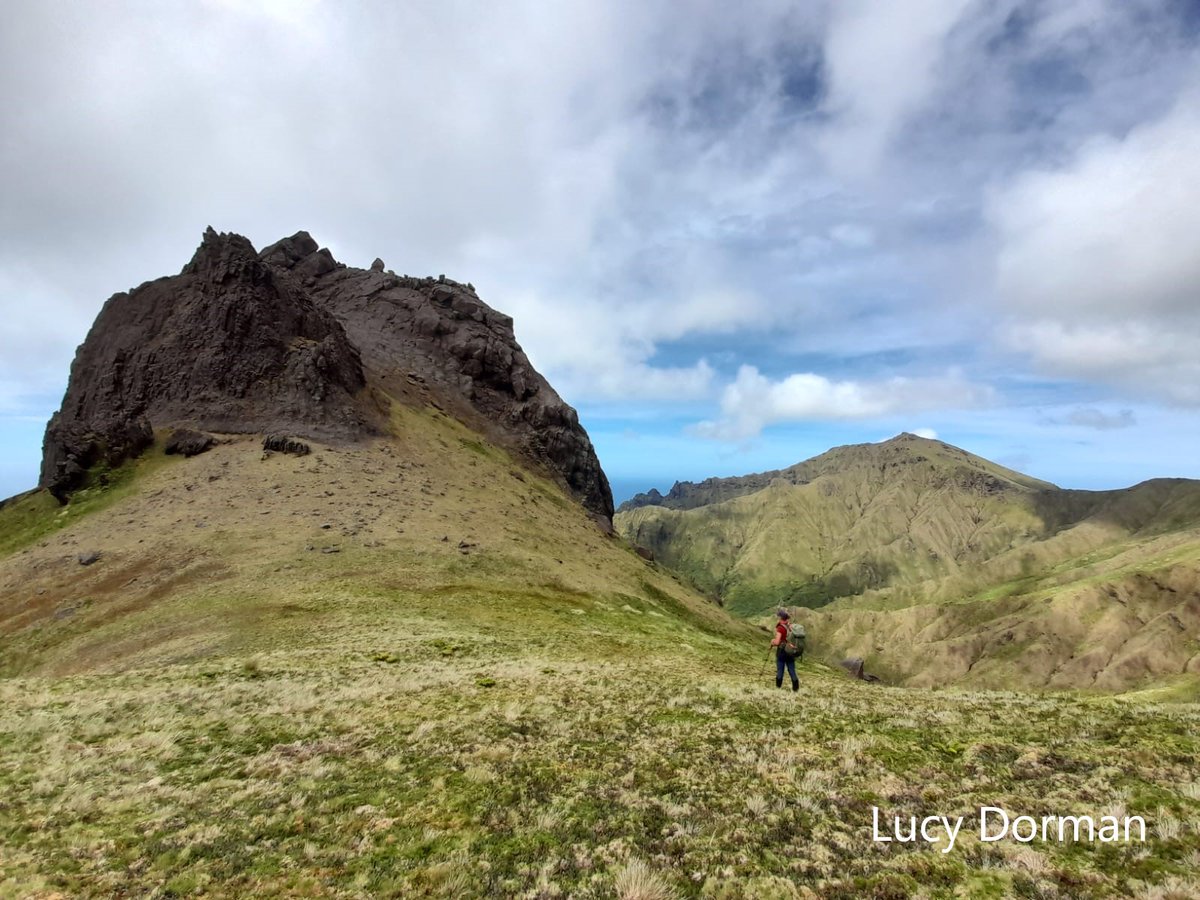
A few bird flu outbreaks have been reported from gentoo colonies on the East of the Falklands over the last few weeks but everything looks healthy here so far! Gentoos are on their nests, skuas are starting to build theirs, and the king chicks are slowly getting ready to fledge.
I enjoy birding, hiking, and spending time in my garden when not on an island studying seabirds." Jeff will be leading our work on terrestrial birds' diet, trying to understand how pathogens move across species and islands through how birds interact and move. 3/3
[Meet the team] The first of us in the field this year is not even in the Falklands (yet). Meet Jeff White, our seabird ecology expert: "I am originally from Memphis, Tennessee, USA but spent much of my time on our family farm in Mississippi... 1/3
...I've been working with the @TawakiProject studying New Zealand's penguins since 2016 and received my PhD in biology from the University of Miami in 2024. My primary interests are in seabird foraging (especially stable isotope ecology) and movement ecology..." 2/3
And we're back! Kicking off the season with sample collection on beautiful Saunders, which, as usual, treated us with the best sunset over the gentoo penguins at the Neck!
People in the Falklands are on top of bird flu surveillance! Sad to see the virus affecting the birds again this year, but happy to see everyone involved and reporting suspicious cases to @FalklandsGov
HPAI suspected and confirmed cases in the Falklands ticking along.
👉https://t.co/b6YXFdxzHY
Of course, data also collated into our dashboard
👉https://t.co/3AQahIQDjn
We've been collecting data to better understand pathogen dynamics and impacts in the wildlife of the Falkland Islands. The project started 2 years ago and turned out to be crucial to our understanding of avian influenza there. Stay tuned! Thanks @UKBCFs for the support!
WE’RE RECRUITING!💚🐁... a Field Team Leader & Field Officer to join the G70 SANAP Overwintering Team on Gough Island later this year (N.B. roles will focus on rodents not seabirds this time). All details here: https://t.co/yHZ70I4TII & https://t.co/VxmpbClRkv
Confirmation of Highly Pathogenic Avian Influenza (HPAI) H5N1 Associated with an Unexpected Mortality Event in South Polar Skuas (Stercorarius maccormicki) during 2023-2024 Surveillance Activities in #Antarctica#preprint https://t.co/TgjfhVZKJW
It's to capture this kind of processes that, in addition to collect epidemiological data from the birds in the Falklands, we also collect movement data.
This is the 2nd study reporting prospecting (i.e. visiting other colonies) in Northern gannets from colonies affected by highly pathogenic avian influenza (HPAI). Breeding gannets are not known to prospect. They usually only move between their nest and the sea where they feed...
This show how infectious disease can impact wildlife behaviour and population dynamics... And also highlight a potential pathway of transmission for the virus, with birds from infected colony visit other (potentially non-infected) colonies.
Growing evidence that highly pathogenic avian influenza (HPAI) poses risks to mammals, including both domestic and wild, but also that mammals contribute to moving the virus around...
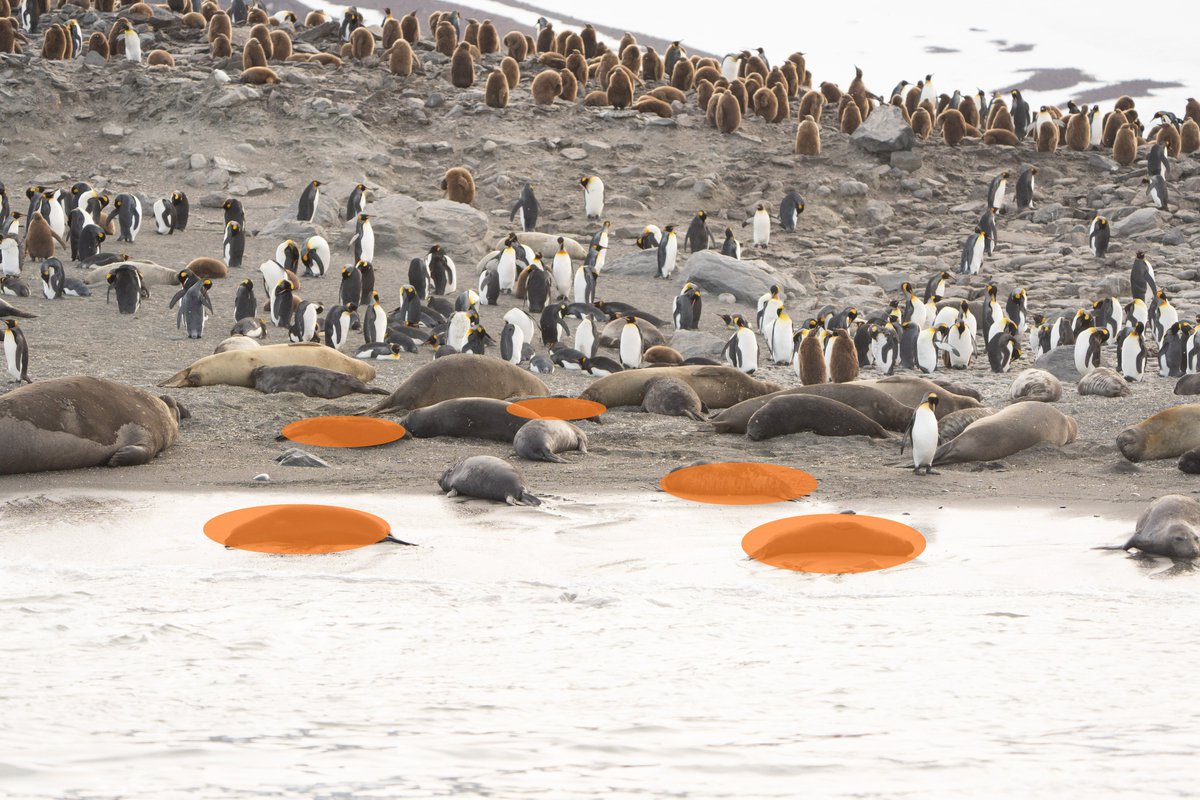
Avian flu devastated seals in South Georgia this summer. We reported to @GovSGSSI >150 dead elephant seals at St Andrews Bay alone in Nov. By Feb the density of carcases of unid. seals was still high (e.g. 17 in a ~50m-sq area of Elsehul). I hope that the worst is over. #HPAI
While exploring updates from other @UKBCFs funded projects, I ended up on this one about the threat that bird flu poses, not only on wild populations, but also on the livelihoods of people who rely on poultry. Bird flu really is the perfect illustration of a #OneHealth challenge.
At the end of last year, we wrote a small note for the @UKBCFs newsletter about monitoring bird flu in the Falklands wildlife. The virus hadn't spread within the islands yet then. Oh how things have changed since... https://t.co/1FmSvCq2TA




![FIWildHealth's tweet photo. [Meet the team] The first of us in the field this year is not even in the Falklands (yet). Meet Jeff White, our seabird ecology expert: "I am originally from Memphis, Tennessee, USA but spent much of my time on our family farm in Mississippi... 1/3 https://t.co/J0G6C9JGIE](https://pbs.twimg.com/media/Ga4P89aXAAAA5Q6.jpg)